Aldehydes
Aldehydes are organic compounds containing a carbonyl group (C=O) bonded to at least one hydrogen atom. These versatile compounds are fundamental in various chemical reactions, including oxidation, reduction, and nucleophilic addition. Aldehydes are essential building blocks in the synthesis of pharmaceuticals, fragrances, and polymers. At CymitQuimica, we provide a diverse selection of high-quality aldehydes to support your research and industrial applications.
Found 8540 products of "Aldehydes"
Sort by
Purity (%)
0
100
|
0
|
50
|
90
|
95
|
100
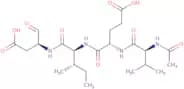
Ac-Val-Glu-Ile-Asp-aldehyde (pseudo acid)
CAS:<p>Ac-Val-Glu-Ile-Asp-aldehyde is a pseudo acid that has been shown to induce apoptotic cell death in cultured cells. It is localized in the cerebellar granule and mitochondria of HL-60 cells and HK-2 cells. Ac-Val-Glu-Ile-Asp-aldehyde induces necrotic cell death when it binds to the serine protease zymogen, which is localized in the mitochondrial membrane. It also induces apoptosis by disrupting the mitochondrial membrane potential, leading to a release of cytochrome c into the cytosol. Ac-Val-Glu-Ile-Asp-aldehyde can bind to annexin and tubule cells, which are important for β cell function.</p>Formula:C22H36N4O9Purity:Min. 95%Molecular weight:500.54 g/mol2-Fluoropyridine-5-carboxaldehyde
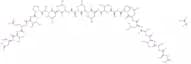
CAS:<p>2-Fluoropyridine-5-carboxaldehyde is a reactive chemical that can be used as an acceptor in organic synthesis. It has been shown to have antibacterial properties, and is also a synthon for the production of prosthetic groups. 2-Fluoropyridine-5-carboxaldehyde reacts with dopamine to form diphenyl ethers, which are used as labels for immunoassays. This chemical can be catalysed and has been shown to be resistant to catalysis. 2-Fluoropyridine-5-carboxaldehyde can also be used in the synthesis of cycloalkanes.</p>Formula:C6H4FNOPurity:Min. 95%Molecular weight:125.1 g/molAc-Ala-Ala-Val-Ala-Leu-Leu-Pro-Ala-Val-Leu-Leu-Ala-Leu-Leu-Ala-Pro-Ile-Glu-Thr-Asp-aldehyde trifluoroacetate salt
CAS:<p>Please enquire for more information about Ac-Ala-Ala-Val-Ala-Leu-Leu-Pro-Ala-Val-Leu-Leu-Ala-Leu-Leu-Ala-Pro-Ile-Glu-Thr-Asp-aldehyde trifluoroacetate salt including the price, delivery time and more detailed product information at the technical inquiry form on this page</p>Formula:C95H162N20O26Purity:Min. 95%Molecular weight:2,000.42 g/mol4-Acetoxybenzaldehyde
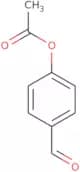
CAS:<p>4-Acetoxybenzaldehyde is a compound with an acetyl group attached to the benzene ring. It is potentially toxic to cells and has been shown to produce reactive oxygen species (ROS) in v79 cells, which can lead to cell death. The biological properties of 4-acetoxybenzaldehyde are not well understood, but it has been shown to have antioxidant properties in other studies. This compound also reacts with amines, forming acetamides and amides. 4-Acetoxybenzaldehyde is found in environmental pollution as a result of its presence in the atmosphere and its use as a solvent. It was first synthesized by the reaction of coumaric acid and acetyl chloride with formaldehyde at reflux temperature. The compound can be purified by chromatographic methods or mass spectrometric analysis.</p>Formula:C9H8O3Purity:Min. 95%Color and Shape:LiquidMolecular weight:164.16 g/mol4-Fluorobenzaldehyde oxime
CAS:<p>4-Fluorobenzaldehyde oxime is a phenylhydrazine derivative that reacts with an aromatic amine to form a ternary complex. The reaction time for this process is short, and the yield of the product is high. 4-Fluorobenzaldehyde oxime also reacts with an aromatic amine to form an ion-pair. It can react with acidic hydrogen donors such as peracids and it also has high hydrogen bonding interactions. 4-Fluorobenzaldehyde oxime is used in pharmacological agents as well as other chemical reactions, including halogenation.</p>Formula:C7H6FNOPurity:Min. 95%Color and Shape:White PowderMolecular weight:139.13 g/mol2-Thiophenecarboxaldehyde
CAS:<p>2-Thiophenecarboxaldehyde is a synthetic compound that has been shown to have in vitro antifungal activity. It has also been shown to inhibit the growth of bacteria and fungi, such as Candida albicans. The antimicrobial activity of 2-thiophenecarboxaldehyde has been demonstrated by in vitro studies using human serum, metal carbonyl complexes, and sodium salts. In addition, this compound inhibits the synthesis of proteins in animal cells infected with viruses or bacteria. It also has amoebicidal activity against Entamoeba histolytica and Leishmania donovani. This compound is used for the treatment of autoimmune diseases such as rheumatoid arthritis and multiple sclerosis.</p>Formula:C5H4OSPurity:Min. 95%Color and Shape:Clear LiquidMolecular weight:112.15 g/mol2-Hydroxy-4-fluorobenzaldehyde
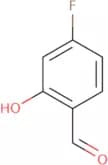
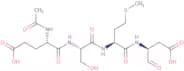
CAS:<p>2-Hydroxy-4-fluorobenzaldehyde is a chemical used as a diagnosis agent to detect radiation exposure. It reacts with magnesium and water molecules to form an amination reaction that produces hydrogen fluoride gas. 2-Hydoxy-4-fluorobenzaldehyde has been shown to have the ability to penetrate into mitochondria, which may be related to its use in the treatment of hepatitis. The chemical structure of this compound is similar to salicylaldehyde, which is used as a reagent for formylation reactions and optical properties. It has also been shown that 2-hydroxy-4-fluorobenzaldehyde can act as a fluorescence probe for the detection of hydrophobic regions on proteins.</p>Formula:C7H5FO2Purity:Min. 95%Color and Shape:PowderMolecular weight:140.11 g/molAc-Glu-Ser-Met-Asp-aldehyde (pseudo acid)
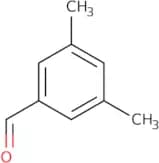
CAS:<p>Ac-Glu-Ser-Met-Asp-aldehyde is a molecule that is naturally produced by the human body. It has been shown to be an endogenous caspase activator, which may lead to apoptosis. Ac-Glu-Ser-Met-Asp-aldehyde can also bind to cholesterol and influence its synthesis, thus affecting the production of other proteins. This molecule has a protease activity and can cleave peptides at specific sites. The sequences of this molecule have been determined and it has been found that these sequences are similar to those found in other proteases such as serine proteases.</p>Formula:C19H30N4O10SPurity:Min. 95%Molecular weight:506.53 g/mol3,5-Dimethylbenzaldehyde
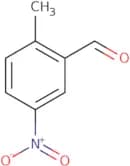
CAS:<p>3,5-Dimethylbenzaldehyde is an organic compound that is a colorless liquid. It has a chemical formula of C9H12O2 and is classified as an aldehyde. 3,5-Dimethylbenzaldehyde can be synthesized by the reaction of isopropyl palmitate with xylene in the presence of carbon as a source. The reaction time required for this synthesis is approximately one day. The major products of this reaction are 3,5-dimethylbenzaldehyde and 2-methylbutanal. This reaction mechanism can also be used to determine the concentration of urinary metabolites in human urine samples. Analysis of these samples requires an organic solvent such as hexane or dichloromethane. Kinetic data was collected from the rate at which zinc powder reacts with 3,5-dimethylbenzaldehyde over time at different concentrations. A kinetic experiment was conducted using c–h bond activation to produce 3,5-dimethoxy</p>Formula:C9H10OPurity:Min. 95%Color and Shape:Colorless Clear LiquidMolecular weight:134.18 g/mol2-Methyl-5-nitrobenzaldehyde
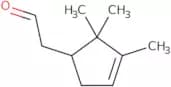
CAS:<p>2-Methyl-5-nitrobenzaldehyde is a nitro compound that is used in the synthesis of dobutamine. It has been shown to undergo rearrangements, with the formation of 2-methyl-5-nitrophenol. Kinetic studies have shown that chlorine can be substituted for hydrogen at the 2 position, and this substitution leads to an increase in reactivity. 2-methyl-5-nitrobenzaldehyde also reacts with dopamine to form a ketone. The hydroxy group on this molecule is nucleophilic and can attack electrophiles, making it useful as an active site for synthetic reactions. This compound is also pyrophoric, which means it will spontaneously ignite in air and burn until all its fuel is consumed.</p>Formula:C8H7NO3Purity:Min. 95%Color and Shape:Off-White PowderMolecular weight:165.15 g/mol(2,2,3-Trimethylcyclopent-3-en-1-yl)acetaldehyde
CAS:<p>(2,2,3-Trimethylcyclopent-3-en-1-yl)acetaldehyde is an epoxide. It is a colorless liquid with a pleasant odor and taste that can be used as a flavoring agent. This compound is biosynthesized by bacteria from the alpha-terpineol or 2,2,3-trimethylcyclopentanone. The biological activity of (2,2,3-Trimethylcyclopent-3-en-1-yl)acetaldehyde has been investigated in cultures and in vitro studies on acid bacteria. The production of this compound was found to be stimulated by the presence of other terpenoids such as limonene and alpha pinene.</p>Formula:C10H16OPurity:Min. 95%Molecular weight:152.23 g/molN-Boc-2-aminoacetaldehyde
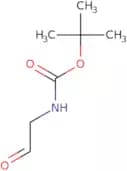
CAS:<p>N-Boc-2-aminoacetaldehyde is an aliphatic aldehyde that has been used in the synthesis of a number of bioactive molecules. It is synthesized by reacting an N-Boc amino acid with chloroform and hydrochloric acid. The reaction time is typically 2 hours at room temperature, although it can be decreased to 20 minutes if the temperature is increased to 60°C. The product can be purified using extraction or recrystallization methods. N-Boc-2-aminoacetaldehyde reacts with chloride ions to form phosphoranes, which are useful in clinical development as antimicrobial peptides. This compound also reacts with fluorine to form hydrogenated derivatives that have been shown to have neurokinin activity in animal models.</p>Formula:C7H13NO3Purity:Min. 95%Color and Shape:Colorless PowderMolecular weight:159.18 g/molZ-Leu-Leu-Tyr-a-keto aldehyde
CAS:<p>Please enquire for more information about Z-Leu-Leu-Tyr-a-keto aldehyde including the price, delivery time and more detailed product information at the technical inquiry form on this page</p>Formula:C30H39N3O7Purity:Min. 95%Molecular weight:553.65 g/mol4-tert-Butoxybenzaldehyde
CAS:<p>4-tert-Butoxybenzaldehyde is a colorless liquid that has a viscosity of 0.3 mm2/s at 25 °C. It can be synthesized by reacting pyridine with hydrochloric acid in the presence of a Grignard reagent. 4-tert-Butoxybenzaldehyde reacts with phenolic antioxidants to form an ester, which can be used as an industrial solvent. The crystal x-ray diffraction pattern of 4-tert-Butoxybenzaldehyde exhibits peaks at 2θ = 8.0, 11.5, and 18.5° corresponding to the (100), (200), and (220) planes, respectively. This chemical can also undergo reactions that lead to termination or transfer reactions, including diethyl ketomalonate formation with diethyl malonate in the presence of water as a solvent and potassium hydroxide as a catalyst for transfer reactions.END></p>Formula:C11H14O2Purity:Min. 95%Color and Shape:PowderMolecular weight:178.23 g/molN-Ethylcarbazole-3-carboxaldehyde
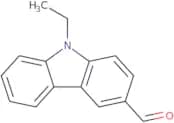
CAS:<p>N-Ethylcarbazole-3-carboxaldehyde is an organic compound that has been shown to have anti-cancer properties. It activates the enzyme dioxygenase, which in turn generates reactive oxygen species (ROS) that induce DNA damage and apoptosis in mammalian cells. The photophysical and fluorescence spectrometry of N-ethylcarbazole-3-carboxaldehyde were studied as a function of pH and found to be sensitive to acidic environments. N-Ethylcarbazole-3-carboxaldehyde is also able to form covalent bonds with DNA bases, leading to irreversible oxidation.</p>Formula:C15H13NOPurity:Min. 95%Molecular weight:223.27 g/molFormaldehyde-13C solution
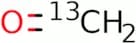
CAS:<p>20% by weight in water. 98 atom % 13C</p>Formula:H13CHOPurity:Min. 95%Molecular weight:42.12 g/mol3-Bromo-5-chlorobenzaldehyde
CAS:<p>3-Bromo-5-chlorobenzaldehyde is a fine chemical that is used as a building block in the synthesis of other chemicals. It is also a reagent and speciality chemical with high quality and versatility. 3-Bromo-5-chlorobenzaldehyde has been shown to be useful in the preparation of complex compounds, such as heterocyclic aromatic compounds, which are versatile scaffolds for drug discovery. 3-Bromo-5-chlorobenzaldehyde has a CAS No. 188813-05-0.</p>Formula:C7H4BrClOPurity:Min. 95%Color and Shape:PowderMolecular weight:219.46 g/molcis-3-Hexenal - stabilised: 50% in triacetin
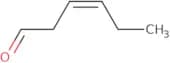
CAS:<p>Cis-3-hexenal is a fatty acid that is found in various foods, including soybean and corn oils. It can be used as a chemical substrate to measure the activity of lipoxygenases, enzymes that catalyze the formation of hydroperoxides from polyunsaturated fatty acids. Cis-3-hexenal is also an insect attractant and has been shown to have antifungal properties against plant pathogens such as Phytophthora infestans. This chemical compound has also been shown to inhibit protein synthesis in cells and to be able to react with DNA. Cis-3-hexenal - stabilised: 50% in triacetin</p>Formula:C6H10OPurity:Min. 95%Color and Shape:PowderMolecular weight:98.14 g/mol3-Fluoro-2-hydroxybenzaldehyde
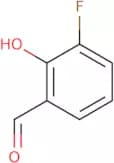
CAS:<p>3-Fluoro-2-hydroxybenzaldehyde is a colorless liquid with a sweet, aromatic odor. It has been shown to be an antibacterial agent against Gram positive bacteria and may have potential as a drug for the treatment of MRSA. 3-Fluoro-2-hydroxybenzaldehyde is used in the production of cellulose acetate and sodium sulfide. It is also used in the chemical reactions that form amines, hydroxyl groups, and chloride ions. It has been shown to inhibit mitochondrial respiration by chelating ring complexes in the respiratory chain. It also inhibits biological processes such as DNA synthesis, protein synthesis, and hydrogen bond formation.</p>Formula:C7H5FO2Purity:Min. 95%Color and Shape:PowderMolecular weight:140.11 g/mol3-Hydroxyisonicotinaldehyde
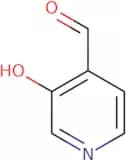
CAS:<p>3-Hydroxyisonicotinaldehyde is a disulfide bond that plays an important role in enzyme catalysis. The active site of the enzyme, which contains a nucleophilic attack on the electrophilic carbon atom, is composed of two cysteine residues with their sulfhydryl group (-SH) bonded to each other through a disulfide bond. This bond can be broken by either an acidic environment or protonation. In the absence of these conditions, the -SH groups are coordinated to metal ions and form a complex. The hydroxyl group (-OH) on one cysteine residue can coordinate to the nitrogen atom on the other cysteine residue and form tautomers. These tautomers correspond to two different configurations of the molecule: one where both sulfur atoms are in a trans configuration (tautomer A), and one where they are in a cis configuration (tautomer B). The biological properties of 3-hydroxyison</p>Formula:C6H5NO2Purity:Min. 95%Molecular weight:123.11 g/mol