Pharmaceutical Standards
Pharmaceutical standards are a comprehensive set of reference materials essential for ensuring the safety, efficacy, and quality of pharmaceutical products. This category includes standards for active pharmaceutical ingredients (APIs), which are the core components responsible for therapeutic effects. Additionally, it covers compounds and metabolites relevant to both the pharmaceutical and veterinary industries, providing benchmarks for the accurate measurement and analysis of these substances. Nitrosamine control standards are crucial for detecting and mitigating potentially harmful nitrosamines in drug formulations. Toxicology standards help assess the safety and potential adverse effects of pharmaceutical compounds. Furthermore, enzyme activators and inhibitors standards are vital for research and development, enabling precise studies of biochemical pathways and drug mechanisms. These pharmaceutical standards are indispensable tools for regulatory compliance, quality control, and research, ensuring that pharmaceutical products meet stringent safety and effectiveness criteria.
Subcategories of "Pharmaceutical Standards"
- APIs for research and impurities(273,404 products)
- Enzyme Activators and Inhibitors(2,827 products)
- Nitrosamines(2,606 products)
- Pharmaceutical and Veterinary Compounds and Metabolites(2,577 products)
- Toxicology(13,652 products)
Found 7836 products of "Pharmaceutical Standards"
Sort by
Purity (%)
0
100
|
0
|
50
|
90
|
95
|
100
S-Benzoyl Tiopronin-d5
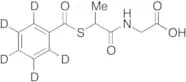
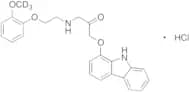
CAS:Controlled Product<p>Applications S-Benzoyl Tiopronin-d5 is labelled S-Benzoyl Tiopronin (B209585) which is used to prepare radiolabeled platelet GPIIb/IIIa receptor antagonists as imaging agents for the diagnosis of thromboembolic disorders.<br>References DeGrado, W., et al.: PCT Int. Appl., WO 9422494 A1 19941013 (1994)<br></p>Formula:C12D5H8NO4SColor and Shape:NeatMolecular weight:272.332Keto Carvedilol-d3 Hydrochloride
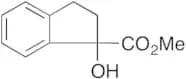
CAS:Controlled ProductFormula:C24H22D3ClN2O4Color and Shape:NeatMolecular weight:150.6032,3-Dihydro-1-hydroxy-1H-indene-1-carboxylic Acid Methyl Ester
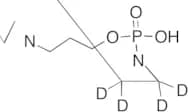
CAS:Controlled ProductFormula:C11H12O3Color and Shape:NeatMolecular weight:192.2113-(Aziridin-1-yl)propyl Hydrogen Aziridin-1-ylphosphonate-d4
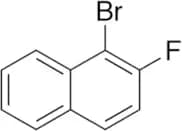
Controlled ProductFormula:C7D4H11N2O3PColor and Shape:NeatMolecular weight:210.2041-Bromo-2-fluoronaphthalene
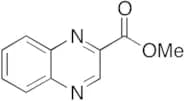
CAS:Controlled ProductFormula:C10H6BrFColor and Shape:NeatMolecular weight:225.062-Quinoxalinecarboxylic Acid Methyl Ester
CAS:Controlled Product<p>Applications 2-Quinoxalinecarboxylic Acid Methyl Ester has been used as a reactant in the synthesis of quinoxaline derivatives that show antimycobacterial activity, while displaying minor activity itself. In addition to having the substructure that exhibits antitumor activity, it is also used in the design of guanine-guanine selective DNA cleaving agents.<br>References Seitz, L.E. et al.: J. Med. Chem., 45, 5604 (2002); Toshima, K. et al.: Chem. Comm., 3, 212 (2002);<br></p>Formula:C10H8N2O2Color and Shape:NeatMolecular weight:188.18(2E)-2-Hexenoic Acid (3Z)-3-Hexenyl Ester
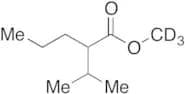
CAS:Controlled ProductFormula:C12H20O2Color and Shape:NeatMolecular weight:196.286rac 2-Isopropyl Pentanoic Acid Methyl Ester-d3
CAS:Controlled ProductFormula:C9H15D3O2Color and Shape:NeatMolecular weight:270.3663-Hydroxylauric Acid
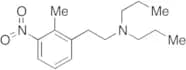
CAS:<p>Applications 3-Hydroxylauric Acid is used in the study of Lipid A, a major constituent of the lipopolysaccharides, which are responsible for the toxicity of gram negative bacteria. Also used in the synthesis of olefins from β-hydroxy carboxylic acids.<br>References Ogawa, Y. et al.: Carb. Res., 220, 155 (1991); Hara, S. et al.: Tetrahedron Lett., 1545 (1975);<br></p>Formula:C12H24O3Color and Shape:NeatMolecular weight:216.3172N,N-Dipropyl-2-(2-methyl-3-nitrophenyl)ethylamine
CAS:Controlled Product<p>Applications N,N-Dipropyl-2-(2-methyl-3-nitrophenyl)ethylamine is an intermediate used to prepare 4-[2-(Di-n-propylamino)ethyl]-2(3H)-indolone and related compounds as a prejunctional dopamine receptor agonist.<br>References Gallagher, G., et al.: J. Med. Chem., 28, 1533 (1985); DeMarinis, R., et al.: J. Med. Chem., 29, 939 (1986)<br></p>Formula:C15H24N2O2Color and Shape:NeatMolecular weight:264.36N-[(4-Fluorophenyl)sulfonyl]-D-aspartic Acid 1,4-Dimethyl Ester
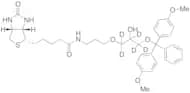
CAS:Controlled ProductFormula:C12H14FNO6SColor and Shape:NeatMolecular weight:319.3061-O-(4,4'-Dimethoxytrityl)-3-O-(N-biotinyl-3-aminopropyl)glycerol-d5
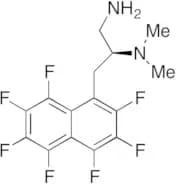
CAS:Controlled ProductFormula:C37D5H42N3O7SColor and Shape:NeatMolecular weight:682.881(S)-N2,N2-Dimethyl-3-(perfluoronaphthalen-1-yl)propane-1,2-diamine
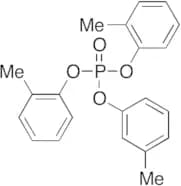
Controlled ProductFormula:C15H13F7N2Color and Shape:NeatMolecular weight:354.266Bis(o-cresyl) m-Cresyl Phosphate
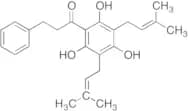
CAS:Controlled ProductFormula:C21H21O4PColor and Shape:NeatMolecular weight:368.372’,4’,6’-Trihydroxy-3’,5’-diprenyldihydrochalcone
CAS:Controlled Product<p>Applications 2’,4’,6’-Trihydroxy-3’,5’-diprenyldihydrochalcone, can be used in synthesis of new diterpene and new dihydrochalcone derivatives.<br>References Bohlmann, F., et al.: Phytochemistry (Elsevier), Vol. 19, P: 873-9 (1980);<br></p>Formula:C23H26O4Color and Shape:NeatMolecular weight:394.5031-(2-Hydroxyphenyl)-2-nitropropene
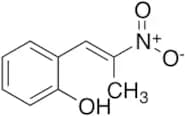
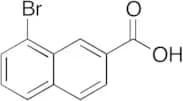
CAS:Controlled Product<p>Applications 1-(2-Hydroxyphenyl)-2-nitropropene (cas# 86029-73-4) is a useful research chemical.<br></p>Formula:C9H9NO3Color and Shape:NeatMolecular weight:179.1738-Bromonaphthalene-2-carboxylic Acid
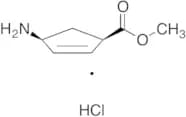
CAS:Controlled ProductFormula:C11H7BrO2Color and Shape:NeatMolecular weight:251.076(1R,4S)-4-Amino-2-cyclopentene-1-carboxylic Acid Methyl Ester Hydrochloride
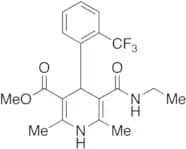
CAS:Controlled Product<p>Applications (1R,4S)-4-Amino-2-cyclopentene-1-carboxylic Acid Methyl Ester Hydrochloride is an intermediate used in the synthesis of ent-Abacavir (A105015), which is an enatiomer of Abacavir (A105000). Abacavir is a carbocyclic 2'-deoxyguanosine nucleoside reverse transcriptase inhibitor and an anti-HIV drug used to treat HIV infection (1). Intracellular enzymes convert Abacavir to its active form, carbovir-triphosphate (CBV-TP), which then selectively inhibits HIV reverse transcriptase by incorporating into viral DNA (2). Abacavir is metabolized in the liver by uridine diphosphate glucuronyltransferase and alcohol dehydrogenase resulting in inactive glucuronide and carboxylate metabolites, respectively.<br></p>Formula:C7H11NO2•HClColor and Shape:NeatMolecular weight:141.17 + 36.46Methyl 1,4-Dihydro-4-(2’-trifluoromethyl)phenyl-pyridine-3-carboxylate-5-ethyl Carboxamide
CAS:Controlled Product<p>Applications Methyl 1,4-Dihydro-4-(2’-trifluoromethyl)phenyl-pyridine-3-carboxylate-5-ethyl Carboxamide (cas# 887407-06-9) is a compound useful in organic synthesis.<br></p>Formula:C19H21F3N2O3Color and Shape:NeatMolecular weight:382.38



![N-[(4-Fluorophenyl)sulfonyl]-D-aspartic Acid 1,4-Dimethyl Ester](/_next/image/?url=https%3A%2Fstatic.cymitquimica.com%2Fproducts%2FTR%2Fthumb-webp%2FF595610.webp&w=3840&q=75)