Pharmaceutical Standards
Pharmaceutical standards are a comprehensive set of reference materials essential for ensuring the safety, efficacy, and quality of pharmaceutical products. This category includes standards for active pharmaceutical ingredients (APIs), which are the core components responsible for therapeutic effects. Additionally, it covers compounds and metabolites relevant to both the pharmaceutical and veterinary industries, providing benchmarks for the accurate measurement and analysis of these substances. Nitrosamine control standards are crucial for detecting and mitigating potentially harmful nitrosamines in drug formulations. Toxicology standards help assess the safety and potential adverse effects of pharmaceutical compounds. Furthermore, enzyme activators and inhibitors standards are vital for research and development, enabling precise studies of biochemical pathways and drug mechanisms. These pharmaceutical standards are indispensable tools for regulatory compliance, quality control, and research, ensuring that pharmaceutical products meet stringent safety and effectiveness criteria.
Subcategories of "Pharmaceutical Standards"
- APIs for research and impurities(273,404 products)
- Enzyme Activators and Inhibitors(2,827 products)
- Nitrosamines(2,606 products)
- Pharmaceutical and Veterinary Compounds and Metabolites(2,577 products)
- Toxicology(13,652 products)
Found 7836 products of "Pharmaceutical Standards"
Sort by
Purity (%)
0
100
|
0
|
50
|
90
|
95
|
100
4'-Hydroxy atomoxetine
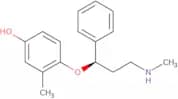
CAS:<p>4'-Hydroxyatomoxetine is a metabolite of atomoxetine, which is a drug that is used to treat attention deficit hyperactivity disorder and narcolepsy. 4'-Hydroxyatomoxetine has been shown to have pharmacological properties similar to those of atomoxetine. However, it does not bind to the κ-opioid receptors, unlike its parent drug. The analytical method for this metabolite has been developed using liquid chromatography with tandem mass spectrometry. The major limitation with the analytical method is that it can be affected by matrix effects and hepatic impairment. This metabolite is glucuronidated and then conjugated with trifluoroacetic acid (TFA) before excretion in urine or bile. It also binds to kappa-opioid receptors, but at a lower affinity than its parent compound.</p>Formula:C17H21NO2Purity:Min. 95%Color and Shape:PowderMolecular weight:271.35 g/molL-Proline-β-naphthylamide hydrochloride
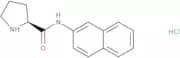
CAS:<p>L-proline analogue</p>Formula:C15H16N2O·HClPurity:Min. 95%Molecular weight:276.76 g/mol5-Octanoylsalicylic acid
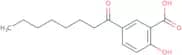
CAS:<p>5-Octanoylsalicylic acid is an anti-inflammatory and antioxidant agent that has been shown to have skin-conditioning properties. It has been found to be effective in the treatment of skin diseases, such as erythema, scaling, and itching, due to its ability to inhibit tyrosinase activity. 5-Octanoylsalicylic acid has also been shown to increase cellular proliferation and lymphocyte transformation in vitro. This compound is a precursor of all-trans-retinoic acid (a form of vitamin A), which is used for the treatment of acne. 5-Octanoylsalicylic acid can be synthesized from methyl ethyl ketone and potassium dichromate by a Friedel-Crafts reaction. It is also found in fruits such as apples, bananas, peaches, and oranges. Animal studies have shown that chronic oral administration may lead to a decrease in dehydroascorbic acid levels and an increased risk</p>Formula:C15H20O4Purity:Min. 95%Molecular weight:264.32 g/molDescyclopropyl abacavir
CAS:<p>Descyclopropyl abacavir is a synthetic prodrug form of the antiviral drug abacavir, which is used to treat HIV infection. It is metabolized by amine oxidases and, as such, has been shown to be a potent inhibitor of these enzymes. Descyclopropyl abacavir has also been shown to have herbicidal properties against control weeds and glyphosate-resistant weeds.</p>Formula:C11H14N6OPurity:Min. 95%Molecular weight:246.27 g/mol5,6-Epoxy-13-cis retinoic acid
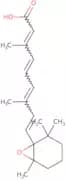
CAS:<p>5,6-Epoxy-13-cis retinoic acid (5,6-ER) is the most active metabolite of all-trans-retinoic acid. 5,6-ER binds to the nuclear receptor and acts as a transcription factor. It has been shown to inhibit the growth of several cancer cell lines in vitro, including T47D cells. 5,6-ER also has antacid properties and can be used for the treatment of inflammatory bowel disease. 5,6-ER is found in low concentrations in plasma and tissues and accumulates in high concentrations in rat liver microsomes. The major metabolic pathway includes hydrolysis by trifluoroacetic acid which produces 5,6 epoxyretinoyl coenzyme A (5,6 epoxyretinoyl CoA). This compound is then converted to 5,6 epoxyretinol by an unknown mechanism.</p>Formula:C20H28O3Purity:Min. 95%Molecular weight:316.43 g/mol9-Chloro-11β,17,21-trihydroxy-16β-methylpregna-1,4-diene-3,20-dione 17-valerate
CAS:Controlled Product<p>Prednisolone is a synthetic corticosteroid that is used in the treatment of a number of lung diseases, including asthma. Prednisolone is used to decrease the inflammation and swelling around the airways and lungs. Prednisolone is used to treat certain skin conditions, such as eczema and dermatitis. This drug also decreases the activity of the immune system by inhibiting production of substances that cause inflammation. The onset of action for prednisolone is typically one day with a duration of up to two weeks. It has been shown to be more effective when taken orally than when applied topically. It may be taken with or without food and can be given as an oral or an intravenous dose. Prednisolone tablets must be dissolved in water before they are placed under the tongue (sublingual). The tablets will dissolve quickly under the tongue, releasing prednisolone into your bloodstream. Enteric-coated tablets should not be crushed or chewed</p>Formula:C27H37ClO6Purity:Min. 95%Molecular weight:493.03 g/molValeric acid hydrazide
CAS:<p>Valeric acid hydrazide (VAH) is a monoclonal antibody that binds to the receptor molecule. The binding of VAH to the receptor molecule leads to a change in the reaction mechanism and prevents the initiation of an immune response. This drug has been shown to have therapeutic properties in a number of autoimmune diseases, such as rheumatoid arthritis and multiple sclerosis, by blocking the production of TNF-α and other inflammatory cytokines. Valeric acid hydrazide also shows biological properties against cancerous cells. It inhibits the growth factor activity, which is believed to be responsible for tumor formation and growth. This agent may also inhibit angiogenesis by preventing endothelial cell proliferation and migration.</p>Formula:C5H12N2OPurity:Min. 95%Molecular weight:116.16 g/molD-Aspartic acid b tert-butyl ester
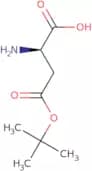
CAS:<p>D-Aspartic acid b tert-butyl ester (DATB) is an antimicrobial agent that has been shown to inhibit the growth of drug-resistant bacteria. DATB has been shown to be active against both gram-positive and gram-negative bacteria, with a selectivity for those with a peptidoglycan cell wall. DATB inhibits the synthesis of amide and peptide bonds and has been shown to have a wide range of uses in the production of antibiotics, such as carbamates and natural products.</p>Formula:C8H15NO4Purity:Min. 95%Color and Shape:PowderMolecular weight:189.21 g/mol3a-Hydroxy tibolone
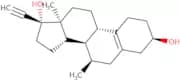
CAS:Controlled Product<p>Tibolone is a synthetic hormone that is used in the treatment of menopausal symptoms and breast cancer. Tibolone has been shown to be an effective treatment for menopausal symptoms, such as hot flashes and vaginal dryness, by providing relief from these symptoms. Tibolone has also been shown to have anti-cancer effects. This drug may be useful for treating breast cancer because it can inhibit the growth of cancer cells by binding to estrogen receptors and blocking estrogen-induced cell proliferation. Tibolone also stimulates angiogenesis, which is the formation of new blood vessels in order to provide nutrients and oxygen to growing tissue. It has been shown that this drug inhibits the synthesis of hepg2 cells in vitro, which are involved in the production of angiogenic factors. Tibolone may also have clinical relevance as a chemopreventive agent against prostate cancer.BR> Tibolone has also been shown to stimulate sulphatase activity in vitro, which may contribute to</p>Formula:C21H30O2Purity:Min. 95%Molecular weight:314.46 g/mol1,8-Dinitropyrene
CAS:<p>1,8-Dinitropyrene is a genotoxic and mutagenic potential agent. It has been shown to induce nitric oxide synthase activity in rat liver microsomes, which may be due to its ability to activate the redox potential of the cells. 1,8-Dinitropyrene also induces enzyme activities such as p450 and nitroreductase in rat liver microsomes. This chemical has an analytical detection limit of 0.05 ppm and can be used as a marker for environmental exposure. 1,8-Dinitropyrene is genotoxic and carcinogenic in rats but not mice. It has been shown to induce mutations at the thymidine position of calf-thymus DNA and is potent inducer of genetic mutation in vitro.</p>Formula:C16H8N2O4Purity:Min. 95%Color and Shape:PowderMolecular weight:292.25 g/mol4-Fluoro-3-nitropyridine
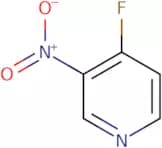
CAS:<p>4-Fluoro-3-nitropyridine is a reactive chemical that can react with alcohols, amines, and amino acids. It has been shown to have absorption spectra in the ultraviolet region of the light spectrum. 4-Fluoro-3-nitropyridine is also a pyridine derivative.</p>Formula:C5H3FN2O2Purity:Min. 95%Color and Shape:Off-White PowderMolecular weight:142.09 g/mol17a-Methyl-4-[(phenylthio)methyl]testosterone
CAS:Controlled Product<p>Please enquire for more information about 17a-Methyl-4-[(phenylthio)methyl]testosterone including the price, delivery time and more detailed product information at the technical inquiry form on this page</p>Formula:C27H36O2SPurity:Min. 95%Molecular weight:424.64 g/molγ-Decalactone
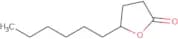
CAS:<p>gamma-Decalactone is a cationic surfactant that is biosynthesized by the addition of an alkynyl group to isovaleric acid. It has been shown to have antimicrobial properties against type strain and wild-type strains of Escherichia coli, as well as Pseudomonas aeruginosa. The nmr spectra of gamma-Decalactone show a type of carbon source that may be natural compounds or fatty acids. Gamma-Decalactone can form through the action of pancreatic lipase on fatty acids, which are found in the pancreas. When gamma-Decalactone was tested for its ability to inhibit hydrogen bonding interactions, it was found to have no effect on these interactions.</p>Formula:C10H18O2Purity:Min. 95%Color and Shape:Clear LiquidMolecular weight:170.25 g/mol6-Hydroxy oxymorphone
CAS:Controlled Product<p>Oxymorphone is a potent synthetic opioid analgesic with a short duration of action. It is a prodrug that has to be metabolized in the liver by cytochrome P450 enzymes for activation. The 6-hydroxy metabolite is more potent than oxymorphone itself and has been shown to have antinociceptive properties in mice. Oxymorphone is used in cancer patients as an oral dosage form, which may be administered with or without food. It has been shown that the albumin concentration influences the pharmacokinetics of oxymorphone and its metabolites. This drug also has immunomodulatory effects and can cause adverse events such as hypersensitivity reactions, nausea, vomiting, or constipation.</p>Formula:C17H21NO4Purity:Min. 95%Molecular weight:303.35 g/mol4'-Chloroacetophenone
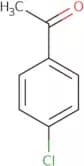
CAS:<p>4'-Chloroacetophenone is a chemical substance that is used in the synthesis of other substances. It has been shown to be an effective tool for cell-specific reactions, such as methyl ketones and benzaldehyde. 4'-Chloroacetophenone reacts with hydrochloric acid and palladium complexes to produce electron reduction, which leads to the activation of methyl ketones. This reaction provides a method for synthesizing molecules with a carbonyl group. The isolated yield of this reaction is dependent on the reaction solution temperature and concentration. The mechanism of this reaction appears to be Suzuki coupling reaction.</p>Formula:C8H7ClOPurity:Min. 95%Color and Shape:Clear Colourless To Pale Yellow LiquidMolecular weight:154.59 g/mol(17a)-3-Ethynyl-19-norpregna-3,5-dien-20-yn-17-ol
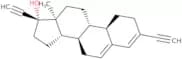
CAS:Controlled Product<p>Please enquire for more information about (17a)-3-Ethynyl-19-norpregna-3,5-dien-20-yn-17-ol including the price, delivery time and more detailed product information at the technical inquiry form on this page</p>Formula:C22H26OPurity:Min. 95%Molecular weight:306.44 g/molO-tert-Butyl-D-tyrosine
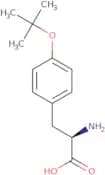
CAS:<p>O-tert-Butyl-D-tyrosine is an organogelator. It is a low molecular weight organic liquid that can form a gel when mixed with a solvent. O-tert-Butyl-D-tyrosine is soluble in hydrophobic solvents such as butanol, and insoluble in water. The gelation properties of this substance are due to its ability to interact with the surface of the solvent droplet and form a network that holds other solute molecules in place. This interaction is called physisorption, which means that it does not need any chemical bonds to form the gel. Gels formed by O-tert-Butyl-D-tyrosine are stable at room temperature, but will melt when heated or exposed to pH extremes.</p>Formula:C13H19NO3Purity:Min. 95%Molecular weight:237.29 g/mol6-O-Methyl codeine
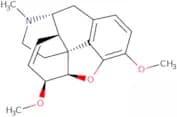
CAS:Controlled Product<p>6-O-Methyl codeine is a drug that belongs to the class of opioid analgesics. It is used to treat severe pain and coughing in patients with infectious diseases, such as pneumonia or bronchitis. 6-O-Methyl codeine may be administered by mouth, intravenously, or intramuscularly. The mechanism of action of this drug is not fully understood, but it has been shown to decrease respiratory rate in some animal studies. 6-O-Methyl codeine also has an effect on the central nervous system and may cause dizziness, drowsiness, nausea, vomiting and constipation. This drug is metabolized through oxidative reactions with oxygenated molecules like fluorine or hydrogenated aromatic hydrocarbons. 6-O-Methyl codeine is a prodrug that can be converted into morphine following cleavage by liver enzymes.</p>Formula:C19H23NO3Purity:Min. 95%Molecular weight:313.39 g/mol(6a,11b,16a)-21-(Acetyloxy)-9-bromo-6-fluoro-11-hydroxy-16-methyl-pregna-1,4-diene-3,20-dione
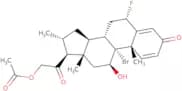
CAS:Controlled Product<p>Please enquire for more information about (6a,11b,16a)-21-(Acetyloxy)-9-bromo-6-fluoro-11-hydroxy-16-methyl-pregna-1,4-diene-3,20-dione including the price, delivery time and more detailed product information at the technical inquiry form on this page</p>Formula:C24H30BrFO5Purity:Min. 95%Molecular weight:497.39 g/molPregna-1,4,9(11),16-tetraene-3,20-dione
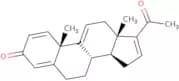
CAS:Controlled Product<p>Pregna-1,4,9(11),16-tetraene-3,20-dione is a controlled product that is widely used in the industrial sector. It is a phosphoric compound that has various applications. This chemical compound acts as a chemokine and contains active agents such as tryptamine and aldehyde monophosphate. Pregna-1,4,9(11),16-tetraene-3,20-dione is also known to be a mouse metabolite and has been found to have properties similar to naphthalene and phenylethylamine. With its acidic nature and oxygen-containing structure, this compound can be easily purified through recrystallization. It exists in different tautomeric forms, making it highly versatile for various applications in different industries.</p>Formula:C21H24O2Purity:Min. 95%Molecular weight:308.41 g/mol





![17a-Methyl-4-[(phenylthio)methyl]testosterone](/_next/image/?url=https%3A%2Fstatic.cymitquimica.com%2Fproducts%2F3D%2Fthumb-webp%2FFM25693.webp&w=3840&q=75)