Glycoscience
Glycoscience is the study of carbohydrates and their derivatives, as well as the interactions and biological functions they participate in. This field of research is crucial for understanding a wide variety of biological processes, including cell recognition, signaling, immune response, and disease development. Glycoscience has important applications in biotechnology, medicine, and the development of new drugs and therapies. At CymitQuimica, we offer a wide selection of high-quality, high-purity products for glycoscience research. Our catalog includes monosaccharides, oligosaccharides, polysaccharides, glycoconjugates, and specific reagents, designed to support researchers in their studies on the structure, function, and applications of carbohydrates in biological systems. These resources are intended to facilitate scientific discoveries and practical applications in various areas of bioscience and medicine.
Subcategories of "Glycoscience"
- Aminosugars(108 products)
- Glyco-Related Antibodies(282 products)
- Glycolipids(46 products)
- Glycosaminoglycans (GAGs)(55 products)
- Glycosides(419 products)
- Monosaccharides(6,621 products)
- Oligosaccharides(3,681 products)
- Polysaccharides(503 products)
Found 11041 products of "Glycoscience"
Sort by
Purity (%)
0
100
|
0
|
50
|
90
|
95
|
100
Tetradecyl b-D-maltopyranoside
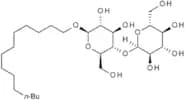
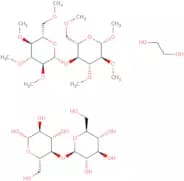
CAS:<p>Tetradecyl b-D-maltopyranoside is a crystalline polymer of high molecular weight that is made up of repeating units of tetradecyl b-D-maltose. It has a lamellar morphology and can be sectioned with techniques such as electron microscopy, X-ray diffraction, and differential scanning calorimetry. Tetradecyl b-D-maltopyranoside is a metastable form of the compound. It has been found in nature in the form of the monomer unit, tetradecyl maltosyl (tetramethyleneglycol) b-d-maltoside. In order to produce this compound as a polymer, it must first be heated to about 160°C for several hours, which causes the monomers to assemble into chains of tetrahedrons. The properties of tetradecyl b-D-maltopyranoside depend on its environment</p>Formula:C26H50O11Purity:Min. 95 Area-%Color and Shape:PowderMolecular weight:538.67 g/molDipyridamole di-O-b-D-glucuronide
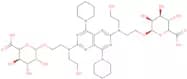
CAS:<p>Dipyridamole di-O-b-D-glucuronide is a fluorinated oligosaccharide that has been synthesized using the click chemistry reaction. It is a monosaccharide that has been glycosylated and modified with methyl groups to produce a high purity product. The carbohydrate consists of one or more sugar units linked by glycosidic bonds. Carbohydrates are classified by their number of sugar units and by the presence of other chemical groups such as phosphate, sulfate, or hydroxyl. This product is also used in the synthesis of complex carbohydrates and polysaccharides.</p>Formula:C36H56N8O16Purity:Min. 95%Molecular weight:856.87 g/molTetragalacturonic acid
CAS:<p>Tetragalacturonic acid (α-1,4 galacturonotetraose) is derived from pectin or pectic acid by enzymatic or partial acid hydrolysis (Combo, 2012). It is used inâ¯galacturonic acidâ¯metabolism research as a substrate to identify, differentiate, and characterize endo- and exopolygalacturonase(s), and gluconase(s) (Jayani, 2005). The addition of very short fragments of homogalacturonan, tri-galacturonate, and tetra-galacturonate oligosaccharides restores development in dark-grown, de-etiolated seedling mutants, suggesting that they are unable to generate de-methylesterified pectin fragments. A model of spatiotemporally separated photoreceptive and signal-responsive cell types has been proposed, that contains overlapping subsets of the regulatory network of light-dependent seedling development (Sinclair, 2017).</p>Formula:C24H34O25Purity:(%) Min. 95%Color and Shape:White PowderMolecular weight:722.51 g/mol4-Nitrobenzyl β-D-thiogalactopyranoside
CAS:<p>4-Nitrobenzyl b-D-thiogalactopyranoside is a synthetic glycosylation agent that can be used for the modification of saccharides and oligosaccharides. The product is available in different purity grades, custom synthesis, and custom modifications.</p>Formula:C13H17NO7SPurity:Min. 95%Molecular weight:331.34 g/molHeparin derived dp6 saccharide ammonium salt
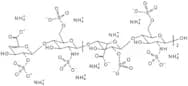
<p>Heparin derived dp6 saccharide ammonium salt is a glycosylation product of heparin. It is a synthetic glycosaminoglycan consisting of alternating units of N-acetylglucosamine and glucuronic acid. This compound is highly water soluble and has been shown to be stable at pH 3-7 for up to 6 hours. The compound has also been subjected to a number of modifications, including methylation, click modification, fluorination, saccharide modification, sugar modification, and oligosaccharide synthesis. The structural formula of this compound can be found in the Chemical Abstracts Service (CAS) number: 234764-56-2 with a molecular weight of 735.81 g/mol. Custom synthesis is available on request.</p>Purity:Approx.75%Color and Shape:PowderMolecular weight:~1800 (Average)2,4-Dinitrophenyl 3,4,6-tri-O-acetyl-2-deoxy-2-fluoro-b-D-galactoside
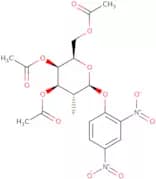
CAS:<p>2,4-Dinitrophenyl 3,4,6-tri-O-acetyl-2-deoxy-2-fluoro-b-D-galactoside is a glycosidase inhibitor that is used in the validation of β-glucosidases. It has been shown to inhibit the activity of a number of glycosidases, including α-, β-, and γ-. 2,4-Dinitrophenyl 3,4,6-tri-O-acetyl -2 -deoxy -2 -fluoro -b D galactoside inhibits the hydrolysis of oligosaccharides containing a terminal α-- or β--glucose moiety to produce smaller sugars. This compound can be used as an acceptor for spectrophotometric assays and as an analytical standard for measuring the degree of polymerization (DP) of oligosaccharides. The rate of its reaction with gly</p>Formula:C18H19FN2O12Purity:Min. 95%Color and Shape:PowderMolecular weight:474.35 g/mol6-Phosphogluconic acid trisodium
CAS:<p>6-Phosphogluconic acid trisodium is a synthetic, non-natural glycosylation product that is used as a building block in the synthesis of complex carbohydrates. It can be fluorinated or methylated, and modified with a click reaction to produce various derivatives. The compound has been shown to have high purity and is readily available from commercial suppliers.</p>Formula:C6H13O10P•Na3Purity:Min. 95%Molecular weight:345.1 g/molNystatin A3
CAS:<p>8,9-Dideoxy-28,29-dihydro-7,10-dihydroxy-35-O-(2,6-dideoxy-L-ribo-hexopyranosyl)amphotericin B is an antifungal drug that belongs to the class of polyene macrolides. It is a potent inhibitor of Candida albicans and Candida glabrata. This compound has been shown to have synergistic effects when used in combination with nystatin against C. albicans. 8,9-Dideoxy-28,29-dihydro-7,10-dihydroxy-35O-(2,6 - dideoxy - L - ribo - hexopyranosyl)amphotericin B also inhibits toll like receptor 4 (TLR4), which is responsible for the induction of inflammatory cytokines such as IL1B and IL8</p>Formula:C53H85NO20Purity:Min. 95%Molecular weight:1,056.24 g/mol(Hydroxypropyl)methyl cellulose, viscosity 5 cP 80%-120%, 2% aqueous solution
CAS:<p>Please enquire for more information about (Hydroxypropyl)methyl cellulose, viscosity 5 cP 80%-120%, 2% aqueous solution including the price, delivery time and more detailed product information at the technical inquiry form on this page</p>Purity:Min. 95%α-D-Thiomannose sodium
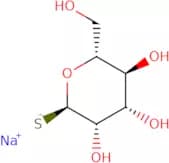
CAS:<p>A thio-sugar</p>Formula:C6H11O5SNaPurity:Min. 95 Area-%Color and Shape:White PowderMolecular weight:218.21 g/molMono-(6-(diethylenetriamine)-6-deoxy)-β-Cyclodextrin
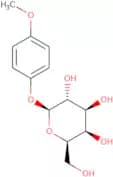
CAS:<p>Please enquire for more information about Mono-(6-(diethylenetriamine)-6-deoxy)-β-Cyclodextrin including the price, delivery time and more detailed product information at the technical inquiry form on this page</p>Formula:C46H81N3O34Purity:Min. 95%Molecular weight:1,220.1 g/mol4-Methoxyphenyl β-D-galactopyranoside
CAS:<p>4-Methoxyphenyl b-D-galactopyranoside is a custom synthesis of a sugar with an active methyl group. It is synthesized by the Click modification of 4-hydroxyphenyl b-D-galactopyranoside and has been fluorinated. The glycosylation process has been carried out using glycone as a precursor to modify the monosaccharide and oligosaccharide. This product has a CAS number of 3150-20-7 and is considered a synthetic compound.</p>Formula:C13H18O7Purity:Min. 95%Color and Shape:PowderMolecular weight:286.28 g/mol6'-Sialyllactose-BSA
<p>Sialyllactose-BSA is a complex carbohydrate that is used in the synthesis of saccharides. It has been modified with fluorination to create a 6'-sialyllactose-BSA, which is a monosaccharide. This product can be custom synthesized and it's purity is high. The product can be methylated or glycosylated, and it has been click-modified for fluorescence labeling.</p>Purity:Min. 95%Color and Shape:PowderMolecular weight:72,318 g/molMethyl 2-deoxy-L-ribofuranoside
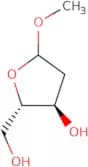
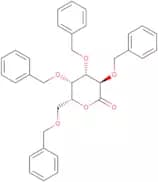
CAS:<p>Methyl 2-deoxy-L-ribofuranoside is an intermediate in the synthesis of l-arabinose. It can be obtained by the reaction of methyl 2,3-dideoxy-D-ribofuranoside with pivaloyl chloride. The antiviral activity of this compound has been shown by its ability to inhibit the replication of influenza A virus. Methyl 2-deoxy-L-ribofuranoside is a fluorinating agent that can be used for the synthesis of oligosaccharides and nucleosides. This intermediate also serves as a substrate for a number of organic reactions, including regioselective and stereoselective chlorination.</p>Formula:C6H12O4Purity:Min. 95%Color and Shape:PowderMolecular weight:148.16 g/mol2,3,4,6-Tetra-O-benzyl-5-thio-D-glucono-1,5-lactone
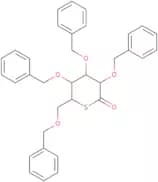
CAS:<p>2,3,4,6-Tetra-O-benzyl-5-thio-D-glucono-1,5-lactone is a complex carbohydrate that can be modified with methylation and glycosylation. It is a saccharide that can be modified by fluorination and click modification. This compound is synthesized by the polymerization of allose in the presence of an enzyme to produce 2,3,4,6-tetra-O-(benzyloxymethyl)-5-thio--D--glucono--1,5--lactone.</p>Formula:C34H34O5SPurity:Min. 95%Molecular weight:554.7 g/molPachyman - from Poria cocos
CAS:<p>Poria cocos is an edible medicinal fungus known as “Fuling” in Chinese that has been used as a Chinese traditional medicine for more than two thousand years. Polysaccharide material is the most abundant organic substance in the fungus, accounting for about 85% of the total and is a mixture of polysaccharides with the major component being Pachyman, a β-glucan with a 1,3 backbone and 1,6 side chains. It is reported that Pachyman has a wide range of biological activities including antitumour, immunomodulatory, anti-inflammatory and antioxidative properties. Pachyman is a beta-glucan with a 1,3 backbone and 1,6 side chains of fungal origin (Poria cocos).<br>The image was kindly provided by Dr. Chris Lawson.</p>Purity:Min. 95%Color and Shape:White PowderGlycosylceramide - from plant origin
CAS:<p>Glucosylceramide (Glc-Cer) is the common precursor in the biosynthesis of most glycosphingolipids, with exception of some Gal-Cer derivatives, such as, GM4. Glucosylceramide consists of a glucosyl moiety which is β-O-glycosydically linked to ceramide, which itself, consists of the long-chain aminoalcohol sphingosine and a fatty acid. Glucosylceramide (also called glucocerebroside) is synthesised enzymatically, by the glucosylceramide synthase-catalysed with the addition of a glucose residue to ceramide. Glucosylceramide is involved in the regulation of various cellular events and also serves as a main constituent in liposome formulations.</p>Formula:C40H75NO9Purity:Min. 95%Molecular weight:714.02 g/molD-Gluconic acid sodium salt
CAS:<p>D-Gluconic acid sodium salt is a glycol ether that is used as an injection solution. It has been shown to have antibacterial efficacy against wild-type strains of bacteria such as Escherichia coli, Pseudomonas aeruginosa, and Staphylococcus aureus. The in vitro antimicrobial action of D-gluconic acid sodium salt was found to be due to its ability to inhibit bacterial growth by interfering with the synthesis of DNA. D-Gluconic acid sodium salt also has been shown to have antihypertensive effects in rats through the inhibition of angiotensin II type 1 receptor (AT1) signaling pathway and erythrocyte proliferation. This drug also has been shown to bind benzalkonium chloride and x-ray diffraction data show that it is crystalline in nature. The analytical method for determining the concentration of D-gluconic acid sodium salt is by electrochemical impedance</p>Formula:C6H11NaO7Purity:Min. 95%Color and Shape:White PowderMolecular weight:218.14 g/mol6-Monodeoxy-6-monoamino-γ-cyclodextrin,
CAS:<p>This gamma-cyclodextrin (γ-CD) derivative is a modified cyclic oligosaccharide composed of eight glucose units, featuring a larger cavity size than α- and β-cyclodextrins. This structural characteristic allows γ-CDs to form inclusion complexes with a wider range of guest molecules, making it particularly versatile in various industries. In the food sector, it is used as a carrier and stabilizer for flavors, fat-soluble vitamins, and polyunsaturated fatty acids, protecting volatile compounds from evaporation. In pharmaceuticals, it enhances the solubility and bioavailability of poorly water-soluble drugs and, thanks to its larger ring size, allows for the encapsulation of larger molecules or even entire drug molecules. γ-CDs and derivatives are also used for environmental remediation and, in analytical chemistry, for the extraction and concentration of target substances.</p>Formula:C48H81NO39Purity:Min. 95%Molecular weight:1,296.14 g/molMethyl 2-hydroxyethyl cellulose
CAS:Controlled Product<p>Methyl 2-hydroxyethyl cellulose (MEC) is a synthetic substance that is used as a thickening and emulsifying agent in many products, including foods, pharmaceuticals, and cosmetics. MEC has been shown to inhibit the activity of certain enzymes, such as amylase, lipase, and protease. In addition to these properties, MEC is also known for its high degree of thermal stability and light resistance. This product can be used in a wide range of applications due to its versatility and low cost.</p>Formula:C34H66O24Purity:Min. 95%Color and Shape:White/Off-White SolidMolecular weight:858.87 g/molL-Hexaguluronic acid hexasodium
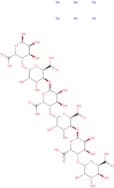
CAS:<p>Please enquire for more information about L-Hexaguluronic acid hexasodium including the price, delivery time and more detailed product information at the technical inquiry form on this page</p>Formula:C36H50O37•Na6Purity:Min. 95%Molecular weight:1,212.7 g/mol2-Deoxy-2-fluoro-D-fucose
<p>2-Deoxy-2-fluoro-D-fucose is a custom synthesis, which is a complex carbohydrate. It has CAS No. and polysaccharide modification and can be methylated, glycosylated, or fluorinated. The molecular weight of this product is high purity and it can be used as a sugar or carbohydrate. Click modification is possible with 2-deoxy-2 fluoro-D-fucose.</p>Formula:C6H11FO4Purity:Min. 95%Color and Shape:PowderMolecular weight:166.15 g/mol2-Deoxy-D-glucono-1,5-lactone
CAS:<p>2-Deoxy-D-glucono-1,5-lactone is a crystalline compound that is isolated from the hydrolysis of D-gluconic acid. This compound has been found to be a diastereoisomeric product with a lactone ring and an epimerization process. It can also be synthesized by reacting epichlorohydrin with potassium hydroxide in the presence of a hydroxy group. 2DG is an elimination product of 2-deoxyglucose and has been shown to have antihyperglycemic effects due to its ability to inhibit glucose synthesis in the liver and muscle cells. This compound also inhibits protein synthesis in bacteria, which may lead to cell death.</p>Formula:C6H10O5Purity:Min. 95%Molecular weight:162.14 g/molMethyl 2-azido-3,4,6-tri-O-acetyl-2-deoxy-b-D-mannopyranoside
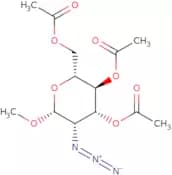
CAS:<p>Methyl 2-azido-3,4,6-tri-O-acetyl-2-deoxy-bD mannoside is a custom synthesis that can be modified to suit the needs of the customer. It is an oligosaccharide and polysaccharide that has been modified with methylation and glycosylation. This product has CAS No. 97604-59-6 and is available for purchase in high purity with a purity level of at least 95%. Methyl 2-azido-3,4,6-triO acetyl -2 deoxy b D mannoside has been fluorinated to create a synthetic sugar.</p>Formula:C13H19N3O8Purity:Min. 95%Color and Shape:White PowderMolecular weight:345.31 g/mol1,3,4,6-Tetra-O-acetyl-2-O-benzyl-a-D-mannopyranose
CAS:<p>1,3,4,6-Tetra-O-acetyl-2-O-benzyl-a-D-mannopyranose (1) is a high purity monosaccharide that can be custom synthesized to meet the needs of your research. 1 is a synthetic compound that is fluorinated and glycosylated. It has been shown to be an efficient methylation and modification agent for saccharide synthesis. It also acts as a building block for oligosaccharides and complex carbohydrates.</p>Formula:C21H26O10Purity:Min. 95%Molecular weight:438.43 g/molChondroitin sulphate
CAS:<p>Chondroitin sulphate is an inhibitor that has been extensively studied in human and animal models. This active agent has been shown to have a protein inhibitory effect on epithelial cells, as well as an inhibitory effect on cell growth in Chinese medicine and Chinese medicinal plants. Chondroitin sulphate has been found to exhibit inhibitory activity against endothelial cells, which may be due to its ability to inhibit the nuclear translocation of NF-κB. This compound can be detected by liquid chromatography and has been shown to have a significant inhibitory effect on the proliferation of HepG2 cells. Overall, chondroitin sulphate shows great potential for use in healthcare products aimed at regulating cell growth and inflammation.</p>Purity:ReportedColor and Shape:Powder3'-methoxy apiin;Chrysoeiol-7-(2-O-apiosylglucoside)
CAS:<p>Please enquire for more information about 3'-methoxy apiin;Chrysoeiol-7-(2-O-apiosylglucoside) including the price, delivery time and more detailed product information at the technical inquiry form on this page</p>Purity:Min. 95%Glucose dehydrogenase
CAS:<p>Glucose Dehydrogenase is an enzyme, which is typically derived from microbial sources such as bacteria and fungi. It functions by catalyzing the oxidation of glucose to gluconolactone, concurrently reducing a cofactor such as NAD⁺ or PQQ. This biochemical reaction is critical in various analytical applications due to its specificity and efficiency in glucose detection.Glucose Dehydrogenase is widely employed in the development of biosensors and diagnostic assays. Its primary application is in blood glucose monitoring devices, where its ability to accurately quantify glucose levels is crucial for managing diabetes. Additionally, it is utilized in research and development settings for biochemical assays that require precise glucose measurements. The enzyme's rapid and specific action on glucose molecules makes it an indispensable tool in both clinical and laboratory environments, contributing to advancements in biosensing technologies and metabolic studies.</p>Galacto-RGD trifluoroacetate salt
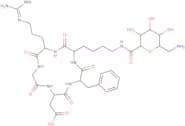
CAS:<p>Please enquire for more information about Galacto-RGD trifluoroacetate salt including the price, delivery time and more detailed product information at the technical inquiry form on this page</p>Formula:C34H52N10O12Purity:Min. 95%Color and Shape:PowderMolecular weight:792.84 g/molBacillithiol trifluoroacetic acid salt
CAS:<p>Bacillithiol (BSH) is a low molecular weight thiol molecule produced in Bacilli, which is also found in Firmicutes bacteria. It plays an important role in maintaining the balance of reactive oxygen species within cells and detoxifying certain harmful compounds. It is the α-anomeric glycoside of L-cysteinyl-D-glucosamine with L-malic acid and it seems to have antioxidant properties. Bacillithiol plays an important role in bacterial redox homeostasis and plays an important role in the detoxification of electrophiles as it is a cofactor for FosB (thiol transferase). <br>This is the salt form (trifluoroacetic acid salt, TFA) of Bacillithiol.</p>Formula:C13H22N2O10S·CF3CO2HPurity:Min. 95 Area-%Color and Shape:Colorless Clear LiquidMolecular weight:512.41 g/molGlobotriose-sp-biotin
<p>Globotriose-sp-biotin is a custom synthesis that contains a fluorinated, methylated, and modified monosaccharide. It is a synthetic oligosaccharide with glycosylation at the reducing end. Globotriose-sp-biotin can be used in the modification of polysaccharides and complex carbohydrates to improve their bioactivity. This product has a CAS number of 127798-73-5 and is listed as an Oligosaccharide under Glycosylations in the Carbohydrate section.</p>Purity:Min. 95%Color and Shape:PowderOnitin 2'-O-glucoside
CAS:<p>Onitin 2'-O-glucoside is a sugar that is custom synthesized and purified. It is a modification of oligosaccharides, complex carbohydrates, and polysaccharides. Onitin 2'-O-glucoside is an Oligosaccharide Carbohydrate which can be used in the synthesis of high purity monosaccharides and methylations. It also has the ability to form glycosylation with saccharides, such as glucose or fructose. This product can also be fluorinated to produce saccharides that are water soluble.</p>Purity:Min. 95%D-Gluconic acid potassium salt
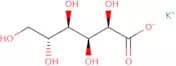
CAS:<p>D-Gluconic acid potassium salt is a glycol ether with biochemical properties that can be used to synthesize covalent linkages. It has been shown to have antimicrobial properties in wild-type strains of Escherichia coli and Salmonella typhimurium. D-Gluconic acid potassium salt has been shown to exhibit inhibitory effects on the synthesis of DNA, RNA, and protein, as well as enzyme activities. The matrix effect is an analytical method that measures the inhibition of bacterial growth in agar plates. Electrochemical impedance spectroscopy (EIS) is a technique that measures changes in electrical resistance when bacteria are placed on an electrode surface. This technique has been used to show that D-gluconic acid potassium salt exhibits inhibitory effects against group P2 enzymes, such as polymerase chain reaction (PCR), which is used for DNA replication and amplification.</p>Formula:C6H11KO7Purity:Min. 95%Molecular weight:234.25 g/molLacto-N-neodifucohexaose
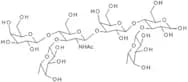
<p>Neutral difucosylated hexasasaccharide naturally present in human breast milk</p>Formula:C38H65NO29Purity:Min. 75%Color and Shape:PowderMolecular weight:999.93 g/molDiosmetin-7-O-b-D-glucopyranoside
CAS:<p>Diosmetin-7-O-b-D-glucopyranoside is a coumarin derivative that is found in the root of the Chinese herb Dioscorea tinctoria. It has been shown to have anti-inflammatory effects by inhibiting the expression of inflammatory genes, and it also has antioxidant properties. The chemical structure of diosmetin has been shown to be similar to protocatechuic acid, an important phenolic acid that can be found in wine and vinegar. Diosmetin has also been shown to inhibit mitochondrial apoptosis, which may contribute to its anti-cancer effects. Diosmetin has been shown to increase postprandial blood glucose levels in rats fed a high fat diet, and this effect may be due to its ability to inhibit peroxisome proliferator-activated receptor gamma (PPARγ) activity.</p>Formula:C22H22O11Purity:Min. 95%Color and Shape:PowderMolecular weight:462.4 g/mol2-Benzamido-2-deoxy-D-glucopyranose
CAS:<p>2-Benzamido-2-deoxy-D-glucopyranose is a synthetic, inexpensive, and non-toxic compound that has antibiotic properties. It is used as a reagent for the sulfonylating of aromatic rings and as an intermediate in the synthesis of other compounds. 2-Benzamido-2-deoxy-D-glucopyranose can be radiolabeled with carbon or fluorine atoms to form a resonance labeled probe that can be used in magnetic resonance spectroscopy.</p>Formula:C13H17NO6Purity:Min. 95%Color and Shape:White PowderMolecular weight:283.28 g/molLactose-PAA-biotin
<p>Lactose-PAA-biotin is a biotin linked to lactose by a polyacrylamide linker</p>Purity:Min. 95%Color and Shape:Powder2,3,4,6-Tetra-O-benzyl-D-galactono-1,5-lactone
CAS:<p>2,3,4,6-Tetra-O-benzyl-D-galactono-1,5-lactone is an aldehyde that has been synthesized from tert-butyl bromoacetate and ethynyl acetate in the presence of cesium carbonate. It is an exocyclic aldehyde that forms a cyclic ester with glycine. The synthetic pathway was stereoselective because the exocyclic double bond was only formed on one face of the molecule. This product can be used as an intermediate for the synthesis of glycine analogues and glycines.</p>Formula:C34H34O6Purity:Min. 95%Molecular weight:538.63 g/molGlucosamine L-5-methyltetrahydrofolate
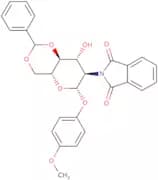
CAS:<p>Please enquire for more information about Glucosamine L-5-methyltetrahydrofolate including the price, delivery time and more detailed product information at the technical inquiry form on this page</p>Formula:C20H25N7O6•(C6H13NO5)2Purity:Min. 95%Molecular weight:817.8 g/mol4-Methoxyphenyl 4,6-O-benzylidene-2-deoxy-2-phthalimido-β-D-glucopyranoside
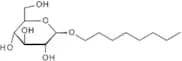
CAS:<p>4-Methoxyphenyl 4,6-O-benzylidene-2-deoxy-2-phthalimido-b-D-glucopyranoside is an organic compound with the formula C13H14N4O8. It is a white solid that is soluble in water, methanol and ethanol. The compound has been synthesized using Click chemistry, fluorination, glycosylation, and methylation of the sugar. It has also been modified with an oligosaccharide and monosaccharide to form a complex carbohydrate.</p>Formula:C28H25NO8Purity:Min. 98 Area-%Color and Shape:PowderMolecular weight:503.51 g/molOctyl D-glucopyranoside
CAS:<p>Octyl D-glucopyranoside is a glucoside that is used as an analytical reagent. It has been shown to have detergent properties and can be used for the extraction of proteins. Octyl D-glucopyranoside also has a high binding affinity for guanine nucleotides, protein, and glycol ethers. The rate constant for the reaction between octyl D-glucopyranoside with the guanine nucleotide was found to be 0.25 x 10^(-5) s^(-1). This product can be used in biochemical research and chromatographic analysis.</p>Formula:C14H28O6Purity:Min. 98 Area-%Color and Shape:White PowderMolecular weight:292.37 g/mola-D-Glucose
CAS:<p>Glucose is a monosaccharide that is an important source of energy for the human body. It is a simple sugar found in many carbohydrates and is the main form of fuel used by the brain. Glucose is also used as a chemical building block for polysaccharides such as glycogen, cellulose, and chitin. The hypoglycemic effect of glucose can be observed when blood glucose levels are below 70 mg/dL. This effect can be due to its ability to increase the production of insulin or decrease the rate of gluconeogenesis in liver cells. It also has been shown to have an inhibitory effect on some viruses and bacteria, which may be due to its ability to inhibit transcription activators or polymerase chain reactions.</p>Formula:C6H12O6Purity:Min. 96 Area-%Color and Shape:White PowderMolecular weight:180.16 g/molFerulic acid acyl-b-D-glucoside
CAS:<p>Ferulic acid acyl-b-D-glucoside is a flavonoid compound that has been shown to have antioxidant properties. It is found in plants and can be synthesized by the enzyme phenylalanine ammonia-lyase. Ferulic acid acyl-b-D-glucoside is insoluble in water, but soluble in organic solvents such as ethanol and acetone. The chemical composition of ferulic acid acyl-b-D-glucoside is not well understood, but it has been shown to contain chalcone, chlorogenic acids, aldehydes, celosianin, and betanidin.</p>Purity:Min. 95%D-Mannose tablets
CAS:<p>Please enquire for more information about D-Mannose tablets including the price, delivery time and more detailed product information at the technical inquiry form on this page</p>Formula:C6H12O6Purity:Min. 95%Color and Shape:PowderMolecular weight:180.16 g/mol1,4:3,6-Dianhydro-L-iditol
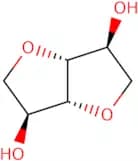
CAS:<p>1,4:3,6-Dianhydro-L-iditol is a synthetic compound that is used in pharmaceutical preparations and tissue culture. It has been shown to inhibit the growth of bacteria such as Staphylococcus aureus and Mycobacterium tuberculosis in vitro assays. The synthesis of 1,4:3,6-dianhydro-L-iditol involves intramolecular hydrogenation of fatty acids with alkanoic acids and the use of solid catalysts.</p>Formula:C6H10O4Purity:Min. 95%Molecular weight:146.14 g/molGlyco-diosgenin
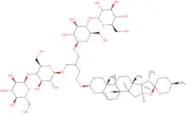
CAS:<p>Glyco-diosgenin is an amphipathic molecule that has been found to stabilize proteins. It has the potential to be developed as a drug target for stabilizing proteins in cells. Glyco-diosgenin was synthesized by chemical modification of diosgenin, which is a steroidal saponin found in plants. The chemical modification that occurred at the 3-hydroxyl position of glyco-diosgenin produced a more effective molecule due to increased solubility and decreased toxicity. The protein stabilization properties of glyco-diosgenin have been shown by cryo-electron microscopy on plant cells, titration calorimetry, and functional studies on various proteins.</p>Formula:C56H92O25Purity:Min. 97 Area-%Color and Shape:PowderMolecular weight:1,165.31 g/molb-D-Galactopyranosyl nitromethane
CAS:<p>b-D-Galactopyranosyl nitromethane is a high purity sugar with various modifications. It is custom synthesized to order and is available in various purity grades. This sugar can be modified by fluorination, glycosylation, methylation, or modification with oligosaccharides or monosaccharides. The CAS number for this sugar is 81846-64-2. b-D-Galactopyranosyl nitromethane High purity, Custom synthesis, sugar, Click modification, Fluorination, Glycosylation, Synthetic, Methylation, Modification, Oligosaccharide, Monosaccharide CAS No. 81846-64-2</p>Formula:C7H13NO7Purity:Min. 95%Molecular weight:223.2 g/mol4-C-[[(Methylsulfonyl)oxy]methyl]-3-O-benzyl-1,2-di-O-acetyl 5-methanesulfonate D-erythro-pentofuranose
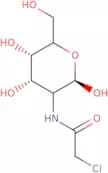
CAS:<p>Methyl 4-C-[[(methylsulfonyl)oxy]methyl]-3-O-benzyl-1,2-di-O-acetyl 5-methanesulfonate D-erythro-pentofuranose is a methylated saccharide used in the synthesis of LNA amidites</p>Formula:C19H26O12S2Purity:Min. 95%Color and Shape:PowderMolecular weight:510.53 g/mol2-N-Chloroacetyl-2-deoxy-D-glucosamine
CAS:<p>2-N-Chloroacetyl-2-deoxy-D-glucosamine is a high purity synthetic molecule that is custom synthesized to meet your needs. This product is a sugar with the following Click modification, fluorination, glycosylation, and methylation. 2-N-Chloroacetyl-2-deoxy-D-glucosamine has CAS No. 1334320-67-0. The molecular weight of this compound is 514.25 g/mol. This product can be used in the synthesis of oligosaccharides and monosaccharides as well as saccharides, which are complex carbohydrates.</p>Formula:C8H14ClNO6Purity:Min. 95%Color and Shape:PowderMolecular weight:255.65 g/molD-Fructose 1-phosphate barium salt trihydrate
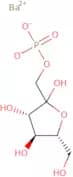
CAS:<p>D-Fructose 1-phosphate barium salt trihydrate is a custom synthesis, high purity sugar. It has been modified with fluorination, glycosylation, and methylation. D-Fructose 1-phosphate barium salt trihydrate is made from the modification of various sugars such as oligosaccharides and monosaccharides to form complex carbohydrates. It can be used for Click modification or in the synthesis of glycoconjugates. D-Fructose 1-phosphate barium salt trihydrate is also known as saccharide.</p>Formula:C6H11BaO9P·3H2OPurity:Min. 95%Color and Shape:Yellow PowderMolecular weight:449.49 g/mol




















![4-C-[[(Methylsulfonyl)oxy]methyl]-3-O-benzyl-1,2-di-O-acetyl 5-methanesulfonate D-erythro-pentofur…](/_next/image/?url=https%3A%2Fstatic.cymitquimica.com%2Fproducts%2F3D%2Fthumb-webp%2FMM76880.webp&w=3840&q=75)