Antimicrobials
Antimicrobials are agents that destroy or inhibit the growth of microorganisms, including bacteria, viruses, fungi, and parasites. These compounds are essential in the prevention and treatment of infections, playing a crucial role in medicine, agriculture, and the food industry. At CymitQuimica, we offer an extensive range of high-quality, high-purity antimicrobials suitable for various scientific and industrial applications. Our catalog includes antibiotics, antifungals, antivirals, and disinfectants, all designed to meet the needs of research and development, as well as clinical and production applications. With our products, professionals can ensure the effectiveness and safety in infection control and public health protection.
Subcategories of "Antimicrobials"
- Antibiotics(4,110 products)
- Antifungals(835 products)
- Antiparasitics(704 products)
- Antivirals(762 products)
Found 2422 products of "Antimicrobials"
Sort by
Purity (%)
0
100
|
0
|
50
|
90
|
95
|
100
MCB-3681
CAS:<p>MCB-3681 is a small-molecule inhibitor, which is synthesized through advanced chemical processes. It operates at a molecular level by selectively targeting and inhibiting specific cellular pathways involved in cancer cell proliferation. The compound's action is characterized by its ability to interfere with enzyme activity crucial for the survival and growth of malignant cells, thus inducing apoptosis and inhibiting tumor progression.</p>Formula:C31H32F2N4O8Purity:Min. 95%Molecular weight:626.6 g/molAtisinium chloride
CAS:<p>Atisinium chloride is an organometallic compound, which is synthesized through advanced coordination chemistry techniques. The source of this compound lies in the strategic combination of organic ligands with metal centers, facilitating unique interactions that are pivotal to its functionality. The mode of action primarily involves the ability to participate in complex catalytic cycles, engaging in electron transfer processes that are essential for mediating chemical transformations.<br><br>This compound finds applications in specialized fields such as catalysis, where it is utilized to promote and drive reactions that may be inefficient under normal conditions. Its effectiveness in altering reaction pathways and increasing selectivity makes it valuable in synthetic chemistry and industrial processes. Additionally, atisinium chloride's unique properties might be leveraged in materials science for the development of novel materials with tailored functionalities. The intricate balance of its reactive properties and stability under varying conditions makes it a subject of ongoing research for further applications.</p>Formula:C22H34ClNO2Purity:Min. 95%Molecular weight:379.96 g/molEnt-avibactam sodium
CAS:<p>Ent-avibactam sodium is a pharmacological agent, categorized as a beta-lactamase inhibitor, which is synthetically derived. This compound acts by binding to and inhibiting the action of beta-lactamase enzymes produced by certain bacteria, thereby preventing the breakdown of beta-lactam antibiotics. Consequently, it restores the effectiveness of these antibiotics against resistant strains.</p>Formula:C7H10N3NaO6SPurity:Min. 95%Molecular weight:287.23 g/molCefetrizole
CAS:<p>Please enquire for more information about Cefetrizole including the price, delivery time and more detailed product information at the technical inquiry form on this page</p>Formula:C16H15N5O4S3Purity:Min. 95%Molecular weight:437.5 g/molLeptomycin A
CAS:<p>Leptomycin A is a Streptomyces-produced inhibitor, which is derived from the bacterium Streptomyces spiroverticillatus. It functions by specifically binding to and inhibiting the CRM1 (exportin 1), a nuclear export receptor. This action blocks the nuclear export of proteins that contain a leucine-rich nuclear export signal (NES), thereby leading to their accumulation within the nucleus. The inhibition of CRM1 disrupts various cellular processes, including cell cycle regulation and signal transduction pathways.</p>Formula:C32H46O6Purity:Min. 95%Molecular weight:526.7 g/molHexazinone metabolite D
CAS:<p>Hexazinone metabolite D is a derivative compound that results from the biotransformation of Hexazinone, which is a systemic herbicide. This metabolite originates from the breakdown processes mediated by biological or environmental factors in ecosystems where Hexazinone is applied. Its mode of action involves the inhibition of photosynthesis by targeting photosystem II, ultimately reducing the transfer of electrons, which leads to the disruption of energy production in susceptible plant species.</p>Formula:C10H15N3O3Purity:Min. 95%Molecular weight:225.24 g/molMetolachlor mercapturate
CAS:<p>Metolachlor mercapturate is a metabolite of the herbicide Metolachlor, which is derived from the degradation of the primary active ingredient found in various agricultural herbicide formulations. It is formed through biotransformation processes in plants, soil, and water, where the parent compound undergoes enzymatic reactions leading to its metabolic products. The primary mode of action involves the inhibition of elongase enzymes, which are crucial for the synthesis of fatty acids in plants, thus preventing cell division and impacting weed growth effectively.</p>Formula:C20H30N2O5SPurity:Min. 95%Molecular weight:410.5 g/molOxohongdenafil
CAS:<p>Please enquire for more information about Oxohongdenafil including the price, delivery time and more detailed product information at the technical inquiry form on this page</p>Formula:C25H32N6O4Purity:Min. 95%Molecular weight:480.6 g/molSofosbuvir d6
CAS:<p>Sofosbuvir d6 is a deuterated antiviral drug used for the treatment of Hepatitis C virus (HCV) infection, which is synthesized chemically. This modification involves the replacement of hydrogen atoms with deuterium, a stable isotope of hydrogen, resulting in enhanced pharmacokinetic properties. By incorporating deuterium, the metabolic stability of the compound is improved due to the kinetic isotope effect, which slows down the metabolic degradation of the compound.</p>Formula:C22H29FN3O9PPurity:Min. 95%Molecular weight:535.5 g/molPicarbutrazox
CAS:<p>Picarbutrazox is a fungicide, which is a product derived from chemical synthesis designed to protect crops by inhibiting fungal growth. It works through a specific mode of action that targets and disrupts the biosynthesis of essential lipids within fungal cells. This disruption ultimately leads to the cessation of cell membrane formation, impeding the growth and proliferation of the fungi.</p>Formula:C20H23N7O3Purity:Min. 95%Molecular weight:409.4 g/molLenacapavir
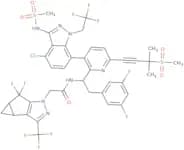
CAS:<p>Lenacapavir is a capsid inhibitor with a mode of action that interferes with the HIV capsid protein, disrupting multiple stages of the viral lifecycle. It is used for treating multidrug-resistant HIV infections.</p>Formula:C39H32ClF10N7O5S2Purity:Min. 95%Color and Shape:PowderMolecular weight:968.28 g/mol2-Amino-5-(4-hydroxy-3,5-dimethoxybenzyl)pyrimidin-4-ol
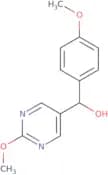
CAS:<p>2-Amino-5-(4-hydroxy-3,5-dimethoxybenzyl)pyrimidin-4-ol is a synthetic pyrimidine derivative, which is meticulously engineered through organic synthesis pathways. This compound emerges from a tailored chemical reaction involving the strategic manipulation of a pyrimidine core to incorporate specific functional groups. The unique structural configuration of this molecule allows it to interact with biological macromolecules, primarily through hydrogen bonding and pi-pi interactions, potentially influencing biochemical pathways.</p>Formula:C13H15N3O4Purity:Min. 95%Molecular weight:277.28 g/molThiosildenafil-despiperazine
CAS:<p>Thiosildenafil-despiperazine is a derivative of sildenafil, which is a phosphodiesterase type 5 (PDE5) inhibitor. This compound is synthesized through structural modifications of sildenafil, leading to alterations in its pharmacological profile and potential applications. The source of this derivative involves chemical synthesis techniques to modify the core structure of sildenafil, specifically targeting modifications in the piperazine ring and replacing it with a thioside group to enhance or alter desired effects.</p>Formula:C17H20N4O4S2Purity:Min. 95%Molecular weight:408.5 g/molDeoxylapachol
CAS:<p>Deoxylapachol is a naturally occurring metabolite, which is derived from the heartwood of certain Tabebuia tree species. It is a type of naphthoquinone, recognized for its biologically active properties. The mode of action of deoxylapachol involves the inhibition of certain enzymes and signaling pathways, contributing to its potential therapeutic effects. It disrupts cellular respiration and affects redox balance, which can lead to the selective targeting of certain pathogenic organisms and cancer cells.</p>Formula:C15H14O2Purity:Min. 95%Molecular weight:226.27 g/molGentamicin B sulfate
CAS:<p>Gentamicin B sulfate is an aminoglycoside antibiotic, which is produced through the fermentation process involving the actinomycete Micromonospora purpurea. This antibiotic functions primarily by binding to the 30S ribosomal subunit of bacteria, thereby inhibiting protein synthesis. This action disrupts the initiation of protein chain formation, ultimately leading to bacterial cell death. Gentamicin B sulfate is particularly effective against a variety of Gram-negative bacteria and some Gram-positive strains.</p>Formula:C19H40N4O14SPurity:Min. 95%Molecular weight:580.60 g/molMinocycline hydrochloride dihydrate
CAS:<p>Minocycline hydrochloride dihydrate is a broad-spectrum antibiotic, which is a synthetic derivative of tetracycline. It is sourced from chemical synthesis processes and possesses potent antimicrobial properties. The mode of action involves inhibiting bacterial protein synthesis by binding to the 30S ribosomal subunit, thereby preventing the addition of amino acids to the growing peptide chain. This mechanism effectively disrupts bacterial growth and replication.</p>Formula:C23H32ClN3O9Purity:Min. 95%Molecular weight:530 g/molSPR741
CAS:<p>SPR741 is an antimicrobial potentiator, which is derived from polymyxin B, an antibiotic sourced from the bacterium *Bacillus polymyxa*. Its mode of action involves permeabilizing the outer membrane of Gram-negative bacteria, allowing otherwise impermeable antibiotics to enter the bacterial cell. This potentiation effect significantly enhances the efficacy of co-administered antibiotics against resistant strains.</p>Formula:C44H73N13O13Purity:Min. 95%Molecular weight:992.1 g/molErythromycin propionate
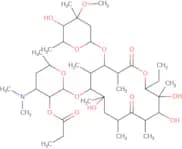
CAS:<p>Erythromycin propionate is an antibiotic, which is derived from the bacterium *Saccharopolyspora erythraea*. This compound functions by inhibiting protein synthesis in susceptible bacteria, specifically targeting the 50S ribosomal subunit. Erythromycin propionate achieves this by binding to the ribosomal RNA, thereby preventing the translocation step of protein elongation.</p>Formula:C40H71NO14Purity:Min. 95%Molecular weight:790 g/molPyraziflumid
CAS:<p>Pyraziflumid is a fungicide, which is chemically synthesized with a specific mode of action as a succinate dehydrogenase inhibitor (SDHI). This compound is designed to target mitochondrial complex II, disrupting critical energy production within fungal cells. The inhibition of succinate dehydrogenase prevents the fungi from efficiently undergoing respiration, ultimately leading to cell death.</p>Formula:C18H10F5N3OPurity:Min. 95%Molecular weight:379.3 g/molCarbazomycin D
CAS:<p>Carbazomycin D is a bioactive product classified as an antibiotic, which is derived from the bacterium Streptomyces. These actinomycetes are well-known for their ability to produce a wide range of secondary metabolites with antimicrobial properties. The mode of action of Carbazomycin D involves the inhibition of bacterial cell wall synthesis, effectively disrupting the growth and replication of gram-positive bacteria.</p>Formula:C17H19NO3Purity:Min. 95%Molecular weight:285.34 g/mol