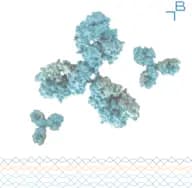
Primary Antibodies
Primary antibodies are immunoglobulins that bind specifically to an antigen of interest, allowing for the detection and quantification of proteins, peptides, or other biomolecules. These antibodies are critical tools in a wide range of applications, including Western blotting, immunohistochemistry, and ELISA. At CymitQuimica, we offer an extensive selection of high-quality primary antibodies that provide specificity and sensitivity for various research needs, including cancer, immunology, and cell biology studies.
Subcategories of "Primary Antibodies"
- Cancer Research Antibodies(3,606 products)
- Cardiovascular Antibodies(2 products)
- Developmental Biology(746 products)
- Epigenetics Antibodies(162 products)
- Immunology Antibodies(2,788 products)
- Metabolism Antibodies(277 products)
- Microbiology Antibodies(736 products)
- Signal Transduction(2,710 products)
- Tags & Cellular Markers(33 products)
Show 1 more subcategories
Found 69953 products of "Primary Antibodies"
Sort by
Purity (%)
0
100
|
0
|
50
|
90
|
95
|
100
STXBP1 antibody
<p>STXBP1 antibody is a highly specialized antibody used in the field of life sciences. It is commonly used for research purposes in the study of growth factors, insulin, and various other proteins. This antibody has shown efficacy in targeting specific proteins such as trastuzumab, an anti-HER2 antibody, and lipoprotein lipase. Additionally, it has been found to interact with interleukin-6 and epidermal growth factor.</p>Desmoglein 3 antibody
<p>Desmoglein 3 antibody is a polyclonal antibody that specifically targets the desmoglein 3 protein. Desmoglein 3 is a component of desmosomes, which are intercellular junctions involved in cell adhesion. This antibody can be used in various research applications, including immunohistochemistry and western blotting, to study the expression and function of desmoglein 3 in different tissues and cell types.</p>Rabbit IgG Heavy Chain antibody
<p>The Rabbit IgG Heavy Chain antibody is a pluripotent stem cell-derived antibody that plays a crucial role in various biological processes. It specifically targets the heavy chain of rabbit immunoglobulin G (IgG) and can be used as a powerful tool in research and diagnostic applications.</p>Cyclin B1 antibody
<p>The Cyclin B1 antibody is a monoclonal antibody that specifically targets and binds to Cyclin B1, a protein involved in cell cycle regulation. This antibody is commonly used in Life Sciences research for various applications such as immunohistochemistry, western blotting, and flow cytometry. It has been shown to be highly specific and sensitive in detecting Cyclin B1 expression in different tissues and cell types. The Cyclin B1 antibody can also be used for studying the role of Cyclin B1 in diseases like cancer, where abnormal cell cycle regulation is often observed. With its high affinity and neutralizing properties, this antibody is a valuable tool for researchers studying cell signaling pathways and developing potential therapeutic inhibitors targeting Cyclin B1.</p>RBM7 antibody
<p>RBM7 antibody was raised using the middle region of RBM7 corresponding to a region with amino acids SFNQSSSSQWRQGTPSSQRKVRMNSYPYLADRHYSREQRYTDHGSDHHYR</p>PSMG1 antibody
<p>PSMG1 antibody was raised using a synthetic peptide corresponding to a region with amino acids VMKLDLITVEAFKPILSTRSLKGLVKNIPQSTEILKKLMTTNEIQSNIYT</p>PNMT antibody
<p>The PNMT antibody is a highly specialized product in the field of Life Sciences. It is an antibody that specifically targets the enzyme phenylethanolamine N-methyltransferase (PNMT), which plays a crucial role in the synthesis of adrenaline and noradrenaline. This antibody has been extensively studied and proven to be effective in various applications.</p>PHYHIP antibody
<p>PHYHIP antibody was raised using the N terminal of PHYHIP corresponding to a region with amino acids KFKHRDVPTKLVAKAVPLPMTVRGHWFLSPRTEYSVAVQTAVKQSDGEYL</p>SOX6 antibody
<p>SOX6 antibody was raised in mouse using recombinant Human Sry (Sex Determining Region Y)-Box 6 (Sox6),</p>GATA1 antibody
<p>The GATA1 antibody is a highly specialized product in the field of Life Sciences. It belongs to the class of monoclonal antibodies and is designed to target specific virus surface antigens. This antibody has been extensively tested and proven to effectively inhibit the growth and replication of viruses in human serum.</p>Foxp1 antibody
<p>The 6-Fluoro-3-indoxyl-beta-D-galactopyranoside is an effective antituberculosis drug that falls under the class of rifamycins. It is known to be the most potent rifamycin for treating tuberculosis infections. By binding to DNA-dependent RNA polymerase, this drug inhibits bacterial growth and prevents transcription and replication. Extensive research has shown its high activity on human erythrocytes using a patch-clamp technique. The active form of this drug undergoes various metabolic transformations, including hydrolysis by esterases or glucuronidases, oxidation by cytochrome P450 enzymes, reduction by glutathione reductase, or conjugation with glucuronic acid. Additionally, it specifically targets markers expressed in Mycobacterium tuberculosis strains and inhibits their cell growth in culture.</p>Copine IV antibody
<p>Copine IV antibody was raised using the C terminal of CPNE4 corresponding to a region with amino acids EAYQSCLPKLQLYGPTNIAPIIQKVAKSASEETNTKEASQYFILLILTDG</p>LYK5 antibody
<p>LYK5 antibody was raised using the N terminal of LYK5 corresponding to a region with amino acids MSFLTNDASSESIASFSKQEVMSSFLPEGGCYELLTVIGKGFEDLMTVNL</p>ITGB1BP1 antibody
<p>ITGB1BP1 antibody was raised in Rabbit using Human ITGB1BP1 as the immunogen</p>CDC42 antibody
<p>The CDC42 antibody is a monoclonal antibody that has the ability to neutralize the influenza hemagglutinin. It belongs to the group of antibodies known as monoclonal antibodies, which are highly specific and targeted against a particular antigen. This antibody can be used in various applications, including diagnostic tests and research studies.</p>PTK7 antibody
<p>PTK7 antibody was raised in Mouse using a purified recombinant fragment of human PTK7 expressed in E. coli as the immunogen.</p>ApoD antibody
<p>The ApoD antibody is a monoclonal antibody that specifically targets a protein found in human serum. It is widely used in Life Sciences research to study various biological processes. One of its key applications is the detection and analysis of amyloid plaques, which are associated with neurodegenerative diseases such as Alzheimer's disease. The ApoD antibody has also been used to study hormone peptides, including glucagon, and chemokines. Additionally, it has shown promise in cancer research, particularly in the study of breast cancer cells (such as MCF-7 cells). This highly specific antibody binds to its target protein with high affinity, making it a valuable tool for researchers in various fields.</p>KLHL23 antibody
<p>KLHL23 antibody was raised using a synthetic peptide corresponding to a region with amino acids TYDKVQSYNSDINEWSLITSSPHPEYGLCSVPFENKLYLVGGQTTITECY</p>ANT2 antibody
<p>The ANT2 antibody is a highly activated nuclear antibody that has been developed as an inhibitor for various immunoassays. It specifically targets neurotrophic factors and can be used as a monoclonal antibody in research and diagnostic applications. Additionally, the ANT2 antibody has shown inhibitory properties against TGF-β1, chemokines, and TNF-α. Its neutralizing capabilities make it a valuable tool for studying the effects of these factors on cellular processes. With its immobilization potential and anti-CD33 antibody properties, the ANT2 antibody offers researchers a versatile option for their experiments.</p>PDSS2 antibody
<p>PDSS2 antibody was raised using a synthetic peptide corresponding to a region with amino acids IKAGKGVTSAIDLCRYHGNKALEALESFPPSEARSALENIVFAVTRFS</p>SIRT7 antibody
<p>The SIRT7 antibody is a cholinergic monoclonal antibody that targets the adeno-associated virus. It is commonly used in Life Sciences for bioassays and research purposes. This antibody specifically recognizes and binds to β-catenin, a protein involved in cell adhesion and signaling pathways. By binding to β-catenin, the SIRT7 antibody prevents its interaction with other proteins, inhibiting the formation of dimers and interfering with its acetyltransferase activity. Additionally, this antibody has been shown to inhibit the growth factor-β1 signaling pathway, which plays a crucial role in cell proliferation and differentiation. The SIRT7 antibody can be utilized in various applications such as polymerase chain reactions (PCR), particle chemiluminescence assays, and as a cytotoxic formation inhibitor. It is available as both a monoclonal and polyclonal antibody, providing researchers with options to suit their specific needs.</p>Complement C9 antibody
<p>Complement C9 antibody is a basic protein that belongs to the Life Sciences category. It is a monoclonal antibody that specifically targets complement component C9, which is involved in the formation of the membrane attack complex (MAC) during the complement cascade. This antibody binds to C9 and prevents its interaction with other complement components, thereby inhibiting MAC formation. Additionally, it has been shown to bind to other biomolecules such as collagen, myelin-associated glycoprotein, galectin-3, interferon, and various glycoproteins. The Complement C9 antibody can be used in research and diagnostic applications to study complement-mediated immune responses and investigate the role of C9 in disease pathology. Its high specificity and affinity make it an excellent tool for studying this important biomolecule.</p>KIR2DS4 antibody
<p>KIR2DS4 antibody was raised in mouse using recombinant human kIR2DS4 purified from E. coli as the immunogen.</p>ANXA3 antibody
<p>The ANXA3 antibody is a highly specific monoclonal antibody that targets the Annexin A3 protein. This protein is involved in various cellular processes, including transferrin binding, amyloid plaque formation, and regulation of alpha-fetoprotein levels. The ANXA3 antibody can be used in research and diagnostic applications to detect the presence and localization of Annexin A3 in different tissues and biological samples.</p>Doublecortin antibody
<p>The Doublecortin antibody is a highly specialized product that belongs to the category of Polyclonal Antibodies. It is designed to target and bind to the doublecortin protein, which plays a crucial role in neurogenesis and neuronal migration. This antibody can be used in various research applications, including immunohistochemistry, western blotting, and immunofluorescence.</p>G6PD antibody
<p>G6PD antibody was raised in mouse using recombinant human G6PD (35-506aa) purified from E. coli as the immunogen.</p>PRL antibody
<p>The PRL antibody is a nuclear monoclonal antibody that targets the growth factor prolactin (PRL). It is commonly used in Life Sciences research to study the role of PRL in various physiological processes. This antibody specifically recognizes and binds to PRL, allowing for the detection and quantification of PRL levels in biological samples such as human serum or tissue extracts. The PRL antibody can be used in techniques like immunohistochemistry, ELISA, or Western blotting to investigate the expression and localization of PRL in different tissues or cell types. By blocking the interaction between PRL and its receptor, this antibody can also be used as a tool to study the functional consequences of inhibiting PRL signaling pathways. With its high specificity and affinity for PRL, the PRL antibody is an essential tool for researchers studying adipose biology, growth factors, or investigating potential therapeutic targets for conditions related to dysregulated PRL signaling.</p>NOTCH2 antibody
<p>The NOTCH2 antibody is a monoclonal antibody that targets the NOTCH2 receptor, which plays a crucial role in various morphogenetic processes. This antibody acts as a metallopeptidase inhibitor, preventing the cleavage of NOTCH2 and allowing it to function properly. The NOTCH2 antibody is produced using recombinant human protein and has been extensively tested for its specificity and effectiveness. It can be used in various research applications, including gel chromatography, immunohistochemistry, and Western blotting. By targeting the NOTCH2 receptor, this antibody provides valuable insights into the signaling pathways involved in development and disease progression. Choose the NOTCH2 antibody for reliable and accurate results in your research endeavors.</p>p14 ARF antibody
<p>The p14 ARF antibody is an extracellular antibody that targets interleukin and autoantibodies. It is a medicament that can be used for testing compounds in the Life Sciences field. This antibody, when used in research, has shown affinity for ligands and can be used to study pluripotent stem cells. It is solubilized and available as polyclonal antibodies. The p14 ARF antibody also has potential applications as an inhibitor in the development of new medicines.</p>Lactoferrin antibody (HRP)
<p>Lactoferrin antibody was raised in Mouse using purified human lactoferrin as the immunogen.</p>TRAF3 antibody
<p>The TRAF3 antibody is a highly specialized and potent cytotoxic agent that is designed to target specific proteins involved in cellular signaling pathways. It acts as an inhibitor by neutralizing the activity of TRAF3, a protein known to be involved in various biological processes such as cell growth, differentiation, and apoptosis. This antibody can be used in a wide range of applications, including research in Life Sciences, where it can be utilized to study the role of TRAF3 in different cellular processes. Additionally, this monoclonal antibody has been shown to have high affinity towards its target and can effectively bind to TRAF3 with minimal cross-reactivity towards other proteins or glycoconjugates. With its unique properties and specificity, the TRAF3 antibody is an invaluable tool for scientists and researchers looking to unravel the complexities of cellular signaling pathways.</p>PPIA antibody
<p>PPIA antibody was raised using a synthetic peptide corresponding to a region with amino acids FRALSTGEKGFGYKGSCFHRIIPGFMCQGGDFTRHNGTGGKSIYGEKFED</p>Albumin antibody
<p>The Albumin antibody is a powerful tool for researchers working with human albumin. This monoclonal antibody specifically targets and binds to albumin, allowing for precise detection and analysis. It can be used in various applications, including immunohistochemistry, Western blotting, and ELISA.</p>PDE10A antibody
<p>The PDE10A antibody is a highly specialized monoclonal antibody that targets the phosphodiesterase 10A enzyme. This antibody has been extensively studied for its potential therapeutic applications in various diseases, including autoimmune disorders and inflammatory conditions. It specifically binds to the PDE10A antigen, inhibiting its activity and modulating downstream signaling pathways.</p>PDK3 antibody
<p>PDK3 antibody was raised using the middle region of PDK3 corresponding to a region with amino acids IYLKALSSESFERLPVFNKSAWRHYKTTPEADDWSNPSSEPRDASKYKAK</p>COT antibody
<p>The COT antibody is a monoclonal antibody that specifically targets retinal photoreceptor cells. It has been widely used in the field of Life Sciences for its anti-neoplastic properties. The COT antibody works by binding to specific receptors on the surface of cancer cells, triggering endocytic uptake and subsequent destruction of the cancerous cells. Additionally, this antibody has shown promising results in combination with adeno-associated viruses for targeted drug delivery.</p>ACLY antibody
<p>The ACLY antibody is an activated antibody used in Life Sciences research. It is commonly used in immunoassays and neutralizing experiments to study the role of ACLY (adenylate cyclase-associated protein) in various cellular processes. This monoclonal antibody specifically targets ACLY and can be used to detect its presence in samples such as human serum or cell lysates. The ACLY antibody has been shown to inhibit the activity of ACLY, which plays a crucial role in collagen synthesis, adipose tissue mineralization, and other cellular functions. Researchers often use this antibody to investigate the effects of ACLY inhibitors or other compounds, such as sorafenib, on cellular pathways involving ACLY. With its high specificity and sensitivity, the ACLY antibody is a valuable tool for studying the function and regulation of ACLY in different biological contexts.</p>MIOX antibody
<p>The MIOX antibody is a monoclonal antibody that acts as an inhibitor. It is specifically designed to target sn-38, a metabolite of the chemotherapy drug irinotecan. This antibody has been developed using recombinant vaccinia technology and has shown high specificity and affinity for sn-38. In laboratory studies, it has been demonstrated to neutralize the cytotoxic effects of sn-38 on human serum. The MIOX antibody is widely used in life sciences research, particularly in studies related to androgen signaling, DNA aptamers, electrode development, adipose tissue biology, and sphingosine metabolism. Its unique properties make it an invaluable tool for researchers in various fields.</p>SPN antibody
<p>The SPN antibody is a highly specialized antibody that targets antiphospholipid antibodies. It is designed to reduce the viscosity of these antibodies and promote better blood flow. The SPN antibody is a monoclonal antibody, meaning it is created from a single clone of cells, ensuring consistency and accuracy in its performance. This antibody specifically targets autoantibodies, which are antibodies that mistakenly attack healthy cells in the body. By neutralizing these autoantibodies, the SPN antibody helps to restore balance and improve overall health. Additionally, this antibody has been shown to interact with nuclear proteins such as alpha-synuclein, fibrinogen, glycoprotein, and c-myc. With its activated properties and wide range of applications in Life Sciences, including collagen studies, the SPN antibody is an invaluable tool for researchers and healthcare professionals alike.</p>FLT4 antibody
<p>FLT4 antibody was raised in Mouse using a purified recombinant fragment of human FLT4 expressed in E. coli as the immunogen.</p>ACADVL antibody
<p>ACADVL antibody was raised using the N terminal of ACADVL corresponding to a region with amino acids RPYAGGAAQESKSFAVGMFKGQLTTDQVFPYPSVLNEEQTQFLKELVEPV</p>IRX5 antibody
<p>IRX5 antibody was raised in mouse using recombinant Iroquois Homeobox Protein 5 (Irx5)</p>GAPDH antibody
<p>GAPDH antibody was raised using the N terminal of GAPDH corresponding to a region with amino acids IDLNYMVYMFQYDSTHGKFHGTVKAENGKLVINGNPITIFQERDPSKIKW</p>