Lipids
Lipids are a diverse group of hydrophobic molecules essential for cellular structure, energy storage, and signaling. They include fats, oils, phospholipids, sterols, and waxes, each playing unique roles in biological membranes and metabolic processes. In this category, you will find a variety of lipids suitable for research in biochemistry, cell biology, and nutrition. At CymitQuimica, we provide high-quality lipids to support your studies on lipid metabolism, membrane dynamics, and lipid-protein interactions, ensuring reliable and reproducible outcomes in your experiments.
Subcategories of "Lipids"
- Fatty Acids and Derivatives(3,197 products)
- Glycerolipids(97 products)
- Glycerophospholipids / Phospholipids(381 products)
- Isoprenes / Phenyl Lipids(550 products)
- Physiologically Active Lipids(3,312 products)
- Polyketides(531 products)
- Sphingolipids(226 products)
- Sterols(200 products)
Found 1431 products of "Lipids"
Sort by
Purity (%)
0
100
|
0
|
50
|
90
|
95
|
100
Isopentadecanoic Acid
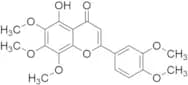
CAS:Controlled ProductFormula:C15H30O2Color and Shape:NeatMolecular weight:242.3982-(3,4-Dimethoxyphenyl)-5-hydroxy-6,7,8-trimethoxy-4H-chromen-4-one
CAS:Controlled ProductFormula:C20H20O8Color and Shape:NeatMolecular weight:388.3681,2-Dioleoyloxy-3-(dimethylamino)propane
CAS:Controlled Product<p>Applications Cationic amphiphiles are being studied for their potential role in preparing liposomes for interaction with artificial and biological membranes and cellular transfection techniques. Cationic species with ester linkages to the hydrophobic portion are more easily degraded by recipient cells and more efficiently metabolized.<br>References Leventis, R., and Silvus, J.R.: Biochimica et Biophysica Acta, 1023, 124 (1990)<br></p>Formula:C41H77NO4Color and Shape:NeatMolecular weight:648.05rac 1-Lauroyl-2-oleoyl-3-chloropropanediol
Controlled Product<p>Applications rac 1-Lauroyl-2-oleoyl-3-chloropropanediol is a derivative of rac 1-Lauroyl-3-chloropropanediol (L184750), a glycerol fatty acid ester found in a variety of vegetable oils.<br>References Velisek, J., et al.: J. Agric. Food Chem., 28, 1142 (1980); Zelinkova, Z., et al.: Food Addit. Contam., 23, 1290 (2006); Weisshaar, R., et al.: Eur. J. Lipid Sci. Technol., 110, 183 (2008)<br></p>Formula:C33H61ClO4Color and Shape:NeatMolecular weight:557.29Stearyl Palmitate
CAS:Controlled Product<p>Applications Stearyl Palmitate is a wax monoester with thickening properties used as an emolient in cosmetics. Stearyl Palmitate was identified as a metabolite in abnormal metabolites in psoriatic nail.<br>References Guncheva, M.H. et al.: Biotechnol. Lett., 30, 509 (2008); Santos, S. et al.: Phytochem. Anal., 18, 60 (2006); Maeda, K. et al.: J. Chrom. Biomed. Appl., 221, 199 (1980);<br></p>Formula:C34H68O2Color and Shape:NeatMolecular weight:508.901,3-Glyceryl Dilinoleate (>80%)
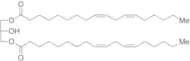
CAS:<p>Stability Unstable even at -20°C<br>Applications Derivative of α-Glucosidase inhibitory phosphatidic acids in wheat germ.<br>References Liu, L. et al.: Food Chem. 126, 553 (2011)<br></p>Formula:C39H68O5Purity:>80%Color and Shape:NeatMolecular weight:616.95rac-3-Hydroxyoctadecanoic Acid
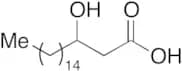
CAS:Controlled Product<p>Applications rac-3-Hydroxyoctadecanoic acid is a fatty acid found in foodstuffs such as vegetable oils, milk, and dairy products. rac-3-Hydroxyoctadecanoic acid is also used as a chemical marker to identify and confirm the presence of Campylobacter pylori, a gram-negative bacteria that cause duodenal ulcers in humans.<br>References Carlsson, A., et al.: Med. Sci. Res., 16, 1301 (1988); Jenske, R. & Vetter, W.: Food Chem., 114, 1122 (2009); Krakowka, S., et al.: Infect. Immun., 55, 2789 (1987); Levi, S., et al.: Lancet, 333, 1167 (1989)<br></p>Formula:C18H36O3Color and Shape:NeatMolecular weight:300.484β-Hydroxy Cholesterol
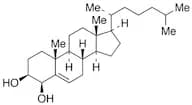
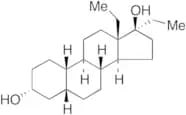
CAS:Controlled Product<p>Applications A metabolite of Cholesterol. It is formed from Cholesterol by the drug-metabolizing enzyme cytochrome P 450 3A4. A potential ligand for the nuclear receptor LXR and also a new endogenous CYP3A marker.<br>References Breuer, O., et al.: J. Lipid Res., 36, 2275 (1995), Pikuleva, I., et al.: J. Biol. Chem., 273, 18153 (1998), Chawla, A., et al.: Science, 294, 1866 (2001), Bodin, K., et al.: J. Biol. Chem., 276, 38685 (2001),<br></p>Formula:C27H46O2Color and Shape:White To Light BeigeMolecular weight:402.65(3α,5β,17α)-13-Ethyl-18,19-dinorpregnane-3,17-diol
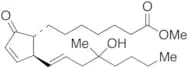
CAS:Controlled Product<p>Applications (3α,5β,17α)-13-Ethyl-18,19-dinorpregnane-3,17-diol is an anabolic androgenic steroid.<br>References Fragkaki, A. et a.: J. Ster. Biochem. Mol. Biol., 115, 44 (2009);<br></p>Formula:C21H36O2Color and Shape:NeatMolecular weight:320.5110,11-Dehydro Misoprostol (Mixture of Diastereomers)
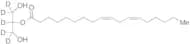
CAS:Controlled Product<p>Applications Misoprostol (M368750) impurity.<br>References Lee, H.K., et al.: J. Pharma. Sci., 73, 306 (1984),<br></p>Formula:C22H36O4Color and Shape:NeatMolecular weight:364.522-Linoleoyl-rac-glycerol-d5
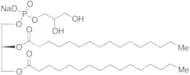
CAS:Controlled Product<p>Stability Temperature Sensitive<br>Applications 2-Linoleoyl-rac-glycerol-d5 is labelled 2-Linoleoyl-rac-glycerol (L467960) which is a fatty acid monoglycerides in vegetable oils with medium unsaturation.<br>References Compton, D., et al.: J. Pharmacol. Exp. Ther., 277, 586 (1996); Devane, W., et al.: Science, 258, 1946 (1992)<br></p>Formula:C21H33D5O4Color and Shape:NeatMolecular weight:359.551,2-Dipalmitoyl-sn-glycero-3-phospho-rac-(1-glycerol) Sodium Salt
CAS:Controlled Product<p>Applications 1,2-Dipalmitoyl-sn-glycero-3-phospho-rac-(1-glycerol) forms lipid bilayers. In the high temperature phase, the conformation of the chains is liquid-like. In the low temperature phases, the chains are stiff and parallel and they interdigitate.<br>References Ranck, J., et al.: Biochimica et Biophysica Acta (BBA) - Lipids and Lipid Metabolism, 488, 432 (1977)<br></p>Formula:C38H74NaO10PColor and Shape:NeatMolecular weight:744.952-Stearoyl-sn-glycero-3-phosphocholine
CAS:Controlled Product<p>Stability Hygroscopic<br>Applications A fatty acid that when in complex acyl-CoA acts as an Acyltransferase enzyme. Found in mice after exposure to endocrine disruptors DEHP and Aroclor 1254.<br>References Zhang, J. et al.: J. Pharmaceut. Biomed., 66, 287 (2012); Holub, B.J.: BBA-Lipid. Lipid. Met., 664, 221 (1981)<br></p>Formula:C26H54NO7PColor and Shape:NeatMolecular weight:523.683-Hydroxylauric Acid
CAS:<p>Applications 3-Hydroxylauric Acid is used in the study of Lipid A, a major constituent of the lipopolysaccharides, which are responsible for the toxicity of gram negative bacteria. Also used in the synthesis of olefins from β-hydroxy carboxylic acids.<br>References Ogawa, Y. et al.: Carb. Res., 220, 155 (1991); Hara, S. et al.: Tetrahedron Lett., 1545 (1975);<br></p>Formula:C12H24O3Color and Shape:NeatMolecular weight:216.31721,2-Dipalmityl-sn-glycero-3-Phosphoethanolamine-N-(cap biotinyl) Sodium Salt
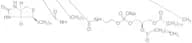
CAS:Controlled Product<p>Applications 1,2-Dipalmityl-sn-glycero-3-Phosphoethanolamine-N-(cap biotinyl) Sodium Salt is used in the development of capacitance based immunosensors on mixed self-assembled monolayers for Hb detection.<br>References Hays, H. C., et al.: Sensors and Actuators, B: Chemical, 114, 1064 (2006)<br></p>Formula:C53H98N4NaO11PSColor and Shape:NeatMolecular weight:1053.39Hexacosanoic Acid Ethyl Ester
CAS:Controlled Product<p>Applications Hexacosanoic Acid Ethyl Ester is the ethyl ester derivative of Hexacosanoic Acid (H290910) and is reported to be a grape constituent.<br>References Radulovic, N., et al.: J. Essent. Oil Res., 22, 616 (2010)<br></p>Formula:C28H56O2Color and Shape:NeatMolecular weight:424.741,3-Dioctanoyl Glycerol
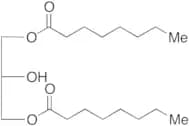
CAS:Controlled Product<p>Applications 1,3-Dioctanoyl Glycerol is an cell permeable lipid used as probe for triacylglycerol metabolism study.<br>References Lei, Q., et al.: Eur. J. Lipid. Sci. Technol., 115, 232 (2013);<br></p>Formula:C19H36O5Color and Shape:NeatMolecular weight:344.49C2 Dihydroceramide
CAS:Controlled Product<p>Applications May be used as a negative control for C2 Ceramide.<br>References Bielawska, A., et al., J. Biol. Chem., 268, 26226 (1993)<br></p>Formula:C20H41NO3Color and Shape:NeatMolecular weight:343.543α,17α-Dimethylandrostane-3β,17β-diol
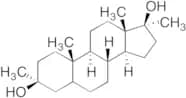
CAS:Controlled ProductFormula:C21H36O2Color and Shape:NeatMolecular weight:320.51Methyl 9,10-Dihydroxystearate
CAS:Controlled Product<p>Applications Methyl 9,10-dihydroxystearate is a component of Cardamin impatiens seed oil.<br>References Mikolajczak, K. L., et al.: J. Am. Oil. Chem. Soc., 42, 939 (1965);<br></p>Formula:C19H38O4Color and Shape:NeatMolecular weight:330.5