Aminoacids and derivatives
Amino acids are compounds with a structure based on an amino group (-NH₂) and a carboxyl group (-COOH), both attached to a central carbon atom. This structure makes them essential for the synthesis of proteins and other biomolecules. Their derivatives can have regulatory properties over metabolic processes and biological systems, with applications in nutrition, health, and regenerative medicine.
At CymitQuimica, we offer a wide range of amino acids and their derivatives, ideal for research and the formulation of bioactive products.
Found 12241 products of "Aminoacids and derivatives"
Sort by
Purity (%)
0
100
|
0
|
50
|
90
|
95
|
100
N-Methyl-N-nitroso-1-octadecylamine
CAS:<p>Applications N-Methyl-N-nitroso-1-octadecylamine was found to present in various hair-care products when investigated through thermal energy analyzer.<br>References Morrison, J.B., et al.: Food. Chem. Toxicol., 21, 69 (1983); Rainey, W.T., et al.: Biomed. Mass. Spec., 5, 395 (1978);<br></p>Formula:C19H40N2OColor and Shape:White To Off-WhiteMolecular weight:312.53Glycyl-Glycyl-Glycine
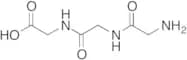
CAS:Controlled Product<p>Applications Glycyl-glycyl-glycine is used as a model peptide for studies of physicochemical parameters and molecular associations of small peptides. It is also used as a copper chelator.<br></p>Formula:C6H11N3O4Color and Shape:NeatMolecular weight:189.174-[4-(dimethylamino)benzoyl]-8-propyl-1-oxa-4,8-diazaspiro[4.5]decane-3-carboxylic acid
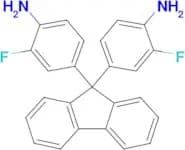
CAS:Purity:95.0%Molecular weight:375.4689941406254,4'-(9H-Fluorene-9,9-diyl)bis(2-fluoroaniline)
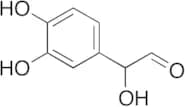
CAS:Purity:97.0%Color and Shape:SolidMolecular weight:384.429992675781253,4-Dihydroxyphenylglycolaldehyde (Dopegal)
CAS:<p>Stability Very Hygroscopic, Moisture Sensitive<br>Applications 3,4-Dihydroxyphenylglycolaldehyde (Dopegal) is the monoamine oxidase metabolite of dopamine which is toxic of in a concentrated amount and may be a target for Alzheimer or Parkinson’s therapy.<br>References Burke, W. et al.: Neurotoxical., 25, 101 (2004);<br></p>Formula:C8H8O4Color and Shape:NeatMolecular weight:168.152-[4-(3-chlorophenyl)piperazin-1-yl]-6-methyl-3,4-dihydropyrimidin-4-one
CAS:Purity:98%Molecular weight:304.7799987792969(7s)-7-Methyl-1,3,4,6,7,8,9,9a-octahydropyrazino[2,1-c][1,4]oxazine
CAS:Purity:98%Molecular weight:156.22900390625Benzo[1,3]dioxol-5-yl-piperidin-4-yl-amine
CAS:Formula:C12H16N2O2Color and Shape:SolidMolecular weight:220.272(2,3,6,7-tetrahydro-1H,5H-pyrido[3,2,1-ij]quinolin-9-ylmethyl)amine dihydrochloride
CAS:Purity:95.0%Molecular weight:275.22000122070313,4-Dihydroxybenzaldehyde
CAS:Controlled Product<p>Stability Hygroscopic<br>Applications 3,4-Dihydroxybenzaldehyde (cas# 139-85-5) is a compound useful in organic synthesis.<br></p>Formula:C7H6O3Color and Shape:BeigeMolecular weight:138.12Tranexamic Acid
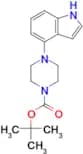
CAS:Controlled Product<p>Stability Hygroscopic<br>Applications Antifibrinolytic agent; blocks lysine binding sites of plasminogen. Hemostatic.<br>References Andersson, et al.: Scand. J. Haematol. 2, 230 (1965), Melander, B., et al.: Acta Pharmacol. Toxicol., 22, 340 (1965), Bonnar, J., et al.: Br. Med. J., 313, 579 (1996), Dunn, C.J., et al.: Drugs, 57, 1005 (1999),<br></p>Formula:C8H15NO2Color and Shape:White To Off-WhiteMolecular weight:157.21Tert-Butyl 4-(1H-indol-4-yl)piperazine-1-carboxylate
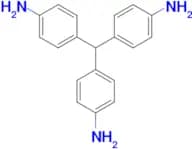
CAS:Purity:97.0%Molecular weight:301.39001464843754,4′,4”-Methanetriyltrianiline
CAS:Formula:C19H19N3Purity:95%Color and Shape:SolidMolecular weight:289.382N-(4-(AMINOMETHYL)PHENYL)BENZO[D]ISOXAZOL-3-AMINE HCL
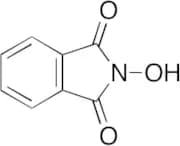
CAS:Purity:95.0%Molecular weight:275.739990234375N-Hydroxyphthalimide
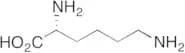
CAS:Controlled Product<p>Applications N-Hydroxyphthalimide is used in the synthesis of a new class of antibacterials potent against macrolide resistant bacteria. Also used in the synthesis of pyrazolidines, isoxazolidines and tetrahydrooxazines.<br>References Agouridas, C. et al.: J. Med. Chem., 41, 4080 (1998); La Londe, R. et al.: Angew. Chem. Int. Ed., 49, 598 (2010);<br></p>Formula:C8H5NO3Color and Shape:NeatMolecular weight:163.13D-Lysine(>90%)
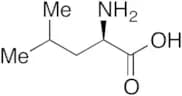
CAS:Controlled Product<p>Applications D-Lysine is the unnatural isomer of L-Lysine (L468895) that has the ability to reduce non-enzymatic glycation in vitro. D-Lysine also exists as polypeptide chains of poly-D-lysine, a nonspecific adhesion-promoting molecule that has the potential to be a polymeric drug carrier.<br>References Chen, Q., et al.: J. Biol. Chem., 269, 26602 (1994); Sensi, M., et al.: Diabetologia, 36, 797 (1993); Vermeersch, H., & Remon, J.: J. Control. Rel., 32, 225 (1994)<br></p>Formula:C6H14N2O2Purity:>90%Color and Shape:NeatMolecular weight:146.19D-Leucine
CAS:Controlled ProductFormula:C6H13NO2Color and Shape:White To Off-WhiteMolecular weight:131.17Tert-butyl N-{2-[(2-hydroxyethyl)amino]ethyl}carbamate
CAS:Purity:95.0%Molecular weight:204.27000427246094(R)-tert-Butyl 2-((7-chloropyrido[4,3-b]pyrazin-5-ylamino)methyl)morpholine-4-carboxylate
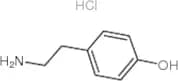
CAS:Purity:97.0%Molecular weight:379.8500061035156Tyramine Hydrochloride
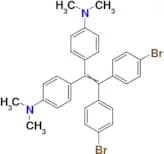
CAS:<p>Applications Tyramine Hydrochloride is a naturally occurring monoamine derived from tyrosine. Neurotransmitter.<br>References Roy, K., et al.: J. Mol. Liq., 230, 104-112 (2017); Roy, M. N., et al.: Chem. Phys. Lett., 655-656, 43-50 (2016)<br></p>Formula:C8H11NO·ClHColor and Shape:Off-WhiteMolecular weight:173.644,4'-(2,2-Bis(4-bromophenyl)ethene-1,1-diyl)bis(N,N-dimethylaniline)
CAS:Purity:98%Molecular weight:576.3759765625Ethyl N-[(2-Boc-amino)ethyl]glycinatehydrochloride
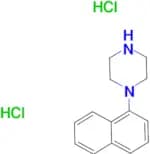
CAS:Purity:97.0%Color and Shape:SolidMolecular weight:282.76998901367191-Naphthalen-1-yl-piperazine dihydrochloride
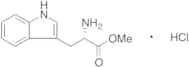
CAS:Color and Shape:SolidMolecular weight:285.2099914550781L-Tryptophan Methyl Ester Hydrochloride
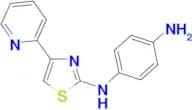
CAS:Controlled Product<p>Applications Amino acid derivative that may be used to prepare the corresponding amino acid amide L-Tryptophanamide Hydrochloride (Cat. #T89550).<br>References Smith, E.L., et al.: J. Biol. Chem., 180, 1209 (1949),<br></p>Formula:C12H14N2O2·ClHColor and Shape:White To Off-WhiteMolecular weight:254.71N-(4-Pyridin-2-yl-thiazol-2-yl)benzene-1,4-diamine
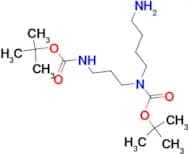
CAS:Color and Shape:SolidMolecular weight:268.3399963378906N1,N4-bis-Boc-spermidine
CAS:Purity:97.0%Color and Shape:Liquid, No data available.Molecular weight:345.48400878906251-Quinoxalin-2-yl-piperidin-4-ylamine hydrochloride
CAS:Purity:95.0%Molecular weight:264.760009765625R-(+)-Carbidopa
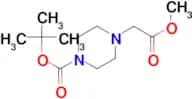
CAS:Controlled Product<p>Stability Hygroscopic<br>Applications R-(+)-Carbidopa is an inhibitor of DOPA decarboxylase, which plays a significant role in the prevention of the conversion of L-DOPA (D533751) to dopamine (D533780). Studies has also indicated the inhibitory effects of towards L-DOPA in human liver prepns and as well as 5-hydroxytryptophan (H975700).<br>References Vogel, W.H. et al.: Arch. Int. Pharmacodyn. Ther. 198, 85 (1972);<br></p>Formula:C10H14N2O4Color and Shape:NeatMolecular weight:226.23Tert-butyl 4-(2-methoxy-2-oxoethyl)piperazine-1-carboxylate
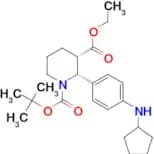
CAS:Purity:95.0%Color and Shape:Liquid, No data available.Molecular weight:258.3179931640625(2R,3S)-1-tert-butyl 3-ethyl 2-(4-(cyclopentylamino)phenyl)piperidine-1,3-dicarboxylate
CAS:Purity:97%Molecular weight:416.562(3S,3'S)-4,4'-(7-Chloropyrido[2,3-d]pyrimidine-2,4-diyl)bis(3-methylmorpholine)
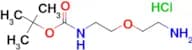
CAS:Purity:95.0%Molecular weight:363.8500061035156N-Boc-2-(2-amino-ethoxy)-ethylamine hydrochloride
CAS:Purity:98.0%Color and Shape:SolidMolecular weight:240.729995727539061'-(tert-Butoxycarbonyl)-[1,4'-bipiperidine]-3-carboxylic acid
CAS:Purity:98+%Molecular weight:312.4100036621094Tert-Butyl 2-Benzyl-4-(Hydroxymethyl)-2,8-Diazaspiro[4.5]Decane-8-Carboxylate
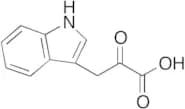
CAS:Purity:95%Molecular weight:360.49798583984375Indole-3-pyruvic Acid
CAS:<p>Applications Indole-3-pyruvic Acid is a compound involved in the biosynthesis of Indole-3-acetic acid, a plant hormone which plays important roles in regulating growth and responses to environmental changes.<br>References Kong, W., et al.: Plant Cell Physiol, 56, 715-726 (2015)<br></p>Formula:C11H9NO3Color and Shape:Light Yellow To BeigeMolecular weight:203.19N-Acetyl-L-Tryptophan
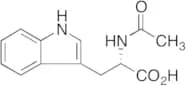
CAS:Controlled Product<p>Applications N-Acetyl-L-Tryptophan, is a derivative of L-Tryptophan (T947210), that can be used as competitive inhibitor to identify and characterize tryptophanases. It can also be used as an NK1 tachykinin receptor antagonist, that may help to develop a novel therapeutic intervention for the treatment of reperfusion injury in acute ischemic stroke.<br>References Turner, R. J., et al.: Neuroscience, 220, 1 (2012);<br></p>Formula:C13H14N2O3Color and Shape:White To Off-WhiteMolecular weight:246.26



![4-[4-(dimethylamino)benzoyl]-8-propyl-1-oxa-4,8-diazaspiro[4.5]decane-3-carboxylic acid](/_next/image/?url=https%3A%2Fstatic.cymitquimica.com%2Fproducts%2F10%2Fthumb-webp%2FF525747.webp&w=3840&q=75)
![2-[4-(3-chlorophenyl)piperazin-1-yl]-6-methyl-3,4-dihydropyrimidin-4-one](/_next/image/?url=https%3A%2Fstatic.cymitquimica.com%2Fproducts%2F10%2Fthumb-webp%2FF728791.webp&w=3840&q=75)
![(7s)-7-Methyl-1,3,4,6,7,8,9,9a-octahydropyrazino[2,1-c][1,4]oxazine](/_next/image/?url=https%3A%2Fstatic.cymitquimica.com%2Fproducts%2F10%2Fthumb-webp%2FF719403.webp&w=3840&q=75)
![Benzo[1,3]dioxol-5-yl-piperidin-4-yl-amine](/_next/image/?url=https%3A%2Fstatic.cymitquimica.com%2Fproducts%2F10%2Fthumb-webp%2FF032078.webp&w=3840&q=75)
![(2,3,6,7-tetrahydro-1H,5H-pyrido[3,2,1-ij]quinolin-9-ylmethyl)amine dihydrochloride](/_next/image/?url=https%3A%2Fstatic.cymitquimica.com%2Fproducts%2F10%2Fthumb-webp%2FF358564.webp&w=3840&q=75)
![3-Amino-N-[4-(phenylamino)phenyl]benzamide](/_next/image/?url=https%3A%2Fstatic.cymitquimica.com%2Fproducts%2F10%2Fthumb-webp%2FF341648.webp&w=3840&q=75)

![N-(4-(AMINOMETHYL)PHENYL)BENZO[D]ISOXAZOL-3-AMINE HCL](/_next/image/?url=https%3A%2Fstatic.cymitquimica.com%2Fproducts%2F10%2Fthumb-webp%2FF306211.webp&w=3840&q=75)
![Tert-butyl N-{2-[(2-hydroxyethyl)amino]ethyl}carbamate](/_next/image/?url=https%3A%2Fstatic.cymitquimica.com%2Fproducts%2F10%2Fthumb-webp%2FF521096.webp&w=3840&q=75)
![(R)-tert-Butyl 2-((7-chloropyrido[4,3-b]pyrazin-5-ylamino)methyl)morpholine-4-carboxylate](/_next/image/?url=https%3A%2Fstatic.cymitquimica.com%2Fproducts%2F10%2Fthumb-webp%2FF053694.webp&w=3840&q=75)
![Ethyl N-[(2-Boc-amino)ethyl]glycinatehydrochloride](/_next/image/?url=https%3A%2Fstatic.cymitquimica.com%2Fproducts%2F10%2Fthumb-webp%2FF041117.webp&w=3840&q=75)




![(3S,3'S)-4,4'-(7-Chloropyrido[2,3-d]pyrimidine-2,4-diyl)bis(3-methylmorpholine)](/_next/image/?url=https%3A%2Fstatic.cymitquimica.com%2Fproducts%2F10%2Fthumb-webp%2FF229684.webp&w=3840&q=75)
![1'-(tert-Butoxycarbonyl)-[1,4'-bipiperidine]-3-carboxylic acid](/_next/image/?url=https%3A%2Fstatic.cymitquimica.com%2Fproducts%2F10%2Fthumb-webp%2FF736450.webp&w=3840&q=75)
![Tert-Butyl 2-Benzyl-4-(Hydroxymethyl)-2,8-Diazaspiro[4.5]Decane-8-Carboxylate](/_next/image/?url=https%3A%2Fstatic.cymitquimica.com%2Fproducts%2F10%2Fthumb-webp%2FF613787.webp&w=3840&q=75)