Carbohydrates and glycoconjugates
Carbohydrates are organic compounds composed of carbon, hydrogen, and oxygen, with a basic structure formed by monosaccharides. These can combine to form disaccharides, oligosaccharides, or polysaccharides, depending on the number of monomeric units. Carbohydrates play a fundamental role in energy storage, cell structure, and cellular communication. Their derivatives are used in pharmaceutical products, such as sweeteners and excipients.
At CymitQuimica, we offer a wide range of carbohydrates and their derivatives for research and industrial applications.
Found 5006 products of "Carbohydrates and glycoconjugates"
Sort by
Purity (%)
0
100
|
0
|
50
|
90
|
95
|
100
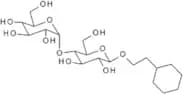
2-Cyclohexylethyl-4-O-(a-D-glucopyranosyl)-b-D-glucopyranoside
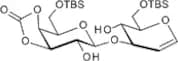
CAS:<p>Oroxylum indicum is a plant that belongs to the family Bignoniaceae. It has been used in traditional medicine for the treatment of cancer and has been shown to possess anti-inflammatory properties. The sequenced genome of Oroxylum indicum has provided a model system for understanding the molecular mechanisms underlying tumorigenesis. This plant contains a number of monoclonal antibodies, including one that is active against mouse monoclonal antibodies and inhibits tumor xenografts. The extract of this plant also inhibits influenza virus and polymerase chain reactions, which are important steps in protein synthesis. Oroxylum indicum may have therapeutic potential as an anti-cancer drug because it can inhibit solid tumours by interfering with protein synthesis.</p>Formula:C20H36O11Purity:Min. 95%Color and Shape:PowderMolecular weight:452.49 g/mol3',4'-O-Carbonyl-6,6'-di-O-tert-butyldimethylsilyl lactal
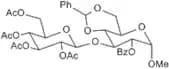
CAS:<p>3',4'-O-Carbonyl-6,6'-di-O-tert-butyldimethylsilyl lactal is a fluorinated carbohydrate that can be used as a building block for the synthesis of oligosaccharides. It is an important sugar in glycosylation, click chemistry and methylations. This compound has been shown to have high purity and is available for custom synthesis.</p>Formula:C25H46O10Si2Purity:Min. 95%Molecular weight:562.8 g/molMethyl 3-O-(2,3,4,6-tetra-O-acetyl-b-D-glucopyranosyl)-4,6-O-benzylidene-2-O-benzoyl-a-D-glucopyranoside
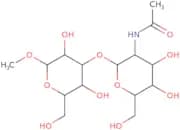
CAS:<p>Methyl 3-O-(2,3,4,6-tetra-O-acetyl-b-D-glucopyranosyl)-4,6-O-benzylidene-2-O-benzoyl-a-D-glucopyranoside is a custom synthesis that has been fluorinated and methylated. This product is a monosaccharide with a CAS No. 7123893 2. It is an oligosaccharide that can be used in the synthesis of saccharides and polysaccharides. Methyl 3 O (2 3 4 6 tetra O acetyl b D glucopyranosyl) 4 6 O benzylidene 2 O benzoyl a D glucopyranoside has been synthesized by glycosylation of sugar. This product can also be used to modify and functionalize complex carbohydrates.</p>Formula:C35H40O16Purity:Min. 95%Molecular weight:716.68 g/molMethyl 3-O-(2-acetamido-2-deoxy-a-D-galactopyranosyl)-a-D-galactopyranoside
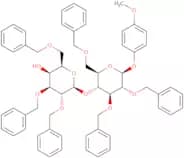
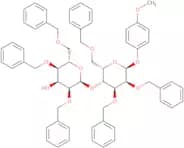
CAS:<p>Methyl 3-O-(2-acetamido-2-deoxy-a-D-galactopyranosyl)-a-D-galactopyranoside is a synthetic carbohydrate. It is a biochemically active compound that can be used as an intermediate in the synthesis of oligosaccharides and monosaccharides, as well as other natural products. Methyl 3-O-(2-acetamido-2-deoxy-a-D-galactopyranosyl)-a-D-galactopyranoside has been studied for its potential use in cancer treatments, antiaging, and diabetes treatments.</p>Formula:C15H27NO11Purity:Min. 95%Color and Shape:PowderMolecular weight:397.38 g/mol4-Methoxyphenyl 4-O-(2,4,6-tri-O-benzyl-b-D-galactopyranosyl)-2,3,6-tri-O-benzyl-b-D-glucopyranoside
CAS:<p>4-Methoxyphenyl 4-O-(2,4,6-tri-O-benzyl-b-D-galactopyranosyl)-2,3,6-tri-O-benzyl-b-D-glucopyranoside is a suppressor of genes that has been shown to be active in the treatment of leukemia. It suppresses transcription by inhibiting histone H3 acetylation and DNA replication by binding to the dna replication complex at sites of replication. The suppression of genes may be due to its ability to inhibit translation by blocking signal sequences and hybridization with complementary mRNA.</p>Formula:C61H64O12Purity:Min. 95%Molecular weight:989.15 g/molLacto-N-fucopentaose III-GEL
CAS:<p>Lacto-N-fucopentaose III-GEL is a synthetic monosaccharide that is used as a building block for the synthesis of complex carbohydrates. Lacto-N-fucopentaose III-GEL is synthesized from fructose, which is methylated with chloromethylated N,N'-diacetylchitobiose as the methylating agent and sodium methoxide as the catalyst. The resulting glycoconjugate is then treated with hydrofluoric acid to introduce fluorine atoms into the carbohydrate backbone.</p>Purity:Min. 95%Maltobionic acid dicyclohexylammonium salt
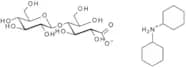
CAS:Controlled Product<p>An antioxidant used in food and feeds, produced from starch, using enzymes</p>Formula:C24H45NO12Purity:Min. 95%Molecular weight:539.61 g/mol8-Methoxycarbonyloctyl-3-O-benzyl-2,2'-dideoxy-2,2'-diphthalimido-3',4',6-tri-O-acetyl-b-cellobiose
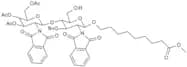
CAS:<p>8-Methoxycarbonyloctyl-3-O-benzyl-2,2'-dideoxy-2,2'-diphthalimido-3',4',6-tri-O-acetyl-b -cellobiose is a cellobiose with an 8 methoxycarbonyl group at the C8 position. It can be used in the synthesis of oligosaccharides and polysaccharides. The compound has been synthesized by methylation, click modification, and fluorination. The CAS number is 106445-30-1. 8MCOBBIOSE has a purity of > 98% and may have a white to off white powder appearance.</p>Formula:C51H58N2O18Purity:Min. 95%Molecular weight:987.01 g/mol1,6-Anhydro-4-O-(2,3,4,6-tetra-O-acetyl-a-D-mannopyranosyl)-b-D-mannopyranose
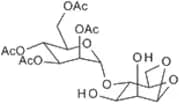
CAS:<p>1,6-Anhydro-4-O-(2,3,4,6-tetra-O-acetyl-a-D-mannopyranosyl)-b-D-mannopyranose is a modified oligosaccharide that is a carbohydrate. This product is custom synthesized and has high purity. It is a monosaccharide with methylation and glycosylation. The CAS number for this product is 6765035505.</p>Formula:C20H28O14Purity:Min. 95%Molecular weight:492.44 g/mol4-Methoxyphenyl 4-O-[3-O-(methyl 5-acetamido-4,7,8,9-tetra-O-acetyl-3,5-dideoxy-D-glycero-a-D-galacto-2-nonulopyranosylonate)-2,6-di -O-benzyl-b-D-galactopyranosyl]-2,3,6-tri-O-benzyl-b-D-glucopyranoside
<p>4-Methoxyphenyl 4-O-[3-O-(methyl 5-acetamido-4,7,8,9-tetra-O-acetyl-3,5-dideoxy-D-glycero-a-D-galacto--2--nonulopyranosylonate)-2,6--di -O--benzyl b D galactopyranosyl]-2,3,6--tri -O benzyl b D glucopyranoside is a glycosylation product of the monosaccharide 4 methoxyphenol and 4 O-[3 O methyl 5 acetamido 4 7 8 9 tetra O acetyl 3 5 dideoxy D glycero 2 a D galacto 2 nonulopyranosylonate] 2 6 di O benzyl b D galactopyranoside. It has been modified by fluorination at the C1</p>Formula:C74H85NO24Purity:Min. 95%Molecular weight:1,372.46 g/mol2-O-(3,4,6-Tri-O-acetyl-2-deoxy-2-N-phthalimido-b-D-glucopyranosyl)-3-O-benzyl-4,6-benzylidene-D-mannopyranose
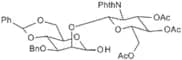
<p>2-O-(3,4,6-Tri-O-acetyl-2-deoxy-2-N-phthalimido-b-D-glucopyranosyl)-3-O-benzyl-4,6-benzylidene -D -mannopyranose is a custom synthesis. It is a complex carbohydrate that has been modified with methylation and glycosylation. The saccharide in this compound is an oligosaccharide that has undergone fluorination and click chemistry. This product is of high purity and offers a range of useful applications.</p>Formula:C40H41NO15Purity:Min. 95%Molecular weight:775.75 g/molG-NGA2 N-Glycan
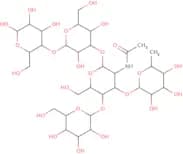
CAS:<p>G-NGA2 N-glycan is a custom synthesis and modification of the carbohydrate. This product contains a fluorination, methylation, and monosaccharide. The average molecular weight is 1257. G-NGA2 N-Glycan is a saccharide that is synthesized from glucose by glycosyltransferase. It can be modified with a click reaction to form an oligosaccharide or polysaccharide. G-NGA2 N-Glycan has been assigned the CAS number 103584-68-5 and molecular weight of 1257 Da.</p>Formula:C56H94N4O41Purity:Min. 95%Molecular weight:1,479.35 g/molCarboxymethyl-dextran sodium salt 10-20% COOH terminally reduced - Average molecular weight 70000
CAS:<p>Drug carrier for cancer therapy & imaging, biocompatible, soluble, biodegradable</p>Purity:Min. 95%Carbomethoxyethylthioethyl 4-O-(4-O-[6-O-{a-D-glucopyranosyl}-a-D-glucopyranosyl]-a-D-glucopyranosyl)-b-D-glucopyranoside
CAS:<p>Carbomethoxyethylthioethyl 4-O-(4-O-[6-O-{a-D-glucopyranosyl}-a-D-glucopyranosyl]-a-D-glucopyranosyl)-b-D-glucopyranoside is a synthetic carbohydrate with a molecular weight of 1406. It has been custom synthesized and modified to contain fluorine, methyl, and saccharide groups. Carbomethoxyethylthioethyl 4-O-(4 -O-[6 -O-[a -D - glucopyranosyl] - a - D - glucopyranosyl] - a - D - glucopyranosyl) b - D - glucopyranoside has been shown to be useful in the synthesis of oligosaccharides and polysaccharides.</p>Formula:C30H52O23SPurity:Min. 95%Molecular weight:812.79 g/mol1,6-Anhydro-4-O-b-D-galactopyranosyl-b-D-glucopyranose
CAS:<p>N-acetyllactosamine is a monosaccharide that belongs to the group of n-acetyllactosamine. It can be found in the form of an agglutinin, lactose, and lectin. The conformation of this molecule is an equilibrium between its alpha and beta forms. The pyridine can act as an acid catalyst for the alpha conformation. There are two forms of this molecule: one synthesized from D-glucose and one synthesized from D-galactose. 1,6-Anhydro-4-O-b-D-galactopyranosyl-b-D-glucopyranose is synthesized from D-glucose. Oligosaccharides containing this molecule have been expressed in Saccharomyces cerevisiae cells and purified by affinity chromatography on columns that contain immobilized antibody to human serum albumin. This molecule has been shown</p>Formula:C12H20O10Purity:Min. 95%Molecular weight:324.28 g/mol4-Methoxyphenyl 4-O-(2,3,6-tri-O-benzyl-b-D-galactopyranosyl)-2,3,6-tri-O-benzyl-b-D-glucopyranoside
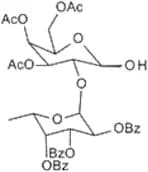
CAS:<p>4-Methoxyphenyl 4-O-(2,3,6-tri-O-benzyl-b-D-galactopyranosyl)-2,3,6-tri-O-benzyl-b-D-glucopyranoside is a sugar that is custom synthesized. It is fluorinated and modified with saccharides. The molecular weight of this compound is 582.06 g/mol and the CAS number for it is 15041281.</p>Formula:C61H64O12Purity:Min. 95%Molecular weight:989.15 g/mol3,4,6-Tri-O-acetyl-2-O-(2,3,4-tri-O-benzoyl-a-L-fucopyranosyl)-D-galactopyranose
<p>3,4,6-Tri-O-acetyl-2-O-(2,3,4-tri-O-benzoyl-a-L-fucopyranosyl)-D-galactopyranose (TFP) is a fluorinated carbohydrate synthesized by the reaction of 3,4,6 trihydroxyacetophenone with 2,3,4 trihydroxypentanediol and acetyl chloride. TFP is a complex carbohydrate that can be used to modify proteins and glycoproteins. The methylation of TFP has been shown to decrease the binding affinity between lectins and glycoproteins.</p>Formula:C39H40O16Purity:Min. 95%Molecular weight:764.73 g/mol6-O-Sulphated Lewisa-BSA
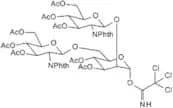
<p>Lewisa-BSA is a modified form of BSA that contains 6-O sulfated sugars. This carbohydrate is used in the treatment of diabetes and other metabolic disorders. Lewisa-BSA is synthesized by the modification of BSA with a series of oligosaccharide residues. The carbohydrate chains are then methylated, glycosylated, and finally sulfated. This process provides Lewisa-BSA with high purity and high stability.</p>Purity:Min. 95%3,4-Di-O-acetyl-2,6-di-O-(3,4,6-tri-O-acetyl-2-deoxy-2-phthalimido-b-D-glucopyranosyl)-a-D-mannopyranosyl trichloroacetimidate
<p>3,4-Di-O-acetyl-2,6-di-O-(3,4,6-tri-O-acetyl-2-deoxy-2-phthalimido-b-D-glucopyranosyl)-a-D-mannopyranosyl trichloroacetimidate is a modified sugar with the molecular formula of C54H79F14N5O26. It is a complex carbohydrate that can be synthesized and custom made. It has high purity and CAS No., and can be methylated, glycosylated, or polysaccarided. This product can also be fluorinated to produce a saccharide with the molecular formula of C54H79F14N5O26F3.</p>Formula:C52H54Cl3N3O26Purity:Min. 95%Molecular weight:1,243.35 g/mol3-O-Methyl-4-O-(3-O-methyl-a-D-mannopyranosyl)-D-mannopyranose
<p>3-O-Methyl-4-O-(3-O-methyl-a-D-mannopyranosyl)-D-mannopyranose is a synthetic sugar that can be modified to synthesize various oligosaccharides, polysaccharides, and complex carbohydrates. This fluorinated sugar has been modified with methyl groups at the 3' and 4' positions. It can be used for fluoroamination of glycosylation, Click chemistry, or other modifications. 3OM4OM3OM is soluble in water and glycerol, making it ideal for use in biological experiments. The chemical name for this compound is O-(3′,4′-dimethoxytrityl)-β--D--mannopyranosyl) -α--D--mannopyranoside and its CAS Registry Number is 836896-81-1.</p>Purity:Min. 95%


![Carbomethoxyethylthioethyl 4-O-(4-O-[6-O-{a-D-glucopyranosyl}-a-D-glucopyranosyl]-a-D-glucopyranos…](/_next/image/?url=https%3A%2Fstatic.cymitquimica.com%2Fproducts%2F3D%2Fthumb-webp%2FOC06493.webp&w=3840&q=75)