Carbohydrates and glycoconjugates
Carbohydrates are organic compounds composed of carbon, hydrogen, and oxygen, with a basic structure formed by monosaccharides. These can combine to form disaccharides, oligosaccharides, or polysaccharides, depending on the number of monomeric units. Carbohydrates play a fundamental role in energy storage, cell structure, and cellular communication. Their derivatives are used in pharmaceutical products, such as sweeteners and excipients.
At CymitQuimica, we offer a wide range of carbohydrates and their derivatives for research and industrial applications.
Found 5006 products of "Carbohydrates and glycoconjugates"
Sort by
Purity (%)
0
100
|
0
|
50
|
90
|
95
|
100
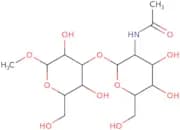
Methyl 3-O-(2-acetamido-2-deoxy-a-D-galactopyranosyl)-b-D-galactopyranoside
CAS:<p>Methyl 3-O-(2-acetamido-2-deoxy-a-D-galactopyranosyl)-b-D-galactopyranoside is a custom synthesis, complex carbohydrate. It belongs to the group of oligosaccharides and polysaccharides. This product is a sugar with high purity, which can be fluorinated. The CAS number for this compound is 128396-53-2.</p>Formula:C15H27NO11Purity:Min. 95%Color and Shape:PowderMolecular weight:397.38 g/mol3-Fucosyllactose-BSA
<p>3-Fucosyllactose is a high purity synthetic sugar that is custom synthesized to order. It has a click modification, fluorination and glycosylation. 3-Fucosyllactose is a monosaccharide with CAS No. 160159-69-2. 3-Fucosyllactose has the ability to be modified for glycoengineering and glycobiology studies. It can be used in the synthesis of complex carbohydrates, such as oligosaccharides and monosaccharides.</p>Purity:Min. 95%Heparin disaccharide III-H disodium salt
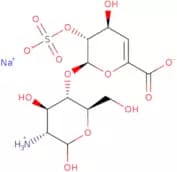
CAS:<p>Heparin is a polysaccharide consisting of repeating units of glucosamine and glucuronic acid that has been shown to have anti-coagulant, antithrombotic, and anti-inflammatory properties. Heparin disaccharide III-H disodium salt is a heparin disaccharide that has been modified by the addition of sodium ions. This heparin disaccharide has been shown to inhibit the proliferation of leukaemia cells in vitro, which may be due to its inhibition of DNA synthesis or cell cycle progression. The mechanism by which this heparin disaccharide inhibits cell growth is not yet known. Research into this mechanism could lead to new treatments for cancer and other diseases.</p>Formula:C12H18NNaO13SPurity:Min. 95%Molecular weight:439.33 g/molNGA4B N-Glycan
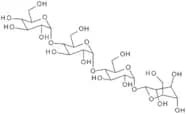
CAS:<p>NGA4B N-Glycan is a custom synthetic compound that can be modified to include methylation, fluorination, and other modifications. It is an oligosaccharide that is a polysaccharide composed of saccharides. The saccharides are monosaccharides or simple sugars. NGA4B N-Glycan is available at high purity for use in research and as a reagent.</p>Formula:C74H123N7O51Purity:Min. 95%Molecular weight:1,926.79 g/mol2,3,6,2',3',4',6'-Hepta-O-acetyl-b-D-maltosyl isothiocyanate
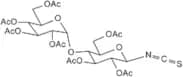
CAS:<p>2,3,6,2',3',4',6'-Hepta-O-acetyl-b-D-maltosyl isothiocyanate is a custom synthesis of a complex carbohydrate. It has been modified by fluorination and click chemistry. The product is available in high purity with CAS No. 81319-58-6. This product is synthesized from a monosaccharide and polysaccharide. The product is produced by methylation of the complex carbohydrate followed by modification with fluoro groups to create the desired product.</p>Formula:C27H35NO17SPurity:Min. 95%Molecular weight:677.64 g/mol2,3,4,6,3',4',6'-Hepta-O-benzoylsucrose
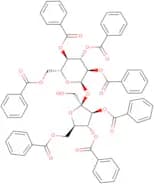
CAS:<p>2,3,4,6,3',4',6'-Hepta-O-benzoylsucrose (HBS) is a custom synthesis and modification of sucrose. The sugar is modified with 2,3,4,6-tetra-O-benzoyl groups at the 6′ position on the fructose unit and 3′ position on the glucose unit. HBS has been used in a click chemistry reaction as an acceptor for azide moieties.</p>Formula:C61H50O18Purity:Min. 95%Color and Shape:PowderMolecular weight:1,071.04 g/molMethyl 2-O-allyl-4,6-O-benzylidene-3-O-(2',3',4',6'-tetra-O-acetyl-a-D-mannopyranosyl)-a-D-mannopyranoside
CAS:<p>Methyl 2-O-allyl-4,6-O-benzylidene-3-O-(2',3',4',6'-tetra-O-acetyl-a-D-mannopyranosyl)-a-D-mannopyranoside is a sugar that is synthesized by the methylation of an oligosaccharide. This product is a white crystalline powder that has been shown to have high purity and a CAS number of 82185-93-1. It has also been modified with fluorination, which makes it resistant to degradation. Methyl 2-O-allyl 4,6 O benzylidene 3 O (2',3',4',6'-tetra - O acetyl - a D mannopyranosyl) - a D mannopyranoside is used in the synthesis of complex carbohydrates.</p>Formula:C31H40O15Purity:Min. 95%Molecular weight:652.64 g/molGal[2346Ac]b(1-3)GlcN3[46Bzd]-b-MP
<p>Gal[2346Ac]b(1-3)GlcN3[46Bzd]-b-MP is a custom synthesis that has been modified with fluorination, methylation, and modification. The product contains a monosaccharide, oligosaccharide, saccharides, and complex carbohydrates.</p>Formula:C34H39N3O15Purity:Min. 95%Molecular weight:729.68 g/molD-Raffinose undecaacetate
CAS:<p>D-Raffinose undecaacetate is a sweetener that is used in some chewing gum and other foods. It is a sucrose ester with the chemical formula C12H24O11. D-Raffinose undecaacetate has been shown to increase the release of insulin, which may be due to its effects on glucose uptake or modulation of taste receptors on the tongue. It has also been shown to have an anti-inflammatory effect, which may be due to its interactions with the bitter taste receptors present in tissues such as the small intestine and liver.</p>Formula:C40H54O27Purity:Min. 95%Molecular weight:966.84 g/molHyaluronate biotin - Molecular Weight - 50kDa
<p>Hyaluronate biotin is a complex carbohydrate that contains both a saccharide and a polysaccharide. The saccharide is usually linked to the backbone of the polysaccharide via glycosylation.</p>Purity:Min. 95%Hepta-O-acetyl-b-Lactosyl-N-Fmoc-L-threonine
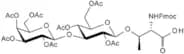
CAS:<p>Hepta-O-acetyl-b-Lactosyl-N-Fmoc-L-threonine is a substance that can be used for the diagnosis of radiation exposure. It is a liquid that is injected into the body, where it accumulates in tissues such as bone marrow. The presence of Hepta-O-acetyl-b-Lactosyl-N-Fmoc-L-threonine in bone marrow cells can be detected using an imaging technique called balloon injury. This liquid also has synergistic effects with radiation and may be useful for the treatment of diseases such as thrombolysis.</p>Formula:C45H53NO22Purity:Min. 95%Molecular weight:959.9 g/mol2,3,6-Tri-O-acetyl-4-O-(2,3,4,6-tetra-O-acetyl-a-D-mannopyranosyl)-D-mannopyranose
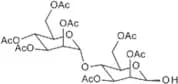
CAS:<p>This product is a fatty acid that binds to the carbohydrate binding sites in the cell membrane of Caco-2 cells. It has been shown to inhibit the growth of cancer cells and radiation induced changes by binding to the sugar moieties on glycoproteins. This product also inhibits the production of glycoconjugates, which are important for cell-cell interactions and biological function. The disaccharide form has been found to be a diagnostic agent for cancer cells, with a structural formula that can be seen in the figure below.</p>Formula:C26H36O18Purity:Min. 95%Molecular weight:636.55 g/mol2,3,6,2',3',4',6'-Hepta-O-acetyl-b-D-lactosyl isothiocyanate
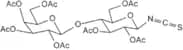
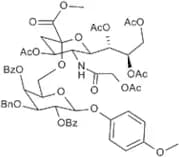
CAS:<p>2,3,6,2',3',4',6'-Hepta-O-acetyl-b-D-lactosyl isothiocyanate is a fluorinated oligosaccharide that has been custom synthesized with a click modification. This compound is a high purity product and can be used in the synthesis of complex carbohydrates.</p>Formula:C27H35NO17SPurity:Min. 95%Molecular weight:677.64 g/mol4-Methoxyphenyl 2,4-di-O-benzoyl-3-O-benzyl-6-O-[methyl 5-(acetoxyacetamido)-4,7,8,9-tetra-O-acetyl-3,5-dideoxy-D-glycero-α-D-ga lacto-2-nonulopyranosylonate]-β-D-galactopyranoside
<p>The methylation of a glycosylation is an organic chemistry technique that can be used to modify the chemical structure of a carbohydrate. A glycosylation is the reaction between an alcohol and a sugar, which produces a glycoside. The addition of methyl groups at specific positions on the sugar molecule can lead to improved properties such as increased stability, increased solubility, or increased uptake by cells. This process has been shown to produce compounds with more desirable pharmacological properties than their parent compounds. Click chemistry is a versatile and powerful method for modifying carbohydrates. It involves the use of copper-catalyzed azide-alkyne cycloaddition reactions to form carbon-nitrogen bonds in place of conventional amide linkages in peptides and proteins. Carbohydrates are modified using this method by attaching small molecules such as fluorine atoms onto one or more carbons in the carbohydrate structure. This process can be used to create novel sugars with improved properties including high purity, high stability</p>Formula:C56H61NO23Purity:Min. 95%Molecular weight:1,116.08 g/molGD1b-Ganglioside ammonium
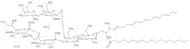
CAS:<p>GD1b ganglioside (shown as ammonium salt) is one of the major gangliosides in neuronal and glial membranes. It has a core tetrasaccharide structure (Galβ1,3GalNAcβ1,4Galβ1,4Glc) with its two sialic acids linked α2,3/α2,8 to the inner galactose residue, and ceramide linked β to position 1 on the reducing terminal glucose residue (Ledeen, 2009). GD1b ganglioside acts as a receptor for BK virus, as well as for heat-labile LTII-a toxin, produced by enteropathogenicâ¯E. coli. GD1b ganglioside also interacts with tetanus neurotoxin (TeNT) and is crucial for its entry into cells (Kolter, 2012). The functional significance of ammonia in the brain is not yet fully understood: see (Modi 1994).</p>Purity:Min. 95%1,6:2,3-Dianhydro-4-O-(methyl 2,3-di-O-benzyl-b-D-glucopyranosyluronate)-b-D-mannopyranose
CAS:<p>1,6:2,3-Dianhydro-4-O-(methyl 2,3-di-O-benzyl-b-D-glucopyranosyluronate)-b-D-mannopyranose is a sugar that can be synthetically produced from methylated saccharides. The compound is a complex carbohydrate with a number of functional groups including hydroxyl and methyl groups. The compound is also known as Methyl 2,3:di:O:benzyl b(1→4)-D-glucopyranoside (2→3) -4→6)-b(1→4) -mannopyranose. This product has CAS No. 87907-24-2 and can be custom synthesized to order on request.</p>Formula:C27H30O10Purity:Min. 95%Molecular weight:514.52 g/molHyaluronate rhodamine - Molecular Weight - 1500kDa
<p>Hyaluronate rhodamine is a synthetic, high-purity, fluorinated, hydrophilic oligosaccharide. It is a complex carbohydrate with a molecular weight of 1500kDa and a very low viscosity. Hyaluronate rhodamine has been modified to include Click chemistry that provides the potential for site-specific modification on the sugar backbone. The fluorination process can be customized to produce the desired degree of substitution (DS) and functionalization for specific applications. This product has been glycosylated and polysaccharide modified to create an oligosaccharide that is suitable for use in therapeutic and diagnostic applications.</p>Purity:Min. 95%Maltosyl trehalose
CAS:<p>Maltosyltransferase, involved in the biosynthesis of α-glucans, has been genetically validated as a potential therapeutic target against Mycobacterium tuberculosis. Trehalose derivatives are potential tools for the targeting of trehalose pathways in the cell wall of Mycobacterium tuberculosis.</p>Formula:C24H42O21Purity:Min. 95%Color and Shape:PowderMolecular weight:666.58 g/mol4-Methoxyphenyl 4-O-(2,3,6-tri-O-benzyl-b-D-galactopyranosyl)-2,3,6-tri-O-benzyl-b-D-glucopyranoside
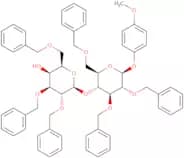
CAS:<p>4-Methoxyphenyl 4-O-(2,3,6-tri-O-benzyl-b-D-galactopyranosyl)-2,3,6-tri-O-benzyl-b-D-glucopyranoside is a sugar that is custom synthesized. It is fluorinated and modified with saccharides. The molecular weight of this compound is 582.06 g/mol and the CAS number for it is 15041281.</p>Formula:C61H64O12Purity:Min. 95%Molecular weight:989.15 g/mol3,4,2',3',6'-Penta-O-acetylsucrose
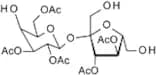
CAS:<p>3,4,2',3',6'-Penta-O-acetylsucrose is a deuterated analog of sucrose. It can be synthesized by reacting sucrose with acetyl chloride in the presence of a base. The transesterification reaction yields the desired product in an overall yield of about 20%. This process is similar to that used for the synthesis of fatty acid esters, but 3,4,2',3',6'-Penta-O-acetylsucrose does not exist in nature and cannot be found as a natural product. The X-ray crystallography studies show that 3,4,2',3',6'-Penta-O-acetylsucrose has a conformation different from that of 6-phosphate sucrose.</p>Formula:C22H32O16Purity:Min. 95%Molecular weight:552.49 g/mol


![Gal[2346Ac]b(1-3)GlcN3[46Bzd]-b-MP](/_next/image/?url=https%3A%2Fstatic.cymitquimica.com%2Fproducts%2F3D%2Fthumb-webp%2FOG60595.webp&w=3840&q=75)