Benzimidazole and Imidazole Derivatives
Benzimidazole is a compound consisting of a benzene ring fused to an imidazole ring, a five-membered structure containing two nitrogen atoms. Benzimidazole derivatives, such as albendazole, are known for their antiparasitic and antifungal activity, used in the treatment of parasitic infections and certain parasitic diseases in animals and humans. Imidazole, on the other hand, is a five-membered structure with two nitrogen atoms found in various biologically active compounds. Imidazole derivatives, such as metronidazole, have antimicrobial and antiparasitic properties. These compounds are also used in the pharmaceutical industry for treating bacterial infections, parasitic diseases, and some fungal infections, as well as in organic chemistry as catalysts.
At CymitQuimica, we offer high-purity benzimidazoles and imidazoles for research in medicinal chemistry, pharmacology, and biotechnology.
Found 10345 products of "Benzimidazole and Imidazole Derivatives"
Sort by
Purity (%)
0
100
|
0
|
50
|
90
|
95
|
100
9-Acridinecarboxylic acid
CAS:Controlled Product<p>Applications 9-Acridinecarboxylic acid is used in the synthesis of short DNA-binding peptides.<br></p>Formula:C14H9NO2Color and Shape:YellowMolecular weight:223.232-Cyclopropylmethylamino-5-chlorobenzophenone
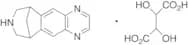
CAS:Controlled Product<p>Applications: 2-Cyclopropylmethylamino-5-chlorobenzophenone is a benzodiazepine derivative.<br>References Japp, M. et al.: J. Chrom., 439, 317 (1988); Guan, F. et al.: J. Anal Toxicol., 23, 54 (1999);<br></p>Formula:C17H16ClNOColor and Shape:NeatMolecular weight:285.77Varenicline Carbamoyl β-D-Glucuronide
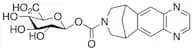
CAS:Controlled Product<p>Applications A metabolite of Varenicline.<br>References Toide, K., et al.: Biochem. Pharmacol., 67, 1269 (2004), Coe, J., et al.: J. Med. Chem., 48, 3474 (2005), Doll, R., et al.: Br. J. Cancer, 92, 426 (2005), Obach, R., et al.: Drug Metab. Dispos., 33, 262 (2005),<br></p>Formula:C20H21N3O8Color and Shape:NeatMolecular weight:431.4Prazepam
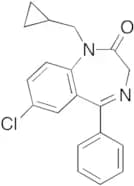
CAS:Controlled Product<p>Applications Prazepam, is a benzodiazepine derivative drug having anxiolytic, anticonvulsant, sedative and skeletal muscle relaxant properties.<br>References Shader R. I., et al.: Ciba. Found. Symp., (74), 141 (1979); Jacqmin, P., et al.: Neuropsychobiology, 19 (4), 186 (1988);<br></p>Formula:C19H17ClN2OColor and Shape:Off-WhiteMolecular weight:324.80Hydroxy Varenicline N-Trifluoroacetic Acid Salt
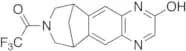
CAS:Controlled Product<p>Applications Protected Varenicline metabolite.<br></p>Formula:C15H12F3N3O2Color and Shape:NeatMolecular weight:323.271,2-Bismethylenecyclohexane (~75%)
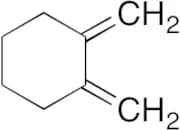
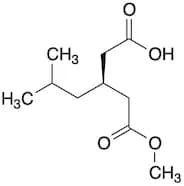
CAS:Controlled ProductFormula:C8H12Purity:~75%Color and Shape:NeatMolecular weight:108.18(3S)-3-(2-Methylpropyl)-pentanedioic Acid 1-Methyl Ester
CAS:Controlled Product<p>Impurity Pregabalin Impurity 17<br>Applications (3S)-3-(2-Methylpropyl)-pentanedioic Acid 1-Methyl Ester (Pregabalin Impurity 17) is an impurity of Pregabalin (P704800), a GABA analogue used as an anticonvulsant.<br>References Taylor, C.P., at al.: Epilepsy Res., 14, 11 (1993); Field, M.J., et al.: Pain, 80, 391 (1999)<br></p>Formula:C10H18O4Color and Shape:NeatMolecular weight:202.254-Hydroxy Midazolam-d5 Methanoate
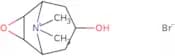
CAS:Controlled Product<p>Applications A labelled metabolite of Midazolam (M343000).<br>References Ha, H., et al.: Ther. Drug Monit., 15, 338 (1993), Thummel, K., et al.: J. Pharmacol. Exp. Ther., 271, 557 (1994), Kim, R., et al.: Pharm. Res., 16, 408 (1999), Maurer, H., et al.: Anal. Bioanal. Chem., 381, 110 (2005), Smink, B., et al.: J. Anal. Toxicol., 30, 478 (2006),<br></p>Formula:C19H12D5ClFN3O2Color and Shape:NeatMolecular weight:378.843-Hydroxy-1-methyl-1-Azoniabicyclo[2.2.2]octane Bromide
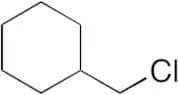
CAS:Controlled Product<p>Applications 3-Hydroxy-1-methyl-1-Azoniabicyclo[2.2.2]octane is an impurity in the synthesis of Clidinium Bromide (C576250), an anticholinergic. Used as an antispasmodic.<br>References Zhang, L., et al.: Pharm. Res., 25, 1902 (2008), Sanderson, H., et al.: Toxicol Lett., 187, 84 (2009),<br></p>Formula:C8H16BrNOColor and Shape:NeatMolecular weight:222.12(Chloromethyl)cyclohexane
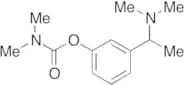
CAS:Controlled Product<p>Applications (Chloromethyl)cyclohexane is a common chemical reagent used in the synthesis of imidazole inhibitors of cytokine release which suppresses the response to tumor necrosis factor.<br> Not a dangerous good if item is equal to or less than 1g/ml and there is less than 100g/ml in the package<br>References Laufer, S. et al., J. Med. Chem., 45, 1695 (2002); Rabinowitz, M. et al.: J. Med. Chem., 44, 4252 (2001);<br></p>Formula:C7H13ClColor and Shape:NeatMolecular weight:132.63N-Desethyl N-Methyl rac-Rivastigmine
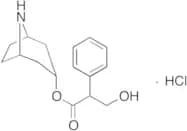
CAS:<p>Impurity Rivastigmin USP Related Compound B<br>Applications N-Desethyl N-Methyl rac-Rivastigmine (Rivastigmin USP Related Compound B) is an impurity in the synthesis of Rivastigmine (R541000) a brain selective acetylcholinesterase inhibitor. Nootropic.<br>References Rosler, M., et al.: Brit. Med. J., 318, 633 (1999), Enz, A., et al.: Prog. Brain Res., 98, 431 (1993),<br></p>Formula:C13H20N2O2Color and Shape:Clear ColourlessMolecular weight:236.31Noratropine Hydrochloride
CAS:Controlled Product<p>Stability Hygroscopic<br>Applications A metabolite of Atropine (A794625). Two metabolites of Atropine (apoatropine and noratropine) were found in rat urine.<br>References Xu, A., et al.: J. Pharm. Biomed. Anal., 14, 33 (1995), Cherkaoui, S., et al.: J. Pharm. Biomed. Anal., 17, 1167 (1998),<br></p>Formula:C16H21NO3·HClColor and Shape:BrownMolecular weight:311.80Propyl Itraconazole
CAS:Controlled ProductFormula:C34H36Cl2N8O4Color and Shape:NeatMolecular weight:691.61Midazolam-d6 (1 mg/mL in Acetonitrile)
CAS:Controlled ProductFormula:C18D6H7ClFN3Color and Shape:Single SolutionMolecular weight:331.804-Nitro-5-desnitro Tinidazole
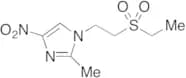
CAS:Controlled Product<p>Impurity Tinidazole EP Impurity B<br>Applications 4-Nitro-5-desnitro Tinidazole (Tinidazole EP Impurity B) is an impurity in the synthesis of Tinidazole (T443900), antiprotozoal (Trichomonas, Giardia); antiamebic; antibacterial.<br>References Miller, M.W., et al.: J. Med. Chem., 13, 849 (1970), Oderdea, G., et al.: Gut, 33, 1328 (1992),<br></p>Formula:C8H13N3O4SColor and Shape:NeatMolecular weight:247.27Modafinil-d5 Sulfone
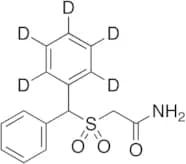
CAS:Controlled Product<p>Applications A labelled metabolite of Modafinil (M482500), a central nervous system vigilance promoting agent, which possesses neuroprotective properties.<br>References Wong, Y., et al.: J. Clin. Pharmacol., 39, 281 (1999), Robertson, P., et al.: Drug Metab. Dispos., 28, 664 (2000), Roth, T., et al.: Clin. Ther., 28, 689 (2006),<br></p>Formula:C152H5H10NO3SColor and Shape:NeatMolecular weight:294.384-Hydroxy Triazolam
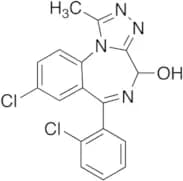
CAS:Controlled Product<p>Stability Light Sensitive<br>Applications A metabolite of Triazolam (T767380).<br>References Gall, M., et al.: J. Med. Chem., 21, 1290 (1978), Jones, H., et al.: Drug Metab. Dispos., 32, 973 (2004), Hallifax, D., et al.: Drug Metab. Dispos., 33, 1852 (2005).<br></p>Formula:C17H12Cl2N4OColor and Shape:NeatMolecular weight:359.21Trimebutine EP Impurity E-Nitroso
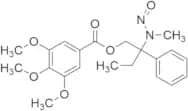
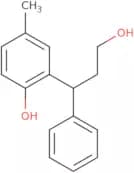
Controlled ProductFormula:C21H26N2O6Color and Shape:NeatMolecular weight:402.4412-Hydroxy-5-methyl-γ-phenylbenzenepropanol
CAS:<p>2-Hydroxy-5-methylphenylbenzenepropanol is an aliphatic phenol that is used as a treatment for benzene poisoning. It is also used as a precursor to other compounds, such as the chlorides and alkylates of 2-hydroxy-5-methylphenylbenzenepropanol. This compound can be synthesized by reacting ethyl benzoylacetate with diisopropylamine in the presence of oxygen and chlorine gas. It is often immobilized using nutrients, l-tartaric acid, or cinnamic acid.</p>Formula:C16H18O2Purity:Min. 95%Molecular weight:242.31 g/molDesdifluoromethoxy hydroxy pantoprazole
CAS:<p>Desdifluoromethoxy hydroxy pantoprazole is a synthetic compound that is used as an impurity standard for the drug product Pantoprazole. It has a purity of ≥98% and is stable under ambient conditions. Desdifluoromethoxy hydroxy pantoprazole is not active on its own, but it is a metabolite of pantoprazole. It can be used to study the metabolism of pantoprazole.</p>Formula:C15H15N3O4SPurity:Min. 95%Molecular weight:333.36 g/mol1-[[4-(3-Methoxypropoxy)-3-methyl-2-pyridinyl]methyl]-2-[[[4-(3-methoxypropoxy)-3-methyl-2-pyridinyl]methyl]thio]-1H-benzimidazole
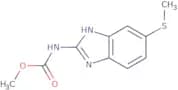
CAS:<p>1-[[4-(3-Methoxypropoxy)-3-methyl-2-pyridinyl]methyl]-2-[[[4-(3-methoxypropoxy)-3-methyl-2-pyridinyl]methyl]thio]-1H-benzimidazole is a drug product with analytical applications. It has been shown to have natural and synthetic origins, as well as impurities of its own. It is a custom synthesis and research and development compound that is used for HPLC standardization. The compound has been synthesized for the purpose of drug development and it is intended for niche use.</p>Formula:C29H36N4O4SPurity:Min. 95%Molecular weight:536.69 g/molAlbendazole impurity F
CAS:<p>Albendazole is an anti-helminthic drug that is structurally classified as a benzimidazole. It has been shown to be effective against a variety of helminths, including roundworms, pinworms, hookworms, and tapeworms. Albendazole impurity F is an analytical standard for the determination of albendazole in pharmaceutical products by HPLC. It also serves as a reference substance to establish the purity of drug products containing albendazole and its metabolites. Albendazole impurity F is not considered to be a metabolite of albendazole because it has been shown to be stable under acidic conditions and can be synthesized from other starting materials.</p>Formula:C10H11N3O2SPurity:Min. 95%Molecular weight:237.28 g/molPregabalin impurity PD 0312236 and Pregabalin impurity PD 0312237 (mixture of tautomeric isomers)
CAS:<p>Lactose conjugate degradation product of pregabalin</p>Formula:C20H35NO11Purity:Min. 95%Molecular weight:465.49 g/molN-Methyl omeprazole (Mixture of isomers with the methylated nitrogens of imidazole)
<p>Please enquire for more information about N-Methyl omeprazole (Mixture of isomers with the methylated nitrogens of imidazole) including the price, delivery time and more detailed product information at the technical inquiry form on this page</p>Formula:C18H21N3O3SPurity:Min. 95%Molecular weight:359.44 g/mol(4R)-1-(4-O-b-D-Galactopyranosyl-b-D-glucopyranosyl)-4-(2-methylpropyl)-2-pyrrolidinone
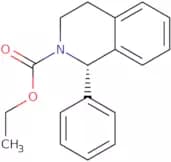
CAS:<p>(4R)-1-(4-O-b-D-Galactopyranosyl-b-D-glucopyranosyl)-4-(2-methylpropyl)-2-pyrrolidinone is a synthetic, impurity standard and research and development compound. (4R)-1-(4-O-b-D-Galactopyranosyl-b-D-glucopyranosyl)-4-(2-methylpropyl)-2pyrrolidinone is used as an analytical reference in the synthesis of other compounds. It is also used in drug development for the treatment of tuberculosis. This product has a high purity level and is pharmacopoeia grade.</p>Formula:C20H35NO11Purity:Min. 95%Molecular weight:465.49 g/molEthyl (S)-1-phenyl-1,2,3,4-tetrahydro-2-isoquinolinecarboxylate
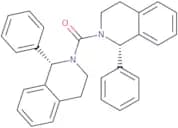
CAS:<p>Ethyl (S)-1-phenyl-1,2,3,4-tetrahydro-2-isoquinolinecarboxylate is an analytical standard used to identify impurities in drug products. It is a metabolite of the drug product and has been shown to be safe for human consumption. The compound is a synthetic chemical that is not found naturally in the environment. CAS No. 180468-42-2</p>Formula:C18H19NO2Purity:Min. 95%Molecular weight:281.35 g/molOxybutynin EP impurity B
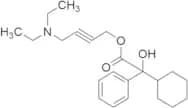
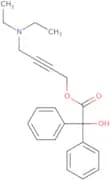
CAS:<p>Oxybutynin EP impurity B is a metabolite of oxybutynin and is a natural product. It is used as an analytical reference substance, to develop new drugs, and in pharmacopoeia in order to measure the purity of oxybutynin. The compound is synthesized by chemical synthesis and can be used as a standard for HPLC analysis.</p>Purity:Min. 95%(R)-1-Phenyl-1,2,3,4-tetrahydroisoquinoline
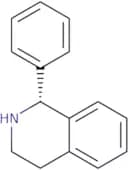
CAS:<p>(R)-1-Phenyl-1,2,3,4-tetrahydroisoquinoline is a chiral molecule with four stereocenters. It is synthesized by the reaction of sulfamic acid and cyclohexene in the presence of p-toluenesulfonic acid. The product formed is then dehydrogenated to produce (R)-1-phenyl-1,2,3,4-tetrahydroisoquinoline. This compound is soluble in organic solvents such as benzene and ethane and can be used as an acceptor for chiral stationary phases.</p>Formula:C15H15NPurity:Min. 95%Color and Shape:PowderMolecular weight:209.29 g/mol2,12-Dihydro-1,3-dimethyl-9-methoxy-12-thioxobenzo [4,5] pyrido [1,2-c] imidazo [1,2-a] imidazol-2-one
CAS:<p>2,12-Dihydro-1,3-dimethyl-9-methoxy-12-thioxobenzo [4,5] pyrido [1,2-c] imidazo [1,2-a] imidazol-2-one is a synthetic compound that has not been evaluated in humans. This compound is an impurity standard for the synthesis of an API. The purity of this compound is >98% and it has been shown to be stable under acidic conditions.</p>Formula:C16H13N3O2SPurity:Min. 95%Molecular weight:311.36 g/mol3,4-Dimethoxy-2-methylpyridine-N-oxide
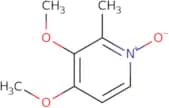
CAS:<p>3,4-Dimethoxy-2-methylpyridine-N-oxide is a potent inhibitor of somatostatin, which is known to play a role in the regulation of cancer cell growth and apoptosis. This compound has been shown to inhibit the activity of human kinases, including those involved in tumor cell proliferation. 3,4-Dimethoxy-2-methylpyridine-N-oxide is an anticancer agent that can be used to treat various types of cancer. It has also been found to have inhibitory effects on urine quetiapine and Chinese hamster ovary cells. The compound is a potent analog of kinase inhibitors and can be used as a lead compound for developing new drugs with anticancer properties.</p>Formula:C8H11NO3Purity:Min. 95%Molecular weight:169.18 g/molTiotropium Bromide EP Impurity G
CAS:<p>Tiotropium Bromide EP Impurity G is an anticholinergic bronchodilator that is used in the treatment of asthma. Tiotropium Bromide EP Impurity G has been shown to have long-acting properties, with a half-life of about 20 hours. It has a high affinity for the muscarinic receptor and acts as a competitive antagonist at this site. Tiotropium Bromide EP Impurity G also has a cavity, which may be necessary for its activity.</p>Formula:C9H6BrNO2Purity:Min. 95%Molecular weight:240.05 g/molScopine-2,2-dithienyl glycolate
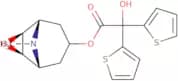
CAS:<p>Scopine-2,2-dithienyl glycolate is a catalyst that belongs to the class of dithienyl glycolates. Scopine-2,2-dithienyl glycolate is used in the pharmaceutical industry as an average catalyst for reactions and can be used to recover dimethylbenzene. The method of detection for scopine-2,2-dithienyl glycolate is based on its ability to absorb light at a wavelength of 360 nm. The reaction solution must be monitored carefully during the synthetic process because it has been shown that it can react with water or air and form hydrogen sulfide gas. If this happens, the reaction solution will become cloudy or turbid. This product is a white crystalline solid that appears as tiny needles and has a melting point of 173 degrees Celsius (340 degrees Fahrenheit).</p>Formula:C18H19NO4S2Purity:Min. 95%Molecular weight:377.48 g/molSolifenacin impurity C
CAS:<p>Solifenacin impurity C is an impurity that is found in the drug product Solifenacin. It has been shown to be a natural metabolite and has been detected in human urine. Solifenacin impurity C is used as an analytical standard for HPLC analyses of solifenacin, and can also be used as a reference material for pharmacopoeia. The purity of this compound is 99%.</p>Formula:C31H28N2OPurity:Min. 95 Area-%Color and Shape:White PowderMolecular weight:444.57 g/molN,N-Dimethylaminoethyl-a-(1-Hydroxycyclopentyl)phenylacetate hydrochloride
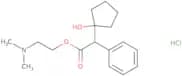
CAS:Controlled Product<p>N,N-Dimethylaminoethyl-a-(1-Hydroxycyclopentyl)phenylacetate hydrochloride (DMAEA) is a drug that is used as an ophthalmic. It has been shown to be safe and effective in patients with chronic open angle glaucoma, and it may also have some efficacy for the treatment of other conditions such as uveitis and retinal detachment. DMAEA is thought to work by binding to the DNA in the eye’s optic nerve cells and blocking the production of leukotrienes. This drug has also been shown to have anti-inflammatory properties.</p>Formula:C17H26ClNO3Purity:Min. 95%Color and Shape:PowderMolecular weight:327.85 g/molOmeprazole Impurity 65
<p>Impurity 65 is an impurity of Omeprazole, a drug used to treat gastroesophageal reflux disease and peptic ulcer. Impurity 65 is a metabolite of Omeprazole that can be found in the drug product at a concentration up to 0.5%. It has been shown to have anti-inflammatory effects and can be used as a research and development standard for HPLC analysis. Impurity 65 is also used as an impurity standard in the USP pharmacopoeia and other pharmacopoeias around the world.</p>Formula:C17H17N3O4Purity:Min. 95%Molecular weight:327.33 g/mol1-[[3-Methyl-4-(2,2,2-trifluoroethoxy)-2-pyridinyl]methyl]-2-[[[3-methyl-4-(2,2,2-trifluoroethoxy)-2-pyridinyl]methyl]sulfinyl]-1H-b enzimidazole
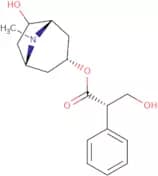
CAS:<p>1-[[3-Methyl-4-(2,2,2-trifluoroethoxy)-2-pyridinyl]methyl]-2-[[[3-methyl-4-(2,2,2-trifluoroethoxy)-2-pyridinyl]methyl]sulfinyl]-1H-b enzimidazole is an impurity of a drug product. It is a metabolite that has been shown to be present in human plasma and urine. This compound is synthetically produced and is not found in nature. It has been shown to have niche applications in both analytical chemistry and pharmacopoeia.</p>Formula:C25H22F6N4O3SPurity:Min. 95%Molecular weight:572.52 g/mol7-Hydroxyhyoscyamine
CAS:<p>7-Hydroxyhyoscyamine is an antibacterial agent that is used in the treatment of bacterial infections. It has been shown to inhibit the growth of a number of bacteria including Staphylococcus aureus, Streptococcus pyogenes, and Escherichia coli. 7-Hydroxyhyoscyamine has been shown to be more potent than 6-hydroxyhyoscyamine (6-OH Hya) for inhibiting protein synthesis in the bacteria. The compound does not have any psychoactive effects, unlike atropine sulfate, which is also an alkaloid found in plants from the Solanaceae family. 7-Hydroxyhyoscyamine can be synthesized by reacting atropine with nitrous acid or hydrochloric acid. This synthetic process leads to n-oxides as impurities, which can be removed by using a reversed phase high performance liquid chromatography (RP HPLC). Validation of this</p>Formula:C17H23NO4Purity:Min. 95%Color and Shape:PowderMolecular weight:305.4 g/mol2-(3-(1-Benzylpiperidin-4-yl)-2-oxopropyl)-4,5-dimethoxybenzoic acid
CAS:<p>2-(3-(1-Benzylpiperidin-4-yl)-2-oxopropyl)-4,5-dimethoxybenzoic acid is a synthetic compound that is being researched as a potential drug product. It is an impurity standard for HPLC and has been used in the past to develop drugs. The chemical structure of this compound closely resembles that of the natural metabolite 4,5-dimethoxybenzoic acid, which is found in plants such as thyme. 2-(3-(1-Benzylpiperidin-4-yl)-2-oxopropyl)-4,5-dimethoxybenzoic acid has shown to inhibit human cytochrome P450 enzymes, which may lead to serious side effects when taken orally.</p>Formula:C24H29NO5Purity:Min. 95%Molecular weight:411.49 g/molcis-(±)-4-[4-[4-[4-[[2-(2,4-Dichlorophenyl)-2-(1H-1,2,4-triazol-1-ylmethyl)-1,3-dioxolan-4-yl]methoxy]phenyl]-1-piperazinyl]phenyl]- 2,4-dihydro-2-propyl-3H-1,2,4-triazol-3-one
CAS:<p>cis-(±)-4-[4-[4-[4-[[2-(2,4-Dichlorophenyl)-2-(1H-1,2,4-triazol-1-ylmethyl)-1,3-dioxolan-4-yl]methoxy]phenyl]-1-piperazinyl]phenyl]- 2,4-dihydro-2-propyl-3H-1,2,4-triazol-3-one is a drug product that is used as a research and development tool. It is an impurity standard for HPLC. This compound has a chemical name of cis-(±)-4-[4-[4-[4-(hydroxymethyl)phenyl]-1piperazinyl]phenyl]-2, 4dihydro 2propyl 3H 1 2 4 triazol 3one. The CAS number for this compound is 7485591 7. This compound</p>Formula:C34H36Cl2N8O4Purity:Min. 95%Molecular weight:691.61 g/mol1-Deoxy-4-O-β-D-galactopyranosyl-1-[(4R)-4-(2-methylpropyl)-2-oxo-1-pyrrolidinyl]-β-D-fructopyranose/furanose
CAS:<p>Lactose conjugate degradation product of pregabalin</p>Formula:C20H35NO11Purity:Min. 95%Color and Shape:PowderMolecular weight:465.49 g/mol1-[[4-(3-Methoxypropoxy)-3-methyl-2-pyridinyl]methyl]-2-[[[4-(3-methoxypropoxy)-3-methyl-2-pyridinyl]methyl]sulfonyl]-1H-benzimidazo le
CAS:<p>1-[[4-(3-Methoxypropoxy)-3-methyl-2-pyridinyl]methyl]-2-[(4-(3-methoxypropoxy)-3-methyl-2-pyridinyl)methylsulfonyl]-1H-benzimidazole (MKC1807) is a synthetic drug product. MKC1807 is an analytical standard in the HPLC assay for the determination of Epiandrosterone sulfate and its metabolites. 1-[4-(3-Methoxypropoxy)-3,5,6,7,8 -pentamethylcyclohexyl]methyl 2-[(4-(3 -methoxypropoxy) 3,5,6,7,8 -pentamethylcyclohexyl)methylsulfonyl]-1H benzimidazole has been shown to be a natural metabolite of Epiandrosterone sulfate. This compound</p>Formula:C29H36N4O6SPurity:Min. 95%Molecular weight:568.69 g/mol1-[[3-Methyl-4-(2,2,2-trifluoroethoxy)-2-pyridinyl]methyl]-2-[[[3-methyl-4-(2,2,2-trifluoroethoxy)-2-pyridinyl]methyl]thio]-1H-benzi midazole
CAS:<p>1-[[3-Methyl-4-(2,2,2-trifluoroethoxy)-2-pyridinyl]methyl]-2-[[[3-methyl-4-(2,2,2-trifluoroethoxy)-2-pyridinyl]methyl]thio]-1H-benzi midazole is a high purity analytical standard that is used to calibrate HPLC. It is found as an impurity in the drug product and as a metabolite. 1-[(3-Methyl-4-(2,2,2 -trifluoroethoxy) - 2 - pyridinyl) methyl] - 2 - [[[3 - methyl (4 ( 2 , 2 , 2 - trifluoroethoxy) - 2 pyridinyl) methyl] thio] - 1 H benzimidazole is the IUPAC name for this compound. This chemical has been synthesized</p>Formula:C25H22F6N4O2SPurity:Min. 95%Molecular weight:556.52 g/molAlbendazole sulfone
CAS:<p>Albendazole sulfone is a metabolite of the drug albendazole. It is used as an analytical standard to measure the concentration of albendazole in human plasma and urine samples. The concentration-time curve for albendazole sulfone can be determined using a nonlinear regression analysis, with the rate constant being calculated from the slope and intercept. This method has been shown to be accurate for predicting pharmacokinetic parameters in humans. Albendazole sulfone is also used as a probe in wastewater treatment studies, where it binds to colloidal gold particles that are used to visualize the removal of small particles by microorganisms.</p>Formula:C12H15N3O4SPurity:Min. 95 Area-%Color and Shape:PowderMolecular weight:297.33 g/molAmino albendazole sulfone
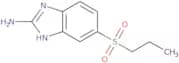
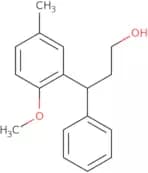
CAS:<p>Amino albendazole sulfone is an anthelmintic drug that is used to treat worm infestations in animals. It is the active metabolite of fenbendazole sulfone and has a terminal half-life of 12 hours in humans. Amino albendazole sulfone can be prepared by chromatographic methods, such as liquid chromatography or gas chromatography, and it can be analyzed with a fluorescence detector. This drug has been shown to have a concentration–time curve following administration to rats and results in an increase in the number of worms eliminated from the body.</p>Formula:C10H13N3O2SPurity:Min. 95%Molecular weight:239.3 g/mol2-Methoxy-5-methyl-γ-phenylbenzenepropanol
CAS:<p>2-Methoxy-5-methyl-gamma-phenylbenzenepropanol is a synthetic compound that is used as an intermediate in the synthesis of coumarin derivatives. Reaction with sulfonating agents produces sulfones, and reaction with borohydride reagents produces boronates. The synthesis of 2-methoxy-5-methyl-gamma-phenylbenzenepropanol can be accomplished by the reduction of diphenyl ethers with lithium aluminum hydride or borohydride. The reduction can also be carried out using lanthanum oxide and potassium borohydride. The reaction proceeds smoothly at room temperature in nonpolar solvents.<br>2-Methoxy-5-methyl-gamma-phenylbenzenepropanol reacts with chloride to produce the corresponding chlorides, which are useful intermediates for the synthesis of tolterodine tartrate, a drug used to treat urinary inc</p>Formula:C17H20O2Purity:Min. 95%Molecular weight:256.34 g/mol2-[[(4-Methoxy-3-methyl-2-pyridinyl)methyl]sulfinyl]-1H-benzimidazole
CAS:<p>2-[(4-Methoxy-3-methyl-2-pyridinyl)methyl]sulfinyl]-1H-benzimidazole is a synthetic, impurity standard that is used in the synthesis of drug products. It has been shown to inhibit the metabolism of drugs and may be used as a marker for drug metabolism. This compound may also be used as a marker in analytical studies to assess the purity of a drug product. 2-[(4-Methoxy-3-methyl-2-pyridinyl)methyl]sulfinyl]-1H-benzimidazole has not been evaluated for safety or efficacy.</p>Formula:C15H15N3O2SPurity:Min. 95%Molecular weight:301.36 g/molLansoprazole impurity H
CAS:<p>Lansoprazole impurity H is a metabolite of lansoprazole, a proton pump inhibitor that inhibits the production of stomach acid. Lansoprazole impurity H is used in research and development as an analytical standard to measure lansoprazole concentrations in drug products. It is also used as an impurity standard for pharmacopoeia purposes. Lansoprazole impurity H is not known to be toxic, but it has not been evaluated for carcinogenicity or reproductive toxicity.</p>Formula:C23H16F3N5OSPurity:90%MinMolecular weight:467.47 g/mol




![3-Hydroxy-1-methyl-1-Azoniabicyclo[2.2.2]octane Bromide](/_next/image/?url=https%3A%2Fstatic.cymitquimica.com%2Fproducts%2FTR%2Fthumb-webp%2FH946585.webp&w=3840&q=75)




![1-[[4-(3-Methoxypropoxy)-3-methyl-2-pyridinyl]methyl]-2-[[[4-(3-methoxypropoxy)-3-methyl-2-pyridin…](/_next/image/?url=https%3A%2Fstatic.cymitquimica.com%2Fproducts%2F3D%2Fthumb-webp%2FIM25351.webp&w=3840&q=75)


![2,12-Dihydro-1,3-dimethyl-9-methoxy-12-thioxobenzo [4,5] pyrido [1,2-c] imidazo [1,2-a] imidazol-2…](/_next/image/?url=https%3A%2Fstatic.cymitquimica.com%2Fproducts%2F3D%2Fthumb-webp%2FID57925.webp&w=3840&q=75)
![1-[[3-Methyl-4-(2,2,2-trifluoroethoxy)-2-pyridinyl]methyl]-2-[[[3-methyl-4-(2,2,2-trifluoroethoxy)…](/_next/image/?url=https%3A%2Fstatic.cymitquimica.com%2Fproducts%2F3D%2Fthumb-webp%2FIM25689.webp&w=3840&q=75)

![cis-(±)-4-[4-[4-[4-[[2-(2,4-Dichlorophenyl)-2-(1H-1,2,4-triazol-1-ylmethyl)-1,3-dioxolan-4-yl]meth…](/_next/image/?url=https%3A%2Fstatic.cymitquimica.com%2Fproducts%2F3D%2Fthumb-webp%2FID27219.webp&w=3840&q=75)
![1-Deoxy-4-O-β-D-galactopyranosyl-1-[(4R)-4-(2-methylpropyl)-2-oxo-1-pyrrolidinyl]-β-D-fructopyrano…](/_next/image/?url=https%3A%2Fstatic.cymitquimica.com%2Fproducts%2F3D%2Fthumb-webp%2FID63811.webp&w=3840&q=75)
![1-[[4-(3-Methoxypropoxy)-3-methyl-2-pyridinyl]methyl]-2-[[[4-(3-methoxypropoxy)-3-methyl-2-pyridin…](/_next/image/?url=https%3A%2Fstatic.cymitquimica.com%2Fproducts%2F3D%2Fthumb-webp%2FIM25352.webp&w=3840&q=75)
![1-[[3-Methyl-4-(2,2,2-trifluoroethoxy)-2-pyridinyl]methyl]-2-[[[3-methyl-4-(2,2,2-trifluoroethoxy)…](/_next/image/?url=https%3A%2Fstatic.cymitquimica.com%2Fproducts%2F3D%2Fthumb-webp%2FIM25690.webp&w=3840&q=75)

![2-[[(4-Methoxy-3-methyl-2-pyridinyl)methyl]sulfinyl]-1H-benzimidazole](/_next/image/?url=https%3A%2Fstatic.cymitquimica.com%2Fproducts%2F3D%2Fthumb-webp%2FIM21228.webp&w=3840&q=75)