Flavonoids and Polyphenols
Flavonoids are phenolic compounds that contain a structure of 15 carbon atoms, consisting of two aromatic rings linked by a three-carbon bridge. Polyphenols are a broader class of organic compounds containing multiple phenolic groups. Both groups have potent antioxidant properties, allowing them to protect cells from damage caused by free radicals. Flavonoids are commonly found in fruits, vegetables, and tea and are associated with improved cardiovascular health and the prevention of chronic diseases. Polyphenols also have applications in cancer prevention and brain health promotion.
At CymitQuimica, we offer high-quality flavonoids and polyphenols for research in chemistry, pharmacology, and biomedicine.
Found 16990 products of "Flavonoids and Polyphenols"
Sort by
Purity (%)
0
100
|
0
|
50
|
90
|
95
|
100
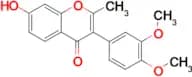
3-(3,4-Dimethoxy-phenyl)-7-hydroxy-2-methyl-chromen-4-one
CAS:Purity:95.0%Molecular weight:312.3210144042969[6]-Shogaol (>90%)
CAS:Controlled Product<p>Applications [6]-Shogaol is an aromatic constituent of ginger and the chain-dehydroxylated analog of [6]-Gingerol. [6]-Shogaol has activity very similar to [6]-Gingerol and produced an inhibition of spontaneous motor activity, antipyretic and analgesic effects, and prolonged hexobarbital-induced sleeping time. [6]-Shogaol also has potent antitussive activity and affected the cortical EEG.<br>References Suekawa, M. et al.: J. Pharm-Dyn., 7, 836 (1984); Yoshikawa, M. et al.: Chem. Pharmac. Bull., 40, 2239 (1992);<br></p>Formula:C17H24O3Purity:>90%Color and Shape:NeatMolecular weight:276.37(-)-Riboflavin
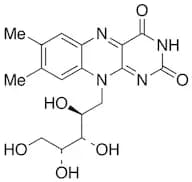
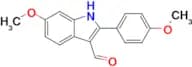
CAS:Controlled Product<p>Stability Hygroscopic<br>Applications (-)-Riboflavin is a nutritional factor found in milk, eggs, malted barley, liver, kidney, heart, leafy vegetables. Richest natural source is yeast. Minute amounts present in all plant and animal cells. Vitamin (enzyme cofactor).<br>References Unna, K., et al.: J. Pharmacol. Exp. Ther., 76, 75 (1942), Rivlin, et al.: N. Engl. J. Med., 283, 463 (1970), Al-Shammary, F.J., et al.: Anal. Profiles Drug Subs., 19, 429 (1990),<br></p>Formula:C17H20N4O6Color and Shape:NeatMolecular weight:376.366-Methoxy-2-(4-methoxyphenyl)-1H-indole-3-carbaldehyde
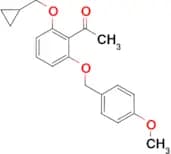
CAS:Purity:97%Molecular weight:281.31100463867191-(2-(CYCLOPROPYLMETHOXY)-6-(4-METHOXYBENZYLOXY)PHENYL)ETHANONE
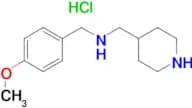
CAS:Purity:95.0%Molecular weight:326.3919982910156(4-Methoxy-benzyl)-piperidin-4-ylmethyl-amine hydrochloride
CAS:Purity:95.0%Molecular weight:270.799987792968756-ethyl-1-(4-methoxybenzyl)-1H-pyrazolo[3,4-b]pyridine-4-carboxylic acid
CAS:Color and Shape:SolidMolecular weight:311.341003417968754-AMINO-2-(3-METHOXYPHENYL)-6,7-DIHYDRO-5H-CYCLOPENTA[D]PYRIMIDINE
CAS:Purity:95.0%Molecular weight:241.294006347656251-(4-Methoxyphenyl)-2-pyrimidin-4-ylethanone
CAS:Formula:C13H12N2O2Purity:95.0%Color and Shape:SolidMolecular weight:228.251Silydianin
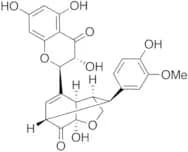
CAS:Controlled Product<p>Applications Silydianin is an active constituent of Silybium marianum and is known the exhibit anti-inflammatory activity which regulates caspase-3 activation which affects cell membranes and acts as a free radical scavenger.<br>References Zlelinska-Przyyjemska, M., et al.: Phytother. Res., 20, 115 (2006); Milan, M., et al.L Anal. Chimica. Acta., 486, 125 (2003); Liu, Y.Z., et al.: Chin. Herb. Med., 4, 237 (2012);<br></p>Formula:C25H22O10Color and Shape:Off-WhiteMolecular weight:482.443-(4-METHOXYBENZYL)-1,3,7-TRIAZASPIRO[4.4]NONANE-2,4-DIONE HCL
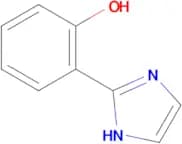
Purity:95.0%Molecular weight:311.76998901367192-(1H-Imidazol-2-yl)phenol
CAS:Purity:95.0%Color and Shape:Liquid, No data available.Molecular weight:160.175994873046886-Iodo Diosmin
CAS:<p>Impurity Diosmin EP Impurity D<br>Applications 6-Iodo Diosmin (Diosmin EP Impurity D) is a Diosmin (D485200) impurity.<br></p>Formula:C28H31IO15Color and Shape:Light YellowMolecular weight:734.44(-)-Epicatechin Gallate
CAS:Controlled Product<p>Stability Light Sensitive<br>Applications One of the catechin isomers and a potent antioxidant that can modulate a wide range of membrane proteins. Its bilayer-modifying potency was tested using gramicidin A (gA) channels as probes. All the catechins alter gA channel function and modify bilayer properties, with a 500-fold range in potency. The gallate group causes current block, as evident by brief downward current transitions.<br>References Ingolfsson, H., et al.: FEBS Lett., 585, 3101 (2011),<br></p>Formula:C22H18O10Color and Shape:White To Off-WhiteMolecular weight:442.37
![5'-Nitro-[1,1':3',1''-terphenyl]-2'-ol](/_next/image/?url=https%3A%2Fstatic.cymitquimica.com%2Fproducts%2F10%2Fthumb-webp%2FF722350.webp&w=3840&q=75)

![[6]-Shogaol (>90%)](/_next/image/?url=https%3A%2Fstatic.cymitquimica.com%2Fproducts%2FTR%2Fthumb-webp%2FS357800.webp&w=3840&q=75)

![6-ethyl-1-(4-methoxybenzyl)-1H-pyrazolo[3,4-b]pyridine-4-carboxylic acid](/_next/image/?url=https%3A%2Fstatic.cymitquimica.com%2Fproducts%2F10%2Fthumb-webp%2FF428128.webp&w=3840&q=75)
![4-AMINO-2-(3-METHOXYPHENYL)-6,7-DIHYDRO-5H-CYCLOPENTA[D]PYRIMIDINE](/_next/image/?url=https%3A%2Fstatic.cymitquimica.com%2Fproducts%2F10%2Fthumb-webp%2FF301970.webp&w=3840&q=75)
![4-(3-Bromopyrazolo[1,5-a]pyrimidin-6-yl)phenol](/_next/image/?url=https%3A%2Fstatic.cymitquimica.com%2Fproducts%2F10%2Fthumb-webp%2FF224471.webp&w=3840&q=75)


![3-(4-METHOXYBENZYL)-1,3,7-TRIAZASPIRO[4.4]NONANE-2,4-DIONE HCL](/_next/image/?url=https%3A%2Fstatic.cymitquimica.com%2Fproducts%2F10%2Fthumb-webp%2FF505848.webp&w=3840&q=75)