


Flavonoids and Polyphenols
Flavonoids are phenolic compounds that contain a structure of 15 carbon atoms, consisting of two aromatic rings linked by a three-carbon bridge. Polyphenols are a broader class of organic compounds containing multiple phenolic groups. Both groups have potent antioxidant properties, allowing them to protect cells from damage caused by free radicals. Flavonoids are commonly found in fruits, vegetables, and tea and are associated with improved cardiovascular health and the prevention of chronic diseases. Polyphenols also have applications in cancer prevention and brain health promotion.
At CymitQuimica, we offer high-quality flavonoids and polyphenols for research in chemistry, pharmacology, and biomedicine.
Found 16990 products of "Flavonoids and Polyphenols"
Sort by
Purity (%)
0
100
|
0
|
50
|
90
|
95
|
100
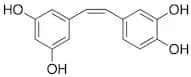
cis-Piceatannol
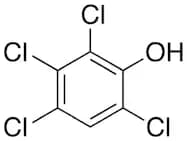
CAS:Controlled Product<p>Applications The cis isomer of human metabolite of Resveratrol (R150000).<br>References Athar, M., et al.: Toxicol. Appl. Pharmacol., 224, 274 (2007), Bernhardt, R., et al.: J. Biotechnol., 124, 128 (2006), Fairman, D.A., et al.: Drug Metab. Dispos., 35, 2159 (2007),<br></p>Formula:C14H12O4Color and Shape:NeatMolecular weight:244.242,4,5,6-Tetrachlorophenol (contains 10% pentachlorophenol)
CAS:Controlled Product<p>Applications Used as a broad range pesticide against insects, fungi, vegetation and bacteria. It has become a common environmental contaminant and probable human carcinogen.<br> Not a dangerous good if item is equal to or less than 1g/ml and there is less than 100g/ml in the package<br>References Gulcan, H., et al.: Chem. Res. Toxicol., 21, 1503 (2008), Toropov, A., et al.: Bioorg. Med. Chem., 16, 5999 (2008), Franco, A., et al.: Envir. Toxicol. Chem., 28, 2018 (2009), Jensen, S., et al.: J. Agric. Food Chem., 57, 5872 (2009),<br></p>Formula:C6H2Cl4OColor and Shape:NeatMolecular weight:231.893-Bromo-4-methoxy-benzoyl chloride
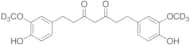
CAS:Formula:C8H6BrClO2Purity:95.0%Color and Shape:SolidMolecular weight:249.49Tetrahydro Curcumin-d6
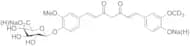
CAS:Controlled Product<p>Applications Labelled analogue of Tetrahydro Curcumin, a major metabolite of Curcumin (C838500) that has been shown to have protective effects against diabetes and vascular dysfunction via alleviation of oxidative stress.<br>References Namareoung, S. et al.: Naun.-Schmied. Arch. Pharmacol.,383, 519 (2011); Kartileksan, K. et al.: J. Func. Foods, 2, 134 (2009);<br></p>Formula:C21H18D6O6Color and Shape:NeatMolecular weight:378.45Curcumin b-D-Glucuronide-d3 Sodium (>90%)
CAS:Controlled Product<p>Applications Curcumin β-D-Glucuronide-d3 Sodium Salt is the labelled analogue of Curcumin β-D-Glucuronide Sodium Salt, which is a metabolite of Curcumin (C838510) in hepatic tissue and portal blood.<br>References Sharma, O., et al.: Biochem. Pharmacol., 25, 1811 (1976); Colletti, L., et al.: J. Clin. Invest., 85, 1936 (1990); Sharma, R., et al.: Clin. Cancer Res., 7, 1894 (2001);<br></p>Formula:C27H25D3O12•x(Na)Purity:>90%Color and Shape:NeatMolecular weight:547.5222993-(3-Methoxyphenyl)-5-[(4-methoxyphenyl)methylidene]-2-sulfanylideneimidazolidin-4-one
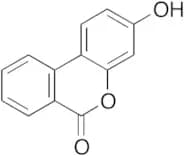
CAS:Purity:95%Molecular weight:340.4Urolithin B
CAS:<p>Stability Hygroscopic<br>Applications Urolithin B is an intestinal microbial metabolite of ellagitannis and exhibits potent anti-oxidant and pro-oxidant activies depending on the assay system and conditions. Urolithin B can also display estrogenic and/or anti-estrogenic activity.<br>References Kallio, T., et al.: J. Agr. Food Chem., 61, 10720 (2013); Nealmongkol, P., et al.: Tetrahedron, 69, 9277 (2013); Larrosa, M., et al.: J. Agr. Food Chem., 54, 1611 (2006); Bialonska, D., et al.: J. Agr. Food Chem., 57, 10181 (2009)<br></p>Formula:C13H8O3Color and Shape:NeatMolecular weight:212.20Hexahydrocurcumin-d6
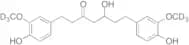
CAS:Controlled Product<p>Applications Hexahydrocurcumin-d6 is an isotope labelled degradation product of Curcumin (C838500), a dietary anti-inflammatory and chemopreventive agent consisting of two methoxyphenol rings connected by a conjugated heptadienedione chain.<br>References Gordon, D.N., et al.: J. Biol. Chem., 290, 4817 (2015);<br></p>Formula:C21H20D6O6Color and Shape:NeatMolecular weight:380.46Genistein 7-β-D-Glucuronide 4’-Sulfate Disodium Salt
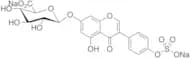
CAS:<p>Applications Sulfuric Acid conjugated Genistein metabolite.<br>References Kinjo, J., et al.: Biol. Pharm. Bull., 27, 185 (2004), Tsuchihashi, R., et al.: Nat. Med., 58, 71 (2004), Bursztyka, J., et al.: Food Chem. Toxicol., 46, 939 (2008),<br></p>Formula:C21H16Na2O14SColor and Shape:Brown To Dark RedMolecular weight:570.39(+)-trans Taxifolin
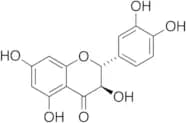
CAS:Controlled Product<p>Applications An antioxidant flavenoid.<br>References Dixon, D., et al.: J. Biol. Chem., 285, 36322 (2010), Sheu, M., et al.: Chem. Pharm. Bull., 58, 1187 (2010),<br></p>Formula:C15H12O7Color and Shape:NeatMolecular weight:304.25Biochanin A
CAS:Controlled Product<p>Applications An isoflavone with anticancer proliferation, differentiation and chemopreventitive properties. Inhibits metabolic activation of benzo[a]pyrene.<br>References Chae, Y.H., et al.: Chem. Biol. Interactions, 82, 181 (1992), Jing, Y. and Waxman, S.: Anticancer Res., 15(4), 1147 (1995)<br></p>Formula:C16H12O5Color and Shape:Off-WhiteMolecular weight:284.26Triclosan-d3
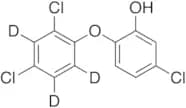
CAS:Controlled Product<p>Applications Isotope labelled Triclosan is used as bactericide and preservative for cosmetic and detergent compositions (1). Broadly used as an antiseptic and disinfectant (2). This compound is a contaminant of emerging concern (CECs). Drinking water contaminant candidate list 3 (CCL 3) compound as per United States Environmental Protection Agency (EPA). Environmental contaminants; Food contaminants.<br> Not a dangerous good if item is equal to or less than 1g/ml and there is less than 100g/ml in the package<br>References 1. Lindström, A. et al.: Environ. Sci. Technol. 2002 Jun 1;36(11):2322-9. 2. Ruszkiewicz, J. et al.: J. Toxicol. Environ. Health B. Crit. Rev. 2017;20(2):104-117.<br></p>Formula:C122H3H4Cl3O2Color and Shape:Off-White To Light YellowMolecular weight:292.56Bisdemethoxycurcumin
CAS:Controlled Product<p>Applications Bisdemethoxycurcumin is one of the three major forms of curcuminoids found in the rhizomes of turmeric. Bisdemethoxycurcumin displays antioxidant, anti-inflammatory as well as chemotherapeutic activity. Bisdemethoxycurcumin acts as an inhibitor of human pancreatic α-amylase, a target for type-2 diabetes .<br>References Ponnusamy, S. et al.: Food Chem., 135, 2638 (2012); Hung, C.-M. et al.: J. Agric. Food. Chem., 60, 8427 (2012); Jayaprakasha, G.K. et al.: Food Chem., 98, 720 (2006);<br></p>Formula:C19H16O4Color and Shape:NeatMolecular weight:308.332-tert-Butyl-4-Hydroxyanisole
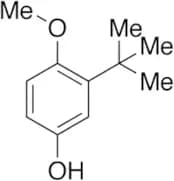
CAS:Controlled Product<p>Applications 2-tert-Butyl-4-hydroxyanisole shows insecticidal activity.<br>References Newberne, P., et al.: Food Technol., 54, 66 (2000), Passone, M., et al.: Food Control, 19, 364 (2008),<br></p>Formula:C11H16O2Color and Shape:Off-White To Light BeigeMolecular weight:180.24N-(4-Hydroxyphenyl)-N-methyl-2-thienylformamide
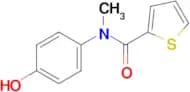
CAS:Formula:C12H11NO2SPurity:95.0%Color and Shape:SolidMolecular weight:233.292-Methoxy-4-(6-nitro-1H-benzo[d]imidazol-2-yl)phenol
CAS:Purity:97%Molecular weight:285.2590026855469



![3-(3-Methoxyphenyl)-5-[(4-methoxyphenyl)methylidene]-2-sulfanylideneimidazolidin-4-one](/_next/image/?url=https%3A%2Fstatic.cymitquimica.com%2Fproducts%2F10%2Fthumb-webp%2FF985982.webp&w=3840&q=75)


![2-Methoxy-4-(6-nitro-1H-benzo[d]imidazol-2-yl)phenol](/_next/image/?url=https%3A%2Fstatic.cymitquimica.com%2Fproducts%2F10%2Fthumb-webp%2FF634554.webp&w=3840&q=75)