


Quinones and Derivatives
Quinones are aromatic compounds containing a benzene ring system with two carbonyl groups in specific positions, forming a cyclohexene structure with oxygen. They are derived from compounds such as anthraquinone and 1,4-benzoquinone, which play important biological roles, including electron transfer in metabolic processes. Quinone derivatives, such as hydroquinones and antirheumatic agents, have applications in the pharmaceutical industry due to their antioxidant, antimicrobial, and anticancer properties. Additionally, quinones are used in the production of dyes and cosmetic products.
At CymitQuimica, we offer quinones and their derivatives for applications in organic chemistry, pharmaceuticals, and the cosmetic industry.
Found 24191 products of "Quinones and Derivatives"
Sort by
Purity (%)
0
100
|
0
|
50
|
90
|
95
|
100
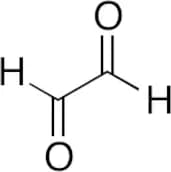
Glyoxal (40% w/w in H2O) (Technical Grade)
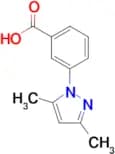
CAS:Controlled ProductFormula:C2H2O2Color and Shape:Single SolutionMolecular weight:58.043-(3,5-Dimethyl-pyrazol-1-yl)-benzoic acid
CAS:Formula:C12H12N2O2Purity:95.0%Color and Shape:SolidMolecular weight:216.242'-(1H-Tetrazol-5-yl)-[1,1'-biphenyl]-4-carbaldehyde
CAS:Purity:98%Molecular weight:250.26100158691406N2'-Deacetyl-N2'-[3-(methylthio)-1-oxopropyl]-maytansine
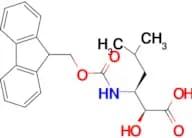
CAS:Controlled Product<p>Applications N2'-Deacetyl-N2'-[3-(methylthio)-1-oxopropyl]-maytansine is an active metabolite of Maytansine (M197940), inhibits in vitro polymerization of tubulin and is used in the treatment of advanced breast cancer.<br>References Remillard, S., et. al.: Science, 189, 1002 (1975); Prota, A.E., et. al.: P. Natl. Acad. Sci. USA, 111, 13817 (2014)<br></p>Formula:C36H50ClN3O10SPurity:>90%Color and Shape:NeatMolecular weight:752.31Fmoc-(2S,3S)-3-amino-2-hydroxy-5-methylhexanoic acid
CAS:Purity:98.0%Molecular weight:383.4440002441406[1,1':4',1''-Terphenyl]-2',3,3'',5,5''-pentacarboxylic acid
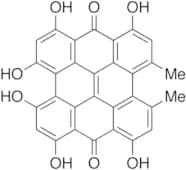
CAS:Purity:98%Molecular weight:450.3550109863281Hypericin
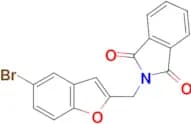
CAS:<p>Applications Hypericin is an extract from Hypericum perforatum L. hypericaceae (also known as St. John’s wort) and is believed to be an antibiotic/antiviral, specifically acting as a kinase inhibitor.<br>References Valeri, A. et al.: J. Pharm. Pharmacol., 64, 1770 (2012); Tahtouh, T. et al.: J. Med. Chem., 55, 9312 (2012); Arsic, I. et al.: Molecules, 15, 6688 (2010);<br></p>Formula:C30H16O8Color and Shape:Dark RedMolecular weight:504.442-(5-Bromo-benzofuran-2-ylmethyl)-isoindole-1,3-dione
Purity:95.0%Molecular weight:356.174987792968755'-(Trifluoromethyl)-[1,1':3',1''-terphenyl]-3,3'',5,5''-tetracarboxylic acid
CAS:Purity:98%Molecular weight:474.343994140625(2E)-1-{[1,1'-biphenyl]-4-yl}-3-(4-bromophenyl)prop-2-en-1-one
CAS:Purity:95.0%Molecular weight:363.25399780273445-[benzyl(2-chlorophenyl)sulfamoyl]-2-chlorobenzoic acid
CAS:Purity:97%Molecular weight:436.29998779296875Methyl 6-Bromo-2-napthoate
CAS:Controlled Product<p>Impurity Adapalene USP Related Compound A<br>Applications Methyl 6-Bromo-2-napthoate (Adapalene USP Related Compound A) is used in the synthesis of Adapalene, a retinoid specific for RARβ and RARγ receptors.<br>References Milanese, A. et al.: Bioorg. Chem., 9, 151 (2011);<br></p>Formula:C12H9BrO2Color and Shape:NeatMolecular weight:265.10




![2'-(1H-Tetrazol-5-yl)-[1,1'-biphenyl]-4-carbaldehyde](/_next/image/?url=https%3A%2Fstatic.cymitquimica.com%2Fproducts%2F10%2Fthumb-webp%2FF758868.webp&w=3840&q=75)
![N2'-Deacetyl-N2'-[3-(methylthio)-1-oxopropyl]-maytansine](/_next/image/?url=https%3A%2Fstatic.cymitquimica.com%2Fproducts%2FTR%2Fthumb-webp%2FD199035.webp&w=3840&q=75)
![[1,1':4',1''-Terphenyl]-2',3,3'',5,5''-pentacarboxylic acid](/_next/image/?url=https%3A%2Fstatic.cymitquimica.com%2Fproducts%2F10%2Fthumb-webp%2FF696034.webp&w=3840&q=75)
![5'-(Trifluoromethyl)-[1,1':3',1''-terphenyl]-3,3'',5,5''-tetracarboxylic acid](/_next/image/?url=https%3A%2Fstatic.cymitquimica.com%2Fproducts%2F10%2Fthumb-webp%2FF691067.webp&w=3840&q=75)
![(2E)-1-{[1,1'-biphenyl]-4-yl}-3-(4-bromophenyl)prop-2-en-1-one](/_next/image/?url=https%3A%2Fstatic.cymitquimica.com%2Fproducts%2F10%2Fthumb-webp%2FF524245.webp&w=3840&q=75)
![5-[benzyl(2-chlorophenyl)sulfamoyl]-2-chlorobenzoic acid](/_next/image/?url=https%3A%2Fstatic.cymitquimica.com%2Fproducts%2F10%2Fthumb-webp%2FF643175.webp&w=3840&q=75)
