Amino Acids (AA)
Amino acids (AAs) are the fundamental building blocks of proteins, playing a crucial role in various biological processes. These organic compounds are essential for protein synthesis, metabolic pathways, and cell signaling. In this category, you will find a comprehensive range of amino acids, including essential, non-essential, and modified forms, which are vital for research in biochemistry, molecular biology, and nutritional sciences. At CymitQuimica, we provide high-quality amino acids to support your research and development needs, ensuring accuracy and reliability in your experimental outcomes.
Subcategories of "Amino Acids (AA)"
- Amino Acid Derivatives(3,955 products)
- Amino Acid and Amino Acid Related Compounds(3,436 products)
- Amino Acids with Oxygen or Sulphur(168 products)
- Boc- Amino Acids(351 products)
- Fmoc Amino Acids(1,710 products)
Found 38216 products of "Amino Acids (AA)"
Sort by
Purity (%)
0
100
|
0
|
50
|
90
|
95
|
100
Chenodeoxycholic Acid-3-ß-D-Glucuronide
CAS:Formula:C30H48O10Color and Shape:White To Off-White SolidMolecular weight:568.702-Hydroxy-1-[4-(2-hydroxyethyl)phenyl]-2-methylpropan-1-one
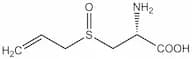
CAS:Formula:C12H16O3Molecular weight:208.26L-(±)-alliin
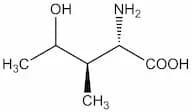
CAS:Organo-sulphur compoundFormula:C6H11NO3SPurity:≥ 95.0 % (HPLC)Color and Shape:PowderMolecular weight:177.224-hydroxy l-isoleucine
CAS:Amino acidFormula:C6H13NO3Purity:≥ 98.0 % (HPLC)Color and Shape:PowderMolecular weight:147.17L-arginine
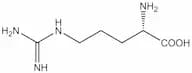
CAS:Amino acidFormula:C6H14N4O2Purity:≥ 98.0 % (HPLC)Color and Shape:PowderMolecular weight:174.2L-alanine
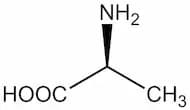
CAS:Amino acidFormula:C3H7NO2Purity:≥ 98.0 % (HPLC)Color and Shape:PowderMolecular weight:89.09L-aspartic acid
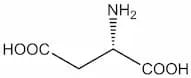
CAS:Amino acidFormula:C4H7NO4Purity:≥ 98.0 % (HPLC)Color and Shape:PowderMolecular weight:133.1N-malonyl dl-tryptophan
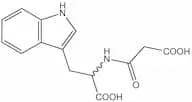
Nitrogen heterocyclic compoundFormula:C14H14N2O5Purity:≥ 98.0 % (HPLC)Color and Shape:PowderMolecular weight:290.28L-methionine
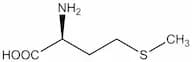
CAS:MethionineFormula:C5H11NO2SPurity:≥ 95.0 % (HPLC)Color and Shape:PowderMolecular weight:149.21L-proline
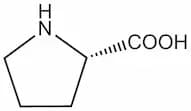
CAS:Amino acidFormula:C5H9NO2Purity:≥ 98.0 % (HPLC)Color and Shape:PowderMolecular weight:115.13L-glutamic acid
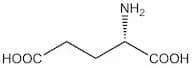
CAS:Glutamic acidFormula:C5H9NO4Purity:≥ 98.0 % (HPLC)Color and Shape:PowderMolecular weight:147.13L-(+)-ergothioneine
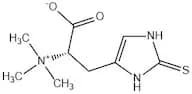
CAS:Nitrogen heterocyclic compoundFormula:C9H15N3O2SPurity:≥ 90.0 % (HPLC)Color and Shape:PowderMolecular weight:229.35-hydroxy l-tryptophan
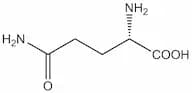
CAS:Nitrogen heterocyclic compoundFormula:C11H12N2O3Purity:≥ 98.0 % (HPLC)Color and Shape:PowderMolecular weight:220.23L-glutamine
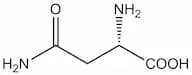
CAS:Amino acidFormula:C5H10N2O3Purity:≥ 98.0 % (HPLC)Color and Shape:PowderMolecular weight:146.14L-asparagine
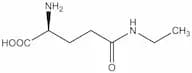
CAS:Amino acidFormula:C4H8N2O3Purity:≥ 98.0 % (HPLC)Color and Shape:PowderMolecular weight:132.12L-theanine
CAS:Acyclic amideFormula:C7H14N2O3Purity:≥ 98.0 % (HPLC)Color and Shape:PowderMolecular weight:174.2Γ-aminobutyric acid
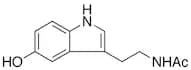
CAS:Amino acidFormula:C4H9NO2Purity:≥ 98.0 % (HPLC)Color and Shape:PowderMolecular weight:103.12N-Acetyl-5-hydroxytryptamine
CAS:<p>Stability Hygroscopic<br>Applications A metabolite of Melatonin (M215000).<br>References Reiter, R.J., et al.: J. Biomed. Sci., 7, 444 (2000), Chen, Z., et al.: Am. J. Physiol, 284, 1618 (2003), Barrenetxe, J., et al.: J. Physiol. Biochem., 60, 61 (2004),<br></p>Formula:C12H14N2O2Color and Shape:White To GreyMolecular weight:218.2518[3-(4-Fluorobenzyl)-2,4-dioxo-1,3,8-triazaspiro[4.5]dec-8-yl]acetic acid
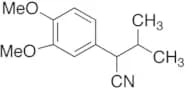
CAS:Purity:95.0%Molecular weight:335.33499145507813,4-Dimethoxy-a-(1-methylethyl)benzeneacetonitrile
CAS:Controlled Product<p>Impurity Verapamil EP Impurity K<br>Applications (Verapamil EP Impurity K)<br></p>Formula:C13H17NO2Color and Shape:White To Light GreenMolecular weight:219.282-Methyl-2-(nitroamino)-1-propanol
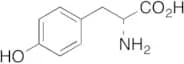
CAS:Controlled Product<p>Applications A nitroamino subsituted primary alcohol.<br></p>Formula:C4H10N2O3Color and Shape:NeatMolecular weight:134.13D-Tyrosine
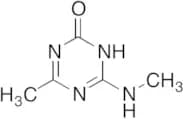
CAS:Controlled Product<p>Applications D-Tyrosine, the stereoisomer to L-Tyrosine (T899975), is an amino acid used in various organic syntheses for antibiotics. It is used in the synthesis of (-)-anisomycin, as well as BATSI (boronic acid transition state inhibitors) which act on β-lactamases. It has also been studied as an inhibitor of microbial growth on surfaces, reducing microbial attachment to hydrophillic glass and hydrophobic polypropylene surfaces.<br>References Li, Ji. et al.: Chin. Chem. Lett., 23, 647 (2012); Xu, H. et al.: Water Res., 45, 5796 (2011); Ke, W. et al.: Antimicrob. Agents Chemother., 55, 174 (2011);<br></p>Formula:C9H11NO3Color and Shape:NeatMolecular weight:181.194-Methyl-6-(methylamino)-1,3,5-triazin-2(1H)-one
CAS:<p>Applications 4-Methyl-6-(methylamino)-1,3,5-triazin-2(1H)-one is a heterocyclic Triazine based building block useful in organic synthesis. It is related to 2-Amino-4-methoxy-6-methyl-1,3,5-triazine (A616880), which is used to synthesize pesticides.<br>References Klein, J., et al.: J. AOAC Intrnational, 86, 1015 (2003); Pang, G., et al.: J. Chromat. A, 1125, 1 (2006);<br></p>Formula:C5H8N4OColor and Shape:White To Off-WhiteMolecular weight:140.142-Benzyl-1,2,3,4-tetrahydroisoquinoline-8-carboxylic acid
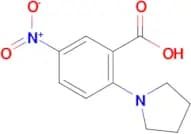
CAS:Purity:95.0%Molecular weight:267.32800292968755-Nitro-2-(pyrrolidin-1-yl)benzoic acid
CAS:Formula:C11H12N2O4Purity:95.0%Color and Shape:SolidMolecular weight:236.227Nα-Acetyl-L-ornithine
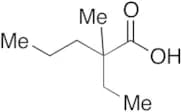
CAS:Controlled ProductFormula:C7H14N2O3Color and Shape:Off-WhiteMolecular weight:174.22-Ethyl-2-methylpentanoic Acid
CAS:Controlled Product<p>Applications 2-Ethyl-2-methylpentanoic Acid is a derivative of 2,5-Dimethyl-2-ethylhexanoic Acid (D461540), used in biological studies to evaluate environmental chemicals for estrogenicity.<br>References Rabinowitz, J.R., et al.: Chem. Res. Toxicol.,22, 1594 (2009); Judson, R., et al.: Environ. Health Perspect, 117, 685 (2009)<br></p>Formula:C8H16O2Color and Shape:Colourless OilyMolecular weight:144.216-Phenyl-5,6,6a,7,8,9,10,10a-octahydro-7,10-methanophenanthridine-2-carboxylic acid
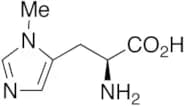
CAS:Purity:98%Molecular weight:319.403991699218753-N-Methyl-L-histidine
CAS:<p>Applications 3-N-Methyl-L-histidine is a potential compound to be used as a treatment with pharmacological PPARα agonists to stimulate the ubiquitin proteasome pathway and myofibrillar protein breakdown in skeletal muscle of rodents.<br>References Ringseis, R., et al.: Biochem. Biphys. Gen. Subject., 1830, 2105 (2013); Ubhi, B.K., et al.: Molec. Biosys., 8, 3125 (2012);<br></p>Formula:C7H11N3O2Color and Shape:NeatMolecular weight:169.182,2,2-Trifluoroacetic acid compound with 2-(8-azabicyclo[3.2.1]Octan-3-yl)acetic acid (1:1)
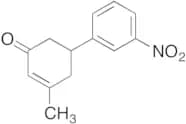
CAS:Purity:98%Molecular weight:283.247009277343753-Methyl-5-(3-nitrophenyl)cyclohex-2-enone
CAS:Controlled Product<p>Applications 3-Methyl-5-(3-nitrophenyl)cyclohex-2-enone is derived from Acetone (A163800), which is a common organic building block in organic chemistry.<br>References Neubert, L., et al.: J. Am. Chem. Soc., 134, 12239 (2012); Zhai, J.J., et al.: J. Am. Soc. Mass. Spec., 20, 1366 (2009);<br></p>Formula:C13H13NO3Color and Shape:NeatMolecular weight:231.258-ethyl-4-(3-fluorobenzoyl)-1-oxa-4,8-diazaspiro[4.5]decane-3-carboxylic acid
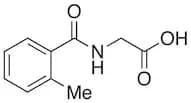
CAS:Purity:95.0%Molecular weight:336.36300659179692-Methyl Hippuric Acid
CAS:Controlled Product<p>Applications The main metabolite of o-xylene.<br>References Gregus, Z., et al.: Drug Metab. Dispos., 26, 1082 (1998), Gregus, Z., et al.: Xenobiotica, 29, 547 (1999), Gonzalez-Reche, L., et al.: Arch. Toxicol., 77, 80 (2003),<br></p>Formula:C10H11NO3Color and Shape:White To Off-WhiteMolecular weight:193.20Nicotianamine
CAS:Controlled Product<p>Applications Phytosiderophores are produced in higher plants as iron chelating amino acids that promote uptake of iron from soil.<br>References Klair, S., et al.: J. Plant Nutr., 19, 1295 (1996),<br></p>Formula:C11H19N3O6Color and Shape:NeatMolecular weight:289.29H-Gly-OH
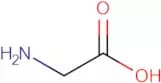
CAS:<p>M03001 - H-Gly-OH</p>Formula:C2H5NO2Purity:98%Color and Shape:Solid, White crystallineMolecular weight:75.0674-Methoxy-2-methylaniline
CAS:Controlled ProductFormula:C8H11NOColor and Shape:NeatMolecular weight:137.18N-Cinnamylglycine
CAS:<p>Applications N-Cinnamylglycine is a derivative of ferulic acid (F308900), a widely distributed compound in plants that is used as an antioxidant and food preservative.<br>References Jellum,E., et al.: J. Pharma. Biomed. Anal., 9, 663 (1991); Kayahara, H., et al.: Anticancer. Res., 19, 3763 (1999); Bollina, V., et al.: Plant. Molec. Biol., 77, 355 (2011);<br></p>Formula:C11H11NO3Color and Shape:NeatMolecular weight:205.21(3-Glycidoxypropyl)triethoxysilane
CAS:Controlled Product<p>Applications (3-Glycidoxypropyl)triethoxysilane is used in the fabric industry to treat and modify fabrics.<br>References Schramm, Christian, et al.: Coloration Tech., 133(3), 234-242 (2017);Grancaric, Ana Marija, et al.: Pro. in Org. Coatings, 103, 174-181 (2017); Yeo, Jun-Seok, et al.: J. of Ind. and Eng. Chem., 45, 301-306 (2017)<br></p>Formula:C12H26O5SiColor and Shape:NeatMolecular weight:278.42D-Cysteine Hydrochloride Monohydrate
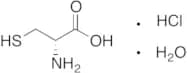
CAS:Controlled Product<p>Applications D-Cysteine Hydrochloride Monohydrate is used as a reactant in the expedient synthesis of electronically modified luciferins for bioluminescence imaging.<br>References McCutcheon, D., et al.: J. Am. Chem. Soc., 134, 7604 (2012);<br></p>Formula:C3H7NO2S·HCl·H2OColor and Shape:NeatMolecular weight:121.16+(36.46)+(18.02)L-Methionine-34S
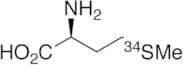
CAS:<p>Applications Labelled L-Methionine, an essential aminoacid for human development. Hepatoprotectant; antidote (acetominophen poisoning); urinary acidifier.<br>References Benevenga, N.J., et al.: J. Agric. Food Chem., 22, 2 (1974), Fleisher, L.D., et al.: Clin. Endocrinol. Metab., 3, 37 (1974), Meinnel, T., et al.: Biochimie, 75, 1061 (1993),<br></p>Formula:C5H11NO234SColor and Shape:NeatMolecular weight:151.11(R)-3-((tert-Butoxycarbonyl)amino)-3-(naphthalen-1-yl)propanoic acid
CAS:Purity:98%Molecular weight:315.3689880371094(S)-2-Amino-4-methylpentanol
CAS:Controlled Product<p>Applications (S)-2-Amino-4-methylpentanol is a starting material for the synthesis of aminopeptidase N and phospholipase A2 inhibitors.<br>References Fournié-Zaluski, M., et al.: J. Med. Chem., 35, 1259 (1992); Bennion, C., et al.: J. Med. Chem., 35, 2939 (1992)<br></p>Formula:C6H15NOColor and Shape:NeatMolecular weight:117.189L-Histidine Hydrochloride Hydrate (<5% D) (13C6, 97-99%)
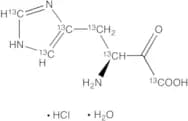
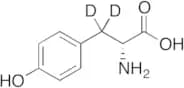
CAS:Controlled ProductFormula:C6H9N3O2•(HCl)•(H2O)Purity:97-99%Color and Shape:NeatMolecular weight:161.1136461802D-Tyrosine-d2
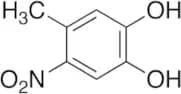
CAS:Controlled Product<p>Applications D-Tyrosine-d2 is deuterium labelled D-Tyrosine (T899970). D-Tyrosine, the stereoisomer to L-Tyrosine (T899975), is an amino acid used in various organic syntheses for antibiotics. It is used in the synthesis of (-)-anisomycin, as well as BATSI (boronic acid transition state inhibitors) which act on β-lactamases. It has also been studied as an inhibitor of microbial growth on surfaces, reducing microbial attachment to hydrophillic glass and hydrophobic polypropylene surfaces.<br>References Li, Ji. et al.: Chin. Chem. Lett., 23, 647 (2012); Xu, H. et al.: Water Res., 45, 5796 (2011); Ke, W. et al.: Antimicrob. Agents Chemother., 55, 174 (2011)<br></p>Formula:C9D2H9NO3Color and Shape:NeatMolecular weight:183.24-Methyl-5-nitrocatechol
CAS:Controlled Product<p>Applications MNC is on the metabolic pathway for 2,4-Dinitotoluene degradation.<br>References Spangoord, R.J., et al.: App. and Environ. Microbiology, 57, 11, 3200 (1991)<br></p>Formula:C7H7NO4Color and Shape:NeatMolecular weight:169.13Ethyl Lauroyl Arginate Hydrochloride
CAS:<p>Applications Ethyl Lauroyl Arginate Hydrochloride is used as a food antimicrobial in the sanitation of preserved foods. It is also used in cosmetics as a preservative.<br> Not a dangerous good if item is equal to or less than 1g/ml and there is less than 100g/ml in the package<br>References Brandt, A. et al.: . Food. Sci., 75, M557 (2010); Taormina, P. et al.: J. Food. Prot., 72, 1216 (2009); Chem. and Eng. News Page 14, Nov. 5 (2018)<br></p>Formula:C20H40N4O3·ClHColor and Shape:NeatMolecular weight:421.02Oleoyl-L-carnitine
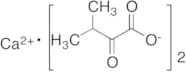
CAS:Controlled Product<p>Stability Hygroscopic<br>Applications Oleoyl-L-carnitine is a long-chain fatty ester of carnitine which is accumulated and released into the circulation, in fatty-acid oxidation defects. Pattern of Oleoyl-L-carnitine can be diagnostic for a number of ß-oxidation defects.<br>References Adams, S., et al.: J. Nutrition, 139, 1073 (2009); Ventura, F., et al.: Clinica Chimica Acta, 281, 1 (1999); Pourfarzam, M., et al.: Clinical Chem,, 40, 2267 (1994); Schaefer, J., et al.: Pediatric Res., 37, 354 (1995)<br></p>Formula:C25H47NO4Color and Shape:NeatMolecular weight:425.643-Methyl-2-oxobutyric Acid Calcium Salt
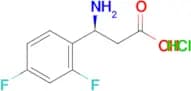
CAS:<p>Stability Hygroscopic<br>Applications 3-Methyl-2-oxobutyric acid calcium salt (cas# 51828-94-5) is a useful research chemical.<br></p>Formula:C10H14CaO6Color and Shape:NeatMolecular weight:270.29(3S)-3-Amino-3-(2,4-difluorophenyl)propanoic acid hydrochloride
CAS:Purity:95%Molecular weight:237.63000488281253-(1,2,4-Triazol-1-yl)-L-alanine
CAS:Controlled Product<p>Applications A metabolite common to all triazole fungicides: free triazole, 1,2,4-triazole (T), and its 2 conjugates: triazolylalanine (TA) and triazolylacetic acid (TAA).<br>References Hrudey, S., et al.: Water Sci. Technol., 20, 55 (1988), Froese, K., et al.: Water Res., 33, 1355 (1999), Hengel, M., et al.: J. Agric. Food Chem., 50, 3412 (2002),<br></p>Formula:C5H8N4O2Color and Shape:NeatMolecular weight:156.145-Methoxyresorcinol
CAS:<p>Applications 5-Methoxyresorcinol (cas# 2174-64-3) is a useful research chemical.<br></p>Formula:C7H8O3Color and Shape:NeatMolecular weight:140.1374-(2-ethoxybenzoyl)-8-ethyl-1-oxa-4,8-diazaspiro[4.5]decane-3-carboxylic acid
CAS:Purity:95.0%Molecular weight:362.42599487304692-Methyl-N-[3-(trifluoromethyl)phenyl]propanamide
CAS:Controlled ProductFormula:C11H12F3NOColor and Shape:NeatMolecular weight:231.214-benzoyl-8-propyl-1-oxa-4,8-diazaspiro[4.5]decane-3-carboxylic acid
CAS:Purity:95.0%Molecular weight:332.39999389648448-benzyl-4-cyclopropanecarbonyl-1-oxa-4,8-diazaspiro[4.5]decane-3-carboxylic acid
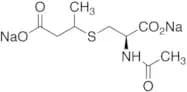
CAS:Purity:95.0%Molecular weight:344.4110107421875N-Acetyl-S-(3-carboxy-2-propyl)-L-cysteine Disodium Salt (Mixture of Diastereomers)
CAS:Controlled Product<p>Applications A metabolite of Crotonaldehyde.<br>References Gray, J.M., et al.: Xenobiotica, 1, 55 (1971), Chung, F., et al.: Mutat. Res., 424, 71 (1999), Smith, C., et al.: Food Chem. Toxicol., 38, 637 (2000), Pan, J., et al.: Chem. Res. Toxicol., 15, 367 (2002),<br></p>Formula:C9H13NO5S·2NaColor and Shape:NeatMolecular weight:293.25(6R,7R)-7-Amino-3-(hydroxymethyl)-8-oxo-5-thia-1-azabicyclo[4.2.0]oct-2-ene-2-carboxylic acid
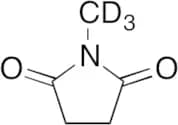
CAS:Purity:95.0%Color and Shape:SolidMolecular weight:230.24000549316406N-Methylsuccinimide-d3
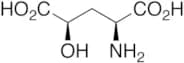
CAS:Controlled Product<p>Applications N-Methylsuccinimide-d3 is the isotope labelled analog of N-Methylsuccinimide (M329425); a model compound used to investigate the mechanism of enolization step by density-functional theory (DFT) calculations. N-Methylsuccinimide is a metabolite of N-methyl-2-pyrrolidone (NMP) and its presence in plasma and urine can be used as a biomarker of exposure to NMP<br>References Takahashi, O., et al.: Chem. Biodivers., 7, 1349 (2010)<br></p>Formula:C5D3H4NO2Color and Shape:NeatMolecular weight:116.133(2S,4R)-4-Hydroxy-L-glutamic Acid
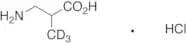
CAS:Controlled Product<p>Applications (2S,4R)-4-Hydroxy-L-glutamic Acid is a metabolite of Glutamic acid (G596960).<br>References Hampson, D., et al.: J. Biol. Chem., 274, 33488 (1999), Jensen, A., et al.: Eur. J. Pharmacol., 397, 247 (2000),<br></p>Formula:C5H9NO5Color and Shape:NeatMolecular weight:163.13rac-3-Aminoisobutyric Acid-d3 Hydrochloride
CAS:Controlled Product<p>Stability Hygroscopic<br>Applications Labelled 3-Aminoisobutyric Acid (A611585). Substituted β-alanines. Used for preparation and isolation of D(-)-β-aminoisobutyric acid.<br>References Kakimoto, Y., et al.: J. Biol. Chem., 236, 3288 (1961),<br></p>Formula:C4H7D3ClNO2Color and Shape:NeatMolecular weight:142.6Boc-MeIle-OH
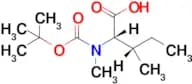
CAS:Purity:95.0%Color and Shape:Solid, Colourless crystallineMolecular weight:245.319000244140622-(tert-Butoxycarbonyl-methyl-amino)-benzoic acid
CAS:Formula:C13H17NO4Purity:97.0%Color and Shape:No data available.Molecular weight:251.2828-benzyl-4-(furan-2-carbonyl)-1-oxa-4,8-diazaspiro[4.5]decane-3-carboxylic acid
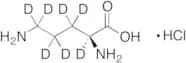
CAS:Purity:95.0%Molecular weight:370.4049987792969L-Ornithine-2,3,3,4,4,5,5-d7 hydrochloride
CAS:Controlled Product<p>Applications L-Ornithine-2,3,3,4,4,5,5-d7 hydrochloride is the labelled analogue of L-Ornithine Hydrochloride (O695550), a non-essential amino acid for human development but is required intermediate in arginine biosynthesis. L-Ornithine is found in virtually all vertebrate tissues as well as incorporated into proteins, such as tyrocidine. Isolation from chicken excreta.<br>References Fattori, D., et al.: J. Med. Chem., 50, 550 (2007), Gomez-Alonso, S., et al.: J. Agric. Food Chem., 55, 608 (2007), Subramaniam, R., et al.: Bioorg. Med. Chem. Lett., 18, 3333 (2008),<br></p>Formula:C5D7H5N2O2·ClHColor and Shape:NeatMolecular weight:175.11049260884-(3-methylphenyl)-3H,4H,5H,6H,7H-imidazo[4,5-c]pyridine-6-carboxylic acid
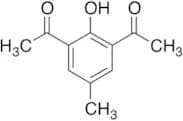
CAS:Purity:95.0%Molecular weight:257.29299926757811-(3-Acetyl-2-hydroxy-5-methyl-phenyl)ethanone
CAS:Controlled Product<p>Applications 1-(3-ACETYL-2-HYDROXY-5-METHYL-PHENYL)-ETHANONE (cas# 55108-28-6) is a useful research chemical.<br></p>Formula:C11H12O3Color and Shape:NeatMolecular weight:192.2111-Methyl-4-nitropyrrole-2-carboxylic Acid
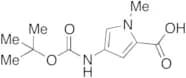
CAS:Controlled Product<p>Applications 1-Methyl-4-nitropyrrole-2-carboxylic Acid is used in the synthesis of Lexitropsin and distamycin analogs with antimicrobial activities.<br>References Anthony, N., et al.: J. Med. Chem., 50, 6116 (2007); Khalaf, A., et al.: J. Med. Chem., 47, 2133 (2004)<br></p>Formula:C6H6N2O4Color and Shape:NeatMolecular weight:170.124-(Boc-amino)-1-methylpyrrole-2-carboxylic Acid
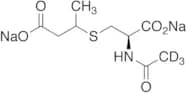
CAS:Controlled Product<p>Applications 4-(Boc-amino)-1-methylpyrrole-2-carboxylic Acid is an unnatural amino acid for preparing heteroaromatic oligoamides for regulating gen expression in biotechnology.<br>References Baird, E., et al.: J. Am. Chem. Soc., 118, 6141 (1996); White, S., et al.: Nature, 391, 468 (1998)<br></p>Formula:C11H16N2O4Color and Shape:NeatMolecular weight:240.256N-Acetyl-S-(3-carboxy-2-propyl)-L-cysteine-d3 Disodium Salt
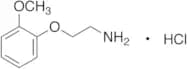
CAS:Controlled Product<p>Applications A labelled metabolite of Crotonaldehyde.<br>References Gray, J.M., et al.: Xenobiotica, 1, 55 (1971), Chung, F., et al.: Mutat. Res., 424, 71 (1999), Smith, C., et al.: Food Chem. Toxicol., 38, 637 (2000), Pan, J., et al.: Chem. Res. Toxicol., 15, 367 (2002),<br></p>Formula:C9H10D3NNa2O5SColor and Shape:NeatMolecular weight:310.292-(2-Methoxyphenoxy)ethylamine Hydrochloride
CAS:<p>Impurity Carvedilol EP Impurity E; Carvedilol Impurity E; Carvedilol USP E<br>Applications 2-(2-Methoxyphenoxy)ethylamine Hydrochloride (Carvedilol EP Impurity E; Carvedilol Impurity E; Carvedilol USP E) is an impurity of Carvedilol synthesis.<br>References Smith, L., et al.: J. Med. Chem., 20, 1653 (1977),<br></p>Formula:C9H13NO2·ClHColor and Shape:NeatMolecular weight:203.67N-Acetylglycine-d5
CAS:Controlled Product<p>Applications N-Acetylglycine-d5 is an isotopic analog of N-Acetyl-glycine (A178260), a derivative of Glycine (G615990). It is an intermediate used to synthesize rac 3-O-Methyl DOPA (M303805) which is an impurity of Levodopa.<br>References Tabar, et al.: Pharmacol. Biochem. Behav., 33, 139 (1989), De Souza Silva, et al.: J. Neurochem., 68, 233 (1997), Feigin, A., et al.: Neurology, 57, 2083 (2001), Perera, A., et al.: J. Labelled Comp. Radiopharm., 46, 389 (2003),<br></p>Formula:C4D5H2NO3Color and Shape:NeatMolecular weight:122.134Methyl 4-Methoxybenzoate
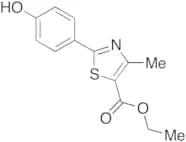
CAS:<p>Applications Methyl 4-Methoxybenzoate is also used in the synthesis of oxadiazole-based, GSK-3 inhibitors. Methyl 4-Methoxybenzoate is used in the synthesis of substituted hydrazides for their antitubercular properties.<br>References Lo Monte, F. et al.: Eur.J. Med. Chem., 61, 26 (2013); Gupta, R. et al.: Asian J. Pharm. Clin. Res., 5, 251 (2012);<br></p>Formula:C9H10O3Color and Shape:WhiteMolecular weight:166.17Ethyl 2-(4-Hydroxyphenyl)-4-methylthiazole-5-carboxylate
CAS:<p>Applications Ethyl 2-(4-Hydroxyphenyl)-4-methylthiazole-5-carboxylate is used in the synthesis of the major metabolites of Febuxostat (F229000), a xanthine oxidase/xanthine dehydrogenase inhibitor. Used for treatment of hyperuricemia and chronic gout. 40-120 mg/day febuxostat was proven effective in lowering serum urate levels when administered to manage hyperuricemia in patients with gout.<br>References Li, X., et. al.: Lett. Org. Chem., 12, 217 (2015); Vallu, V., et. al.: Anal. Chem. Indian J., 14, 339 (2014); Osada, Y., et al.: Eur. J. Pharmacol., 241, 183 (1993); Okamoto, K., et al.: J. Biol. Chem., 278, 1848 (2003); Mayer, M.D., et al.: Am. J. Therap., 12, 22 (2005); Tomlinson, B., et al.: Curr. Opin. Invest. Drugs, 6, 1168 (2005)<br></p>Formula:C13H13NO3SColor and Shape:NeatMolecular weight:263.31(±)-3-Amino-iso-butyric-2,3,3-d3 Acid
CAS:Controlled Product<p>Applications (±)-3-Amino-iso-butyric-2,3,3-d3 Acid is the labeled version of DL-3-Aminoisobutyric Acid (A603043(P)), which is a useful compound for suppressing atherosclerosis in apolipoprotein E-knockout mouse.<br>References Shimba, Y., et al.: Bio. Pharma. Bull., 43, 1016 (2020)<br></p>Formula:C4D3H6NO2Color and Shape:White To Off-WhiteMolecular weight:106.14D-Serine
CAS:Controlled Product<p>Applications A proteinogenic amino acids involved in the biosynthesis of purines and pyrimidines. Inhibitor of serine palmitoyltransferase. A neuromodulator.<br>References Junjaud, G. et al.: J. Neurochem., 98, 1159 (2006); Hanada, K. et al.: FEBS Lett., 474, 63 (2000); Pollegionni, L. et al.: Cell. Mol. Life Sci., 67, 2387 (2010);<br></p>Formula:C3H7NO3Color and Shape:NeatMolecular weight:105.09(4r)-4-{[(tert-butoxy)carbonyl]amino}pentanoic acid
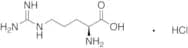
CAS:Purity:95%Molecular weight:217.26499938964844L-Arginine Hydrochloride
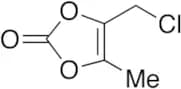
CAS:<p>Applications An essential amino acid for human development. Precursor for nitric oxide. Ammonia detoxicant (hepatic failure); diagnostic aid (pituitary function).<br>References Miura, T., et al.: Anal. Biochem., 139, 432 (1984), Jones, et al.: Adv. Enzyme Regul., 9, 19 (1970), Borders, C.L., et al.: Protein. Sci., 3, 541 (1994),<br></p>Formula:C6H14N4O2·ClHColor and Shape:NeatMolecular weight:210.664-Chloromethyl-5-methyl-1,3-dioxol-2-one
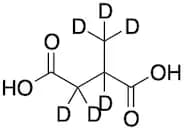
CAS:Controlled Product<p>Applications 4-Chloromethyl-5-methyl-1,3-dioxol-2-one is an important reagent in the preparation of angiotensin II receptor antagonist such as Olmesratan Medoxomil (O550000). 4-Chloromethyl-5-methyl-1,3-dioxol-2-one is also used in the preparation of prodrugs of ampicillin.<br>References Ikeda, S. et al.: Chem. Pharmac. Bull., 32, 4316 (1984); Wu, T. Yaox. Xueb., 41, 537 (2006);<br></p>Formula:C5H5ClO3Color and Shape:NeatMolecular weight:148.54(±)-2-Methyl-d3-succinic-2,3,3-d3 Acid
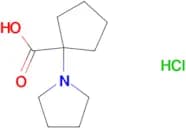
CAS:Controlled Product<p>Applications (±)-2-Methyl-d3-succinic-2,3,3-d3 Acid (CAS# 347840-08-8) is a useful isotopically labeled research compound.<br></p>Formula:C5D6H2O4Color and Shape:NeatMolecular weight:138.151-(1-pyrrolidinyl)cyclopentanecarboxylic acid hydrochloride
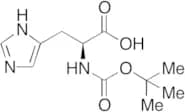
CAS:Purity:95.0%Molecular weight:219.7100067138672Na-Boc-L-histidine
CAS:Controlled Product<p>Applications Nα-Boc-L-histidine is an N-Boc-protected form of L-Histidine (H456010). L-Histidine is an essential amino acid that plays an important role in mitochondrial glutamine transport and has potential of abolishing oxidative stress caused by brain edema.L-Histidine promotes zinc uptake in human erythrocyes and also has potential as an antioxidant therapy for acute mammary inflammation in cattle.<br>References Chaiyotwittayakun, A., et al.: J. Dairy Sci., 85, 60 (2002); Horn, N., et al.: J. Phys., 489, 73 (1995); Rama Rao, K., et al.: Am. J. Path., 176, 1400 (2010);<br></p>Formula:C11H17N3O4Color and Shape:NeatMolecular weight:255.274-(3,5-dichlorobenzoyl)-8-methyl-1-oxa-4,8-diazaspiro[4.5]decane-3-carboxylic acid
CAS:Purity:95.0%Molecular weight:373.23001098632811-Chloro-4-methoxybutane
CAS:Controlled Product<p>Applications 1-Chloro-4-methoxybutane (cas# 17913-18-7) is a compound useful in organic synthesis.<br></p>Formula:C5H11ClOColor and Shape:NeatMolecular weight:122.593,5-Dichloro-4-methylaniline
CAS:Controlled Product<p>Applications 3,5-Dichloro-4-methylaniline<br></p>Formula:C7H7Cl2NColor and Shape:NeatMolecular weight:176.043Nε-(1-Carboxymethyl)-L-lysine-d4
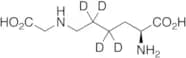
CAS:Controlled Product<p>Stability Hygroscopic<br>Applications CEL and CML are two stable, nonenzymatic chemical modifications of protein lysine residues resulting from glycation and oxidation reactions.<br>References Fu, M.X., et al.: J. Biol. Chem., 271, 9982 (1996), Ahmed M.U., et al.: Biochem.J., 324, 565 (1997), Schleicher, E.D., et al.: J. Clin. Invest., 99, 457 (1997), Shibayama, R., et al.: Diabetes, 48, 1842 (1999),<br></p>Formula:C8H12D4N2O4Color and Shape:NeatMolecular weight:208.25


![2-Hydroxy-1-[4-(2-hydroxyethyl)phenyl]-2-methylpropan-1-one](/_next/image/?url=https%3A%2Fstatic.cymitquimica.com%2Fproducts%2F4Z%2Fthumb-webp%2FB-139032.webp&w=3840&q=75)







![[3-(4-Fluorobenzyl)-2,4-dioxo-1,3,8-triazaspiro[4.5]dec-8-yl]acetic acid](/_next/image/?url=https%3A%2Fstatic.cymitquimica.com%2Fproducts%2F10%2Fthumb-webp%2FF495292.webp&w=3840&q=75)







![2,2,2-Trifluoroacetic acid compound with 2-(8-azabicyclo[3.2.1]Octan-3-yl)acetic acid (1:1)](/_next/image/?url=https%3A%2Fstatic.cymitquimica.com%2Fproducts%2F10%2Fthumb-webp%2FF771892.webp&w=3840&q=75)
![8-ethyl-4-(3-fluorobenzoyl)-1-oxa-4,8-diazaspiro[4.5]decane-3-carboxylic acid](/_next/image/?url=https%3A%2Fstatic.cymitquimica.com%2Fproducts%2F10%2Fthumb-webp%2FF525685.webp&w=3840&q=75)









![4-(2-ethoxybenzoyl)-8-ethyl-1-oxa-4,8-diazaspiro[4.5]decane-3-carboxylic acid](/_next/image/?url=https%3A%2Fstatic.cymitquimica.com%2Fproducts%2F10%2Fthumb-webp%2FF525712.webp&w=3840&q=75)
![2-Methyl-N-[3-(trifluoromethyl)phenyl]propanamide](/_next/image/?url=https%3A%2Fstatic.cymitquimica.com%2Fproducts%2FTR%2Fthumb-webp%2FM331270.webp&w=3840&q=75)
![4-benzoyl-8-propyl-1-oxa-4,8-diazaspiro[4.5]decane-3-carboxylic acid](/_next/image/?url=https%3A%2Fstatic.cymitquimica.com%2Fproducts%2F10%2Fthumb-webp%2FF525714.webp&w=3840&q=75)
![8-benzyl-4-cyclopropanecarbonyl-1-oxa-4,8-diazaspiro[4.5]decane-3-carboxylic acid](/_next/image/?url=https%3A%2Fstatic.cymitquimica.com%2Fproducts%2F10%2Fthumb-webp%2FF525798.webp&w=3840&q=75)

![(6R,7R)-7-Amino-3-(hydroxymethyl)-8-oxo-5-thia-1-azabicyclo[4.2.0]oct-2-ene-2-carboxylic acid](/_next/image/?url=https%3A%2Fstatic.cymitquimica.com%2Fproducts%2F10%2Fthumb-webp%2FF243053.webp&w=3840&q=75)

![8-benzyl-4-(furan-2-carbonyl)-1-oxa-4,8-diazaspiro[4.5]decane-3-carboxylic acid](/_next/image/?url=https%3A%2Fstatic.cymitquimica.com%2Fproducts%2F10%2Fthumb-webp%2FF525800.webp&w=3840&q=75)
![4-(3-methylphenyl)-3H,4H,5H,6H,7H-imidazo[4,5-c]pyridine-6-carboxylic acid](/_next/image/?url=https%3A%2Fstatic.cymitquimica.com%2Fproducts%2F10%2Fthumb-webp%2FF522509.webp&w=3840&q=75)




![(4r)-4-{[(tert-butoxy)carbonyl]amino}pentanoic acid](/_next/image/?url=https%3A%2Fstatic.cymitquimica.com%2Fproducts%2F10%2Fthumb-webp%2FF669814.webp&w=3840&q=75)

![4-(3,5-dichlorobenzoyl)-8-methyl-1-oxa-4,8-diazaspiro[4.5]decane-3-carboxylic acid](/_next/image/?url=https%3A%2Fstatic.cymitquimica.com%2Fproducts%2F10%2Fthumb-webp%2FF525652.webp&w=3840&q=75)