Amino Acids (AA)
Amino acids (AAs) are the fundamental building blocks of proteins, playing a crucial role in various biological processes. These organic compounds are essential for protein synthesis, metabolic pathways, and cell signaling. In this category, you will find a comprehensive range of amino acids, including essential, non-essential, and modified forms, which are vital for research in biochemistry, molecular biology, and nutritional sciences. At CymitQuimica, we provide high-quality amino acids to support your research and development needs, ensuring accuracy and reliability in your experimental outcomes.
Subcategories of "Amino Acids (AA)"
- Amino Acid Derivatives(3,955 products)
- Amino Acid and Amino Acid Related Compounds(3,436 products)
- Amino Acids with Oxygen or Sulphur(168 products)
- Boc- Amino Acids(351 products)
- Fmoc Amino Acids(1,710 products)
Found 38216 products of "Amino Acids (AA)"
Sort by
Purity (%)
0
100
|
0
|
50
|
90
|
95
|
100
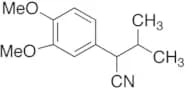
3,4-Dimethoxy-a-(1-methylethyl)benzeneacetonitrile
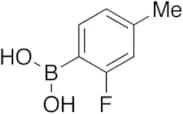
CAS:Controlled Product<p>Impurity Verapamil EP Impurity K<br>Applications (Verapamil EP Impurity K)<br></p>Formula:C13H17NO2Color and Shape:White To Light GreenMolecular weight:219.282-Fluoro-4-methylphenylboronic Acid
CAS:Controlled Product<p>Stability Hygroscopic<br>Applications 2-Fluoro-4-methylphenylboronic Acid (cas# 170981-26-7) is a compound useful in organic synthesis.<br></p>Formula:C7H8BFO2Color and Shape:NeatMolecular weight:153.95N-(2-Hydroxyethyl)glycine (~90%)
CAS:Controlled Product<p>Applications N-(2-Hydroxyethyl)glycine (~90%) (cas# 5835-28-9) is a compound useful in organic synthesis.<br></p>Formula:C4H9NO3Purity:>85%Color and Shape:NeatMolecular weight:119.124-(3,5-dichlorobenzoyl)-8-ethyl-1-oxa-4,8-diazaspiro[4.5]decane-3-carboxylic acid
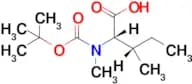
CAS:Purity:95.0%Molecular weight:387.260009765625Boc-MeIle-OH
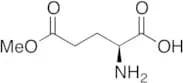
CAS:Purity:95.0%Color and Shape:Solid, Colourless crystallineMolecular weight:245.31900024414062L-Glutamic Acid 5-Methyl Ester
CAS:Controlled Product<p>Applications L-Glutamic acid 5-methyl ester is a protected form of L-Glutamic acid (G596960). L-Glutamic acid is a nonessential amino acid that is important to the mammalian central nervous system. L-Glutamic acid is also a neurotransmitter for cone photoreceptors in the human brain and is used as a treatment for patients who have liver disease accompanied by encephalopathy (a condition termed ‘hepatic coma’).<br>References Anderson, H., et al.: J. Nutr., 99, 82 (1969); Brandon, C. & Lam, D.: Proc. Nat. Acad. Sci., 80, 5117 (1983); McDermott Jr, W., et al.: New Engl. J. Med., 253, 1093 (1955)<br></p>Formula:C6H11NO4Color and Shape:NeatMolecular weight:161.1561-[2-Amino-1-(m-tolyl)ethyl]pyrrolidine-3-carboxylic acid hydrochloride
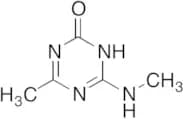
CAS:Formula:C14H21ClN2O2Purity:97.0%Color and Shape:SolidMolecular weight:284.784-Methyl-6-(methylamino)-1,3,5-triazin-2(1H)-one
CAS:<p>Applications 4-Methyl-6-(methylamino)-1,3,5-triazin-2(1H)-one is a heterocyclic Triazine based building block useful in organic synthesis. It is related to 2-Amino-4-methoxy-6-methyl-1,3,5-triazine (A616880), which is used to synthesize pesticides.<br>References Klein, J., et al.: J. AOAC Intrnational, 86, 1015 (2003); Pang, G., et al.: J. Chromat. A, 1125, 1 (2006);<br></p>Formula:C5H8N4OColor and Shape:White To Off-WhiteMolecular weight:140.144-(2,4-dimethylphenyl)-3H,4H,5H,6H,7H-imidazo[4,5-c]pyridine-6-carboxylic acid
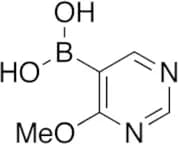
CAS:Purity:95.0%Molecular weight:271.32000732421875(4-Methoxypyrimidin-5-yl)boronic Acid
CAS:Controlled ProductFormula:C5H7BN2O3Color and Shape:NeatMolecular weight:153.9328-ethyl-4-(4-methyl-3-nitrobenzoyl)-1-oxa-4,8-diazaspiro[4.5]decane-3-carboxylic acid
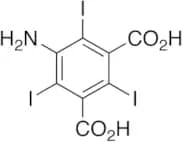
CAS:Purity:95.0%Molecular weight:377.39700317382815-Amino-2,4,6-triiodoisophthalic Acid
CAS:Controlled Product<p>Impurity Iohexol EP Impurity K<br>Applications 5-Amino-2,4,6-triiodoisophthalic Acid (Iohexol EP Impurity K) is an intermediate for nonionic iodinated X-ray contrast agents.<br></p>Formula:C8H4I3NO4Color and Shape:NeatMolecular weight:558.842-(4-Chlorophenyl)-2-[4-(4-methylphenyl)piperazin-1-yl]acetic acid
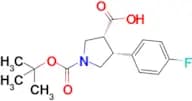
CAS:Molecular weight:344.8399963378906(3R,4R)-1-(tert-Butoxycarbonyl)-4-(4-fluorophenyl)pyrrolidine-3-carboxylic acid
CAS:Purity:97%Molecular weight:309.33700561523444-(2,5-dimethylphenyl)-3H,4H,5H,6H,7H-imidazo[4,5-c]pyridine-6-carboxylic acid
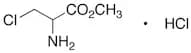
CAS:Purity:95.0%Molecular weight:271.32000732421875D,L-b-Chloroalanine Methyl Ester Hydrochloride
CAS:Controlled Product<p>Applications D,L-β-Chloroalanine Methyl Ester Hydrochloride (cas# 33646-31-0) is a compound useful in organic synthesis.<br></p>Formula:C4H8ClNO2·ClHColor and Shape:NeatMolecular weight:174.03N-[(Benzyloxy)carbonyl]glycylglycine
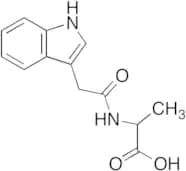
CAS:<p>Applications N-[(Benzyloxy)carbonyl]glycylglycine is a reagent in the synthesis of Glycylglycyl-L-tyrosine (G718500), which is a fungal tyrosinases and their capability to oxidize peptide-bound tyrosine residues is important in a view of applicability of tyrosinases.<br>References Bowness, J., et al.: Biochem. J., 53, 620 (1953), Cuff, M., et al.: J. Mol. Biol., 278, 855 (1998), Kubo, I., et al.: Bioorg. Med. Chem., 12, 5349 (2004),<br></p>Formula:C12H14N2O5Color and Shape:NeatMolecular weight:266.25Indole-3-acetic-L-alanine
CAS:Controlled Product<p>Applications Indole-3-acetic-L-alanine is a derivative of the phytohormone indole-3-acetic acid (I577340) used in studies for the isolation and characterization of Arabdopsis thaliana mutants.<br>References Rampey, R.A., et al.: G3 (Bethesda), 3, 131-141 (2013)<br></p>Formula:C13H14N2O3Color and Shape:NeatMolecular weight:246.264-{[4-(dimethylamino)phenyl]methylidene}-1,2,3,4-tetrahydroacridine-9-carboxylic acid
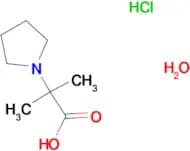
CAS:Purity:95%Molecular weight:358.4412-methyl-2-(1-pyrrolidinyl)propanoic acid hydrochloride hydrate
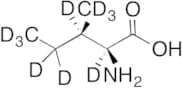
CAS:Purity:95.0%Color and Shape:SolidMolecular weight:211.69000244140625L-Allo-isoleucine-d10
CAS:Controlled Product<p>Applications L-Allo-isoleucine-d10 is a derivative compound of L-allo-isoleucine (A548200), which has been suggested to induce epithelial β-defensin expression. In addition, L-allo-isoleucine is utilized in the biosynthesis pathway for coronamic acid.<br>References Fehlbaum, P., et al.: Proc. Natl. Acad. Sci. USA 97, 12723 (2000); Parry, R. J., et al.: J. Am. Chem. Soc. 113, 1849 (1991)<br></p>Formula:C6H3D10NO2Color and Shape:White To Off-WhiteMolecular weight:141.232-(3-Fluorophenyl)-2-[4-(4-fluorophenyl)piperazin-1-yl]acetic acid
CAS:Molecular weight:332.351013183593758-ethyl-4-(furan-2-carbonyl)-1-oxa-4,8-diazaspiro[4.5]decane-3-carboxylic acid
CAS:Purity:95.0%Molecular weight:308.33401489257818-benzyl-4-(pyridine-3-carbonyl)-1-oxa-4,8-diazaspiro[4.5]decane-3-carboxylic acid
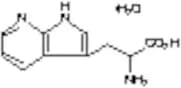
CAS:Purity:95.0%Molecular weight:381.4320068359375D,L-Azatryptophan Hydrate
CAS:Controlled ProductFormula:C10H13N3O3Color and Shape:NeatMolecular weight:223.232-Methyl-5-nitrobenzenesulfonamide
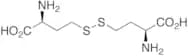
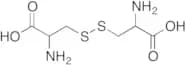
CAS:Controlled Product<p>Applications 2-Methyl-5-nitrobenzenesulfonamide is a chemical reagent in the synthesis of good inhibitors of cancer-related carbonic anhydrase. Also used in the synthesis of novel deacetylase inhibitors used in anti-tumor therapy.<br>References Moeker, J. et al.: J. Med. Chem., 57, 3522 (2014); Han, L. et al.: Bioorg. Med. Chem., 22, 1529 (2014);<br></p>Formula:C7H8N2O4SColor and Shape:Yellowish SolidMolecular weight:216.21L-Homocystine
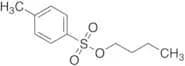
CAS:Controlled Product<p>Applications Increased levels lead to hyperhomocysteinemia; a cardiovascular risk factor in prediction of coronary heart disease as well as being associated with congenital birth defects, pregnancy complications and cancer.<br>References Geisel, J. et al.: Clin. Chem. Lab. Med., 41, 1513 (2003); Geisel, J. et al.: Clin. Chem. Lab. Med., 41, 1513 (2003);<br></p>Formula:C8H16N2O4S2Color and Shape:NeatMolecular weight:268.35Butyl 4-Methylbenzenesulfonate
CAS:Controlled Product<p>Applications Butyl 4-methylbenzenesulfonate (cas# 778-28-9) is a useful research chemical.<br></p>Formula:C11H16O3SColor and Shape:NeatMolecular weight:228.314-(2,4-dimethoxyphenyl)-3H,4H,5H,6H,7H-imidazo[4,5-c]pyridine-6-carboxylic acid
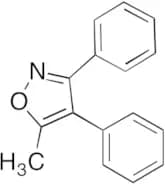
CAS:Purity:95.0%Molecular weight:303.31799316406255-Methyl-3,4-diphenylisoxazole
CAS:Controlled Product<p>Applications 5-Methyl-3,4-diphenylisoxazole is a reagent for the preparation of valdecoxib and valdecoxib analogues.<br>References Di Nunno, L., et al.: J. Med. Chem., 47, 4881 (2004); Reddy, A. R., et al.: Synth. Commun., 42, 639 (2012); Huang, Y., et al.: Zhongguo Xiandai Yingyong, 26, 456 (2009)<br></p>Formula:C16H13NOColor and Shape:NeatMolecular weight:235.28(R)-3-Amino-4-(1H-indol-3-yl)butanoic acid hydrochloride
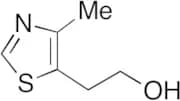
CAS:Purity:95.0%Color and Shape:Liquid, No data available.Molecular weight:254.71000671386724-Methyl-5-thiazoleethanol
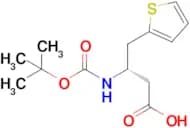
CAS:<p>Applications 4-Methyl-5-thiazoleethanol is used in the synthesis of novel HldE kinase inhibitors used against gram negative bacteria. Also used in the synthesis of potential antimalarial agents from bis-thiazolium analogues.<br> Not a dangerous good if item is equal to or less than 1g/ml and there is less than 100g/ml in the package<br>References Desroy, N. et al.: J. Med. CHem., 56, 1418 (2013); Caldarelli, S. et al.: J. Med. CHem., 496, (2013);<br></p>Formula:C6H9NOSColor and Shape:NeatMolecular weight:143.21(S)-3-((tert-Butoxycarbonyl)amino)-4-(thiophen-2-yl)butanoic acid
CAS:Purity:96%Molecular weight:285.35998535156253-Methyl-1H-Indole-d8
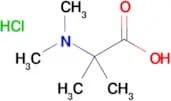
CAS:Controlled Product<p>Applications 3-(methyl-d3)-1H-Indole-2,4,5,6,7-d5 is the labeled analogue of 3-Methylindole (M313470), a naturally abundant pneumotoxin, found primarily in mammalian feces providing its strong fecal odor; however in lower concentrations the compound has a pleasent aroma, giving orange blossoms and jasmine their pleasing scent. It is often a component of commercial fragrances and perfumes.<br> Not a dangerous good if item is equal to or less than 1g/ml and there is less than 100g/ml in the package<br>References Nakashima, T., et al.: Biol. Pharm. Bull., 32, 832 (2009), Xu, H., et al.: Chem. Pharm. Bull., 57, 321 (2009), Bodoor, K., et al.: J. Med. Chem., 52, 3753 (2009), Naskar, S., et al.: J. Chem. Res., 3, 174 (2009), Sollner, K., et al.: J. Agric. Food Chem., 57, 4319 (2009),<br></p>Formula:C92H8HNColor and Shape:NeatMolecular weight:139.222-(Dimethylamino)-2-methylpropanoic acid hydrochloride
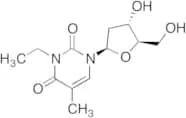
CAS:Purity:95%Molecular weight:167.6300048828125N3-Ethylthymidine
CAS:Controlled Product<p>Applications E677525<br>References Shimizu, T., et al.: Chem. Pharm. Bull., 53, 313 (2005)<br></p>Formula:C12H18N2O5Color and Shape:NeatMolecular weight:270.12157[3-(4-Fluorobenzyl)-2,4-dioxo-1,3,8-triazaspiro[4.5]dec-8-yl]acetic acid
CAS:Purity:95.0%Molecular weight:335.33499145507811,2-Cyclohexanedicarboxylic Acid Mono 4-Methyloctyl Ester
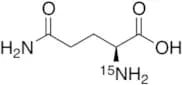
CAS:<p>Applications 1,2-Cyclohexanedicarboxylic Acid Mono 4-Methyloctan-1-ol Ester is a possible metabolite of the di(isononyl)cyclohexane-1,2-dicarboxylate (DINCH) monoester (MINCH).<br>References Koch, H., et al.: Arch. Toxicol., 87, 799 (2013)<br></p>Formula:C17H30O4Color and Shape:NeatMolecular weight:298.42L-Glutamine-15N
CAS:<p>Applications L-Glutamine (Alpha-15n, 98%) (cas# 80143-57-3) is a useful research chemical.<br></p>Formula:C5H1015NNO3Color and Shape:NeatMolecular weight:147.1381-(1-pyrrolidinyl)cyclohexanecarboxylic acid hydrochloride
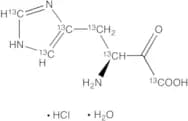
CAS:Purity:95.0%Molecular weight:233.74000549316406L-Histidine Hydrochloride Hydrate (<5% D) (13C6, 97-99%)
CAS:Controlled ProductFormula:C6H9N3O2•(HCl)•(H2O)Purity:97-99%Color and Shape:NeatMolecular weight:161.1136461802N-Acetylglycine-d5
CAS:Controlled Product<p>Applications N-Acetylglycine-d5 is an isotopic analog of N-Acetyl-glycine (A178260), a derivative of Glycine (G615990). It is an intermediate used to synthesize rac 3-O-Methyl DOPA (M303805) which is an impurity of Levodopa.<br>References Tabar, et al.: Pharmacol. Biochem. Behav., 33, 139 (1989), De Souza Silva, et al.: J. Neurochem., 68, 233 (1997), Feigin, A., et al.: Neurology, 57, 2083 (2001), Perera, A., et al.: J. Labelled Comp. Radiopharm., 46, 389 (2003),<br></p>Formula:C4D5H2NO3Color and Shape:NeatMolecular weight:122.134DL-Cysteine
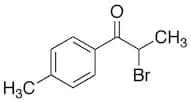
CAS:Controlled Product<p>Stability Hygroscopic<br>Applications Cysteine is a non-essential amino acid that can be synthesized by the human body under normal physiological conditions if a sufficient quantity of methionine is available. Cysteine is commonly used as a precursor in the food and pharmaceutical industries. Cysteine is used as a processing aid for baking, as an additive in cigarettes, as well as in the preparation of meat flavours.<br>References Hui, N. et al.: Meat Sci. Appl., 74 (2001); Kiviharju, K. et al.: J. Biotechnol., 117, 299 (2005); Pecivova, P. et al.: J. Sci. Food Agric., 90, 1681 (2010);<br></p>Formula:C3H7NO2SColor and Shape:NeatMolecular weight:121.162-Bromo-4'-methylpropiophenone
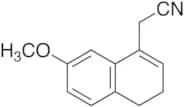
CAS:<p>Applications 2-Bromo-4'-methylpropiophenone (cas# 1451-82-7) is a compound useful in organic synthesis.<br></p>Formula:C10H11BrOColor and Shape:NeatMolecular weight:227.107-Methoxy-3,4-dihydro-1-naphthalenyl-acetonitrile
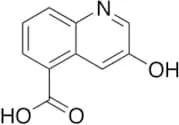
CAS:Controlled Product<p>Applications 7-Methoxy-3,4-dihydro-1-naphthalenyl-acetonitrile (cas# 861960-34-1) is a compound useful in organic synthesis.<br></p>Formula:C13H13NOColor and Shape:NeatMolecular weight:199.253-Hydroxyquinoline-5-carboxylic Acid
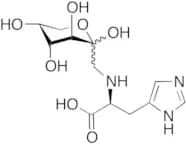
CAS:Controlled ProductFormula:C10H7NO3Color and Shape:NeatMolecular weight:189.167Fructose-histidine
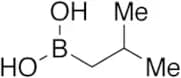
CAS:Controlled Product<p>Applications Fructose-histidine is an amadori compound formed in food.<br>References Wang, J., et al.: J. Mass Spec., 43, 262 (2008); Hashiba, H.: J. Agri. Food Chem., 24, 70 (1976)<br></p>Formula:C12H19N3O7Color and Shape:NeatMolecular weight:317.32-Methylpropylboronic Acid
CAS:Controlled Product<p>Applications 2-Methylpropylboronic Acid is used in the preparation of isocoumarin analogs as inhibitors of γ-secretase cleavage. Also used in the preparation of peptide boronc acid.<br>References Peuchmaur, M. et al.: Bioorg. Med. Chem. Lett., 21, 1018 (2013); Roemmele, R. et al.: Org. Proc. Res. Devel., 17, 422 (2013);<br></p>Formula:C4H11BO2Color and Shape:NeatMolecular weight:101.944-(3-bromobenzoyl)-8-methyl-1-oxa-4,8-diazaspiro[4.5]decane-3-carboxylic acid
CAS:Purity:95.0%Molecular weight:383.24200439453125(3R,3aS,6aS)-5-(tert-Butoxycarbonyl)hexahydro-2H-furo[2,3-c]pyrrole-3-carboxylic acid
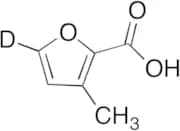
CAS:Purity:95%Molecular weight:257.28601074218753-Methyl-2-furoic Acid-d (Contained d0)
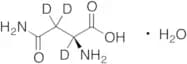
CAS:Controlled Product<p>Applications 3-Methyl-2-furoic Acid-d is a deuterated version of 3-Methyl-2-furoic Acid (M219553), a useful reactant in the synthesis of therapeutic agents.<br>References Dragovich, Peter S., et al.: Bioorg. & Med. Chem. Let., 24(3), 954-962 (2014);Garcia-Barrantes, Pedro M., et al.: J. of Med. Chem., 58(20), 7959-7971 (2015)<br></p>Formula:C6H5DO3Color and Shape:NeatMolecular weight:127.12L-Asparagine-d3 Hydrate
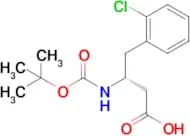
CAS:Controlled Product<p>Applications L-Asparagine-d3 Hydrate is an isotope labelled L-Asparagine Hydrate, a naturally occurring amino acid that is not a essential for humans and can be synthesized from central metabolic pathway intermediates.<br>References Burda, P., et al.: Biochim. Biophys. Acta., 1426, 239 (1999); Yamane, H., et al.: Animal. Sci. J., 80, 286 (2009);<br></p>Formula:C4D3H5N2O3·H2OColor and Shape:White To Off-WhiteMolecular weight:153.1517(S)-3-((tert-Butoxycarbonyl)amino)-3-(2-fluorophenyl)propanoic acid
CAS:Purity:95.0%Color and Shape:SolidMolecular weight:283.29901123046875Ref: 10-F241472
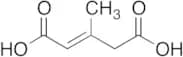
1gTo inquire2gTo inquire5gTo inquire10gTo inquire25gTo inquire250mgTo inquire500mgTo inquire3-Methylglutaconic Acid
CAS:Controlled Product<p>Stability Hygroscopic<br>Applications 3-Methylglutaconic acid is a glutarate which builds up in the urine in 3-methylglutaconic aciduria. 3-methylglutaconic aciduria is a term used to describe five different disorders that impair the functioning of energy-producing centers within cells (mitochondria)<br>References Walsh, R., et al.: J. Inherit. Metab. Dis., 22, 251 (1999); Gonzalez, I., et al.: Am J Med Genet A., 134, 409 (2005); MacKenzie, J., et al.: Biochim Biophys Acta., 1772, 509 (2007)<br></p>Formula:C6H8O4Color and Shape:NeatMolecular weight:144.138-ethyl-4-(3-fluorobenzoyl)-1-oxa-4,8-diazaspiro[4.5]decane-3-carboxylic acid
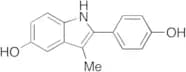
CAS:Purity:95.0%Molecular weight:336.36300659179692-(4-Hydroxyphenyl)-3-methyl-1H-indol-5-ol
CAS:<p>Applications 2-(4-Hydroxyphenyl)-3-methyl-1H-indol-5-ol is used as a reagent in the synthesis of tethered indoles as functionalizable ligands for estrogen receptor.<br>References Trogden, B.G., et al.: Bioorg. Med. Chem. Lett., 19, 485 (2009)<br></p>Formula:C15H13NO2Color and Shape:NeatMolecular weight:239.273-Amino-3-(3-fluoro-4-hydroxyphenyl)propanoic acid hydrochloride
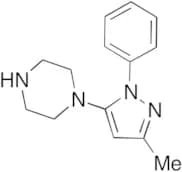
CAS:Purity:95%Molecular weight:235.639999389648441-(3-Methyl-1-phenyl-1H-pyrazol-5-yl)piperazine
CAS:Controlled Product<p>Applications 1-(3-Methyl-1-phenyl-1H-pyrazol-5-yl)piperazine is an intermediate used to prepare nonracemic γ-bicyclic heteroarylpiperazine- and heteroarylpiperidine-substituted prolinylthiazolidines as selective and orally active dipeptidylpeptidase 4 inhibitors for use as antidiabetic agents.<br>References Yoshida, T., et al.: Bioorg. Med. Chem., 20, 5705 (2012)<br></p>Formula:C14H18N4Color and Shape:NeatMolecular weight:242.32(4-Hydroxyphenyl)glycine
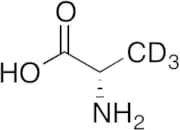
CAS:<p>Applications (4-Hydroxyphenyl)glycine, is a key intermediate for the synthesis Cefpiramide (C243400), used as a β-lactam antibiotic.<br>References Xiao, R. Q., et al.: Guangzhou Huagong, 41, 111 (2013);<br></p>Formula:C8H9NO3Color and Shape:Off White PowderMolecular weight:167.162L-Alanine-d3
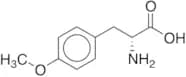
CAS:Controlled Product<p>Applications L-Alanine-d3 is the labeled analogue of L-Alanine (A481500), which is used to make in-vivo measurement of glucose and alanine metabolism in studies of patients with diabetes. L-Alanine is a non-essential amino acid for human development. L-Alanine is one of the 20 amino acids encoded by the genetic code.<br>References Bier, D.M. et al.: Diabetes, 26, 1005 (1977); Capaldo, B. et al.: J. Clin. Endocrinol. Metab., 71, 1220 (1990); Giacca, A. et al.: Diabetes, 47, 1763 (1998)<br></p>Formula:C3D3H4NO2Color and Shape:NeatMolecular weight:92.11(R)-2-Amino-3-(4-methoxyphenyl)propanoic Acid
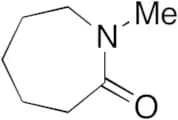
CAS:Controlled ProductFormula:C10H13NO3Color and Shape:NeatMolecular weight:195.215N-Methylcaprolactam
CAS:<p>Applications N-Methylcaprolactam is a reagent that is used in the synthesis of 3-Chloro-4-(dichloromethyl)-5-hydroxy-2(5H)-furanone-13C5, which is a chlorinated furanone that accounts for more of the mutagenic activity of drinking water than any other disinfection byproduct.<br></p>Formula:C7H13NOColor and Shape:NeatMolecular weight:127.188-benzyl-4-(2-ethylbutanoyl)-1-oxa-4,8-diazaspiro[4.5]decane-3-carboxylic acid
CAS:Purity:95.0%Molecular weight:374.48098754882812-(4-(Benzo[d][1,3]dioxol-5-ylmethyl)piperazine-1-carbonyl)cyclohexane-1-carboxylic acid
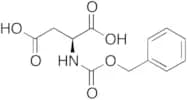
CAS:Purity:90%Molecular weight:374.43701171875N-Cbz-L-aspartic Acid
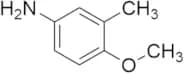
CAS:Controlled Product<p>Applications N-Cbz-L-aspartic acid is an N-Cbz-protected form of L-Aspartic acid (A790024). L-Aspartic acid is a nonessential amino acid that is used to biosynthesize other amino acids within the human body. L-Aspartic acid also increases membrane conductance of mammalian neurons by voltage-dependent means, causing depolarization and nerve impulses that travel to key areas of the central nervous system.<br>References Anderson, H., et al.: J. Nutr., 99, 82 (1969); Honey, C., et al.: Neurosci. Lett., 61, 135 (1985); MacDonald, J., et al.: Brain Res., 237, 248 (1982)<br></p>Formula:C12H13NO6Color and Shape:White To Off-WhiteMolecular weight:267.234-Methoxy-3-methylaniline
CAS:Controlled Product<p>Applications 4-methoxy-3-methylaniline (cas# 136-90-3) is a useful research chemical.<br></p>Formula:C8H11NOColor and Shape:NeatMolecular weight:137.179(S)-3-((tert-Butoxycarbonyl)amino)-3-(2-hydroxyphenyl)propanoic acid
CAS:Purity:95.0%Molecular weight:281.3080139160156Thiodiglycolic Acid-d4
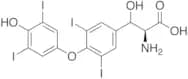
CAS:Controlled Product<p>Applications Thiodiglycolic Acid-d4 acts as a reagent for the synthesis of metabolites of S-carboxymethyl-L-cysteine and S-methyl-L-Cysteine and of some isotoically labelled (2H, 13C) analogs.<br>References Meese, C. O., et al.: Archiv der Pharmazie, 323, 957 (1990)<br></p>Formula:C4D4H2O4SColor and Shape:NeatMolecular weight:154.17β-Hydroxy Thyroxine (>90%)
CAS:Controlled Product<p>Impurity Levothyroxine beta-Hydroxy Impurity / Levothyroxine beta-Hydroxy T4 Impurity<br>Applications It has been prepared for testing as possible antithyroid. It showed some thyromimetic activity.<br>References Wawzone, S., et al.: J. Med. Chem., 6, 442 (1963),<br></p>Formula:C15H11I4NO5Purity:>90%Color and Shape:NeatMolecular weight:792.87p-Methoxytoluene
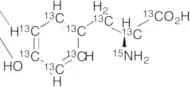
CAS:<p>Applications p-Methoxytoluene is a building block that has been used as a reactant for the preparation of electrophilic fluorinating agents.<br> Not a dangerous good if item is equal to or less than 1g/ml and there is less than 100g/ml in the package<br>References Baudoux, J., Cahard, D.: Org. Reactions, 69, 347 (2007)<br></p>Formula:C8H10OColor and Shape:NeatMolecular weight:122.16L-Tyrosine-13C9,15N
CAS:<p>Applications L-Tyrosine-13C9 ,15N is labelled analogue of L-Tyrosine (T899975), one of the 22 proteinogenic amino acids that are used by cells to synthesize proteins. L-Tyrosine is biologically converted from L-phenylalanine and is in turn is converted to L-DOPA and further converted into the neurotransmitters: dopamine, norepinephrine, and epinephrine.<br>References Rasmussen D.D. et al.: J. Clin. Endocrinol. Metab., 57, 760 (1983); Bagchi, S.P. et al.: Biochem. Pharmacol., 26, 900 (1977)<br></p>Formula:C9H1115NO3Color and Shape:White To Off-WhiteMolecular weight:191.11584-Amino-3-Hydroxybutanoic Acid
CAS:Controlled ProductFormula:C4H9NO3Color and Shape:NeatMolecular weight:119.122-[4-(4-Chlorophenyl)piperazin-1-yl]-2-(4-fluorophenyl)acetic acid
CAS:Molecular weight:348.799987792968751-Methoxy-2-propanol
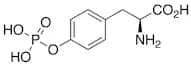
CAS:Controlled Product<p>Applications 1-Methoxy-2-propanol is used as a reagent in the synthesis of 2-amino-3-carboxy-4-phenylthiophenes as novel atypical protein kinase C inhibitors. Also used as a reagent in the synthesis of Metolachlor (M338700); a selective pre-emergence herbicide.<br> Not a dangerous good if item is equal to or less than 1g/ml and there is less than 100g/ml in the package<br>References Titchenell, P.M., et al.: Bioorg. Med. Chem. Lett., 23, 3034 (2013); Zhang, H.: Nongyao Kexue Yu Guanli, 32, 26 (2011)<br></p>Formula:C4H10O2Color and Shape:ColourlessMolecular weight:90.12O-Phospho-L-tyrosine
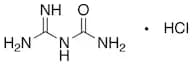
CAS:<p>Applications Useful in the study of tyrosine-phosphorylation, which has been linked with the malignant transformation of cells by some RNA tumour viruses.<br>References Sefton, B.M., et al.: Cell, 20, 807 (1980), Erikson, R., et al.: Perspect. Virol., 11, 93 (1981), Lee, E-S, et al.: J. Org. Chem., 59, 2086 (1994)<br></p>Formula:C9H12NO6PColor and Shape:NeatMolecular weight:261.17Carbamoyl-guanidine Amidino Urea
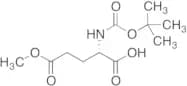
CAS:Controlled Product<p>Applications Carbamoyl-guanidine Amidino Urea Salt, Hydrochloride salt (cas# 926-72-7) is a compound useful in organic synthesis.<br></p>Formula:C2H6N4O·ClHColor and Shape:NeatMolecular weight:138.56N-Boc-L-glutamic Acid 5-Methyl Ester
CAS:Controlled Product<p>Applications N-Boc-L-glutamic Acid 5-Methyl Ester is an intermediate used in the synthesis of Isodesmosine Chloride Hydrate (Synthetic) (I815051), which is a component of elastin and also it is extremely hygroscopic and must be stored over a desiccant such as silica gel.<br>References Partridge, S., et al.: Nature, 209, 399 (1966)<br></p>Formula:C11H19NO6Color and Shape:NeatMolecular weight:261.273-(1,2,4-Triazol-1-yl)-L-alanine
CAS:Controlled Product<p>Applications A metabolite common to all triazole fungicides: free triazole, 1,2,4-triazole (T), and its 2 conjugates: triazolylalanine (TA) and triazolylacetic acid (TAA).<br>References Hrudey, S., et al.: Water Sci. Technol., 20, 55 (1988), Froese, K., et al.: Water Res., 33, 1355 (1999), Hengel, M., et al.: J. Agric. Food Chem., 50, 3412 (2002),<br></p>Formula:C5H8N4O2Color and Shape:NeatMolecular weight:156.145-Methoxyresorcinol
CAS:<p>Applications 5-Methoxyresorcinol (cas# 2174-64-3) is a useful research chemical.<br></p>Formula:C7H8O3Color and Shape:NeatMolecular weight:140.1374-benzoyl-8-propyl-1-oxa-4,8-diazaspiro[4.5]decane-3-carboxylic acid
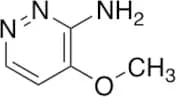
CAS:Purity:95.0%Molecular weight:332.39999389648444-Methoxypyridazin-3-amine
CAS:Controlled ProductFormula:C5H7N3OColor and Shape:NeatMolecular weight:125.128D-Lysine hydrochloride
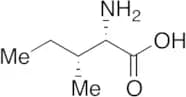
CAS:Controlled Product<p>Applications D-Lysine, HCl<br></p>Formula:C6H14N2O2·ClHColor and Shape:NeatMolecular weight:182.649L-Allo-isoleucine
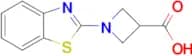
CAS:Controlled Product<p>Applications L-alloisoleucine is a stereo-isomer of L-isoleucine (I820175) and is produced as a byproduct of isoleucine via transamination. L-allo-isoleucine has been suggested to induce epithelial β-defensin expression. In addition, L-allo-isoleucine is utilized in the biosynthesis pathway for coronamic acid.<br>References Fehlbaum, P., et al.: Proc. Natl. Acad. Sci. USA 97, 12723 (2000); Parry, R. J., et al.: J. Am. Chem. Soc. 113, 1849 (1991)<br></p>Formula:C6H13NO2Color and Shape:NeatMolecular weight:131.171-(1,3-benzothiazol-2-yl)azetidine-3-carboxylic acid
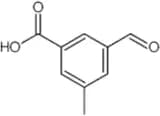
CAS:Purity:95.0%Molecular weight:234.270004272460943-Formyl-5-methylbenzoic Acid
CAS:Controlled Product<p>Applications 3-Formyl-5-methylbenzoic Acid<br></p>Formula:C9H8O3Color and Shape:NeatMolecular weight:164.164-(4-chloro-2-fluorobenzoyl)-8-methyl-1-oxa-4,8-diazaspiro[4.5]decane-3-carboxylic acid
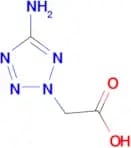
CAS:Purity:95.0%Molecular weight:356.7799987792969(5-Amino-tetrazol-2-yl)-acetic acid
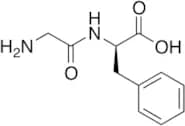
CAS:Formula:C3H5N5O2Color and Shape:SolidMolecular weight:143.106Glycyl-D-phenylalanine
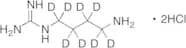
CAS:Controlled Product<p>Applications Glycyl-D-phenylalanine (cas# 34258-14-5) is a useful research chemical.<br></p>Formula:C11H14N2O3Color and Shape:NeatMolecular weight:222.244-Aminobutyl-d8 Guanidine Dihydrochloride
CAS:Controlled Product<p>Applications 4-Aminobutyl-d8 Guanidine is the labelled analog of the decarboxylation product of the amino acid arginine (A769500) and also an intermediate in polyamine biosynthesis.<br>References Golding, B.T., et al.: Biochem. Soc. Trans., 22, 391S (1994);<br></p>Formula:C5H6D8N4·2HClColor and Shape:NeatMolecular weight:211.16263(S)-2-Amino-4-[(3-aminopropyl)amino]-butanoic Acid
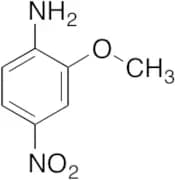
CAS:Controlled Product<p>Applications (S)-2-Amino-4-[(3-aminopropyl)amino]-butanoic Acid is used in the reaction of carboxynorspermidine decarboxylase of Vibrio alginolyticus.<br>References Nakao, H., et al.: J. Gen. Microbiol. 136, 1699-704 (1990)<br></p>Formula:C7H17N3O2Purity:>90%Color and Shape:NeatMolecular weight:175.2292-Methoxy-4-nitroaniline
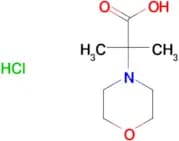
CAS:<p>Applications 2-Methoxy-4-nitroaniline is a derivative of 4-Nitroaniline (N491770), which is used in the synthesis of photorefractive polymers, as novel chromophores in analytical study. As well, due to the absorption spectrum associated with 4-Nitroaniline, it is used to determine catechol derivatives in syntheses.<br>References Nagaraja, P. et al.: J. Pharm. Biomed. Anal., 25, 417 (2001);<br></p>Formula:C7H8N2O3Color and Shape:YellowMolecular weight:168.152-methyl-2-(morpholin-4-yl)propanoic acid hydrochloride
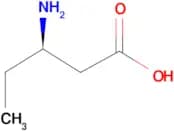
CAS:Color and Shape:SolidMolecular weight:209.6699981689453(R)-3-Amino-pentanoic acid
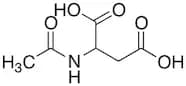
CAS:Formula:C5H11NO2Purity:95%Color and Shape:Solid, Light brown powderMolecular weight:117.148N-Acetyl-DL-aspartic Acid
CAS:Controlled Product<p>Applications N-Acetyl-DL-aspartic acid (cas# 2545-40-6) is a useful research chemical.<br></p>Formula:C6H9NO5Color and Shape:NeatMolecular weight:175.139


![4-(3,5-dichlorobenzoyl)-8-ethyl-1-oxa-4,8-diazaspiro[4.5]decane-3-carboxylic acid](/_next/image/?url=https%3A%2Fstatic.cymitquimica.com%2Fproducts%2F10%2Fthumb-webp%2FF525701.webp&w=3840&q=75)

![1-[2-Amino-1-(m-tolyl)ethyl]pyrrolidine-3-carboxylic acid hydrochloride](/_next/image/?url=https%3A%2Fstatic.cymitquimica.com%2Fproducts%2F10%2Fthumb-webp%2FF040924.webp&w=3840&q=75)
![4-(2,4-dimethylphenyl)-3H,4H,5H,6H,7H-imidazo[4,5-c]pyridine-6-carboxylic acid](/_next/image/?url=https%3A%2Fstatic.cymitquimica.com%2Fproducts%2F10%2Fthumb-webp%2FF522510.webp&w=3840&q=75)
![8-ethyl-4-(4-methyl-3-nitrobenzoyl)-1-oxa-4,8-diazaspiro[4.5]decane-3-carboxylic acid](/_next/image/?url=https%3A%2Fstatic.cymitquimica.com%2Fproducts%2F10%2Fthumb-webp%2FF525692.webp&w=3840&q=75)
![2-(4-Chlorophenyl)-2-[4-(4-methylphenyl)piperazin-1-yl]acetic acid](/_next/image/?url=https%3A%2Fstatic.cymitquimica.com%2Fproducts%2F10%2Fthumb-webp%2FF300266.webp&w=3840&q=75)
![4-(2,5-dimethylphenyl)-3H,4H,5H,6H,7H-imidazo[4,5-c]pyridine-6-carboxylic acid](/_next/image/?url=https%3A%2Fstatic.cymitquimica.com%2Fproducts%2F10%2Fthumb-webp%2FF522515.webp&w=3840&q=75)
![N-[(Benzyloxy)carbonyl]glycylglycine](/_next/image/?url=https%3A%2Fstatic.cymitquimica.com%2Fproducts%2FTR%2Fthumb-webp%2FB287100.webp&w=3840&q=75)
![4-{[4-(dimethylamino)phenyl]methylidene}-1,2,3,4-tetrahydroacridine-9-carboxylic acid](/_next/image/?url=https%3A%2Fstatic.cymitquimica.com%2Fproducts%2F10%2Fthumb-webp%2FF985969.webp&w=3840&q=75)
![2-(3-Fluorophenyl)-2-[4-(4-fluorophenyl)piperazin-1-yl]acetic acid](/_next/image/?url=https%3A%2Fstatic.cymitquimica.com%2Fproducts%2F10%2Fthumb-webp%2FF300392.webp&w=3840&q=75)
![8-ethyl-4-(furan-2-carbonyl)-1-oxa-4,8-diazaspiro[4.5]decane-3-carboxylic acid](/_next/image/?url=https%3A%2Fstatic.cymitquimica.com%2Fproducts%2F10%2Fthumb-webp%2FF525676.webp&w=3840&q=75)
![8-benzyl-4-(pyridine-3-carbonyl)-1-oxa-4,8-diazaspiro[4.5]decane-3-carboxylic acid](/_next/image/?url=https%3A%2Fstatic.cymitquimica.com%2Fproducts%2F10%2Fthumb-webp%2FF525809.webp&w=3840&q=75)

![4-(2,4-dimethoxyphenyl)-3H,4H,5H,6H,7H-imidazo[4,5-c]pyridine-6-carboxylic acid](/_next/image/?url=https%3A%2Fstatic.cymitquimica.com%2Fproducts%2F10%2Fthumb-webp%2FF522514.webp&w=3840&q=75)



![[3-(4-Fluorobenzyl)-2,4-dioxo-1,3,8-triazaspiro[4.5]dec-8-yl]acetic acid](/_next/image/?url=https%3A%2Fstatic.cymitquimica.com%2Fproducts%2F10%2Fthumb-webp%2FF495292.webp&w=3840&q=75)




![4-(3-bromobenzoyl)-8-methyl-1-oxa-4,8-diazaspiro[4.5]decane-3-carboxylic acid](/_next/image/?url=https%3A%2Fstatic.cymitquimica.com%2Fproducts%2F10%2Fthumb-webp%2FF525640.webp&w=3840&q=75)
![(3R,3aS,6aS)-5-(tert-Butoxycarbonyl)hexahydro-2H-furo[2,3-c]pyrrole-3-carboxylic acid](/_next/image/?url=https%3A%2Fstatic.cymitquimica.com%2Fproducts%2F10%2Fthumb-webp%2FF609060.webp&w=3840&q=75)


![8-ethyl-4-(3-fluorobenzoyl)-1-oxa-4,8-diazaspiro[4.5]decane-3-carboxylic acid](/_next/image/?url=https%3A%2Fstatic.cymitquimica.com%2Fproducts%2F10%2Fthumb-webp%2FF525685.webp&w=3840&q=75)


![8-benzyl-4-(2-ethylbutanoyl)-1-oxa-4,8-diazaspiro[4.5]decane-3-carboxylic acid](/_next/image/?url=https%3A%2Fstatic.cymitquimica.com%2Fproducts%2F10%2Fthumb-webp%2FF525814.webp&w=3840&q=75)
![2-(4-(Benzo[d][1,3]dioxol-5-ylmethyl)piperazine-1-carbonyl)cyclohexane-1-carboxylic acid](/_next/image/?url=https%3A%2Fstatic.cymitquimica.com%2Fproducts%2F10%2Fthumb-webp%2FF729921.webp&w=3840&q=75)





![2-[4-(4-Chlorophenyl)piperazin-1-yl]-2-(4-fluorophenyl)acetic acid](/_next/image/?url=https%3A%2Fstatic.cymitquimica.com%2Fproducts%2F10%2Fthumb-webp%2FF300204.webp&w=3840&q=75)



![4-benzoyl-8-propyl-1-oxa-4,8-diazaspiro[4.5]decane-3-carboxylic acid](/_next/image/?url=https%3A%2Fstatic.cymitquimica.com%2Fproducts%2F10%2Fthumb-webp%2FF525714.webp&w=3840&q=75)

![4-(4-chloro-2-fluorobenzoyl)-8-methyl-1-oxa-4,8-diazaspiro[4.5]decane-3-carboxylic acid](/_next/image/?url=https%3A%2Fstatic.cymitquimica.com%2Fproducts%2F10%2Fthumb-webp%2FF525664.webp&w=3840&q=75)
![(S)-2-Amino-4-[(3-aminopropyl)amino]-butanoic Acid](/_next/image/?url=https%3A%2Fstatic.cymitquimica.com%2Fproducts%2FTR%2Fthumb-webp%2FA609335.webp&w=3840&q=75)