Amino Acids (AA)
Amino acids (AAs) are the fundamental building blocks of proteins, playing a crucial role in various biological processes. These organic compounds are essential for protein synthesis, metabolic pathways, and cell signaling. In this category, you will find a comprehensive range of amino acids, including essential, non-essential, and modified forms, which are vital for research in biochemistry, molecular biology, and nutritional sciences. At CymitQuimica, we provide high-quality amino acids to support your research and development needs, ensuring accuracy and reliability in your experimental outcomes.
Subcategories of "Amino Acids (AA)"
- Amino Acid Derivatives(3,955 products)
- Amino Acid and Amino Acid Related Compounds(3,464 products)
- Amino Acids with Oxygen or Sulphur(168 products)
- Boc- Amino Acids(351 products)
- Fmoc Amino Acids(1,710 products)
Found 38247 products of "Amino Acids (AA)"
Sort by
Purity (%)
0
100
|
0
|
50
|
90
|
95
|
100
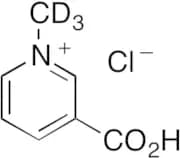
Trigonelline-d3 Hydrochloric Acid Salt (N-methyl-d3)
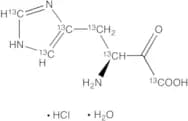
CAS:Controlled Product<p>Stability Hygroscopic<br>Applications Trigonelline-d3 HCl is deuterium labelled Trigonelline HCl. Trigonelline HCl has utility in developing site-specific system that delivers drugs to the brain. It has also been suggested as a potential anti-Alzheimer disease agent.<br>References Bodor, N., et al.: J. Med. Chem 26, 313 (1983); Makowska, J., et al.: J. Chromatogr. B 968, 101 (2014)<br></p>Formula:C7D3H5NO2·ClColor and Shape:NeatMolecular weight:176.62L-Histidine Hydrochloride Hydrate (<5% D) (13C6, 97-99%)
CAS:Controlled ProductFormula:C6H9N3O2•(HCl)•(H2O)Purity:97-99%Color and Shape:NeatMolecular weight:161.1136461802Ethametsulfuron-methyl Sodium Salt
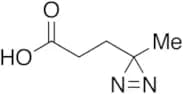
CAS:Controlled Product<p>Applications Ethametsulfuron-methyl Sodium Salt, a regulator of the early steps of complement activation on mucosal surfaces. It can be used in combination treatment of ohmic heating with various essential oil components for inactivation of food-borne pathogens in buffered peptone water and salsa.<br>References Kim, S. S., et al.: Food Control, 80, 29 (2017); Reichhardt, M. P., et al.: Front Immunol, 7, 85 (2016)<br></p>Formula:C15H17N6NaO6SColor and Shape:NeatMolecular weight:432.3873-Methyl-diazirine-3-propanoic Acid
CAS:Controlled Product<p>Stability Light Sensitive<br>Applications 3-Methyl-diazirine-3-propanoic Acid is a reagent used in crosslinking sugars and photoactivatable crosslinking.<br>References Tanaka, Y. et al.: J. Am. Chem. Soc., 130, 3278 (2008);<br></p>Formula:C5H8N2O2Color and Shape:NeatMolecular weight:128.131'-(tert-Butoxycarbonyl)-[1,4'-bipiperidine]-3-carboxylic acid
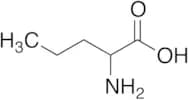
CAS:Purity:98+%Molecular weight:312.4100036621094DL-norvaline
CAS:<p>Applications Norvaline, a hydrogen analogs of an amino acid, was found to be racemates from the Murchison meteorite show. Norvaline was used in chiral separation by electrokinetic chromatography.<br>References Cronin, J., et al.: Science, 275, 951 (1997); Pizzarello, S., et al.: Geochim. Cosmochim. Acta., 64, 329 (2000); Gerabe, S., et al.: J. Chromatogr., 480, 403 (1989);<br></p>Formula:C5H11NO2Color and Shape:NeatMolecular weight:117.158-ethyl-4-(4-fluorobenzoyl)-1-oxa-4,8-diazaspiro[4.5]decane-3-carboxylic acid
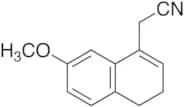
CAS:Purity:95.0%Molecular weight:336.36300659179697-Methoxy-3,4-dihydro-1-naphthalenyl-acetonitrile
CAS:Controlled Product<p>Applications 7-Methoxy-3,4-dihydro-1-naphthalenyl-acetonitrile (cas# 861960-34-1) is a compound useful in organic synthesis.<br></p>Formula:C13H13NOColor and Shape:NeatMolecular weight:199.25(3aS,4S,6R,6aR)-6-(6-Amino-2-chloro-9H-purin-9-yl)-2,2-dimethyltetrahydrofuro[3,4-d][1,3]dioxole-4-carboxylic acid
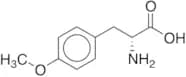
CAS:Purity:97.0%Molecular weight:355.739990234375(R)-2-Amino-3-(4-methoxyphenyl)propanoic Acid
CAS:Controlled ProductFormula:C10H13NO3Color and Shape:NeatMolecular weight:195.215L-Anserine Nitrate Salt
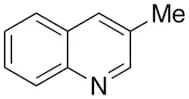
CAS:Controlled Product<p>Applications L-Anserine Nitrate Salt (cas# 10030-52-1) is a compound useful in organic synthesis.<br></p>Formula:C10H16N4O3·HNO3Color and Shape:NeatMolecular weight:303.273-Methylquinoline
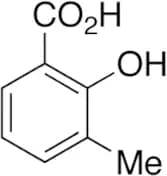
CAS:Controlled Product<p>Applications It can be degraded efficiently by the QL-degrading bacteria.<br>References Shukla, O., et al.: Microbios., 59, 47 (1989), Oh, Y; Biotechnol Bioeng 1994, 44, 533,,,<br></p>Formula:C10H9NColor and Shape:NeatMolecular weight:143.193-Methyl Salicylic Acid
CAS:Controlled Product<p>Applications 3-Methyl Salicylic Acid is a toxic compound, it’s toxicity is similar to salicylic acid. Reagent used in manufacturing and preparation of dyes.<br>References Egorova, T. V., et al.: Tekstil'naya Promyshlennost , 3, 48 (1987); Keshavarz, M. H., et al.: J. Hazard. Mater., 237, 79 (2012)<br></p>Formula:C8H8O3Color and Shape:NeatMolecular weight:152.15Boc-4-azido-L-phenylalanine
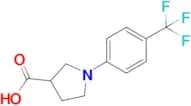
CAS:Controlled Product<p>Applications Boc-4-azido-L-phenylalanine is used in the development of visible fluorogenic dyes for cellular imaging.<br>References Qi, Jianjun., et al.; Bioconjugate Chem., 22, 1758 (2011);<br></p>Formula:C14H18N4O4Color and Shape:NeatMolecular weight:306.321-(4-(Trifluoromethyl)phenyl)pyrrolidine-3-carboxylic acid
CAS:Purity:97%Molecular weight:259.22799682617192,3-Dihydroxy-2-methylbutanoic Acid Sodium Salt
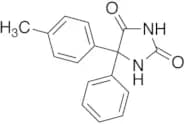
CAS:<p>Applications 2,3-Dihydroxy-2-methylbutanoic Acid Sodium Salt is a useful research chemical.<br></p>Formula:C5H9NaO4Color and Shape:White To Off-WhiteMolecular weight:134.1305-(p-Methylphenyl)-5-phenylhydantoin
CAS:<p>Applications An antibody agent.<br>References Rowell, F. J., et al.: Immunochemistry, 13, 891 (1976),<br></p>Formula:C16H14N2O2Color and Shape:NeatMolecular weight:266.292-Deoxy-2-chloro-D-glucose
CAS:Controlled Product<p>Applications 2-Deoxy-2-chloro-D-glucose is a D-Glucose (G595000) derivative used in the synthesis of sugar nucleotides and oligosaccharides.<br>References Herr, D., et al.: Euro. J. App. Microbiol., 1, 41 (1975);<br></p>Formula:C6H11ClO5Color and Shape:NeatMolecular weight:198.605-Methyl-4,5,6,7-tetrahydrothiazolo[5,4-c]pyridine-2-carboxylic Acid Hydrochloride
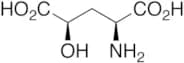
CAS:Controlled Product<p>Stability Hygroscopic<br>Applications 5-Methyl-4,5,6,7-tetrahydrothiazolo[5,4-c]pyridine-2-carboxylic Acid Hydrochloride is used as a reagent in the synthesis of N-(2-acylaminobenzyl or 2-acylaminoheterocyclylmethyl)thiophene-2-carboxamide derivatives as antithrombotics. It is also used as a reagent in the synthesis of diamide derivatives as FXa inhibitors. 5-Methyl-4,5,6,7-tetrahydrothiazolo[5,4-c]pyridine-2-carboxylic Acid Hydrochloride is an intermediate for Edoxaban (E555520).<br>References Mochizuki, A., et al.: Jpn. Kokai Tokkyo Koho. JP 2010120852 A 20100603. Jun 3, 2010; Mochizuki, A., et al.: PCT Int. Appl. WO 2008123017 A1 20081016. Oct 16, 2008<br></p>Formula:C8H11ClN2O2SColor and Shape:Light BrownMolecular weight:234.7(2S,4R)-4-Hydroxy-L-glutamic Acid
CAS:Controlled Product<p>Applications (2S,4R)-4-Hydroxy-L-glutamic Acid is a metabolite of Glutamic acid (G596960).<br>References Hampson, D., et al.: J. Biol. Chem., 274, 33488 (1999), Jensen, A., et al.: Eur. J. Pharmacol., 397, 247 (2000),<br></p>Formula:C5H9NO5Color and Shape:NeatMolecular weight:163.13D-Isoleucine
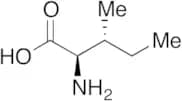
CAS:<p>Applications D-Isoleucine is not biosynthesized in the human body and is therefore categorized as an essential amino acid that must be obtained through diet. It is also an important building block that is used in the formation of hemoglobin in humans.<br>References Albanese, A.: J. Biol. Chem., 157, 613 (1945); Martin, R. & Kirk, K.: Blood, 109, 2217 (2007)<br></p>Formula:C6H13NO2Color and Shape:Off White SolidMolecular weight:131.1729Azido-PEG3-alcohol
CAS:Controlled ProductFormula:C6H13N3O3Color and Shape:NeatMolecular weight:175.19Thiodiglycolic Acid-d4
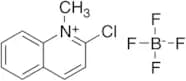
CAS:Controlled Product<p>Applications Thiodiglycolic Acid-d4 acts as a reagent for the synthesis of metabolites of S-carboxymethyl-L-cysteine and S-methyl-L-Cysteine and of some isotoically labelled (2H, 13C) analogs.<br>References Meese, C. O., et al.: Archiv der Pharmazie, 323, 957 (1990)<br></p>Formula:C4D4H2O4SColor and Shape:NeatMolecular weight:154.172-Chloro-1-methylquinolinium Tetrafluoroborate
CAS:Controlled Product<p>Applications 2-Chloro-1-methylquinolinium tetrafluoroborate (cas# 16843-24-6) is a useful research chemical.<br></p>Formula:C10H9ClN·BF4Color and Shape:NeatMolecular weight:265.442,4,8,10-Tetraoxaspiro[5.5]undecane-3,9-diylbis(2-methylpropane-2,1-diyl) bis(3-(3-(tert-butyl)-4-hydroxy-5-methylphenyl)propanoate)
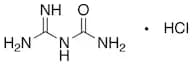
CAS:Controlled Product<p>Applications 2,4,8,10-Tetraoxaspiro[5.5]undecane-3,9-diylbis(2-methylpropane-2,1-diyl) bis(3-(3-(tert-butyl)-4-hydroxy-5-methylphenyl)propanoate) (cas# 90498-90-1) is a useful compound used as a modifier for the thermo-oxidative stabilization of synthesized meterials such as polypropylene-based materials, and spider silk.<br>References Matta, A.; et al.: Polym. Degrad. Stab., 142, 50 (2017); Dao, A. T.; et al.: Polym. Degrad. Stab., 153, 37 (2018).<br></p>Formula:C43H64O10Color and Shape:NeatMolecular weight:740.96Carbamoyl-guanidine Amidino Urea
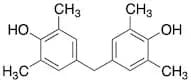
CAS:Controlled Product<p>Applications Carbamoyl-guanidine Amidino Urea Salt, Hydrochloride salt (cas# 926-72-7) is a compound useful in organic synthesis.<br></p>Formula:C2H6N4O·ClHColor and Shape:NeatMolecular weight:138.564,4'-Methylenebis(2,6-dimethylphenol)
CAS:Controlled Product<p>Applications 4,4'-Methylenebis(2,6-dimethylphenol) is used in thermosetting resin composition for the industrial manufacture of metal-clad laminates and printed circuit boards.<br> Not a dangerous good if item is equal to or less than 1g/ml and there is less than 100g/ml in the package<br>References You, J., et al.: Faming Zhuanli Shenqing. 19 pp. (2019)<br></p>Formula:C17H20O2Color and Shape:ColourlessMolecular weight:256.34(6R,7R)-7-Amino-3-(((5-methyl-1,3,4-thiadiazol-2-yl)thio)methyl)-8-oxo-5-thia-1-azabicyclo[4.2.0]oct-2-ene-2-carboxylic acid
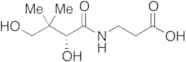
CAS:Purity:97.0%Molecular weight:344.4200134277344Pantothenic Acid (Technical Grade, Contains Lactone)
CAS:Controlled Product<p>Stability Hygroscopic<br>Applications Pantothenic Acid is a member of the B complex vitamins; essential vitamin for the biosynthesis of coenzyme A in mammalian cells. Occurs ubiquitously in all animal and plant tissue. The richest common source is liver, but jelly of the queen bee contains 6 times as much as liver. Rice bran and molasses are other good sources.<br>References Gardner, P., et al.: Food Chem., 68, 471 (2000); Ou, B., et al.: J. Agric. Food Chem., 50, 2772 (2002); Bahorun, T., et al.: J. Sci. Food Agric., 84, 1553 (2004)<br></p>Formula:C9H17NO5Color and Shape:NeatMolecular weight:219.24L-Isoleucine
CAS:<p>Applications L-Isoleucine is classified as an essential amino acid, and is also a tumour promoter of bladder cancer in rats.<br>References Hatch, T., et al.: Infect. Immun., 12, 211 (1975); Nishio, Y., et al.: Science, 231, 843 (1986)<br></p>Formula:C6H13NO2Color and Shape:White To Off-WhiteMolecular weight:131.178-methyl-4-(3-nitrobenzoyl)-1-oxa-4,8-diazaspiro[4.5]decane-3-carboxylic acid
CAS:Purity:95.0%Molecular weight:349.34298706054698-fluoro-3a,4,5,9b-tetrahydro-3H-cyclopenta[c]quinoline-4-carboxylic acid
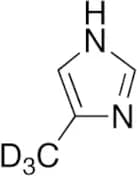
CAS:Purity:95.0%Molecular weight:233.242004394531254-Methylimidazole-d3
CAS:Controlled Product<p>Applications Labelled 4-Methylimidazole (M312990). 4-Methylimidazole is a monomethylated imidazole that can be used as a building block in the preparation of a wide range of biologically active compounds. 4-Methylimidazole is a product which results from the interaction of reducing sugars with ammonia. 4-Methylimidazole showed convulsant activity in animals and is listed as a possible carcinogen.<br> Not a dangerous good if item is equal to or less than 1g/ml and there is less than 100g/ml in the package<br>References Nishie, K. et al.: Toxicol. Appl. Pharmacol., 14, 301 (1969): Cunha, S.C. et al.: J. Food Comp. Anal., 24, 609 (2011); Chan, P.C. et al.: Arch. Toxicol., 82, 55 (2008);<br></p>Formula:C4H3D3N2Color and Shape:BeigeMolecular weight:85.12(+)-a-Methyl-b-alanine
CAS:Controlled Product<p>Applications (+)-α-Methyl-β-alanine is a reactant for the chemoenzymatic assembly of cryptophycins as potent anticancer therapeutics.<br>References Magarvey, N.A., et al.: ACS Chem. Biol., 1, 766-779 (2006)<br></p>Formula:C4H9NO2Color and Shape:NeatMolecular weight:103.120D-Aspartic Acid
CAS:<p>Applications A non-essential amino acid found in food sources and dietary supplements. Its conjugate base D-aspartate has potential use as a a therapeutic agent in the treatment of schizophrenia-related symptoms.<br>References Errico, F. et al.: J. Neurosci., 28, 10404 (2008); Denu, J.M. et al.: Biochem., 34, 3396 (1995); Chen, P.E. et al.: Mol. Pharmacol., 67, 1470 (2005);<br></p>Formula:C4H7NO4Color and Shape:NeatMolecular weight:133.10Arginine Vasopressin Diacetate
CAS:<p>Applications An endogenous antidiuretic hormone in most mammalian species. It is released into the blood from nerve terminals in the posterior pituitary and median eminence. It is a neurotransmitter in the central nervous system and also implicated in a variety of physiological processes such as regulating water balance by antidiuretic action. It is a peptidic V1a receptor agonist that produces vasoconstriction via V1aR-mediated vascular smooth muscle cell contraction and is being used to increase blood pressure in septic shock, a form of vasodilatory hypotension.<br>References Perucca, J. et al.: J. AM. Soc. Nephrol., 19, 1721 (2008); Toba, K. et al.: Prog. Brain Res., 119, 337 (1998); Berrada, K. et al.: J. Biol. Chem., 275, 27229 (2000);<br></p>Formula:C50H73N15O16S2Color and Shape:NeatMolecular weight:1204.348-methyl-4-(3,4,5-trimethoxybenzoyl)-1-oxa-4,8-diazaspiro[4.5]decane-3-carboxylic acid
CAS:Purity:95.0%Molecular weight:394.424011230468752,2-Diselanediyldiethanamine Dihydrochloride
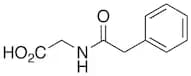
CAS:Controlled Product<p>Stability Hygroscopic<br>Applications 2,2-Diselanediyldiethanamine dihydrochloride (cas# 3542-13-0) is a useful research chemical.<br></p>Formula:C13H16N2O10Color and Shape:NeatMolecular weight:360.274N-Phenylacetylglycine
CAS:Controlled Product<p>Applications A metabolite of carboxylic acid.<br>References Bardsley, W., et al.: Biochem. J., 122, 557 (1971), Kim, J., et al.: Biosci. Biotechnol. Biochem., 69, 1331 (2005), Kopka, J., et al.: J. Biotechnol., 124, 312 (2006),<br></p>Formula:C10H11NO3Color and Shape:NeatMolecular weight:193.201-Azido-2-(2-methoxyethoxy)ethane
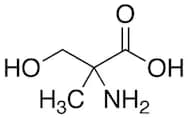
CAS:Controlled Product<p>Applications 1-Azido-2-(2-methoxyethoxy)ethane (cas# 215181-61-6) is a useful research chemical.<br></p>Formula:C5H11NO2Color and Shape:NeatMolecular weight:145.16α-Methyl-D,L-serine
CAS:Controlled Product<p>Applications A serine derivative. Used in the synthesis of constrained amino acid buildings blocks and their incorporation into biologically active peptidomimetics.<br>References Rew, Y., et al.: J. Med. Chem., 45, 3746 (2002),<br></p>Formula:C4H9NO3Color and Shape:NeatMolecular weight:119.12Ethyl trans-3-Methyl-4-oxocrotonate
CAS:Controlled Product<p>Applications Derivative of monoenoic and trienoic analogs of Sorbic Acid with antifungal activity.<br>References Guerin, J. et al.: Annales Pharmaceutiques Francaises 44, 373 (1987)<br></p>Formula:C7H10O3Color and Shape:NeatMolecular weight:142.15DL-Homocysteic-3,3,4,4-d4 Acid
CAS:Controlled ProductFormula:C4D4H5NO5SColor and Shape:Light YellowMolecular weight:187.04525Caerulein (>85%)
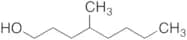
CAS:Controlled Product<p>Applications Caerulein is a ten amino acid oligopeptide that stimulates smooth muscle and increases digestive secretions. It is similar in action and composition to cholecystokinin. It stimulates gastric, biliary, and pancreatic secretion; and certain smooth muscle. It is used in paralytic ileus and as diagnostic aid in pancreatic malfunction. It is used to induce pancreatitis in experimental animal models.<br>References Anastasi,E., et al.: Ep., 23, 699 (1997); De Caro, G., et al.: Br. J. Pharmac Chemother., 33, 48 (1968)<br></p>Formula:C58H73N13O21S2Purity:~90%Color and Shape:Off-WhiteMolecular weight:1352.404-Methyl-1-octanol
CAS:Controlled Product<p>Applications 4-Methyl-1-octanol is an intermediate in the synthesis of 1,2-Cyclohexanedicarboxylic Acid Mono 4-Methyloctan-1-ol Ester which is a possible metabolite of the di(isononyl)cyclohexane-1,2-dicarboxylate (DINCH) monoester (MINCH).<br>References Koch, H., et al.: Arch. Toxicol., 87, 799 (2013)<br></p>Formula:C9H20OColor and Shape:NeatMolecular weight:144.25



![1'-(tert-Butoxycarbonyl)-[1,4'-bipiperidine]-3-carboxylic acid](/_next/image/?url=https%3A%2Fstatic.cymitquimica.com%2Fproducts%2F10%2Fthumb-webp%2FF736450.webp&w=3840&q=75)


![8-ethyl-4-(4-fluorobenzoyl)-1-oxa-4,8-diazaspiro[4.5]decane-3-carboxylic acid](/_next/image/?url=https%3A%2Fstatic.cymitquimica.com%2Fproducts%2F10%2Fthumb-webp%2FF525666.webp&w=3840&q=75)

![(3aS,4S,6R,6aR)-6-(6-Amino-2-chloro-9H-purin-9-yl)-2,2-dimethyltetrahydrofuro[3,4-d][1,3]dioxole-4…](/_next/image/?url=https%3A%2Fstatic.cymitquimica.com%2Fproducts%2F10%2Fthumb-webp%2FF053671.webp&w=3840&q=75)




![5-Methyl-4,5,6,7-tetrahydrothiazolo[5,4-c]pyridine-2-carboxylic Acid Hydrochloride](/_next/image/?url=https%3A%2Fstatic.cymitquimica.com%2Fproducts%2FTR%2Fthumb-webp%2FM330085.webp&w=3840&q=75)


![2,4,8,10-Tetraoxaspiro[5.5]undecane-3,9-diylbis(2-methylpropane-2,1-diyl) bis(3-(3-(tert-butyl)-4-…](/_next/image/?url=https%3A%2Fstatic.cymitquimica.com%2Fproducts%2FTR%2Fthumb-webp%2FT306005.webp&w=3840&q=75)
![(6R,7R)-7-Amino-3-(((5-methyl-1,3,4-thiadiazol-2-yl)thio)methyl)-8-oxo-5-thia-1-azabicyclo[4.2.0]o…](/_next/image/?url=https%3A%2Fstatic.cymitquimica.com%2Fproducts%2F10%2Fthumb-webp%2FF546079.webp&w=3840&q=75)

![8-methyl-4-(3-nitrobenzoyl)-1-oxa-4,8-diazaspiro[4.5]decane-3-carboxylic acid](/_next/image/?url=https%3A%2Fstatic.cymitquimica.com%2Fproducts%2F10%2Fthumb-webp%2FF525623.webp&w=3840&q=75)
![8-fluoro-3a,4,5,9b-tetrahydro-3H-cyclopenta[c]quinoline-4-carboxylic acid](/_next/image/?url=https%3A%2Fstatic.cymitquimica.com%2Fproducts%2F10%2Fthumb-webp%2FF314555.webp&w=3840&q=75)



![8-methyl-4-(3,4,5-trimethoxybenzoyl)-1-oxa-4,8-diazaspiro[4.5]decane-3-carboxylic acid](/_next/image/?url=https%3A%2Fstatic.cymitquimica.com%2Fproducts%2F10%2Fthumb-webp%2FF525628.webp&w=3840&q=75)