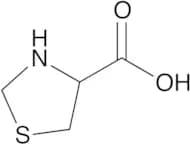
Amino Acids (AA)
Amino acids (AAs) are the fundamental building blocks of proteins, playing a crucial role in various biological processes. These organic compounds are essential for protein synthesis, metabolic pathways, and cell signaling. In this category, you will find a comprehensive range of amino acids, including essential, non-essential, and modified forms, which are vital for research in biochemistry, molecular biology, and nutritional sciences. At CymitQuimica, we provide high-quality amino acids to support your research and development needs, ensuring accuracy and reliability in your experimental outcomes.
Subcategories of "Amino Acids (AA)"
- Amino Acid Derivatives(3,955 products)
- Amino Acid and Amino Acid Related Compounds(3,461 products)
- Amino Acids with Oxygen or Sulphur(168 products)
- Boc- Amino Acids(351 products)
- Fmoc Amino Acids(1,710 products)
Found 38244 products of "Amino Acids (AA)"
Sort by
Purity (%)
0
100
|
0
|
50
|
90
|
95
|
100
N-ε-acetyl-l-lysine
CAS:Controlled Product<p>Applications N-Epsilon-acetyl-l-lysine is used in the metabolomics study on the combined effect of cocaine and ethanol via liquid chromatography-mass spectrometry metabolomics approach.<br>References Sanchez-Lopez, E., et al.: J. Pharm. Biomed. Anal., 140, 313 (2017)<br></p>Formula:C8H16N2O3Color and Shape:NeatMolecular weight:188.22L-Pipecolic Acid
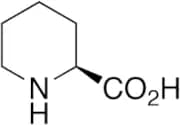
CAS:<p>Applications Pipecolic acid is involved in synaptic transmission in the central nervous system. The l-form occurs in plants.<br>References Nomura Y., et al.: Neurochem. Res., 6, 391 (1981),<br></p>Formula:C6H11NO2Color and Shape:NeatMolecular weight:129.16N-Boc-1,2-phenyldiamine
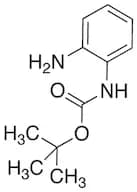
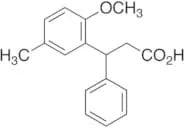
CAS:Controlled Product<p>Applications Protected 1,2-Phenyldiamine, an intermediate in the synthesis of histone deacetylase agents and antitumor agents.<br>References Andrews, D., et al.: Bioorg. Med. Chem. Lett., 18, 2580 (2008), Mahboobi, S., et al.: J. Med. Chem., 52, 2265 (2009),<br></p>Formula:C11H16N2O2Color and Shape:NeatMolecular weight:208.263-(2-Methoxy-5-methylphenyl)-3-phenyl-propanoic Acid
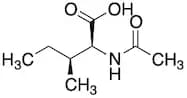
CAS:Controlled Product<p>Applications 3-(2-Methoxy-5-methylphenyl)-3-phenyl-propanoic Acid (cas# 109089-77-2) is a compound useful in organic synthesis.<br></p>Formula:C17H18O3Color and Shape:NeatMolecular weight:270.32N-Acetylisoleucine
CAS:Controlled Product<p>Applications N-ACETYLISOLEUCINE (cas# 3077-46-1) is a useful research chemical.<br></p>Formula:C8H15NO3Color and Shape:NeatMolecular weight:173.28-benzyl-4-(3-methylbutanoyl)-1-oxa-4,8-diazaspiro[4.5]decane-3-carboxylic acid
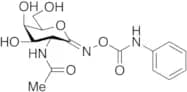
CAS:Purity:95.0%Molecular weight:360.4540100097656Galacto-PUGNAc (>90%)
CAS:Controlled Product<p>Stability Moisture and Temperature Sensitive<br>Applications Galacto-PUGNAc is a highly selective inhibitor for β-hexosaminidases HEXA and HEXB is cell-permeable. Galacto-PUGNAc is able to modulate the activity of HEXA and HEXB in tissue culture, increasing ganglioside GM2 levels in neuroblastoma cells<br>References Stubbs, K.A. et al.: Angew. Chem. Int. Ed., 48, 1300 (2009);<br></p>Formula:C15H19N3O7Purity:>90%Color and Shape:NeatMolecular weight:353.33a-Chloro-p-methyltoluene
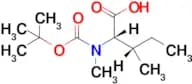
CAS:Controlled Product<p>Applications α-Chloro-p-methyltoluene is a building block that has been used as a reactant for the preparation of 6-aminoquinolone derivatives as submicromolar hepatitis C virus NS5B inhibitors<br> Not a dangerous good if item is equal to or less than 1g/ml and there is less than 100g/ml in the package<br>References Manfroni, G., et. al.: J. Med. Chem., Ahead of Print (2013)<br></p>Formula:C8H9ClColor and Shape:NeatMolecular weight:140.61Boc-MeIle-OH
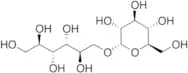
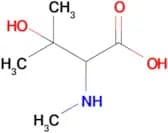
CAS:Purity:95.0%Color and Shape:Solid, Colourless crystallineMolecular weight:245.319000244140621-O-α-D-Glucopyranosyl-D-mannitol
CAS:Controlled Product<p>Applications 1-O-ALPHA-D-GLUCOPYRANOSYL-D-MANNITOL is used in the nutritional and biochemical investigations on disaccharide alcohols.<br>References Grupp, U., et al.: Nutr. Metab., 21, 63 (1977)<br></p>Formula:C12H24O11Color and Shape:NeatMolecular weight:344.31Kynurenic Acid-d5
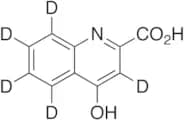
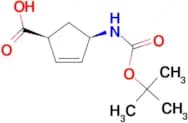
CAS:Controlled Product<p>Applications A labelled product of L-Tryptophan metabolism, possessing neruoactive activity having antiexcitotoxic and anticonvulsant properties.<br>References Wejksza, K., et al.: Pharmacol. Rep., 61, 751 (2009), Gohil, V., et al.: Nat. Biotechnol., 28, 249 (2010), Di Natale, B., et al.: Toxicol. Sci., 115, 89 (2010),<br></p>Formula:C102H5H2NO3Color and Shape:BeigeMolecular weight:194.20(1S,4R)-4-Boc-aminocyclopent-2-enecarboxylic acid
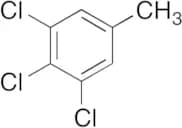
CAS:Purity:95.0%Color and Shape:SolidMolecular weight:227.259994506835941,2,3-Trichloro-5-methylbenzene
CAS:<p>Applications 1,2,3-Trichloro-5-methylbenzene is useful in calculating 21 physical properties of organic compounds strictly from molecular structure.<br> Not a dangerous good if item is equal to or less than 1g/ml and there is less than 100g/ml in the package<br>References Jain, N., et al.: J. Pharm. Sci., 88, 852-860 (1999)<br></p>Formula:C7H5Cl3Color and Shape:White To Off-WhiteMolecular weight:195.4742-ACETAMIDO-2-(1-BOC-PIPERIDIN-4-YL)PROPANOIC ACID
CAS:Purity:95.0%Color and Shape:SolidMolecular weight:314.3819885253906(±)-Aspartic Acid
CAS:<p>Applications (±)-Aspartic Acid, is a non-essential amino acid found in food sources. Its conjugate base D-aspartate has potential use as a a therapeutic agent in the treatment of schizophrenia-related symptoms.<br>References Errico, F. et al.: J. Neurosci., 28, 10404 (2008); Denu, J.M. et al.: Biochem., 34, 3396 (1995); Chen, P.E. et al.: Mol. Pharmacol., 67, 1470 (2005);<br></p>Formula:C4H7NO4Color and Shape:NeatMolecular weight:133.108-benzyl-4-(3-fluorobenzoyl)-1-oxa-4,8-diazaspiro[4.5]decane-3-carboxylic acid
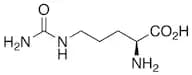
CAS:Purity:95.0%Molecular weight:398.4339904785156L-Citrulline
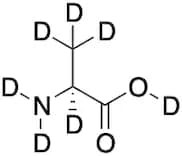
CAS:Controlled Product<p>Applications An amino acid, first isolated from the juice of watermelon, Citrullus vulgaris Schrad., Cucurbitaceae. Used in the treatment of asthenia.<br>References Kurtz, et al.: J. Biol. Chem., 122, 477 (1938), Rajantie, J., et al.: J. Pediatr., 97, 927 (1980), Carpenter, T.O., et al.: N. Engl. J. Med., 312, 290 (1985),<br></p>Formula:C6H13N3O3Color and Shape:NeatMolecular weight:175.19L-Alanine-d7
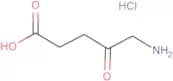
CAS:Controlled Product<p>Applications L-Alanine-d7 (CAS# 74280-71-0) is a useful isotopically labeled research compound.<br></p>Formula:C3D7NO2Color and Shape:Off-WhiteMolecular weight:96.145-Amino-4-oxopentanoic acid hydrochloride
CAS:<p>066621 - 5-Amino-4-oxopentanoic acid hydrochloride</p>Formula:C5H10ClNO3Purity:97.0%Color and Shape:Solid, Powder or Crystalline Powder or SolidMolecular weight:167.591'-(tert-Butoxycarbonyl)-[1,4'-bipiperidine]-3-carboxylic acid
CAS:Purity:98+%Molecular weight:312.41000366210944-(4-Chloro-2-methylphenoxy-d3)butyric Acid
CAS:Controlled Product<p>Applications 4-(4-Chloro-2-methylphenoxy-d3)butyric Acid (CAS# 1219803-42-5) is a useful isotopically labeled research compound.<br></p>Formula:C11D3H10ClO3Color and Shape:White To Off-WhiteMolecular weight:231.6911-(2-Chloroethoxy)-2-methoxybenzene
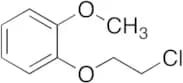
CAS:Controlled Product<p>Applications 1-(2-Chloroethoxy)-2-methoxy benzene, is an impurity of Carvedilol (C184625), a nonselective β-adrenergic blocker with α1-blocking activity. Carvedilol is an antihypertensive used in the treatment of congestive heart failure.<br>References Hirohashi, M., et al.: Arzneim.-Forsch., 40, 735 (1990); Packer, M., et al.: N. Engl. J. Med., 334, 1349 (1996);<br></p>Formula:C9H11ClO2Color and Shape:NeatMolecular weight:186.64Nε-(1-Carboxymethyl)-L-lysine-d4
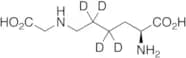
CAS:Controlled Product<p>Stability Hygroscopic<br>Applications CEL and CML are two stable, nonenzymatic chemical modifications of protein lysine residues resulting from glycation and oxidation reactions.<br>References Fu, M.X., et al.: J. Biol. Chem., 271, 9982 (1996), Ahmed M.U., et al.: Biochem.J., 324, 565 (1997), Schleicher, E.D., et al.: J. Clin. Invest., 99, 457 (1997), Shibayama, R., et al.: Diabetes, 48, 1842 (1999),<br></p>Formula:C8H12D4N2O4Color and Shape:NeatMolecular weight:208.25N,N-Dimethylglycine Hydrochloride
CAS:Controlled Product<p>Applications N,N-Dimethylglycine HCl (cas# 2491-06-07) is a useful research chemical.<br></p>Formula:C4H9NO2·HClColor and Shape:NeatMolecular weight:139.586-((tert-Butoxycarbonyl)amino)-2-fluoronicotinic acid
CAS:Purity:97%Molecular weight:256.23300170898442-(3-Methoxyphenoxy)propanoic acid
CAS:Controlled Product<p>Applications 2-(3-Methoxyphenoxy)propanoic acid<br></p>Formula:C10H12O4Color and Shape:NeatMolecular weight:196.24-(3-bromobenzoyl)-8-ethyl-1-oxa-4,8-diazaspiro[4.5]decane-3-carboxylic acid
CAS:Purity:95.0%Molecular weight:397.2690124511719p-Methoxytoluene
CAS:<p>Applications p-Methoxytoluene is a building block that has been used as a reactant for the preparation of electrophilic fluorinating agents.<br> Not a dangerous good if item is equal to or less than 1g/ml and there is less than 100g/ml in the package<br>References Baudoux, J., Cahard, D.: Org. Reactions, 69, 347 (2007)<br></p>Formula:C8H10OColor and Shape:NeatMolecular weight:122.164-Methyl-valerophenone
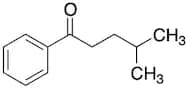
CAS:Controlled Product<p>Applications 4-Methyl-valerophenone is an intermediate used in the synthesis of a-Pyrrolidinoisohexanophenone (Hydrochloride) (P841230), which is a phenone derivative used for research purposes.<br>References Guo, Z.K., et al.: Marine Drugs, 16, 45/1 (2018)<br></p>Formula:C12H16OColor and Shape:NeatMolecular weight:176.25L-Phenylalanine-d5 Methyl Ester Hydrochloride
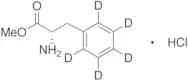
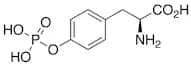
CAS:Controlled Product<p>Applications Protected (S) enantiomer of the amino acid Phenylalanine.<br>References Zhu, P., et al.: Bioorg. Med. Chem. Lett., 19, 6966 (2009), Cramer, B., et al.: Bioorg. Med. Chem., 18, 343 (2010),<br></p>Formula:C10H9D5ClNO2Color and Shape:NeatMolecular weight:220.71O-Phospho-L-tyrosine
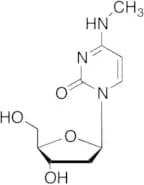
CAS:<p>Applications Useful in the study of tyrosine-phosphorylation, which has been linked with the malignant transformation of cells by some RNA tumour viruses.<br>References Sefton, B.M., et al.: Cell, 20, 807 (1980), Erikson, R., et al.: Perspect. Virol., 11, 93 (1981), Lee, E-S, et al.: J. Org. Chem., 59, 2086 (1994)<br></p>Formula:C9H12NO6PColor and Shape:NeatMolecular weight:261.172'-Deoxy-N-methyl-cytidine
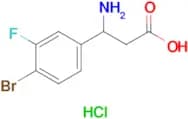
CAS:Controlled Product<p>Applications 2'-Deoxy-N-methyl-cytidine is a nucleotide derivative used as an analytical reagent.<br>References Dupret, D.: Biomed. Health. Res., 23(Human Genome Analysis), 244-255 (1998)<br></p>Formula:C10H15N3O4Color and Shape:NeatMolecular weight:241.2443-Amino-3-(4-bromo-3-fluorophenyl)propanoic acid hydrochloride
CAS:Purity:97.0%Molecular weight:298.5400085449219N-Boc-3-cyclopentylamino-propionic acid
CAS:Purity:98.0%Color and Shape:Solid, Colourless powderMolecular weight:257.32998657226565'-O-Methylthymidine
CAS:Controlled Product<p>Applications 5'-O-Methylthymidine (cas# 14504-60-0) is a useful research chemical.<br></p>Formula:C11H16N2O5Color and Shape:White To Off-WhiteMolecular weight:256.26D,L-o-Tyrosine
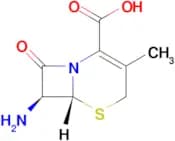
CAS:Controlled Product<p>Applications D,L-o-Tyrosine is a metabolite of Phenylalanine (P319415). A precursor in the formation of catecholamines. Used as biomarkers of protein oxidative damage in β-thalassemia.<br>References Tsugita, A., et al.: Eur. J. Biochem., 124, 585 (1982), Nielsen, F., et al.: Clin. Chem., 43, 1209 (1997), Mates, J., et al.: Clin. Biochem., 32, 595 (1999),<br></p>Formula:C9H11NO3Color and Shape:WhiteMolecular weight:181.197-Aminodezacetoxycephalosporanic acid
CAS:Purity:98.0%Color and Shape:Solid, PowderMolecular weight:214.24000549316406Methylpropylnitrosamine
CAS:Controlled Product<p>Applications Methylpropylnitrosamine is used in biological studies as human liver microsomal cytochrome P-450 enzymes which are involved in the bioactivation of procarcinogens detected by umu gene response in Salmonella typhimurium TA 1535/pSK1002.<br>References Shimada, T., et al.: Cancer Res., 48, 3218 (1989);<br></p>Formula:C4H10N2OColor and Shape:NeatMolecular weight:102.14L-Tyrosine-13C9,15N
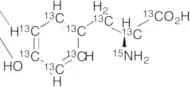
CAS:<p>Applications L-Tyrosine-13C9 ,15N is labelled analogue of L-Tyrosine (T899975), one of the 22 proteinogenic amino acids that are used by cells to synthesize proteins. L-Tyrosine is biologically converted from L-phenylalanine and is in turn is converted to L-DOPA and further converted into the neurotransmitters: dopamine, norepinephrine, and epinephrine.<br>References Rasmussen D.D. et al.: J. Clin. Endocrinol. Metab., 57, 760 (1983); Bagchi, S.P. et al.: Biochem. Pharmacol., 26, 900 (1977)<br></p>Formula:C9H1115NO3Color and Shape:White To Off-WhiteMolecular weight:191.1158N-Methylnitroacetamide
CAS:Controlled Product<p>Impurity Ranitidine EP Impurity H<br>Applications N-Methylnitroacetamide (Ranitidine EP Impurity H) is a degradation product of Ranitidine (R120000).<br>References Sharma, N. et al.: Sci. Pharmac., 79, 309 (2011); Haywood, P.A. et al.: J. Chem. Soc., 5, 951 (1987);<br></p>Formula:C3H6N2O3Color and Shape:NeatMolecular weight:118.092-N-Boc-3-(4-Methoxy-phenyl)-2-methylaminomethyl-propionic acid
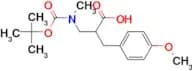
CAS:Formula:C17H25NO5Purity:97.0%Color and Shape:SolidMolecular weight:323.389Sinorphan
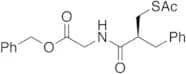
CAS:Controlled Product<p>Applications Sinorphan is an inhibitor of angiotensin-converting enzyme and neutral endopeptidase.<br>References Sulpizio, A.C., et al.: J. Pharmacol. Exp. Therap., 209, 1141 (2004); Takeda, Y., et al.: J. Hyper., 18, 927 (2000); Monteil, T., et al.: Syn. Comm., 31, 211 (2001);<br></p>Formula:C21H23NO4SColor and Shape:NeatMolecular weight:385.48L-Threonic Acid Calcium Salt
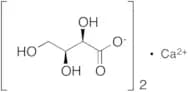
CAS:Controlled Product<p>Applications L-Threonic acid calcium salt is the salt of L-Threonic acid, a naturally occurring compound that can be found in the leaves of Pelargonium crispum. L-Threonic acid is also the degradation product of Dehydroascorbate (DHA), a metabolite of Vitamin C (A786990).<br>References Helsper, J. & Loewus, F.: Plant Phys., 69, 1365 (1982); Koch, C. & Biaglow, J.: J. Cell. Phys., 94, 299 (1978); Nielsen J., et al.: J. Agr. Food Chem., 49, 2998 (2001)<br></p>Formula:C4H7O5·CaColor and Shape:NeatMolecular weight:310.2698-benzyl-4-hexanoyl-1-oxa-4,8-diazaspiro[4.5]decane-3-carboxylic acid
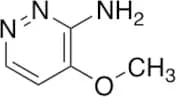
CAS:Purity:95.0%Molecular weight:374.48098754882814-Methoxypyridazin-3-amine
CAS:Controlled ProductFormula:C5H7N3OColor and Shape:NeatMolecular weight:125.128N-Methyl-N-nitroso-1-hexadecylamine
CAS:<p>Applications N-Methyl-N-nitroso-1-hexadecanamine is a compound found in a wide range of cosmetic products and cleaning emulsions.<br> Not a dangerous good if item is equal to or less than 1g/ml and there is less than 100g/ml in the package<br>References Kamp, E.. et al.: Food. Chem. Toxicol., 29, 203 (1991); Lalljie, S. P. D., et al.: Adv. Mass. Spec., 14, 33790 (1998); Abidi, S.L., et al.: J. Chroma., 324, 209 (1985);<br></p>Formula:C17H36N2OColor and Shape:White To Light YellowMolecular weight:284.48




![8-benzyl-4-(3-methylbutanoyl)-1-oxa-4,8-diazaspiro[4.5]decane-3-carboxylic acid](/_next/image/?url=https%3A%2Fstatic.cymitquimica.com%2Fproducts%2F10%2Fthumb-webp%2FF525807.webp&w=3840&q=75)



![8-benzyl-4-(3-fluorobenzoyl)-1-oxa-4,8-diazaspiro[4.5]decane-3-carboxylic acid](/_next/image/?url=https%3A%2Fstatic.cymitquimica.com%2Fproducts%2F10%2Fthumb-webp%2FF525805.webp&w=3840&q=75)
![1'-(tert-Butoxycarbonyl)-[1,4'-bipiperidine]-3-carboxylic acid](/_next/image/?url=https%3A%2Fstatic.cymitquimica.com%2Fproducts%2F10%2Fthumb-webp%2FF736450.webp&w=3840&q=75)



![4-(3-bromobenzoyl)-8-ethyl-1-oxa-4,8-diazaspiro[4.5]decane-3-carboxylic acid](/_next/image/?url=https%3A%2Fstatic.cymitquimica.com%2Fproducts%2F10%2Fthumb-webp%2FF525689.webp&w=3840&q=75)





![8-benzyl-4-hexanoyl-1-oxa-4,8-diazaspiro[4.5]decane-3-carboxylic acid](/_next/image/?url=https%3A%2Fstatic.cymitquimica.com%2Fproducts%2F10%2Fthumb-webp%2FF525801.webp&w=3840&q=75)