Amino Acids (AA)
Amino acids (AAs) are the fundamental building blocks of proteins, playing a crucial role in various biological processes. These organic compounds are essential for protein synthesis, metabolic pathways, and cell signaling. In this category, you will find a comprehensive range of amino acids, including essential, non-essential, and modified forms, which are vital for research in biochemistry, molecular biology, and nutritional sciences. At CymitQuimica, we provide high-quality amino acids to support your research and development needs, ensuring accuracy and reliability in your experimental outcomes.
Subcategories of "Amino Acids (AA)"
- Amino Acid Derivatives(3,955 products)
- Amino Acid and Amino Acid Related Compounds(3,436 products)
- Amino Acids with Oxygen or Sulphur(168 products)
- Boc- Amino Acids(351 products)
- Fmoc Amino Acids(1,710 products)
Found 38216 products of "Amino Acids (AA)"
Sort by
Purity (%)
0
100
|
0
|
50
|
90
|
95
|
100
[1-(2-Thienyl)-3,4-dihydroisoquinolin-2(1H)-yl]acetic acid
CAS:Purity:95.0%Molecular weight:273.3500061035156Nateglinide-d5
CAS:Controlled Product<p>Applications A labelled version of Nateglinide, an amino-acid derivative that stimulates insulin secretion which is used as an antidiabetic.<br>References Shinkai, H., et al.: J. Med. Chem., 32, 1436 (1989), Sato, Y., et al.: Diabetes Res. Clin. Pract., 12, 53 (1991), Vicent, D., et al.: J. Clin. Invest., 111, 1373 (2003), Ceriello, A., et al.: Diabet. Med., 21, 171 (2004),<br></p>Formula:C192H5H22NO3Color and Shape:NeatMolecular weight:322.45Cyclosporin A-d4 (Major)
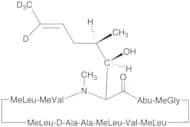
CAS:Controlled Product<p>Applications An immunosuppressant that has revolutionized organ transplantation through its use in the prevention of graft rejection.A group of nonpolar cyclic oligopeptides with immunosupppressant activity.<br>References van Wartburg, A., et al.: Prog. Med. Chem., 25, 1 (1988), Jorgensen, K.A., et al.: Scand. J. Imunol., 57, 93 (2003), Vollenbroeker, et al.: Transplant. Proc., 37, 1741 (2005),<br></p>Formula:C62H107D4N11O12Color and Shape:NeatMolecular weight:1206.66Perfluoro-3-methoxypropanoic Acid
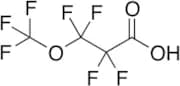
CAS:<p>Applications Perfluoro-3-methoxypropanoic acid (cas# 377-73-1) is a useful research chemical.<br> Not a dangerous good if item is equal to or less than 1g/ml and there is less than 100g/ml in the package<br></p>Formula:C4HF7O3Color and Shape:NeatMolecular weight:230.04D-Glutamic Acid 1-tert-Butyl Ester
CAS:Controlled Product<p>Applications D-Glutamic acid 1-tert-butyl ester is a protected form of D-Glutamic acid (G596965). D-Glutamic acid is an unnatural isomer of L-Glutamic acid (G596960), and is found in bacterial cell wall peptidoglycan of gram-positive and gram-negative bacteria. D-Glutamic acid also occurs as poly-gamma-Glutamic acid, which is a weak immunogen but is capable of acting as a hapten (a small molecule that induces the production of antibodies, as well as binding to them).<br>References Dougherty, T., et al.: J. Bacteriol., 175, 111 (1993); Goodman, J. & Nitecki, D.: Immunology, 13, 577 (1967); Robinson, T.: Life Sci., 19, 1097 (1976)<br></p>Formula:C9H17NO4Color and Shape:NeatMolecular weight:203.24L-Ornithine Hydrochloride
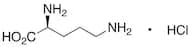
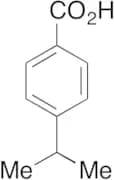
CAS:Controlled Product<p>Stability Hygroscopic<br>Applications L-Ornithine is a non-essential amino acid for human development but is required intermediate in arginine biosynthesis. L-Ornithine is found in virtually all vertebrate tissues as well as incorporated into proteins, such as tyrocidine. Isolation from chicken excreta.<br>References Fattori, D., et al.: J. Med. Chem., 50, 550 (2007), Gomez-Alonso, S., et al.: J. Agric. Food Chem., 55, 608 (2007), Subramaniam, R., et al.: Bioorg. Med. Chem. Lett., 18, 3333 (2008),<br></p>Formula:C5H12N2O2·ClHColor and Shape:White To Off-WhiteMolecular weight:168.624-(1-Methylethyl)benzoic Acid
CAS:<p>Applications 4-(1-Methylethyl)benzoic Acid is used in the synthesis of quinuclidine benzamides as agonists for nicotinic acetylcholine receptors. Also used in the synthesis of nifuroxazide analogues showing antimicrobial activity against methicillin-resistant Staphylococcus.<br>References Bodnar, A. et al.: J. Med. Chem., 48, 905 (2005); Masunari, A. et al.: Bioorg. Med. Chem. Lett., 15, 4229 (2007);<br></p>Formula:C10H12O2Color and Shape:NeatMolecular weight:164.24-(4-bromobenzoyl)-8-ethyl-1-oxa-4,8-diazaspiro[4.5]decane-3-carboxylic acid
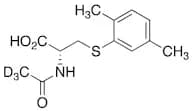
CAS:Purity:95.0%Molecular weight:397.2690124511719N-Acetyl-S-(2,5-dimethylbenzene)-L-cysteine-d3
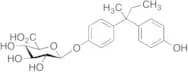
CAS:Controlled Product<p>Applications N-Acetyl-S-(2,5-dimethylbenzene)-L-cysteine-d3 (cas# 1331909-07-9) is a compound useful in organic synthesis.<br>References Gonzalez-Reche, L., et al.: Arch. Toxicol., 77, 80 (2003),<br></p>Formula:C13H14D3NO3SColor and Shape:NeatMolecular weight:270.36Bisphenol B Mono-b-D-glucuronide
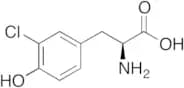
<p>Applications Bisphenol B Mono-β-D-glucuronide is a metabolite of Bisphenol B (B519565), which is the analogue of Bisphenol A (B519495), that is used to make certain plastic an epoxy resins. BPA and its analogs, are also shown to activate human pregnane X receptor (PXR), a nuclear receptor that functions as a master regulator of xenobiotic metabolism.<br>References Krishnan, A.V., et al.: Endocrinology, 132, 2279 (1993); Steinmetz, R., et al.: Trends Endocrinol. Metab., 9, 124 (1998); Petersen, H., et al.: Eur. Food Res. Technol., 216, 355 (2003); Yipeng, S., et al.: Env Hea. Pers., 120, 399 (2012);<br></p>Formula:C22H26O8Color and Shape:White To Off-WhiteMolecular weight:418.443-Chloro-L-tyrosine
CAS:Controlled Product<p>Stability Hygroscopic<br>Applications 3-Chloro-L-tyrosine was used in the enzymatic synthesis of halogen derivatives of aromatic amino acids labeled with hydrogen isotope. 3-Chloro-L-tyrosine exhibited stronger antioxidant properties in Hb-induced oxidative stress as was evident by higher efficiency of reduction of ferryl species.<br>References Winnicka, E., et al.: J. Chem. Eng., 8, 54 (2014); Lu, N., et al.: Toxicol. In Vitro, 28, 847 (2014);<br></p>Formula:C9H10NO3ClColor and Shape:NeatMolecular weight:215.631-[4-(morpholine-4-sulfonyl)-2-nitrophenyl]pyrrolidine-2-carboxylic acid
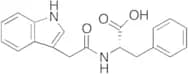
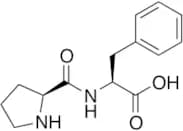
CAS:Purity:98%Molecular weight:385.3900146484375indole-3-acetyl-L-phenylalanine
CAS:Controlled Product<p>Applications Indole-3-acetyl-L-phenylalanine is an indole-3-acetyl-amino acid conjugate involved in regulatory mechanisms for the control of auxin activity during physiological and pathophysiological responses.<br>References Ostrowski, M., et al.: J Plant Physiol, 191, 63-72 (2016)<br></p>Formula:C19H18N2O3Color and Shape:NeatMolecular weight:322.358N-Benzyl-L-tyrosine
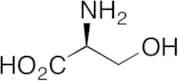
CAS:Controlled Product<p>Applications Protected L-Tyrosine (T899975), an amino acid, used by cells to synthesize proteins. L-Tyrosine is biologically converted from L-phenylalanine and is in turn is converted to L-DOPA and further converted into the neurotransmitters: dopamine, norepinephrine, and epinephrine.<br>References Rasmussen D.D. et al.: J. Clin. Endocrinol. Metab., 57, 760 (1983); Bagchi, S.P. et al.: Biochem. Pharmacol., 26, 900 (1977)<br></p>Formula:C16H17NO3Color and Shape:NeatMolecular weight:271.32L-Serine
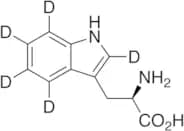
CAS:<p>Applications L-Serine is used in the synthesis of purines and pyrimidines as antibacterial/antifungal agents, as well as acting as a proteinogenic compound.<br>References Olivella, M. et al.: Bioorg. Med. Chem., 20, 6109 (2012);<br></p>Formula:C3H7NO3Color and Shape:White Crystalline PowderMolecular weight:105.09D-Tryptophan-d5
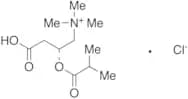
CAS:Controlled Product<p>Applications Labelled analogue of an essential amino acid found in naturally produced peptides. Unlike its stereoisomer, L-tryptophan, it is not used in structural or enzyme proteins.<br>References Karunakaran, S.et al.: Bochem. J., 414, 343 (2008); Pallaghy, P.K. et al.: Biochem., 38, 11553 (1999);<br></p>Formula:C112H5H7N2O2Color and Shape:NeatMolecular weight:209.26Isobutyryl L-Carnitine Chloride
CAS:Controlled ProductFormula:C11H22NO4·ClColor and Shape:NeatMolecular weight:267.75Isoleucine-d10 (mixture of diastereomers)
CAS:Controlled Product<p>Applications Isoleucine-d10 (mixture of diastereomers) (CAS# 29909-02-2) is a useful isotopically labeled research compound and can be used in gas liquid chromatography.<br>References VandenHeuvel, W., et.al., J. Chromatogr., 50, 405-412, (1970);<br></p>Formula:C6D10H3NO2Color and Shape:NeatMolecular weight:141.2345L-Tryptophan-d3
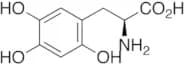
CAS:Controlled Product<p>Applications L-Tryptophan-d3 is a deuterium labelled amino acid, which is a protein building block. The unlabelled L-Tryptophan (T947210) is also available.<br>References Goze, C., et al.: Eur. J. Pharmacol., 643, 153 (2010), Bhandare, P., et al.: J. Chem. Pharm. Res., 2, 372 (2010),<br></p>Formula:C11D3H9N2O2Color and Shape:NeatMolecular weight:207.246-Hydroxy-L-DOPA
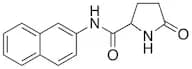
CAS:Controlled Product<p>Impurity Levodopa EP Impurity A; Levodopa USP Related Compound A<br>Stability Hygroscopic<br>Applications 6-Hydroxy-L-DOPA (Levodopa EP Impurity A; Levodopa USP Related Compound A) is the 6-hydroxy derivative of the amino acid L-DOPA (D533751) with neurotoxic properties. Studies show that exogenously administered 6-Hydroxy-L-DOPA is biotransformed by amino acid decarboxylase to the highly potent and catecholamine-selective neurotoxin, 6-Hydroxydopamine. The treatment of 6-Hydroxy-L-DOPA in rats resulted in the stimulation of acetylcholinesterase.<br>References Jaim-Etcheverry, G. et al.: Brain Res., 100, 699 (1975); Kostrzewa, R.M. et al.: Amino Acids, 14, 175 (1998); Berthet, A. et al.: J. Neurosci., 29, 4829 (2009);<br></p>Formula:C9H11NO5Color and Shape:Brown To BlackMolecular weight:213.19L-Pyroglutamic Acid β-Naphthylamide
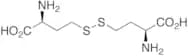
CAS:Controlled Product<p>Applications A substrate for pyroglutamate aminopeptidase. Used for colorimetric determination of pyrrolidonyl peptidase activity in bacteria.<br> Not a dangerous good if item is equal to or less than 1g/ml and there is less than 100g/ml in the package<br>References Szewczuk, A., et al.: Eur. J. Biochem., 8, 63 (1969), Szewczuk, A., et al.: Anal. Biochem., 39, 268 (1971)<br></p>Formula:C15H14N2O2Color and Shape:NeatMolecular weight:254.28L-Homocystine
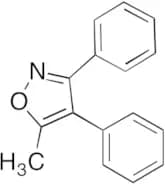
CAS:Controlled Product<p>Applications Increased levels lead to hyperhomocysteinemia; a cardiovascular risk factor in prediction of coronary heart disease as well as being associated with congenital birth defects, pregnancy complications and cancer.<br>References Geisel, J. et al.: Clin. Chem. Lab. Med., 41, 1513 (2003); Geisel, J. et al.: Clin. Chem. Lab. Med., 41, 1513 (2003);<br></p>Formula:C8H16N2O4S2Color and Shape:NeatMolecular weight:268.355-Methyl-3,4-diphenylisoxazole
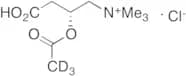
CAS:Controlled Product<p>Applications 5-Methyl-3,4-diphenylisoxazole is a reagent for the preparation of valdecoxib and valdecoxib analogues.<br>References Di Nunno, L., et al.: J. Med. Chem., 47, 4881 (2004); Reddy, A. R., et al.: Synth. Commun., 42, 639 (2012); Huang, Y., et al.: Zhongguo Xiandai Yingyong, 26, 456 (2009)<br></p>Formula:C16H13NOColor and Shape:NeatMolecular weight:235.28Acetyl-d3 L-Carnitine Hydrochloride
CAS:Controlled Product<p>Applications Acetyl-d3 L-Carnitine Hydrochloride is labelled Acetyl L-Carnitine Hydrochloride (A171990) which is used for transmembrane action potential studies. Acetylcarnitine has antinociceptive activity that may be mediated by enhanced activity of muscarinic cholinergic receptors or mGlu2 glutamate receptors.<br>References Matsui, K., et al.: Japanese J. Pharmcol., 39, 263 (1985); Chlechio, S., et al.: J. Endocrinol. Invest., 27, 171 (2004): Walker, R., et al.: Comparative General Pharmacol., 4, 65 (1973)<br></p>Formula:C92H3H15NO4·ClColor and Shape:NeatMolecular weight:242.72Myristoyl-L-carnitine Hydrochloride
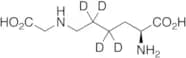
CAS:Controlled Product<p>Applications Myristoyl-L-carnitine Hydrochloride is a long-chain fatty ester of carnitine which is accumulated and released into the circulation, in fatty-acid oxidation defects. Pattern of Lauroyl-L-carnitine can be diagnostic for a number of ß-oxidation defects.<br>References Ventura, F., et al.: Clinica Chimica Acta, 281, 1 (1999); Pourfarzam, M., et al.: Clinical Chem,, 40, 2267 (1994); Schaefer, J., et al.: Pediatric Res., 37, 354 (1995)<br></p>Formula:C21H42ClNO4Color and Shape:NeatMolecular weight:408.02Nε-(1-Carboxymethyl)-L-lysine-d4
CAS:Controlled Product<p>Stability Hygroscopic<br>Applications CEL and CML are two stable, nonenzymatic chemical modifications of protein lysine residues resulting from glycation and oxidation reactions.<br>References Fu, M.X., et al.: J. Biol. Chem., 271, 9982 (1996), Ahmed M.U., et al.: Biochem.J., 324, 565 (1997), Schleicher, E.D., et al.: J. Clin. Invest., 99, 457 (1997), Shibayama, R., et al.: Diabetes, 48, 1842 (1999),<br></p>Formula:C8H12D4N2O4Color and Shape:NeatMolecular weight:208.25Fmoc-Ser(TBDMS)-OH
CAS:Controlled Product<p>Applications Fmoc-Ser(TBDMS)-OH (cas# 146346-81-8) is a useful research chemical.<br></p>Formula:C24H31NO5SiColor and Shape:NeatMolecular weight:441.5921-Carboxy-7-(dimethylamino)-3,4-dihydroxyphenoxazin-5-ium chloride
CAS:Purity:95.0%Molecular weight:336.7300109863281N-[(Benzyloxy)carbonyl]glycylglycine
CAS:<p>Applications N-[(Benzyloxy)carbonyl]glycylglycine is a reagent in the synthesis of Glycylglycyl-L-tyrosine (G718500), which is a fungal tyrosinases and their capability to oxidize peptide-bound tyrosine residues is important in a view of applicability of tyrosinases.<br>References Bowness, J., et al.: Biochem. J., 53, 620 (1953), Cuff, M., et al.: J. Mol. Biol., 278, 855 (1998), Kubo, I., et al.: Bioorg. Med. Chem., 12, 5349 (2004),<br></p>Formula:C12H14N2O5Color and Shape:NeatMolecular weight:266.25DL-Serine-2,3,3-d3
CAS:Controlled Product<p>Applications Labelled DL-Serine is used in the synthesis of novel tryptoline derivatives as IDO (indoleamine 2,3-Deoxygenase) inhibitors, for potential use in Alzheimer’s treatment.<br>References Tanaka, M. et al.: Bioorg. Med. Chem., 21, 1159 (2013);<br></p>Formula:C32H3H4NO3Color and Shape:NeatMolecular weight:108.11(2R)-3-Amino-2-fluoropropanoic Acid-13C3
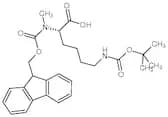
CAS:Controlled ProductFormula:C3H6FNO2Color and Shape:NeatMolecular weight:110.06Fmoc-n-me-lys(boc)-oh
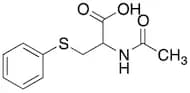
CAS:Controlled Product<p>Applications Fmoc-n-me-lys(boc)-oh<br></p>Formula:C27H34N2O6Color and Shape:NeatMolecular weight:482.5692-(Acetylamino)-3-(phenylthio)propanoic Acid
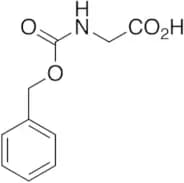
CAS:Controlled Product<p>Applications 2-(Acetylamino)-3-(phenylthio)propanoic acid is a useful chemical in research.<br></p>Formula:C11H13NO3SColor and Shape:NeatMolecular weight:239.29N-Carbobenzoxyglycine
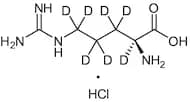
CAS:<p>Applications N-Carbobenzoxyglycine is used in the dipeptide synthesis.<br>References Hans, D., et al.: Med. Chem., 2, 627 (2006), Guzman, F., et al.: J. Biotechnol., 10, 279 (2007), Vlieghe, P., et al.: Drug Discov. Today, 15, 40 (2010),<br></p>Formula:C10H11NO4Color and Shape:NeatMolecular weight:209.2L-Arginine-2,3,3,4,4,5,5-d7 HCl
CAS:Controlled Product<p>Applications L-Arginine-2,3,3,4,4,5,5-d7 HCl (CAS# 204244-77-9) is a useful isotopically labeled research compound. It can be used with Raman scattering for imaging living cells and organisms.<br>References Min, W., et al., PCT Int. Appl. (2014), WO 2014205074 A2<br></p>Formula:C6D7H7N4O2·HClColor and Shape:NeatMolecular weight:217.70L-Isoleucine
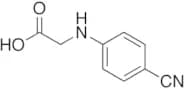
CAS:<p>Applications L-Isoleucine is classified as an essential amino acid, and is also a tumour promoter of bladder cancer in rats.<br>References Hatch, T., et al.: Infect. Immun., 12, 211 (1975); Nishio, Y., et al.: Science, 231, 843 (1986)<br></p>Formula:C6H13NO2Color and Shape:White To Off-WhiteMolecular weight:131.17N-(4-Cyanophenyl)-glycine
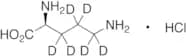
CAS:Controlled Product<p>Applications N-(4-Cyanophenyl)-glycine (cas# 42288-26-6) is a compound useful in organic synthesis.<br></p>Formula:C9H8N2O2Color and Shape:NeatMolecular weight:176.17L-Ornithine-d6 Hydrochloride
CAS:Controlled Product<p>Applications Labelled L-Ornithine. A non-essential amino acid for human development but is required intermediate in arginine biosynthesis. L-Ornithine is found in virtually all vertebrate tissues as well as incorporated into proteins, such as tyrocidine. Isolation from chicken excreta.<br>References Fattori, D. et al.: J. Med. Chem., 50, 550 (2007); Gomez-Alonso, S. et al.: J. Agric. Food Chem., 55, 608 (2007); Subramaniam, R. et al.: Bioorg. Med. Chem. Lett., 18, 3333 (2008);<br></p>Formula:C52H6H6N2O2·ClHColor and Shape:White To Off-WhiteMolecular weight:174.66Linoleoyl Carnitine
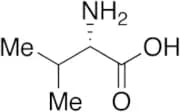
CAS:Controlled Product<p>Stability Hygroscopic, Temperature Sensitive<br>Applications A carnitine ester of unsaturated fatty acid. Used in the studies of fibroblasts in long-chain 3-hydroxyacyl-CoA dehydrogenase deficiency and fatty acid oxidation disorders.<br>References Gross R.W., et al.: J. Biol. Chem., 258, 5221 (1983),<br></p>Formula:C25H45NO4Color and Shape:NeatMolecular weight:423.63L-Valine
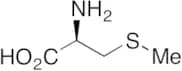
CAS:Controlled Product<p>Applications L-Valine is an essential amino acid and one of 20 proteinogenic amino acids. L-Valine cannot be manufactured by the body and must be acquired through diet or supplementation. L-valine is found in grains, dairy products, mushrooms, meats, peanuts and soy proteins. L-Valine has been used in studies to attenuate arrhythmias and induce hypotensive effects.<br>References Choi, C.W. et al.: Anim. Feed Sci. Technol., 102, 15 (2002); Kolarski, D. et al.: Krmiva, 30, 155 (1988); Oba, M. et al.: J. Dairy Sci., 93, 2044 (2010); Mitrega, K. et al.: Pharmacol. Res., 64, 218 (2011);<br></p>Formula:C5H11NO2Color and Shape:NeatMolecular weight:117.15S-Methyl-L-cysteine
CAS:Controlled Product<p>Applications S-Methyl-L-cysteine is a substrate in the catalytic antioxidant system mediated by methionine sulfoxide reductase A (MSRA). It has been studied as a theurapeutic for neurodegenerative diseases including Parkinson′s.<br>References Wassef, R., et al.: J. Neurosci., 21, 12808 (2007)<br></p>Formula:C4H9NO2SColor and Shape:NeatMolecular weight:135.19L-Histidinol Dihydrochloride
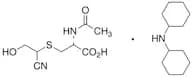
CAS:Controlled ProductFormula:C6H11N3O·2ClHColor and Shape:NeatMolecular weight:214.09N-Acetyl-S-(1-cyano-2-hydroxyethyl)-L-cysteine Dicyclohexylamine Salt (Mixture of Diastereomers)
CAS:<p>Applications A metabolite of Acrylonitrile (ACN).<br>References Guengerich, F., et al.: Cancer Res., 41, 4925 (1981), Leonard, A., et al.: Mutation Res., 436, 263 (1999), Stadler, R., et al.: J. Agric. Food Chem., 52, 5550 (2004), Dybing, E., et al.: Food Chem. Toxicol., 43, 365 (2005), Rice, J., et al.: Mutation Res., 580, 3 (2005),<br></p>Formula:C12H23N·C8H12N2O4SColor and Shape:NeatMolecular weight:413.57Folcysteine
CAS:Controlled Product<p>Applications A cysteine derivative as potential antitumor agent. (A609645)A vitamin needed to synthesize DNA, conduct DNA repair and methylate DNA, it also acts as a cofactor in biological reactions involving folate. (F680300)<br>References Paul, B., et al.: J. Med. Chem., et al.: 19, 1002 (1976), Xu, L., et al.: Mol. Pharm., 7, 1311 (2010), Everette, J., et al.: J. Agric. Food Chem., 58, 8139 (2010), Alshatwi, A., et al.: Food, Chem., Toxicol., 48, 1881 (2010), McKay, D., et al.: Nut. J., 9 (2010),<br></p>Formula:C19H19N7O6·C6H9NO3SColor and Shape:YellowMolecular weight:616.17
![[1-(2-Thienyl)-3,4-dihydroisoquinolin-2(1H)-yl]acetic acid](/_next/image/?url=https%3A%2Fstatic.cymitquimica.com%2Fproducts%2F10%2Fthumb-webp%2FF494876.webp&w=3840&q=75)



![4-(4-bromobenzoyl)-8-ethyl-1-oxa-4,8-diazaspiro[4.5]decane-3-carboxylic acid](/_next/image/?url=https%3A%2Fstatic.cymitquimica.com%2Fproducts%2F10%2Fthumb-webp%2FF525691.webp&w=3840&q=75)
![1-[4-(morpholine-4-sulfonyl)-2-nitrophenyl]pyrrolidine-2-carboxylic acid](/_next/image/?url=https%3A%2Fstatic.cymitquimica.com%2Fproducts%2F10%2Fthumb-webp%2FF642631.webp&w=3840&q=75)






![N-[(Benzyloxy)carbonyl]glycylglycine](/_next/image/?url=https%3A%2Fstatic.cymitquimica.com%2Fproducts%2FTR%2Fthumb-webp%2FB287100.webp&w=3840&q=75)