Amino Acids (AA)
Amino acids (AAs) are the fundamental building blocks of proteins, playing a crucial role in various biological processes. These organic compounds are essential for protein synthesis, metabolic pathways, and cell signaling. In this category, you will find a comprehensive range of amino acids, including essential, non-essential, and modified forms, which are vital for research in biochemistry, molecular biology, and nutritional sciences. At CymitQuimica, we provide high-quality amino acids to support your research and development needs, ensuring accuracy and reliability in your experimental outcomes.
Subcategories of "Amino Acids (AA)"
- Amino Acid Derivatives(3,955 products)
- Amino Acid and Amino Acid Related Compounds(3,461 products)
- Amino Acids with Oxygen or Sulphur(168 products)
- Boc- Amino Acids(351 products)
- Fmoc Amino Acids(1,710 products)
Found 38244 products of "Amino Acids (AA)"
Sort by
Purity (%)
0
100
|
0
|
50
|
90
|
95
|
100
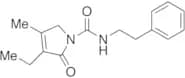
3-Ethyl-2,5-dihydro-4-methyl-2-oxo-N-(2-phenylethyl)-1H-pyrrole-1-carboxamide
CAS:Controlled Product<p>Applications Intermediate for the preparation of Glimepiride.<br></p>Formula:C16H20N2O2Color and Shape:NeatMolecular weight:272.347-Amino-3-methyl-8-oxo-5-thia-1-azabicyclo[4.2.0]oct-2-ene-2-carboxylic acid
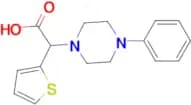
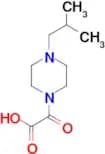
CAS:Purity:95.0%Molecular weight:214.24000549316406(4-Isobutyl-piperazin-1-yl)-oxo-acetic acid
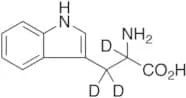
CAS:Purity:98.0%Color and Shape:SolidMolecular weight:214.26499938964844D,L-Tryptophan-d3
CAS:Controlled Product<p>Applications A labelled, essential amino acid.<br>References Liu, F., et al.: Bioorg. Med. Chem., 18, 4167 (2010), Kumar, R., et al.: Eur. J. Med. Chem., 45, 2265 (2010), Cai, W., et al.: Bioorg. Med. Chem., 18, 1899 (2010),<br></p>Formula:C112H3H9N2O2Color and Shape:NeatMolecular weight:207.24H-Val-Gly-OH
CAS:Controlled Product<p>Applications H-Val-Gly-OH (cas# 686-43-1) is a useful research chemical.<br></p>Formula:C7H14N2O3Color and Shape:NeatMolecular weight:174.2Triuret
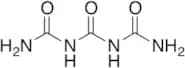
CAS:<p>Applications Triuret is a byproduct of purine degradation in living organisms. It is a product from the pyrolsis of urea.<br>References Sergiu P. P., et al:. HHS Public Access, (2010);<br></p>Formula:C3H6N4O3Color and Shape:NeatMolecular weight:146.10N-Methylacetamide
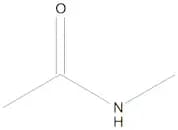
CAS:Controlled Product<p>Applications N-Methylacetamide can be used for the synthesis of N-sulfonyl amidines and acyl sulfonyl ureas.Environmental contaminants; food contaminants.<br>References Chow, S. Y., et al.: J. Org. Chem. 82, 2515 (2017)<br></p>Formula:C3H7NOColor and Shape:NeatMolecular weight:73.098-methyl-4-(4-nitrobenzoyl)-1-oxa-4,8-diazaspiro[4.5]decane-3-carboxylic acid
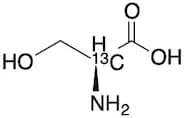
CAS:Purity:95.0%Molecular weight:349.3429870605469L-Serine-2-13C
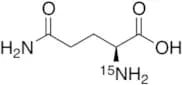
CAS:Controlled Product<p>Applications Isotope labelled L-Serine is used in the synthesis of purines and pyrimidines as antibacterial/antifungal agents, as well as acting as a proteinogenic compound.<br>References Olivella, M. et al.: Bioorg. Med. Chem., 20, 6109 (2012);<br></p>Formula:C213CH7NO3Color and Shape:NeatMolecular weight:106.09L-Glutamine-15N
CAS:<p>Applications L-Glutamine (Alpha-15n, 98%) (cas# 80143-57-3) is a useful research chemical.<br></p>Formula:C5H1015NNO3Color and Shape:NeatMolecular weight:147.138L-Glutamic Acid-d5
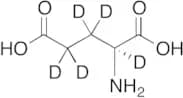
CAS:Controlled Product<p>Applications L-Glutamic Acid-d5 is an non-essential amino acid. Its salt form (glutamate) is an important neurotransmitter that plays a key role in long-term potentiation and is important for learning and memory. It is also a key molecule in cellular metabolism.<br>References McEntee, W., et al.: Psychopharmacology, 111, 391 (1993), Manev, H., et al.: Mol. Pharmacol., 36, 106 (1989)<br></p>Formula:C52H5H4NO4Color and Shape:NeatMolecular weight:152.16Reboxetine-d5 Mesylate
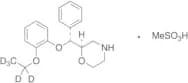
CAS:Controlled ProductFormula:C20H22D5NO6SColor and Shape:Off White SolidMolecular weight:414.53N-des(4-Chlorobenzoyl) Rebamipide
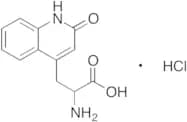
CAS:Formula:C12H13ClN2O3Color and Shape:White To Off-WhiteMolecular weight:268.74-(3-methoxybenzoyl)-8-methyl-1-oxa-4,8-diazaspiro[4.5]decane-3-carboxylic acid
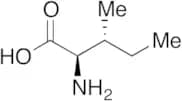
CAS:Purity:95.0%Molecular weight:334.37200927734375D-Isoleucine
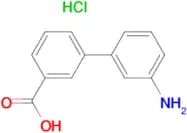
CAS:<p>Applications D-Isoleucine is not biosynthesized in the human body and is therefore categorized as an essential amino acid that must be obtained through diet. It is also an important building block that is used in the formation of hemoglobin in humans.<br>References Albanese, A.: J. Biol. Chem., 157, 613 (1945); Martin, R. & Kirk, K.: Blood, 109, 2217 (2007)<br></p>Formula:C6H13NO2Color and Shape:Off White SolidMolecular weight:131.17293'-Amino-biphenyl-3-carboxylic acid hydrochloride
CAS:Purity:95.0%Molecular weight:249.69000244140625Folcysteine
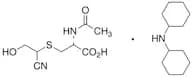
CAS:Controlled Product<p>Applications A cysteine derivative as potential antitumor agent. (A609645)A vitamin needed to synthesize DNA, conduct DNA repair and methylate DNA, it also acts as a cofactor in biological reactions involving folate. (F680300)<br>References Paul, B., et al.: J. Med. Chem., et al.: 19, 1002 (1976), Xu, L., et al.: Mol. Pharm., 7, 1311 (2010), Everette, J., et al.: J. Agric. Food Chem., 58, 8139 (2010), Alshatwi, A., et al.: Food, Chem., Toxicol., 48, 1881 (2010), McKay, D., et al.: Nut. J., 9 (2010),<br></p>Formula:C19H19N7O6·C6H9NO3SColor and Shape:YellowMolecular weight:616.17N-Acetyl-S-(1-cyano-2-hydroxyethyl)-L-cysteine Dicyclohexylamine Salt (Mixture of Diastereomers)
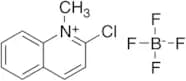
CAS:<p>Applications A metabolite of Acrylonitrile (ACN).<br>References Guengerich, F., et al.: Cancer Res., 41, 4925 (1981), Leonard, A., et al.: Mutation Res., 436, 263 (1999), Stadler, R., et al.: J. Agric. Food Chem., 52, 5550 (2004), Dybing, E., et al.: Food Chem. Toxicol., 43, 365 (2005), Rice, J., et al.: Mutation Res., 580, 3 (2005),<br></p>Formula:C12H23N·C8H12N2O4SColor and Shape:NeatMolecular weight:413.572-Chloro-1-methylquinolinium Tetrafluoroborate
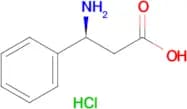
CAS:Controlled Product<p>Applications 2-Chloro-1-methylquinolinium tetrafluoroborate (cas# 16843-24-6) is a useful research chemical.<br></p>Formula:C10H9ClN·BF4Color and Shape:NeatMolecular weight:265.44(S)-(-)-3-Amino-3-phenylpropionic acid hydrochloride
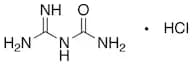
CAS:Formula:C9H12ClNO2Purity:95.0%Color and Shape:SolidMolecular weight:201.65Carbamoyl-guanidine Amidino Urea
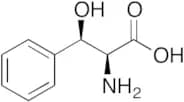
CAS:Controlled Product<p>Applications Carbamoyl-guanidine Amidino Urea Salt, Hydrochloride salt (cas# 926-72-7) is a compound useful in organic synthesis.<br></p>Formula:C2H6N4O·ClHColor and Shape:NeatMolecular weight:138.56L-threo-Phenylserine
CAS:Controlled Product<p>Applications L-threo-Phenylserine is a valuable chiral synthon.<br></p>Formula:C9H11NO3Color and Shape:NeatMolecular weight:181.19L-Phenylalanine-d7
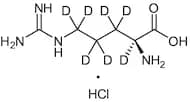
CAS:Controlled Product<p>Applications Labelled analogue of L-Phenylalanine, an essential amino acid.<br>References Hollunger, G. et al.: Acta Pharmacol. Toxicol., 34, 391 (1974); Bagchi, S.P. et al.: Biochem. Pharmacol., 26, 900 (1977);<br></p>Formula:C9H4D7NO2Color and Shape:NeatMolecular weight:172.23L-Arginine-2,3,3,4,4,5,5-d7 HCl
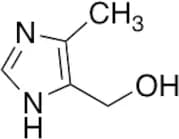
CAS:Controlled Product<p>Applications L-Arginine-2,3,3,4,4,5,5-d7 HCl (CAS# 204244-77-9) is a useful isotopically labeled research compound. It can be used with Raman scattering for imaging living cells and organisms.<br>References Min, W., et al., PCT Int. Appl. (2014), WO 2014205074 A2<br></p>Formula:C6D7H7N4O2·HClColor and Shape:NeatMolecular weight:217.704-Hydroxymethyl-5-methylimidazole
CAS:Controlled Product<p>Applications 4-Hydroxymethyl-5-methylimidazole (cas# 29636-87-1) is a useful research chemical.<br></p>Formula:C5H8N2OColor and Shape:NeatMolecular weight:112.13Arginine Vasopressin Diacetate
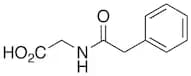
CAS:<p>Applications An endogenous antidiuretic hormone in most mammalian species. It is released into the blood from nerve terminals in the posterior pituitary and median eminence. It is a neurotransmitter in the central nervous system and also implicated in a variety of physiological processes such as regulating water balance by antidiuretic action. It is a peptidic V1a receptor agonist that produces vasoconstriction via V1aR-mediated vascular smooth muscle cell contraction and is being used to increase blood pressure in septic shock, a form of vasodilatory hypotension.<br>References Perucca, J. et al.: J. AM. Soc. Nephrol., 19, 1721 (2008); Toba, K. et al.: Prog. Brain Res., 119, 337 (1998); Berrada, K. et al.: J. Biol. Chem., 275, 27229 (2000);<br></p>Formula:C50H73N15O16S2Color and Shape:NeatMolecular weight:1204.34N-Phenylacetylglycine
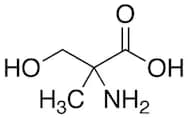
CAS:Controlled Product<p>Applications A metabolite of carboxylic acid.<br>References Bardsley, W., et al.: Biochem. J., 122, 557 (1971), Kim, J., et al.: Biosci. Biotechnol. Biochem., 69, 1331 (2005), Kopka, J., et al.: J. Biotechnol., 124, 312 (2006),<br></p>Formula:C10H11NO3Color and Shape:NeatMolecular weight:193.20α-Methyl-D,L-serine
CAS:Controlled Product<p>Applications A serine derivative. Used in the synthesis of constrained amino acid buildings blocks and their incorporation into biologically active peptidomimetics.<br>References Rew, Y., et al.: J. Med. Chem., 45, 3746 (2002),<br></p>Formula:C4H9NO3Color and Shape:NeatMolecular weight:119.12(2R)-3-Hydroxyisovaleroyl Carnitine
CAS:Controlled Product<p>Stability Very Hygroscopic<br>Applications Hydroxyisovaleroyl Carnitine is used as a diagnostic tool to identify the presence of orofacial clefts. Also used in the screening and diagnostics of inborn errors of metabolism.<br>References Denes, J. et al.: Anal. Chem., 84, 10113 (2012); Budner, M. et al.: Arch. Oral. Biol., 58, 459 (2013);<br></p>Formula:C12H23NO5Color and Shape:NeatMolecular weight:261.31L-2-Aminobutyric Acid-d6
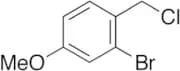
CAS:Controlled Product<p>Applications L-2-Aminobutyric Acid-d6 is the isotope labelled analog of L-2-Aminobutyric Acid (A602930); a receptor antagonist.<br>References Porter, D.J.T., et al.: Biochem. Pharmacol., 50, 1475 (1995)<br></p>Formula:C4D6H3NO2Color and Shape:Off-WhiteMolecular weight:109.162-Bromo-4-methoxybenzyl Chloride 75% (+ regioisomers)
CAS:Controlled Product<p>Applications This compound contains up to 25% of the two other regioisiomers.<br></p>Formula:C8H8BrClOColor and Shape:NeatMolecular weight:235.51N-(4-Aminobenzoyl-d4)-β-alanine
CAS:Controlled Product<p>Applications N-(4-Aminobenzoyl-d4)-β-alanine is the labeled analogue of N-(4-Aminobenzoyl)-β-alanine (A593795), a metabolite of BX661A, a therapeutic agent used in the treatment of ulcerative colitis, chemotaxis and reactive oxygen species production in polymorphonuclear leukocyctes. Inhibits lipid peroxidation in large intestinal mucosa after mesenteric ischemia/reperfusion.<br>References Kimura, I. et al.: Arzneimittelforschung., 48, 1007 (1998); Kumamoto, T. et al.: Jpn. J. Pharmacol., 75, 187 (1997);<br></p>Formula:C10D4H8N2O3Color and Shape:NeatMolecular weight:212.238trans-4-Hydroxy-L-proline
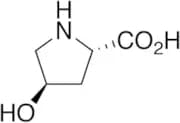
CAS:Controlled Product<p>Applications A natural constituent of animal structural proteins such as collagen and elastin. Several microorganisms producing proline trans-4- and cis-3-hydroxylase were discovered and these enzymes were applied to the industrial production of trans-4- and cis-3-hydroxy-L-proline.<br>References Langmaier, F. et al.: Int. J. Cosm. Sci., 24, 273 (2002); Lawrence, C., et al.: Biochem. J., 313, 185 (1996); Mori, H., et al.: J. Bacteriol.; 179, 5677 (1997); Clifton, I., et al.: Eur. J. Biochem., 268, 6625 (2001);<br></p>Formula:C5H9NO3Color and Shape:NeatMolecular weight:131.132-Methyl-1,4-butanediol
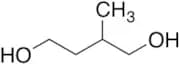
CAS:Controlled Product<p>Stability Unstable in Aqueous Solution<br>Applications 2-METHYL-1,4-BUTANEDIOL (cas# 2938-98-9) is a useful research chemical.<br></p>Formula:C5H12O2Color and Shape:NeatMolecular weight:104.15(4R, 2S)-4-Hydroxy-1-(9-phenyl-9H-fluoren-9-yl)-proline Methyl Ester
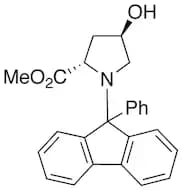
CAS:Controlled Product<p>Applications (4R, 2S)-4-Hydroxy-1-(9-phenyl-9H-fluoren-9-yl)-proline Methyl Ester (cas# 179990-59-1) is a compound useful in organic synthesis.<br></p>Formula:C25H23NO3Color and Shape:Light BrownMolecular weight:385.46N-Acetyl-S-(carbamoylethyl)-L-cysteine-d3
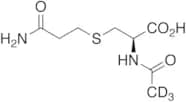
CAS:Controlled Product<p>Stability Hygroscopic<br>Applications Labelled N-Acetyl-S-(carbamoylethyl)-L-cysteine (A171870). N-Acetyl-S-(carbamoylethyl)-L-cysteine is the urinary metabolite of Acrylamide (AA). Acrylamide is formed during the heating of food and is classified as a genotoxic carcinogen.<br>References Besaratinia, A., et al.: Mutat. Res., 80, 31 (2005), Bjellaas, T., et al.: Xenobiotica, 35, 1003 (2005), Bjellaas, T., et al.: Food Chem. Toxicol., 45, 1020 (2007), Bjellaas, T., et al.: Toxicol. Sci., 98, 110 (2007),<br></p>Formula:C8H11D3N2O4SColor and Shape:Off-WhiteMolecular weight:237.29(R)-3-Carboxy-2-hydroxy-N,N,N-trimethylpropan-1-aminium Chloride
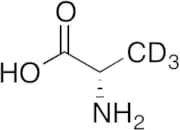
CAS:Controlled Product<p>Stability Hygroscopic<br>Applications (R)-3-Carboxy-2-hydroxy-N,N,N-trimethylpropan-1-aminium chloride is an important co-factor of mammalian mitochondrial energy metabolism. It is also a good active ingredient for dry-skin.<br>References Geier, David A., et al.: Neurochem. Res., 38(11), 2336-2341 (2013);Tanno, Osamu, et al.: Fragrance J., 33(8), 82-85 (2005);<br></p>Formula:C7H16NO3·ClColor and Shape:White To Off-WhiteMolecular weight:197.660L-Alanine-d3
CAS:Controlled Product<p>Applications L-Alanine-d3 is the labeled analogue of L-Alanine (A481500), which is used to make in-vivo measurement of glucose and alanine metabolism in studies of patients with diabetes. L-Alanine is a non-essential amino acid for human development. L-Alanine is one of the 20 amino acids encoded by the genetic code.<br>References Bier, D.M. et al.: Diabetes, 26, 1005 (1977); Capaldo, B. et al.: J. Clin. Endocrinol. Metab., 71, 1220 (1990); Giacca, A. et al.: Diabetes, 47, 1763 (1998)<br></p>Formula:C3D3H4NO2Color and Shape:NeatMolecular weight:92.11L-Ethionine
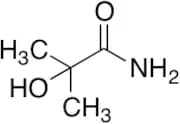
CAS:Controlled Product<p>Applications Ethionine-induced inhibition of protein synthesis and lowering of ATP level in the liver.<br>References Rotig, A., et al.: Lancet, 356, 391 (2000), Forsgren, M., et al.: Biochem. J., 382, 519 (2004), Johnson, A., et al.: J. Biol. Chem., 280, 31397 (2005), Horvath, R., et al.: Neurology, 66, 253 (2006), Mollet, M., et al.: J. Clin. Invest., 117, 765 (2007),<br></p>Formula:C6H13NO2SColor and Shape:NeatMolecular weight:163.242-Hydroxy-2-methylpropanamide
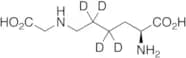
CAS:Controlled Product<p>Applications 2-Hydroxy-2-methylpropanamide (cas# 13027-88-8) is a useful research chemical.<br></p>Formula:C4H9NO2Color and Shape:NeatMolecular weight:103.12Nε-(1-Carboxymethyl)-L-lysine-d4
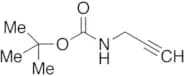
CAS:Controlled Product<p>Stability Hygroscopic<br>Applications CEL and CML are two stable, nonenzymatic chemical modifications of protein lysine residues resulting from glycation and oxidation reactions.<br>References Fu, M.X., et al.: J. Biol. Chem., 271, 9982 (1996), Ahmed M.U., et al.: Biochem.J., 324, 565 (1997), Schleicher, E.D., et al.: J. Clin. Invest., 99, 457 (1997), Shibayama, R., et al.: Diabetes, 48, 1842 (1999),<br></p>Formula:C8H12D4N2O4Color and Shape:NeatMolecular weight:208.25N-Boc-propargylamine
CAS:Controlled Product<p>Applications N-Boc-propargylamine is used in the preparation of triazolobenzylidene-thiazolopyrimidines which act as CDC25 phosphatase inhibitors. Also used in the synthesis of β-glucan polysaccharide analogs.<br>References Duval, R. et al.: J. Comb. Chem., 11, 947 (2009); Tanaka, H. et al.: Tetrahedron Lett., 53, 4104 (2012);<br></p>Formula:C8H13NO2Color and Shape:NeatMolecular weight:155.2L-Leucic Acid
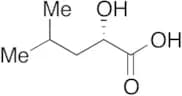
CAS:Controlled Product<p>Applications L-Leucic Acid is a reagent in the synthesis of cryptophycins based macrocyclic depsipeptides which are used as tubulin inhibitors.<br>References Kumar, A., et al.: Eur. J. Med. Chem., 93, 55 (2015)<br></p>Formula:C6H12O3Color and Shape:NeatMolecular weight:132.16Acetyl-d3 L-Carnitine Hydrochloride
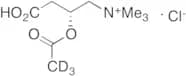
CAS:Controlled Product<p>Applications Acetyl-d3 L-Carnitine Hydrochloride is labelled Acetyl L-Carnitine Hydrochloride (A171990) which is used for transmembrane action potential studies. Acetylcarnitine has antinociceptive activity that may be mediated by enhanced activity of muscarinic cholinergic receptors or mGlu2 glutamate receptors.<br>References Matsui, K., et al.: Japanese J. Pharmcol., 39, 263 (1985); Chlechio, S., et al.: J. Endocrinol. Invest., 27, 171 (2004): Walker, R., et al.: Comparative General Pharmacol., 4, 65 (1973)<br></p>Formula:C92H3H15NO4·ClColor and Shape:NeatMolecular weight:242.72L-Homocystine
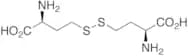
CAS:Controlled Product<p>Applications Increased levels lead to hyperhomocysteinemia; a cardiovascular risk factor in prediction of coronary heart disease as well as being associated with congenital birth defects, pregnancy complications and cancer.<br>References Geisel, J. et al.: Clin. Chem. Lab. Med., 41, 1513 (2003); Geisel, J. et al.: Clin. Chem. Lab. Med., 41, 1513 (2003);<br></p>Formula:C8H16N2O4S2Color and Shape:NeatMolecular weight:268.35


![7-Amino-3-methyl-8-oxo-5-thia-1-azabicyclo[4.2.0]oct-2-ene-2-carboxylic acid](/_next/image/?url=https%3A%2Fstatic.cymitquimica.com%2Fproducts%2F10%2Fthumb-webp%2FF319040.webp&w=3840&q=75)

![8-methyl-4-(4-nitrobenzoyl)-1-oxa-4,8-diazaspiro[4.5]decane-3-carboxylic acid](/_next/image/?url=https%3A%2Fstatic.cymitquimica.com%2Fproducts%2F10%2Fthumb-webp%2FF525622.webp&w=3840&q=75)
![4-(3-methoxybenzoyl)-8-methyl-1-oxa-4,8-diazaspiro[4.5]decane-3-carboxylic acid](/_next/image/?url=https%3A%2Fstatic.cymitquimica.com%2Fproducts%2F10%2Fthumb-webp%2FF525644.webp&w=3840&q=75)