


Amino Acids (AA)
Amino acids (AAs) are the fundamental building blocks of proteins, playing a crucial role in various biological processes. These organic compounds are essential for protein synthesis, metabolic pathways, and cell signaling. In this category, you will find a comprehensive range of amino acids, including essential, non-essential, and modified forms, which are vital for research in biochemistry, molecular biology, and nutritional sciences. At CymitQuimica, we provide high-quality amino acids to support your research and development needs, ensuring accuracy and reliability in your experimental outcomes.
Subcategories of "Amino Acids (AA)"
- Amino Acid Derivatives(3,955 products)
- Amino Acid and Amino Acid Related Compounds(3,461 products)
- Amino Acids with Oxygen or Sulphur(168 products)
- Boc- Amino Acids(351 products)
- Fmoc Amino Acids(1,710 products)
Found 38244 products of "Amino Acids (AA)"
Sort by
Purity (%)
0
100
|
0
|
50
|
90
|
95
|
100
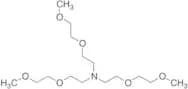
Tris(2-(2-methoxyethoxy)ethyl)amine
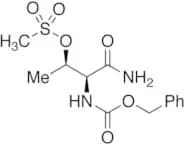
CAS:Controlled Product<p>Applications Tris(2-(2-methoxyethoxy)ethyl)amine (cas# 70384-51-9) is a useful research chemical.<br></p>Formula:C15H33NO6Color and Shape:NeatMolecular weight:323.43N-Benzyloxycarbonyl L-Threonine Amide O-Methanesulfonate
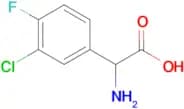
CAS:Controlled Product<p>Applications N-Benzyloxycarbonyl L-Threonine Amide O-Methanesulfonate (cas# 80082-51-5) is a compound useful in organic synthesis.<br></p>Formula:C13H18N2O6SColor and Shape:NeatMolecular weight:330.363-Chloro-4-fluoro-DL-phenylglycine
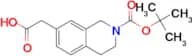
CAS:Formula:C8H7ClFNO2Purity:98+%Color and Shape:SolidMolecular weight:203.62-(2-(TERT-BUTOXYCARBONYL)-1,2,3,4-TETRAHYDROISOQUINOLIN-7-YL)ACETIC ACID
CAS:Purity:95.0%Molecular weight:291.34698486328125(R)-2,3,4,9-TETRAHYDRO-1H-PYRIDO[3,4-B]INDOLE-3-CARBOXYLIC ACID
CAS:Purity:95.0%Molecular weight:216.240005493164064-(3,4-dimethoxyphenyl)-3H,4H,5H,6H,7H-imidazo[4,5-c]pyridine-6-carboxylic acid
CAS:Purity:95.0%Molecular weight:303.3179931640625(5,6-Diphenyl-furo[2,3-d]pyrimidin-4-ylamino)-acetic acid
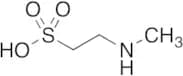
CAS:Purity:93.0%Molecular weight:345.3580017089844N-Methyltaurine
CAS:<p>Applications N-Methyltaurine can be used as a counter ion in the formation of soaps.<br>References Miyahara, Reiji, et al.: J. of Oleo Sci., 50(10), 823-830 (2001)<br></p>Formula:C3H9NO3SColor and Shape:NeatMolecular weight:139.17352-{8-benzyl-2,4-dioxo-1,3,8-triazaspiro[4.5]decan-3-yl}acetic acid hydrochloride
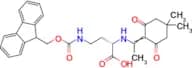
CAS:Purity:95.0%Molecular weight:353.79998779296875(S)-4-((((9H-Fluoren-9-yl)methoxy)carbonyl)amino)-2-((1-(4,4-dimethyl-2,6-dioxocyclohexylidene)ethyl)amino)butanoic acid
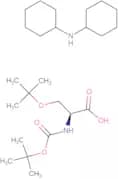
CAS:Purity:97%Molecular weight:504.5830078125BOC-SER(TBU)-OH DCHA
CAS:<p>M06199 - BOC-SER(TBU)-OH DCHA</p>Formula:C24H46N2O5Purity:95%Color and Shape:SolidMolecular weight:442.641N-Carbamyl-L-glutamic Acid
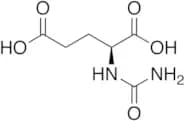
CAS:Controlled Product<p>Applications N-Carbamyl-L-glutamic Acid has been shown to have protective effects against ammonia intoxication and is used in the treatment of acute hyperammonemia.<br>References Paik, W.K. et al.: Life Sci., 15, 1189 (1974); O'Connor, J.E. et al.: Eur. J. Pediat., 148, 540 (1989); Lee, J.H. et al.: Biochem. Biophys. Res. Chem., 248, 391 (1998);<br></p>Formula:C6H10N2O5Color and Shape:NeatMolecular weight:190.153-Indolepropionic-d2 Acid
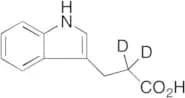
CAS:Controlled Product<p>Stability Hygroscopic<br>Applications 3-Indolepropionic-d2 acid is deuterium labelled 3-Indolepropionic acid (I627170). 3-Indolepropionic acid is a deamination product of Tryptophan (T947200) that protects the hippocampus (studied in gerbils) from ischemic damage and oxidative stress. It’s ability to protect the neurons in this way is attributed to its potent antioxidative effects. 3-Indolepropionic acid is also hypothesized to have protective effects on the thyroid gland.<br>References Hwang, I., et al.: J. Neurosci. Res., 87, 2126 (2009); Karbownik, M., et al.: J. Cell. Biochem., 95, 131 (2005)<br></p>Formula:C11D2H9NO2Color and Shape:NeatMolecular weight:191.22(4S)-4-Hydroxy-L-isoleucine
CAS:Controlled Product<p>Applications (4S)-4-Hydroxy-L-isoleucine is 4S isomer of 4-Hydroxyisoleucine, which is used as a treatment for type II diabetes.<br>References Martinez-Force, E., et al.: Biotechnol. Tech., 5, 209 (1991); Sauvaire, Y., et al.: Diabetes, 47, 206 (1998), Narender, T., et al.: Bioorg. Med. Chem. Lett., 2006, 16, 293 (2006);<br></p>Formula:C6H13NO3Color and Shape:NeatMolecular weight:147.177-Methoxy-3,4-dihydro-1-naphthalenyl-acetonitrile
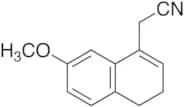
CAS:Controlled Product<p>Applications 7-Methoxy-3,4-dihydro-1-naphthalenyl-acetonitrile (cas# 861960-34-1) is a compound useful in organic synthesis.<br></p>Formula:C13H13NOColor and Shape:NeatMolecular weight:199.254-[4-(dimethylamino)benzoyl]-8-methyl-1-oxa-4,8-diazaspiro[4.5]decane-3-carboxylic acid
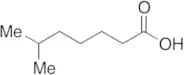
CAS:Purity:95.0%Molecular weight:347.41500854492196-Methylheptanoic Acid (>90%)
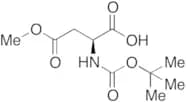
CAS:Controlled Product<p>Applications 6-Methylheptanoic acid is used as a reagent to synthesize analogues of Eponemycin, an antibiotic that also exhibits anti-angiogenic activity by inhibiting proteasome function. 6-Methylheptanoic acid naturally occurs as a component of the scent chemical of the brushtail possum.<br> Not a dangerous good if item is equal to or less than 1g/ml and there is less than 100g/ml in the package<br>References McLean, S., et al.: J. Chem. Ecol., 38, 1318 (2012); Oikawa, T., et al.: Biochem. Biophys. Res. Comm., 181, 1070 (1991); Sin, N., et al.: Bioorg. Med. Chem., 6, 1209 (1998)<br></p>Formula:C8H16O2Purity:>90%Color and Shape:NeatMolecular weight:144.21Boc-L-aspartic Acid β-Methyl Ester
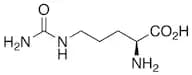
CAS:Controlled Product<p>Applications Boc-L-aspartic Acid β-Methyl Ester is used to prepare isoxazoline glycoprotein IIb/IIIa antagonists. It is also used to synthesize glutamic acid analogs as potent inhibitors of leukotriene A4 hydrolase.<br>References Xue, C., et al.: J. Med. Chem., 40, 2064 (1997); Kirkland, T., et al.: Bioorg. Med. Chem., 16, 4963 (2008)<br></p>Formula:C10H17NO6Color and Shape:NeatMolecular weight:247.245L-Citrulline
CAS:Controlled Product<p>Applications An amino acid, first isolated from the juice of watermelon, Citrullus vulgaris Schrad., Cucurbitaceae. Used in the treatment of asthenia.<br>References Kurtz, et al.: J. Biol. Chem., 122, 477 (1938), Rajantie, J., et al.: J. Pediatr., 97, 927 (1980), Carpenter, T.O., et al.: N. Engl. J. Med., 312, 290 (1985),<br></p>Formula:C6H13N3O3Color and Shape:NeatMolecular weight:175.198-methyl-4-(2,4,6-trimethylbenzoyl)-1-oxa-4,8-diazaspiro[4.5]decane-3-carboxylic acid
CAS:Purity:95.0%Molecular weight:346.4270019531258-benzyl-4-(2-methylpropanoyl)-1-oxa-4,8-diazaspiro[4.5]decane-3-carboxylic acid
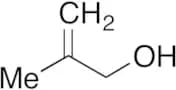
CAS:Purity:95.0%Molecular weight:346.4270019531252-Methyl-2-propen-1-ol
CAS:Controlled Product<p>Stability Light Sensitive<br>Applications 2-Methyl-2-propen-1-ol has been used in the synthesis of C2-methyl-1,2-di-O-hexadecylglycerophosphocholine.<br> Not a dangerous good if item is equal to or less than 1g/ml and there is less than 100g/ml in the package<br>References Bittman, R., Witzke N.M.: Chem. Physics Lipid, 50, 99 (1989)<br></p>Formula:C4H8OColor and Shape:NeatMolecular weight:72.11N-Boc-3-cyclopentylamino-propionic acid
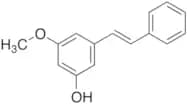
CAS:Purity:98.0%Color and Shape:Solid, Colourless powderMolecular weight:257.3299865722656(E)-3-Methoxy-5-styrylphenol
CAS:Controlled Product<p>Applications (E)-3-Methoxy-5-styrylphenol (cas# 35302-70-6) is a useful research chemical.<br></p>Formula:C15H14O2Color and Shape:NeatMolecular weight:226.272-N-Boc-3-(4-Methoxy-phenyl)-2-methylaminomethyl-propionic acid
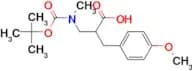
CAS:Formula:C17H25NO5Purity:97.0%Color and Shape:SolidMolecular weight:323.389Nε-(1-Carboxymethyl)-L-lysine-d4
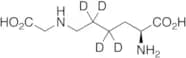
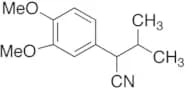
CAS:Controlled Product<p>Stability Hygroscopic<br>Applications CEL and CML are two stable, nonenzymatic chemical modifications of protein lysine residues resulting from glycation and oxidation reactions.<br>References Fu, M.X., et al.: J. Biol. Chem., 271, 9982 (1996), Ahmed M.U., et al.: Biochem.J., 324, 565 (1997), Schleicher, E.D., et al.: J. Clin. Invest., 99, 457 (1997), Shibayama, R., et al.: Diabetes, 48, 1842 (1999),<br></p>Formula:C8H12D4N2O4Color and Shape:NeatMolecular weight:208.253,4-Dimethoxy-a-(1-methylethyl)benzeneacetonitrile
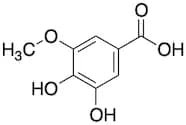
CAS:Controlled Product<p>Impurity Verapamil EP Impurity K<br>Applications (Verapamil EP Impurity K)<br></p>Formula:C13H17NO2Color and Shape:White To Light GreenMolecular weight:219.283,4-Dihydroxy-5-methoxybenzoic Acid
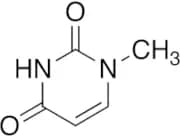
CAS:<p>Applications 3,4-Dihydroxy-5-methoxybenzoic acid (cas# 3934-84-7) is a useful research chemical.<br></p>Formula:C8H8O5Color and Shape:NeatMolecular weight:184.151-Methyluracil
CAS:Controlled Product<p>Applications 1-Methyluracil (cas# 615-77-0) is a compound useful in organic synthesis.<br></p>Formula:C5H6N2O2Color and Shape:WhiteMolecular weight:126.114-[2-(4-chlorophenyl)acetyl]-8-methyl-1-oxa-4,8-diazaspiro[4.5]decane-3-carboxylic acid
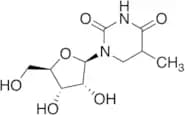
CAS:Purity:95.0%Molecular weight:352.820007324218755,6-Dihydro-5-methyluridine
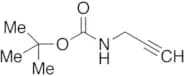
CAS:Controlled Product<p>Applications 5,6-Dihydro-5-methyluridine (cas# 23067-10-9) is a useful research chemical.<br></p>Formula:C10H16N2O6Color and Shape:NeatMolecular weight:260.24N-Boc-propargylamine
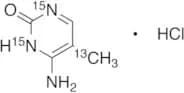
CAS:Controlled Product<p>Applications N-Boc-propargylamine is used in the preparation of triazolobenzylidene-thiazolopyrimidines which act as CDC25 phosphatase inhibitors. Also used in the synthesis of β-glucan polysaccharide analogs.<br>References Duval, R. et al.: J. Comb. Chem., 11, 947 (2009); Tanaka, H. et al.: Tetrahedron Lett., 53, 4104 (2012);<br></p>Formula:C8H13NO2Color and Shape:NeatMolecular weight:155.25-Methyl Cytosine-13C,15N2 Hydrochloride
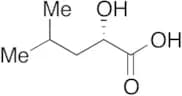
CAS:<p>Applications A labelled derivative of Dibarbituric acid.<br>References Hitchings, G.H., et al.: J. Biol. Chem., 177, 357 (1949),<br></p>Formula:CC4H715N2NO·ClHColor and Shape:NeatMolecular weight:164.57L-Leucic Acid
CAS:Controlled Product<p>Applications L-Leucic Acid is a reagent in the synthesis of cryptophycins based macrocyclic depsipeptides which are used as tubulin inhibitors.<br>References Kumar, A., et al.: Eur. J. Med. Chem., 93, 55 (2015)<br></p>Formula:C6H12O3Color and Shape:NeatMolecular weight:132.16DL-Proline
CAS:<p>Applications DL-Proline is the racemic mixture of both L-Proline (P755995) and D-Proline (P755990).<br>References Bondarenko, L.B., et al.: Int. J. Peptides., 2, 1687 (2012); Rimer, T., et al.: Biomacromolecules, 13, 2110 (2012);<br></p>Formula:C5H9NO2Color and Shape:NeatMolecular weight:115.132-(2,3-Dimethylphenyl)-2-[4-(4-fluorophenyl)piperazin-1-yl]acetic acid
CAS:Molecular weight:342.414001464843758-benzyl-4-(pyridine-4-carbonyl)-1-oxa-4,8-diazaspiro[4.5]decane-3-carboxylic acid
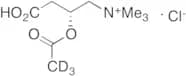
CAS:Purity:95.0%Molecular weight:381.4320068359375Acetyl-d3 L-Carnitine Hydrochloride
CAS:Controlled Product<p>Applications Acetyl-d3 L-Carnitine Hydrochloride is labelled Acetyl L-Carnitine Hydrochloride (A171990) which is used for transmembrane action potential studies. Acetylcarnitine has antinociceptive activity that may be mediated by enhanced activity of muscarinic cholinergic receptors or mGlu2 glutamate receptors.<br>References Matsui, K., et al.: Japanese J. Pharmcol., 39, 263 (1985); Chlechio, S., et al.: J. Endocrinol. Invest., 27, 171 (2004): Walker, R., et al.: Comparative General Pharmacol., 4, 65 (1973)<br></p>Formula:C92H3H15NO4·ClColor and Shape:NeatMolecular weight:242.722-Methylpyrazine
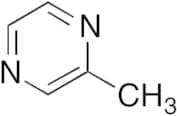
CAS:Controlled Product<p>Applications 2-Methyl-pyrazine is an intermediate used to synthesize 5-Methyl-2(1H)-pyrazinone (M324900) which is a derivative of 2-Hydroxypyrazine (H952710). 2-Hydroxypyrazine (H952710) is used in the synthesis of potential antioxidants.<br> Not a dangerous good if item is equal to or less than 1g/ml and there is less than 100g/ml in the package<br>References Shi, J. et al.: J. Phys. Org. Chem., 22, 1038 (2009); Bonde, C. et al.: Ind. J. Hetero. Chem., 10, 271 (2001);<br></p>Formula:C5H6N2Color and Shape:NeatMolecular weight:94.112-Methoxy-1-[4-(oxiranylmethoxy)phenyl]ethanone
CAS:Controlled Product<p>Applications 2-Methoxy-1-[4-(oxiranylmethoxy)phenyl]ethanone (cas# 110458-44-1) is a compound useful in organic synthesis.<br></p>Formula:C12H14O4Color and Shape:Off-White To Light YellowMolecular weight:222.24L-Homocystine
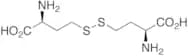
CAS:Controlled Product<p>Applications Increased levels lead to hyperhomocysteinemia; a cardiovascular risk factor in prediction of coronary heart disease as well as being associated with congenital birth defects, pregnancy complications and cancer.<br>References Geisel, J. et al.: Clin. Chem. Lab. Med., 41, 1513 (2003); Geisel, J. et al.: Clin. Chem. Lab. Med., 41, 1513 (2003);<br></p>Formula:C8H16N2O4S2Color and Shape:NeatMolecular weight:268.354-(2-ethoxyphenyl)-3H,4H,5H,6H,7H-imidazo[4,5-c]pyridine-6-carboxylic acid
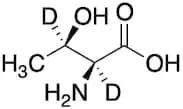
CAS:Purity:95.0%Molecular weight:287.3190002441406L-Threonine-2,3-d2
CAS:Controlled Product<p>Applications L-Threonine-2,3-d2 (CAS# 1202936-45-5) is a useful isotopically labeled research compound.<br></p>Formula:C4D2H7NO3Color and Shape:NeatMolecular weight:121.133-Ethyl-6,7,8,9-tetrahydro-9-hydroxy-2-methyl-4H-pyrido[1,2-a]pyrimidin-4-one
CAS:Controlled Product<p>Impurity Paliperidone USP Related Compound A<br>Applications 3-Ethyl-6,7,8,9-tetrahydro-9-hydroxy-2-methyl-4H-pyrido[1,2-a]pyrimidin-4-one (Paliperidone USP Related Compound A) is used in the synthesis of Paliperidone (P141000). Intermediate.<br>References Rein, A., et al.: Curr. Opin. Drug Discovery Dev., 3, 734 (2000),<br></p>Formula:C11H16N2O2Color and Shape:NeatMolecular weight:208.26



![(R)-2,3,4,9-TETRAHYDRO-1H-PYRIDO[3,4-B]INDOLE-3-CARBOXYLIC ACID](/_next/image/?url=https%3A%2Fstatic.cymitquimica.com%2Fproducts%2F10%2Fthumb-webp%2FF330939.webp&w=3840&q=75)
![4-(3,4-dimethoxyphenyl)-3H,4H,5H,6H,7H-imidazo[4,5-c]pyridine-6-carboxylic acid](/_next/image/?url=https%3A%2Fstatic.cymitquimica.com%2Fproducts%2F10%2Fthumb-webp%2FF522486.webp&w=3840&q=75)
![(5,6-Diphenyl-furo[2,3-d]pyrimidin-4-ylamino)-acetic acid](/_next/image/?url=https%3A%2Fstatic.cymitquimica.com%2Fproducts%2F10%2Fthumb-webp%2FF511717.webp&w=3840&q=75)
![2-{8-benzyl-2,4-dioxo-1,3,8-triazaspiro[4.5]decan-3-yl}acetic acid hydrochloride](/_next/image/?url=https%3A%2Fstatic.cymitquimica.com%2Fproducts%2F10%2Fthumb-webp%2FF521151.webp&w=3840&q=75)

![4-[4-(dimethylamino)benzoyl]-8-methyl-1-oxa-4,8-diazaspiro[4.5]decane-3-carboxylic acid](/_next/image/?url=https%3A%2Fstatic.cymitquimica.com%2Fproducts%2F10%2Fthumb-webp%2FF525661.webp&w=3840&q=75)
![8-methyl-4-(2,4,6-trimethylbenzoyl)-1-oxa-4,8-diazaspiro[4.5]decane-3-carboxylic acid](/_next/image/?url=https%3A%2Fstatic.cymitquimica.com%2Fproducts%2F10%2Fthumb-webp%2FF525662.webp&w=3840&q=75)
![8-benzyl-4-(2-methylpropanoyl)-1-oxa-4,8-diazaspiro[4.5]decane-3-carboxylic acid](/_next/image/?url=https%3A%2Fstatic.cymitquimica.com%2Fproducts%2F10%2Fthumb-webp%2FF525794.webp&w=3840&q=75)

![4-[2-(4-chlorophenyl)acetyl]-8-methyl-1-oxa-4,8-diazaspiro[4.5]decane-3-carboxylic acid](/_next/image/?url=https%3A%2Fstatic.cymitquimica.com%2Fproducts%2F10%2Fthumb-webp%2FF525660.webp&w=3840&q=75)

![2-(2,3-Dimethylphenyl)-2-[4-(4-fluorophenyl)piperazin-1-yl]acetic acid](/_next/image/?url=https%3A%2Fstatic.cymitquimica.com%2Fproducts%2F10%2Fthumb-webp%2FF300390.webp&w=3840&q=75)
![8-benzyl-4-(pyridine-4-carbonyl)-1-oxa-4,8-diazaspiro[4.5]decane-3-carboxylic acid](/_next/image/?url=https%3A%2Fstatic.cymitquimica.com%2Fproducts%2F10%2Fthumb-webp%2FF525808.webp&w=3840&q=75)
![2-Methoxy-1-[4-(oxiranylmethoxy)phenyl]ethanone](/_next/image/?url=https%3A%2Fstatic.cymitquimica.com%2Fproducts%2FTR%2Fthumb-webp%2FM265250.webp&w=3840&q=75)

![4-(2-ethoxyphenyl)-3H,4H,5H,6H,7H-imidazo[4,5-c]pyridine-6-carboxylic acid](/_next/image/?url=https%3A%2Fstatic.cymitquimica.com%2Fproducts%2F10%2Fthumb-webp%2FF522522.webp&w=3840&q=75)
![3-Ethyl-6,7,8,9-tetrahydro-9-hydroxy-2-methyl-4H-pyrido[1,2-a]pyrimidin-4-one](/_next/image/?url=https%3A%2Fstatic.cymitquimica.com%2Fproducts%2FTR%2Fthumb-webp%2FE926295.webp&w=3840&q=75)