Amino Acids (AA)
Amino acids (AAs) are the fundamental building blocks of proteins, playing a crucial role in various biological processes. These organic compounds are essential for protein synthesis, metabolic pathways, and cell signaling. In this category, you will find a comprehensive range of amino acids, including essential, non-essential, and modified forms, which are vital for research in biochemistry, molecular biology, and nutritional sciences. At CymitQuimica, we provide high-quality amino acids to support your research and development needs, ensuring accuracy and reliability in your experimental outcomes.
Subcategories of "Amino Acids (AA)"
- Amino Acid Derivatives(3,955 products)
- Amino Acid and Amino Acid Related Compounds(3,436 products)
- Amino Acids with Oxygen or Sulphur(168 products)
- Boc- Amino Acids(351 products)
- Fmoc Amino Acids(1,710 products)
Found 38216 products of "Amino Acids (AA)"
Sort by
Purity (%)
0
100
|
0
|
50
|
90
|
95
|
100
Thiodiglycolic Acid-d4
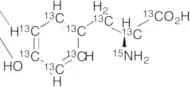
CAS:Controlled Product<p>Applications Thiodiglycolic Acid-d4 acts as a reagent for the synthesis of metabolites of S-carboxymethyl-L-cysteine and S-methyl-L-Cysteine and of some isotoically labelled (2H, 13C) analogs.<br>References Meese, C. O., et al.: Archiv der Pharmazie, 323, 957 (1990)<br></p>Formula:C4D4H2O4SColor and Shape:NeatMolecular weight:154.17L-Tyrosine-13C9,15N
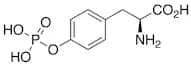
CAS:<p>Applications L-Tyrosine-13C9 ,15N is labelled analogue of L-Tyrosine (T899975), one of the 22 proteinogenic amino acids that are used by cells to synthesize proteins. L-Tyrosine is biologically converted from L-phenylalanine and is in turn is converted to L-DOPA and further converted into the neurotransmitters: dopamine, norepinephrine, and epinephrine.<br>References Rasmussen D.D. et al.: J. Clin. Endocrinol. Metab., 57, 760 (1983); Bagchi, S.P. et al.: Biochem. Pharmacol., 26, 900 (1977)<br></p>Formula:C9H1115NO3Color and Shape:White To Off-WhiteMolecular weight:191.1158O-Phospho-L-tyrosine
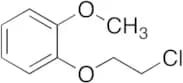
CAS:<p>Applications Useful in the study of tyrosine-phosphorylation, which has been linked with the malignant transformation of cells by some RNA tumour viruses.<br>References Sefton, B.M., et al.: Cell, 20, 807 (1980), Erikson, R., et al.: Perspect. Virol., 11, 93 (1981), Lee, E-S, et al.: J. Org. Chem., 59, 2086 (1994)<br></p>Formula:C9H12NO6PColor and Shape:NeatMolecular weight:261.171-(2-Chloroethoxy)-2-methoxybenzene
CAS:Controlled Product<p>Applications 1-(2-Chloroethoxy)-2-methoxy benzene, is an impurity of Carvedilol (C184625), a nonselective β-adrenergic blocker with α1-blocking activity. Carvedilol is an antihypertensive used in the treatment of congestive heart failure.<br>References Hirohashi, M., et al.: Arzneim.-Forsch., 40, 735 (1990); Packer, M., et al.: N. Engl. J. Med., 334, 1349 (1996);<br></p>Formula:C9H11ClO2Color and Shape:NeatMolecular weight:186.64N-Acetyl-L-cystine
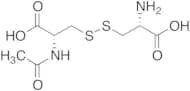
CAS:Controlled Product<p>Applications N-Acetyl-L-cystine is an antioxidant, used in the treatment of influenza A virus pandemic (1). N-Acetyl-L-cystine promotes fertilization by reducing disulfide bonds in zona pellucida of mouse (2).Releases N-Acetyl-L-cysteine, which is an antidote for paracetamol poisoning.<br>References (1) Zhang, R., et al.: (2014) Int. Immunopharmacol. 22: 1-8 (2) Takeo, T., et al.: Biol Reprod. (2015) 92: 1-7<br></p>Formula:C8H14N2O5S2Color and Shape:NeatMolecular weight:282.34Pantothenic Acid (Technical Grade, Contains Lactone)
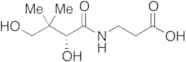
CAS:Controlled Product<p>Stability Hygroscopic<br>Applications Pantothenic Acid is a member of the B complex vitamins; essential vitamin for the biosynthesis of coenzyme A in mammalian cells. Occurs ubiquitously in all animal and plant tissue. The richest common source is liver, but jelly of the queen bee contains 6 times as much as liver. Rice bran and molasses are other good sources.<br>References Gardner, P., et al.: Food Chem., 68, 471 (2000); Ou, B., et al.: J. Agric. Food Chem., 50, 2772 (2002); Bahorun, T., et al.: J. Sci. Food Agric., 84, 1553 (2004)<br></p>Formula:C9H17NO5Color and Shape:NeatMolecular weight:219.244-Aminobutyl-d8 Guanidine Dihydrochloride
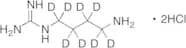
CAS:Controlled Product<p>Applications 4-Aminobutyl-d8 Guanidine is the labelled analog of the decarboxylation product of the amino acid arginine (A769500) and also an intermediate in polyamine biosynthesis.<br>References Golding, B.T., et al.: Biochem. Soc. Trans., 22, 391S (1994);<br></p>Formula:C5H6D8N4·2HClColor and Shape:NeatMolecular weight:211.16263L-Arginine-2,3,3,4,4,5,5-d7 HCl
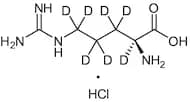
CAS:Controlled Product<p>Applications L-Arginine-2,3,3,4,4,5,5-d7 HCl (CAS# 204244-77-9) is a useful isotopically labeled research compound. It can be used with Raman scattering for imaging living cells and organisms.<br>References Min, W., et al., PCT Int. Appl. (2014), WO 2014205074 A2<br></p>Formula:C6D7H7N4O2·HClColor and Shape:NeatMolecular weight:217.702-Methyl-5-nitroimidazole
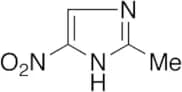
CAS:<p>Impurity Tinidazole EP Impurity A/ Metronidazole EP Impurity A<br>Applications 2-Methyl-5-nitroimidazole (Tinidazole EP Impurity A) is a Floconazole impurity.<br>References Sanderson, H., et al.: Toxicol. Lett., 187, 84 (2009), Kumar, L., et al.: Eur. J. Med. Chem., 45, 817 (2010),<br></p>Formula:C4H5N3O2Color and Shape:Light YellowMolecular weight:127.104-(3,4-dichlorobenzoyl)-8-ethyl-1-oxa-4,8-diazaspiro[4.5]decane-3-carboxylic acid
CAS:Purity:95.0%Molecular weight:387.260009765625N-Phenylacetylglycine
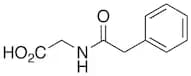
CAS:Controlled Product<p>Applications A metabolite of carboxylic acid.<br>References Bardsley, W., et al.: Biochem. J., 122, 557 (1971), Kim, J., et al.: Biosci. Biotechnol. Biochem., 69, 1331 (2005), Kopka, J., et al.: J. Biotechnol., 124, 312 (2006),<br></p>Formula:C10H11NO3Color and Shape:NeatMolecular weight:193.20α-Methyl-D,L-serine
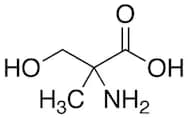
CAS:Controlled Product<p>Applications A serine derivative. Used in the synthesis of constrained amino acid buildings blocks and their incorporation into biologically active peptidomimetics.<br>References Rew, Y., et al.: J. Med. Chem., 45, 3746 (2002),<br></p>Formula:C4H9NO3Color and Shape:NeatMolecular weight:119.12(2R)-3-Hydroxyisovaleroyl Carnitine
CAS:Controlled Product<p>Stability Very Hygroscopic<br>Applications Hydroxyisovaleroyl Carnitine is used as a diagnostic tool to identify the presence of orofacial clefts. Also used in the screening and diagnostics of inborn errors of metabolism.<br>References Denes, J. et al.: Anal. Chem., 84, 10113 (2012); Budner, M. et al.: Arch. Oral. Biol., 58, 459 (2013);<br></p>Formula:C12H23NO5Color and Shape:NeatMolecular weight:261.31L-2-Aminobutyric Acid-d6
CAS:Controlled Product<p>Applications L-2-Aminobutyric Acid-d6 is the isotope labelled analog of L-2-Aminobutyric Acid (A602930); a receptor antagonist.<br>References Porter, D.J.T., et al.: Biochem. Pharmacol., 50, 1475 (1995)<br></p>Formula:C4D6H3NO2Color and Shape:Off-WhiteMolecular weight:109.16N-Methyl-dl-valine Hydrochloride
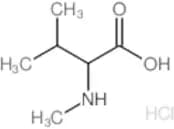
CAS:Controlled Product<p>Applications N-Methyl-dl-valine, HCl<br></p>Formula:C6H13NO2Color and Shape:NeatMolecular weight:131.173L-Homocysteine Thiolactone Hydrochloride
CAS:Controlled Product<p>Applications L-Homocysteine Thiolactone Hydrochloride is used to prepare substituted homocysteine analogs as inhibitors of peptidylglycine α-amidating monooxygenase. It is also used to synthesize (mercaptoacyl)alanylprolines as metalloprotease inhibitors.<br>References Erion, M., et al.: J. Med. Chem., 37, 4430 (1994); Slusarchyk, W., et al.: Bioorg. Med. Chem. Lett., 5, 753 (1995)<br></p>Formula:C4H8ClNOSColor and Shape:NeatMolecular weight:153.63N-(4-Aminobenzoyl-d4)-β-alanine
CAS:Controlled Product<p>Applications N-(4-Aminobenzoyl-d4)-β-alanine is the labeled analogue of N-(4-Aminobenzoyl)-β-alanine (A593795), a metabolite of BX661A, a therapeutic agent used in the treatment of ulcerative colitis, chemotaxis and reactive oxygen species production in polymorphonuclear leukocyctes. Inhibits lipid peroxidation in large intestinal mucosa after mesenteric ischemia/reperfusion.<br>References Kimura, I. et al.: Arzneimittelforschung., 48, 1007 (1998); Kumamoto, T. et al.: Jpn. J. Pharmacol., 75, 187 (1997);<br></p>Formula:C10D4H8N2O3Color and Shape:NeatMolecular weight:212.2384-(3-methoxybenzoyl)-8-propyl-1-oxa-4,8-diazaspiro[4.5]decane-3-carboxylic acid
CAS:Purity:95.0%Molecular weight:362.42599487304694-[4-(dimethylamino)benzoyl]-8-ethyl-1-oxa-4,8-diazaspiro[4.5]decane-3-carboxylic acid
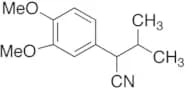
CAS:Purity:95.0%Molecular weight:361.44198608398443,4-Dimethoxy-a-(1-methylethyl)benzeneacetonitrile
CAS:Controlled Product<p>Impurity Verapamil EP Impurity K<br>Applications (Verapamil EP Impurity K)<br></p>Formula:C13H17NO2Color and Shape:White To Light GreenMolecular weight:219.28N-Boc-propargylamine
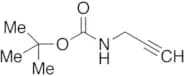
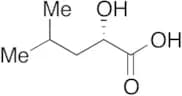
CAS:Controlled Product<p>Applications N-Boc-propargylamine is used in the preparation of triazolobenzylidene-thiazolopyrimidines which act as CDC25 phosphatase inhibitors. Also used in the synthesis of β-glucan polysaccharide analogs.<br>References Duval, R. et al.: J. Comb. Chem., 11, 947 (2009); Tanaka, H. et al.: Tetrahedron Lett., 53, 4104 (2012);<br></p>Formula:C8H13NO2Color and Shape:NeatMolecular weight:155.2L-Leucic Acid
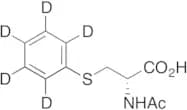
CAS:Controlled Product<p>Applications L-Leucic Acid is a reagent in the synthesis of cryptophycins based macrocyclic depsipeptides which are used as tubulin inhibitors.<br>References Kumar, A., et al.: Eur. J. Med. Chem., 93, 55 (2015)<br></p>Formula:C6H12O3Color and Shape:NeatMolecular weight:132.16S-Phenylmercapturic Acid-d5
CAS:Controlled Product<p>Applications S-Phenylmercapturic Acid-d5 is the labelled analogue of S-Phenylmercapturic Acid (P335600), an important metabolite of Benzene.<br>References Qu, Q., et al.: Am. J. Ind. Med., 37, 522 (2000); Ghittori, S., et al.: Int. Arch. Occup. Environ. Health, 67, 195 (1995);<br></p>Formula:C11H8D5NO3SColor and Shape:NeatMolecular weight:244.324-(2,4-dimethoxyphenyl)-3H,4H,5H,6H,7H-imidazo[4,5-c]pyridine-6-carboxylic acid
CAS:Purity:95.0%Molecular weight:303.31799316406252,6-Diaminopimelic Acid
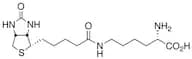
CAS:Controlled Product<p>Applications 2,6-Diaminopimelic Acid is useful in biological studies involving amino acids and amino sugars as molecular indicators of the origins of organic matter in buried tephra soils.<br>References Hobara, S., et al.: Geoderma, 373, 114449 (2020)<br></p>Formula:C7H14N2O4Color and Shape:NeatMolecular weight:190.20Biocytin
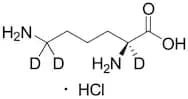
CAS:<p>Applications Useful for the synthesis of Biocytin containing peptides to study the mechanism of reactions catalyzed by biotin - containing enzymes.<br>References Bodanszky, M., and Fagan, D.T.: J. Am. Chem. Soc., 99, 235 (1977)<br></p>Formula:C16H28N4O4SColor and Shape:White To Off-WhiteMolecular weight:372.48L-Lysine-2,6,6-d3 HCl
CAS:Controlled Product<p>Applications L-Lysine-2,6,6-d3 HCl is a useful isotopically labeled compound of L-Lysine HydrochlorideDISCONTINUED PLEASE SEE L486915 (L468923)<br></p>Formula:C6D3H11N2O2·HClColor and Shape:NeatMolecular weight:185.667N-Methyl-N-trimethylsilylacetamide
CAS:Controlled Product<p>Applications N-Methyl-N-trimethylsilylacetamide, is a powerful silylating agent for polar compounds.<br> Not a dangerous good if item is equal to or less than 1g/ml and there is less than 100g/ml in the package<br>References Melanie MacGregor-Ramiasa et. al; Acta biomaterialia, 56, undefined (2017-2-25)<br></p>Formula:C6H15NOSiPurity:>85%Color and Shape:NeatMolecular weight:145.27DL-Cystine-2,2',3,3,3',3'-d6
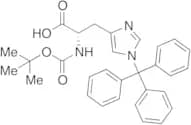
CAS:Controlled Product<p>Applications DL-Cystine-2,2',3,3,3',3'-d6 (CAS# 352431-53-9) is a useful isotopically labeled research compound.<br></p>Formula:C6D6H6N2O4S2Color and Shape:NeatMolecular weight:246.34Boc-His(Trt)-OH
CAS:Controlled Product<p>Applications Boc-His(Trt)-OH was used in the study to prepare and study structure-activity relationship of amino acid amides as selective inhibitors for dipeptidyl peptidases.<br>References Senten, K., et al.: J. Med. Chem., 46, 5005 (2003);<br></p>Formula:C30H31N3O4Color and Shape:White To Off-WhiteMolecular weight:497.58Isobutyryl L-Carnitine Chloride
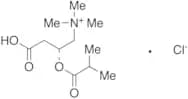
CAS:Controlled ProductFormula:C11H22NO4·ClColor and Shape:NeatMolecular weight:267.75D-Tryptophan-d5
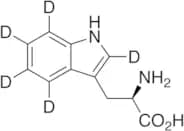
CAS:Controlled Product<p>Applications Labelled analogue of an essential amino acid found in naturally produced peptides. Unlike its stereoisomer, L-tryptophan, it is not used in structural or enzyme proteins.<br>References Karunakaran, S.et al.: Bochem. J., 414, 343 (2008); Pallaghy, P.K. et al.: Biochem., 38, 11553 (1999);<br></p>Formula:C112H5H7N2O2Color and Shape:NeatMolecular weight:209.26L-Serine
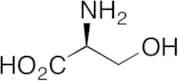
CAS:<p>Applications L-Serine is used in the synthesis of purines and pyrimidines as antibacterial/antifungal agents, as well as acting as a proteinogenic compound.<br>References Olivella, M. et al.: Bioorg. Med. Chem., 20, 6109 (2012);<br></p>Formula:C3H7NO3Color and Shape:White Crystalline PowderMolecular weight:105.09Methyl 2,3,4-Tri-O-isobutyryl-D-glucopyranuronate
CAS:Controlled Product<p>Stability Temperature Sensitive<br>Applications Methyl 2,3,4-Tri-O-isobutyryl-D-glucopyranuronate (cas# 1190403-86-1) is a compound useful in organic synthesis.<br></p>Formula:C19H30O10Color and Shape:NeatMolecular weight:418.44Nα-Acetyl-L-ornithine
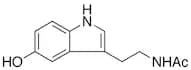
CAS:Controlled ProductFormula:C7H14N2O3Color and Shape:Off-WhiteMolecular weight:174.2N-Acetyl-5-hydroxytryptamine
CAS:<p>Stability Hygroscopic<br>Applications A metabolite of Melatonin (M215000).<br>References Reiter, R.J., et al.: J. Biomed. Sci., 7, 444 (2000), Chen, Z., et al.: Am. J. Physiol, 284, 1618 (2003), Barrenetxe, J., et al.: J. Physiol. Biochem., 60, 61 (2004),<br></p>Formula:C12H14N2O2Color and Shape:White To GreyMolecular weight:218.25185'-O-Methylthymidine
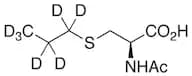
CAS:Controlled Product<p>Applications 5'-O-Methylthymidine (cas# 14504-60-0) is a useful research chemical.<br></p>Formula:C11H16N2O5Color and Shape:White To Off-WhiteMolecular weight:256.26N-Acetyl-S-(propyl-d7)-L-cysteine
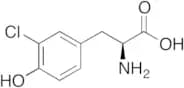
CAS:Controlled ProductFormula:C8D7H8NO3SColor and Shape:Off-WhiteMolecular weight:212.323-Chloro-L-tyrosine
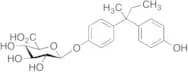
CAS:Controlled Product<p>Stability Hygroscopic<br>Applications 3-Chloro-L-tyrosine was used in the enzymatic synthesis of halogen derivatives of aromatic amino acids labeled with hydrogen isotope. 3-Chloro-L-tyrosine exhibited stronger antioxidant properties in Hb-induced oxidative stress as was evident by higher efficiency of reduction of ferryl species.<br>References Winnicka, E., et al.: J. Chem. Eng., 8, 54 (2014); Lu, N., et al.: Toxicol. In Vitro, 28, 847 (2014);<br></p>Formula:C9H10NO3ClColor and Shape:NeatMolecular weight:215.63Bisphenol B Mono-b-D-glucuronide
<p>Applications Bisphenol B Mono-β-D-glucuronide is a metabolite of Bisphenol B (B519565), which is the analogue of Bisphenol A (B519495), that is used to make certain plastic an epoxy resins. BPA and its analogs, are also shown to activate human pregnane X receptor (PXR), a nuclear receptor that functions as a master regulator of xenobiotic metabolism.<br>References Krishnan, A.V., et al.: Endocrinology, 132, 2279 (1993); Steinmetz, R., et al.: Trends Endocrinol. Metab., 9, 124 (1998); Petersen, H., et al.: Eur. Food Res. Technol., 216, 355 (2003); Yipeng, S., et al.: Env Hea. Pers., 120, 399 (2012);<br></p>Formula:C22H26O8Color and Shape:White To Off-WhiteMolecular weight:418.444-(3,4-dimethoxyphenyl)-3H,4H,5H,6H,7H-imidazo[4,5-c]pyridine-6-carboxylic acid
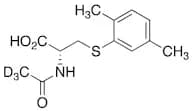
CAS:Purity:95.0%Molecular weight:303.3179931640625N-Acetyl-S-(2,5-dimethylbenzene)-L-cysteine-d3
CAS:Controlled Product<p>Applications N-Acetyl-S-(2,5-dimethylbenzene)-L-cysteine-d3 (cas# 1331909-07-9) is a compound useful in organic synthesis.<br>References Gonzalez-Reche, L., et al.: Arch. Toxicol., 77, 80 (2003),<br></p>Formula:C13H14D3NO3SColor and Shape:NeatMolecular weight:270.36N-Boc-L-glutamic Acid 5-Methyl Ester
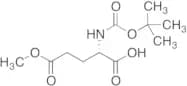
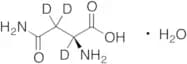
CAS:Controlled Product<p>Applications N-Boc-L-glutamic Acid 5-Methyl Ester is an intermediate used in the synthesis of Isodesmosine Chloride Hydrate (Synthetic) (I815051), which is a component of elastin and also it is extremely hygroscopic and must be stored over a desiccant such as silica gel.<br>References Partridge, S., et al.: Nature, 209, 399 (1966)<br></p>Formula:C11H19NO6Color and Shape:NeatMolecular weight:261.27L-Asparagine-d3 Hydrate
CAS:Controlled Product<p>Applications L-Asparagine-d3 Hydrate is an isotope labelled L-Asparagine Hydrate, a naturally occurring amino acid that is not a essential for humans and can be synthesized from central metabolic pathway intermediates.<br>References Burda, P., et al.: Biochim. Biophys. Acta., 1426, 239 (1999); Yamane, H., et al.: Animal. Sci. J., 80, 286 (2009);<br></p>Formula:C4D3H5N2O3·H2OColor and Shape:White To Off-WhiteMolecular weight:153.1517



![4-(3,4-dichlorobenzoyl)-8-ethyl-1-oxa-4,8-diazaspiro[4.5]decane-3-carboxylic acid](/_next/image/?url=https%3A%2Fstatic.cymitquimica.com%2Fproducts%2F10%2Fthumb-webp%2FF525681.webp&w=3840&q=75)





![4-(3-methoxybenzoyl)-8-propyl-1-oxa-4,8-diazaspiro[4.5]decane-3-carboxylic acid](/_next/image/?url=https%3A%2Fstatic.cymitquimica.com%2Fproducts%2F10%2Fthumb-webp%2FF525735.webp&w=3840&q=75)
![4-[4-(dimethylamino)benzoyl]-8-ethyl-1-oxa-4,8-diazaspiro[4.5]decane-3-carboxylic acid](/_next/image/?url=https%3A%2Fstatic.cymitquimica.com%2Fproducts%2F10%2Fthumb-webp%2FF525710.webp&w=3840&q=75)
![4-(2,4-dimethoxyphenyl)-3H,4H,5H,6H,7H-imidazo[4,5-c]pyridine-6-carboxylic acid](/_next/image/?url=https%3A%2Fstatic.cymitquimica.com%2Fproducts%2F10%2Fthumb-webp%2FF522514.webp&w=3840&q=75)






![4-(3,4-dimethoxyphenyl)-3H,4H,5H,6H,7H-imidazo[4,5-c]pyridine-6-carboxylic acid](/_next/image/?url=https%3A%2Fstatic.cymitquimica.com%2Fproducts%2F10%2Fthumb-webp%2FF522486.webp&w=3840&q=75)