Amino Acids (AA)
Amino acids (AAs) are the fundamental building blocks of proteins, playing a crucial role in various biological processes. These organic compounds are essential for protein synthesis, metabolic pathways, and cell signaling. In this category, you will find a comprehensive range of amino acids, including essential, non-essential, and modified forms, which are vital for research in biochemistry, molecular biology, and nutritional sciences. At CymitQuimica, we provide high-quality amino acids to support your research and development needs, ensuring accuracy and reliability in your experimental outcomes.
Subcategories of "Amino Acids (AA)"
- Amino Acid Derivatives(3,955 products)
- Amino Acid and Amino Acid Related Compounds(3,461 products)
- Amino Acids with Oxygen or Sulphur(168 products)
- Boc- Amino Acids(351 products)
- Fmoc Amino Acids(1,710 products)
Found 38244 products of "Amino Acids (AA)"
Sort by
Purity (%)
0
100
|
0
|
50
|
90
|
95
|
100
1,2-Dichloro-2-methylpropane
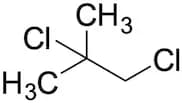
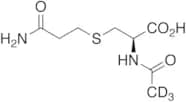
CAS:<p>Applications 1,2-Dichloro-2-methylpropane (cas# 594-37-6) is a useful research chemical.<br> Not a dangerous good if item is equal to or less than 1g/ml and there is less than 100g/ml in the package<br></p>Formula:C4H8Cl2Color and Shape:NeatMolecular weight:127.01N-Acetyl-S-(carbamoylethyl)-L-cysteine-d3
CAS:Controlled Product<p>Stability Hygroscopic<br>Applications Labelled N-Acetyl-S-(carbamoylethyl)-L-cysteine (A171870). N-Acetyl-S-(carbamoylethyl)-L-cysteine is the urinary metabolite of Acrylamide (AA). Acrylamide is formed during the heating of food and is classified as a genotoxic carcinogen.<br>References Besaratinia, A., et al.: Mutat. Res., 80, 31 (2005), Bjellaas, T., et al.: Xenobiotica, 35, 1003 (2005), Bjellaas, T., et al.: Food Chem. Toxicol., 45, 1020 (2007), Bjellaas, T., et al.: Toxicol. Sci., 98, 110 (2007),<br></p>Formula:C8H11D3N2O4SColor and Shape:Off-WhiteMolecular weight:237.294-benzoyl-8-methyl-1-oxa-4,8-diazaspiro[4.5]decane-3-carboxylic acid
CAS:Purity:95.0%Molecular weight:304.346008300781254-(3-phenoxyphenyl)-3H,4H,5H,6H,7H-imidazo[4,5-c]pyridine-6-carboxylic acid
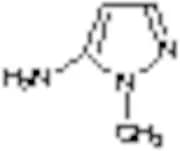
CAS:Purity:95.0%Molecular weight:335.36300659179695-Amino-1-methylpyrazole
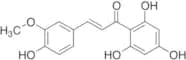
CAS:Controlled ProductFormula:C4H7N3Color and Shape:NeatMolecular weight:97.123-Methoxy-2',4',6',4-tetrahydroxychalcone (>80%)
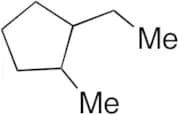
CAS:Controlled Product<p>Applications 3-Methoxy-2',4',6',4-tetrahydroxychalcone piperidine complex (cas# 52218-19-6) is a useful research chemical.<br></p>Formula:C16H14O6Purity:>80%Color and Shape:NeatMolecular weight:302.281-Ethyl-1-methylcyclopentane
CAS:Controlled Product<p>Applications 1-Ethyl-1-methylcyclopentane, is one of the chemical components of Gas-Phase organic carbon emissions from motor vehicles. It is also a volatile component of frying oils.<br>References Gentner, D. R., et al.: Environ. Sci. Tech., 47, 11937 (2013); Prevot, A. Frying Food, 155 (1988);<br></p>Formula:C8H16Color and Shape:NeatMolecular weight:112.218-ethyl-4-(3-fluorobenzoyl)-1-oxa-4,8-diazaspiro[4.5]decane-3-carboxylic acid
CAS:Purity:95.0%Molecular weight:336.36300659179694-(4-chlorobenzoyl)-8-ethyl-1-oxa-4,8-diazaspiro[4.5]decane-3-carboxylic acid
CAS:Purity:95.0%Molecular weight:352.820007324218754-Chloro-4-methyl-1-pentene
CAS:Controlled Product<p>Applications 4-Chloro-4-methyl-1-pentene affects the surface modification of Kevlar stitch threads on mechanical interfacial properties of carbon fiber and bismaleimide stitched composites.<br> Not a dangerous good if item is equal to or less than 1g/ml and there is less than 100g/ml in the package<br>References Ai, T., et al.: Fuhe Cailiao Xuebao, 24, 34-39 (2007)<br></p>Formula:C6H11ClColor and Shape:NeatMolecular weight:118.65-((tert-Butoxycarbonyl)amino)pyrimidine-2-carboxylic acid
CAS:Purity:95%Molecular weight:239.23100280761721,2-Cyclohexanedicarboxylic Acid Mono 4-Methyloctyl Ester
CAS:<p>Applications 1,2-Cyclohexanedicarboxylic Acid Mono 4-Methyloctan-1-ol Ester is a possible metabolite of the di(isononyl)cyclohexane-1,2-dicarboxylate (DINCH) monoester (MINCH).<br>References Koch, H., et al.: Arch. Toxicol., 87, 799 (2013)<br></p>Formula:C17H30O4Color and Shape:NeatMolecular weight:298.424-(3-methylphenyl)-3H,4H,5H,6H,7H-imidazo[4,5-c]pyridine-6-carboxylic acid
CAS:Purity:95.0%Molecular weight:257.29299926757813-Methyloxindole
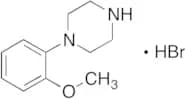
CAS:Controlled Product<p>Applications 3-Methylindole metabolite.<br>References Skordos, K., et al.: Chem. Res. Toxicol., 11, 741 (1998), Lanza, D., et al.: Drug Metab. Disposition, 29, 950 (2001), Hoenicke, K., et al.: J. Agric. Food Chem., 50, 4303 (2002),<br></p>Formula:C9H9NOColor and Shape:BeigeMolecular weight:147.171-(2-Methoxyphenyl)piperazine Hydrobromide
CAS:Controlled Product<p>Stability Hygroscopic<br>Applications 1-(2-Methoxyphenyl)piperazine Hydrobromide is a useful reagent for improving the synthesis of Eapidil.<br>References Wang, H., et al.: Anhui Huagong, 37, 23 (2011)<br></p>Formula:C11H16N2O·HBrColor and Shape:NeatMolecular weight:192.26 +(80.91)trans-Glutaconic Acid
CAS:Controlled Product<p>Applications trans-Glutaconic Acid is used in the synthesis of iso and azokainoids which act as agonists for glutamate receptors. E-isomer of Glutaconic Acid (G596945).<br>References Felluga, F. et al.: Chirality, 24, 112 (2012); Wang, W. et al.: Bioorg. Med. Chem. Lett., 23, 1949 (2013);<br></p>Formula:C5H6O4Color and Shape:White To Light BrownMolecular weight:130.14-(4-bromobenzoyl)-8-ethyl-1-oxa-4,8-diazaspiro[4.5]decane-3-carboxylic acid
CAS:Purity:95.0%Molecular weight:397.26901245117193-([(TERT-BUTOXY)CARBONYL](METHYL)AMINO)CYCLOBUTANE-1-CARBOXYLIC ACID
CAS:Purity:95.0%Molecular weight:229.27600097656252,6-Di-tert-butyl-4-methyl-d3-phenol
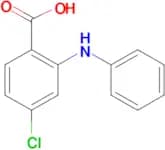
CAS:Controlled Product<p>Applications 2,6-Di-tert-butyl-4-methyl-d3-phenol (CAS# 86819-59-2) is a useful isotopically labeled research compound. This compound has been shown to significantly have lower toxic potency in mice compared to butylated hydroxytolune (BHT).<br>References Mizutani, T., et.al., Toxicol. Appl. Pharmacol. 69,283-290,(1983);<br></p>Formula:C15D3H21OColor and Shape:NeatMolecular weight:223.374-Chloro-2-phenylamino-benzoic acid
CAS:Formula:C13H10ClNO2Purity:95.0%Color and Shape:SolidMolecular weight:247.685-Hydroxy-2-methyl-1H-imidazole-1-ethanol
CAS:Controlled Product<p>Applications 5-Hydroxy-2-methyl-1H-imidazole-1-ethanol is a degradation product of Metronidazole (M338880), an antibiotic.<br>References Perez, Tzayam, et al.: Electrochimica Acta, 165, 173-181 (2015)<br></p>Formula:C6H10N2O2Color and Shape:NeatMolecular weight:142.166-Phenyl-5,6,6a,7,8,9,10,10a-octahydro-7,10-methanophenanthridine-2-carboxylic acid
CAS:Purity:98%Molecular weight:319.403991699218754-(2-phenylbutanoyl)-8-propyl-1-oxa-4,8-diazaspiro[4.5]decane-3-carboxylic acid
CAS:Purity:95.0%Molecular weight:374.4809875488281(E)-2-Cyano-3-(4-(4-(2,2-diphenylvinyl)phenyl)-1,2,3,3a,4,8b-hexahydrocyclopenta[b]indol-7-yl)acrylic acid
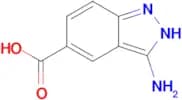
CAS:Purity:98+%Color and Shape:SolidMolecular weight:508.6210021972663-Amino-1H-indazole-5-carboxylic acid
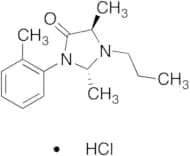
CAS:Formula:C8H7N3O2Purity:95.0%Color and Shape:SolidMolecular weight:177.1632,5-Dimethyl-3-(2-methylphenyl)-1-propylimidazolini-4-one Hydrochloride
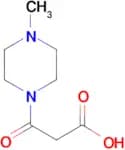
CAS:Controlled Product<p>Applications rac-trans-2,5-Dimethyl-3-(2-methylphenyl)-1-propylimidazolini-4-one Hydrochloride is the salt analogue of 2,5-Dimethyl-3-(2-methylphenyl)-1-propylimidazolini-4-one (D477055), an impurity of Prilocaine (Prilocaine Hydrochloride P725000). Prilocaine is a local anesthetic of the amino amide type and is often used in dentistry. Prilocaine is also often combined with lidocaine as a preparation for dermal anesthesia (lidocaine/prilocaine or EMLA) towards the treatment of conditions like paresthesia.<br>References Caliaro, G., et al.: J. Pharm. Biomed. Anal., 26, 427 (2001), Ulmeanu, S., et al.: Pharm. Res., 20, 1317 (2003)<br></p>Formula:C15H22N2O·HClColor and Shape:NeatMolecular weight:282.80893-(4-Methyl-piperazin-1-yl)-3-oxo-propionic acid
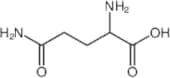
CAS:Formula:C8H14N2O3Purity:98.0%Color and Shape:CrystallineMolecular weight:186.211DL-glutamine
CAS:Controlled Product<p>Applications DL-glutamine<br></p>Formula:C5H10N2O3Color and Shape:NeatMolecular weight:146.141-[2-Nitro-4-(trifluoromethyl)phenyl]piperidine-4-carboxylic acid
CAS:Molecular weight:318.252014160156253a,4,5,9b-Tetrahydro-3 H -cyclopenta[ c ]quinoline-4-carboxylic acid
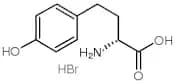
CAS:Purity:95.0%Color and Shape:SolidMolecular weight:215.2519989013672D-Homotyrosine Hydrobromide
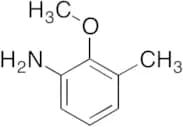
CAS:Controlled Product<p>Applications D-Homotyrosine hydrobromide<br></p>Formula:C10H13NO3·HBrColor and Shape:White To Off-WhiteMolecular weight:276.1272-Methoxy-3-methylaniline
CAS:Controlled Product<p>Applications 2-Methoxy-3-methylaniline is an important building block.<br></p>Formula:C8H11NOColor and Shape:NeatMolecular weight:137.1795-(TERT-BUTOXYCARBONYLAMINO-METHYL)CYCLOHEX-1-ENECARBOXYLIC ACID
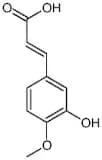
CAS:Purity:95.0%Molecular weight:255.313995361328123-Hydroxy-4-methoxycinnamic Acid
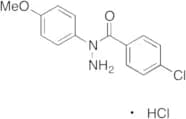
CAS:Controlled Product<p>Applications 3-Hydroxy-4-methoxycinnamic acid, trans-Isoferulic acid<br></p>Formula:C10H10O4Color and Shape:NeatMolecular weight:194.184-Chloro-benzoic Acid 1-(4-Methoxyphenyl)hydrazide Hydrochloride
CAS:<p>Applications 4-Chloro-benzoic Acid 1-(4-Methoxyphenyl)hydrazide Hydrochloride is a derivative of (4-Methoxyphenyl)hydrazine Hydrochloride (M265880). It is a useful synthetic intermediate for the preparation of Indomethacin (I641000); a potent, time-dependent, nonselective inhibitor of the cyclooxygenase enzymes COX-1 and COX-2.<br>References Blobaum, Anna L., et al.: ACS Med. Chem. Lett., 4(5), 486-490 (2013); Prusakiewicz, Jeffery J., et al.: Biochemistry, 43(49), 15439-15445 (2004)<br></p>Formula:C14H13ClN2O2·HClColor and Shape:NeatMolecular weight:313.188-tert-butyl-4-[4-(dimethylamino)benzoyl]-1-oxa-4-azaspiro[4.5]decane-3-carboxylic acid
CAS:Purity:95.0%Molecular weight:388.507995605468754-(4-fluorophenyl)-4,5,6,7-tetrahydro-3H-imidazo[4,5-c]pyridine-6-carboxylic acid
CAS:Molecular weight:261.25601196289062-N-Boc-3-(4-Methoxy-phenyl)-2-methylaminomethyl-propionic acid
CAS:Formula:C17H25NO5Purity:97.0%Color and Shape:SolidMolecular weight:323.3893-Methylbutyric-2,2-d2 Acid
CAS:Controlled Product<p>Applications 3-Methylbutyric-2,2-d2 Acid (CAS# 95927-02-9) is a useful isotopically labeled research compound.<br></p>Formula:C5H8D2O2Color and Shape:NeatMolecular weight:104.153-Hydroxy-4-methylaniline
CAS:Controlled Product<p>Applications 3-Hydroxy-4-methylaniline<br></p>Formula:C7H9NOColor and Shape:NeatMolecular weight:123.153-(2-Bromophenyl)-3-((tert-butoxycarbonyl)amino)propanoic acid
CAS:Purity:97%Molecular weight:344.20498657226564-(3-chlorobenzoyl)-8-methyl-1-oxa-4,8-diazaspiro[4.5]decane-3-carboxylic acid
CAS:Purity:95.0%Molecular weight:338.79000854492195-Methyl Cytosine-13C,15N2 Hydrochloride
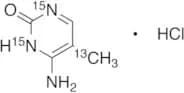
CAS:<p>Applications A labelled derivative of Dibarbituric acid.<br>References Hitchings, G.H., et al.: J. Biol. Chem., 177, 357 (1949),<br></p>Formula:CC4H715N2NO·ClHColor and Shape:NeatMolecular weight:164.57D-Leucyl-L-Tyrosine
CAS:Controlled Product<p>Applications D-LEUCYL-L-TYROSINE (cas# 3303-29-5) is a useful research chemical.<br></p>Formula:C15H22N2O4Color and Shape:NeatMolecular weight:294.35Vinyltris(2-methoxyethoxy)silane
CAS:<p>Applications VINYLTRIS(2-METHOXYETHOXY)SILANE (cas# 1067-53-4) is a useful research chemical.<br></p>Formula:C11H24O6SiColor and Shape:ColourlessMolecular weight:280.392-Hydroxy-2-methylpropanamide
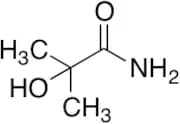
CAS:Controlled Product<p>Applications 2-Hydroxy-2-methylpropanamide (cas# 13027-88-8) is a useful research chemical.<br></p>Formula:C4H9NO2Color and Shape:NeatMolecular weight:103.12


![4-benzoyl-8-methyl-1-oxa-4,8-diazaspiro[4.5]decane-3-carboxylic acid](/_next/image/?url=https%3A%2Fstatic.cymitquimica.com%2Fproducts%2F10%2Fthumb-webp%2FF525614.webp&w=3840&q=75)
![4-(3-phenoxyphenyl)-3H,4H,5H,6H,7H-imidazo[4,5-c]pyridine-6-carboxylic acid](/_next/image/?url=https%3A%2Fstatic.cymitquimica.com%2Fproducts%2F10%2Fthumb-webp%2FF522499.webp&w=3840&q=75)
![8-ethyl-4-(3-fluorobenzoyl)-1-oxa-4,8-diazaspiro[4.5]decane-3-carboxylic acid](/_next/image/?url=https%3A%2Fstatic.cymitquimica.com%2Fproducts%2F10%2Fthumb-webp%2FF525685.webp&w=3840&q=75)
![4-(4-chlorobenzoyl)-8-ethyl-1-oxa-4,8-diazaspiro[4.5]decane-3-carboxylic acid](/_next/image/?url=https%3A%2Fstatic.cymitquimica.com%2Fproducts%2F10%2Fthumb-webp%2FF525671.webp&w=3840&q=75)


![4-(3-methylphenyl)-3H,4H,5H,6H,7H-imidazo[4,5-c]pyridine-6-carboxylic acid](/_next/image/?url=https%3A%2Fstatic.cymitquimica.com%2Fproducts%2F10%2Fthumb-webp%2FF522509.webp&w=3840&q=75)


![4-(4-bromobenzoyl)-8-ethyl-1-oxa-4,8-diazaspiro[4.5]decane-3-carboxylic acid](/_next/image/?url=https%3A%2Fstatic.cymitquimica.com%2Fproducts%2F10%2Fthumb-webp%2FF525691.webp&w=3840&q=75)
AMINO)CYCLOBUTANE-1-CARBOXYLIC ACID](/_next/image/?url=https%3A%2Fstatic.cymitquimica.com%2Fproducts%2F10%2Fthumb-webp%2FF504133.webp&w=3840&q=75)



![4-(2-phenylbutanoyl)-8-propyl-1-oxa-4,8-diazaspiro[4.5]decane-3-carboxylic acid](/_next/image/?url=https%3A%2Fstatic.cymitquimica.com%2Fproducts%2F10%2Fthumb-webp%2FF525728.webp&w=3840&q=75)
![(E)-2-Cyano-3-(4-(4-(2,2-diphenylvinyl)phenyl)-1,2,3,3a,4,8b-hexahydrocyclopenta[b]indol-7-yl)acry…](/_next/image/?url=https%3A%2Fstatic.cymitquimica.com%2Fproducts%2F10%2Fthumb-webp%2FF759999.webp&w=3840&q=75)
![1-[2-Nitro-4-(trifluoromethyl)phenyl]piperidine-4-carboxylic acid](/_next/image/?url=https%3A%2Fstatic.cymitquimica.com%2Fproducts%2F10%2Fthumb-webp%2FF034079.webp&w=3840&q=75)
![3a,4,5,9b-Tetrahydro-3 H -cyclopenta[ c ]quinoline-4-carboxylic acid](/_next/image/?url=https%3A%2Fstatic.cymitquimica.com%2Fproducts%2F10%2Fthumb-webp%2FF028952.webp&w=3840&q=75)
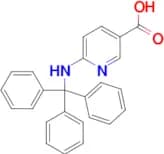

![8-tert-butyl-4-[4-(dimethylamino)benzoyl]-1-oxa-4-azaspiro[4.5]decane-3-carboxylic acid](/_next/image/?url=https%3A%2Fstatic.cymitquimica.com%2Fproducts%2F10%2Fthumb-webp%2FF525783.webp&w=3840&q=75)
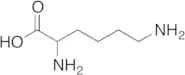
![4-(4-fluorophenyl)-4,5,6,7-tetrahydro-3H-imidazo[4,5-c]pyridine-6-carboxylic acid](/_next/image/?url=https%3A%2Fstatic.cymitquimica.com%2Fproducts%2F10%2Fthumb-webp%2FF427092.webp&w=3840&q=75)
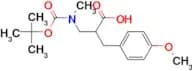


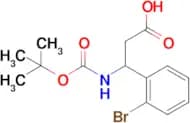
![4-(3-chlorobenzoyl)-8-methyl-1-oxa-4,8-diazaspiro[4.5]decane-3-carboxylic acid](/_next/image/?url=https%3A%2Fstatic.cymitquimica.com%2Fproducts%2F10%2Fthumb-webp%2FF525649.webp&w=3840&q=75)