Amino Acids (AA)
Amino acids (AAs) are the fundamental building blocks of proteins, playing a crucial role in various biological processes. These organic compounds are essential for protein synthesis, metabolic pathways, and cell signaling. In this category, you will find a comprehensive range of amino acids, including essential, non-essential, and modified forms, which are vital for research in biochemistry, molecular biology, and nutritional sciences. At CymitQuimica, we provide high-quality amino acids to support your research and development needs, ensuring accuracy and reliability in your experimental outcomes.
Subcategories of "Amino Acids (AA)"
- Amino Acid Derivatives(3,955 products)
- Amino Acid and Amino Acid Related Compounds(3,461 products)
- Amino Acids with Oxygen or Sulphur(168 products)
- Boc- Amino Acids(351 products)
- Fmoc Amino Acids(1,710 products)
Found 38244 products of "Amino Acids (AA)"
Sort by
Purity (%)
0
100
|
0
|
50
|
90
|
95
|
100
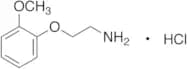
2-(2-Methoxyphenoxy)ethylamine Hydrochloride
CAS:<p>Impurity Carvedilol EP Impurity E; Carvedilol Impurity E; Carvedilol USP E<br>Applications 2-(2-Methoxyphenoxy)ethylamine Hydrochloride (Carvedilol EP Impurity E; Carvedilol Impurity E; Carvedilol USP E) is an impurity of Carvedilol synthesis.<br>References Smith, L., et al.: J. Med. Chem., 20, 1653 (1977),<br></p>Formula:C9H13NO2·ClHColor and Shape:NeatMolecular weight:203.67L-Formiminoglutamic Acid
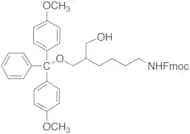
CAS:<p>Stability Hygroscopic<br>Applications L-Formiminoglutamic acid is a useful research chemical. It is used medically in the diagnosis of Cobalt deficiencies in Cattle and sheep.<br>References Marsh, K. B., et al.: New Zeal. J. Agric. Res., 31, 273 (1988); Quirk, M. F., et al.: J. Agric. Sci., 110, 465 (1988); Quirk, M. F., et al.: Aust. J. Agric. Res., 38, 1071 (1987)<br></p>Formula:C6H10N2OColor and Shape:NeatMolecular weight:174.161-O-Dimethoxytrityl-2-(N-Fmoc)-4-Aminobutyl)-1,3-propanediol, >95%
CAS:<p>Stability Very Hygroscopic<br>Applications 1-O-Dimethoxytrityl-2-(N-Fmoc)-4-Aminobutyl)-1,3-propanediol is a useful reagent for the synthesis of acridine and/or lipid containing oligodeoxyribonucleotides.<br>References Marasco, C. J., et al.: Tetra. Lett., 35, 3029 (1994)<br></p>Formula:C43H45NO6Purity:>95%Color and Shape:Off White SolidMolecular weight:671.82N-Benzyloxycarbonyl L-Threonine Amide
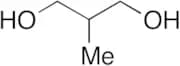
CAS:Controlled Product<p>Applications Threonine derivative used in the synthesis of peptide.<br>References Dekker, C.A., et al.: J. Biol. Chem., 180, 155 (1949),<br></p>Formula:C12H16N2O4Color and Shape:NeatMolecular weight:252.272-Methyl-1,3-propandiol (b-Hydroxyisobutanol)
CAS:Controlled Product<p>Applications β-Hydroxyisobutanol is used as a reagent in the synthesis of pyrazolo[1,5-a]pyridinecarbonyl-substituted spirocyclic piperidine ketals as inhibitors of HCV protein NS4B and of hepatitis C viral replication and their lack of cytotoxicity in human cells.<br>References Tai, V.W.-F., et al.: Bioorg. Med. Chem. Lett., 24, 2288 (2014);<br></p>Formula:C4H10O2Color and Shape:ColourlessMolecular weight:90.121L-Aspartyl-L-phenylalanine Hydrochloride
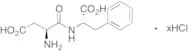
CAS:Controlled Product<p>Applications L-Aspartyl-L-phenylalanine is an impurity of Thiamine (T344185). Thiamine Impurity B.<br>References Aluwihare, L., et al.: Science, 308, 1007 (2005), Koch, B., et al.: Anal. Chem., 79, 1758 (2007), Reemtsma, T., et al.: Environ. Sci. Technol., 42, 1430 (2008),<br></p>Formula:C13H16N2O5xHClColor and Shape:NeatMolecular weight:280.281-Methyl-4-nitro-1H-imidazole-5-carboxylic Acid
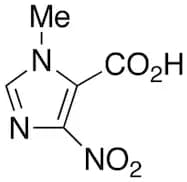
CAS:Controlled Product<p>Applications A derivative of imidazole used in the synthesis of heteroxanthine.<br>References Sarasin, J., et al.: Helv. Chim. Acta, 7, 713 (1924),<br></p>Formula:C5H5N3O4Color and Shape:NeatMolecular weight:171.11N-(Acetyl-d3)-S-benzyl-L-cysteine
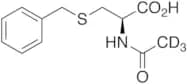
CAS:Controlled Product<p>Applications A labelled metabolite of Toluene.<br>References Gargas, M., et al.: Toxicol. Appl. Pharmacol., 98, 87 (1989), Commandeur, J., et al.: Pharmacol. Rev., 47(2), 271 (1995), Campo, P., et al.: Neurotoxicol. Teratol., 21, 427 (1999), Lohse, C., et al.: J. Agr. Food Chem., 48, 5913 (2000),<br></p>Formula:C122H3H12NO3SColor and Shape:White To Off-WhiteMolecular weight:256.342-(3-Aminophenyl)-quinoline-4-carboxylic acid
CAS:Purity:97%Color and Shape:SolidMolecular weight:264.28399658203125N-Methylaniline
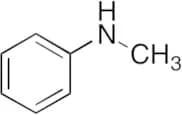
CAS:Controlled Product<p>Applications N-Methylaniline is used as an additive in gasoline because of its antiknock properties.<br> Not a dangerous good if item is equal to or less than 1g/ml and there is less than 100g/ml in the package<br>References Liu, Li-jun, et al.: Huaxue Shiji, 37(1), 53-55, 96 (2015); Qin, Li-xia, et al.: Guangzhou Huagong, 43(8), 138-139, 148 (2015);<br></p>Formula:C7H9NColor and Shape:NeatMolecular weight:107.15N6-{[(2-Phenylethyl)amino]carbonothioyl}lysine (PEITC-Lys)
CAS:Controlled ProductFormula:C15H23N3O2SColor and Shape:NeatMolecular weight:309.43[2-(1-Methyl-1H-pyrazol-3-yl)-1H-benzimidazol-1-yl]acetic Acid
CAS:Controlled Product<p>Applications [2-(1-methyl-1H-pyrazol-3-yl)-1H-benzimidazol-1-yl]acetic acid (cas# 1171565-50-6) is a useful research chemical.<br></p>Formula:C13H12N4O2Color and Shape:NeatMolecular weight:256.26N-des(4-Chlorobenzoyl) Rebamipide
CAS:Formula:C12H13ClN2O3Color and Shape:White To Off-WhiteMolecular weight:268.7D-Cysteine Hydrochloride Monohydrate
CAS:Controlled Product<p>Applications D-Cysteine Hydrochloride Monohydrate is used as a reactant in the expedient synthesis of electronically modified luciferins for bioluminescence imaging.<br>References McCutcheon, D., et al.: J. Am. Chem. Soc., 134, 7604 (2012);<br></p>Formula:C3H7NO2S·HCl·H2OColor and Shape:NeatMolecular weight:121.16+(36.46)+(18.02)2,2-Dimethoxy-N-methylethanamine
CAS:<p>Applications 2,2-Dimethoxy-N-methylethanamine is an impurity formed in the synthetic process of Methimazole (M260300), a thiourea antithyroid agent that prevents iodine organification,<br> Not a dangerous good if item is equal to or less than 1g/ml and there is less than 100g/ml in the package<br>References Sitar, D.S., et al.: J. Pharmacol. Exp. Ther., 184, 432 (1973), Aboul-Enein, H.Y., et al.: Anal. Profiles Drug Subs., 8, 351 (1979), Cooper, D.S., et al.: N. Engl. J. Med., 311, 1353 (1984), Atterwill, C.K., et al.: Food Chem. Toxicol., 29, 355 (1991),<br></p>Formula:C5H13NO2Color and Shape:NeatMolecular weight:119.16N-Pivaloyl-L-tyrosine
CAS:Controlled Product<p>Stability Hygroscopic<br>Applications Used in peptide N-terminal amino acid determination.<br>References Prota, G., et al.: Biochimie, 53, 51 (1971),<br></p>Formula:C14H19NO4Color and Shape:NeatMolecular weight:265.38-Nitroguanine
CAS:Controlled Product<p>Applications 8-Nitroguanine as a potential biomarker for progression of malignant fibrous histiocytoma, a model of inflammation-related cancer.<br>References Surh, Y., et al.: Mutat. Res., 480, 243 (2001), Balkwill, F., et al.: Lancet, 357, 539 (2001), Kawanishi, S., et al.: Biol. Chem., 387, 365 (2006), Hoki, Y., et al.: Cancer Sci., 98, 163 (2007),<br></p>Formula:C5H4N6O3Color and Shape:NeatMolecular weight:196.122-Methoxyacetic Acid-d3
CAS:Controlled Product<p>Applications: Isotope labelled analogue of 2-Methoxyacetic Acid, a synthetic intermediate in the synthesis of dimethyl(alkyloxy)[(methylsulfonyl)phenyl]furanones as COX-2 inhibitors.<br>Dangerous Goods Info: Not a dangerous good if item is equal to or less than 1g/ml and there is less than 100g/ml in the package<br>References Leblanc, Y., et al.: Bioorg. Med. Chem. Lett., 9, 2207 (1999);<br></p>Formula:C32H3H3O3Color and Shape:NeatMolecular weight:93.108-methyl-4-(pyridine-4-carbonyl)-1-oxa-4,8-diazaspiro[4.5]decane-3-carboxylic acid
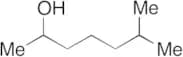
CAS:Purity:95.0%Molecular weight:305.33401489257816-Methyl-2-heptanol
CAS:Controlled Product<p>Applications 6-Methyl-2-heptanol is an intermediate used to prepare tri- and tetrasubstituted imidazoles as highly potent and specific ATP-mimetic inhibitors of p38 MAP kinase.<br>References Laufer, S., et al.: J. Med. Chem., 51, 4122 (2008)<br></p>Formula:C8H18OColor and Shape:NeatMolecular weight:130.23a-Methacrylic Acid
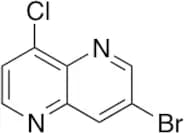
CAS:Controlled Product<p>Stability Light Sensitive<br>Applications α-Methacrylic acid is used in chemistry as a stabilizing agent, forming a thin capping layer on the surface of nanoparticles. α-Methacrylic acid is also used as a surfactant, so that control is maintained during nanocrystal growth. α-Methacrylic acid is also used as a chelating agent.<br> Not a dangerous good if item is equal to or less than 1g/ml and there is less than 100g/ml in the package<br>References Peng, W., et al.: J. Cryst. Growth, 279, 454 (2005); Qu, S., et al.: Appl. Phys. Lett., 80, 3605 (2002); Zhao, G., et al.: Phys. C: Supercond., 468, 2317 (2008)<br></p>Formula:C4H6O2Color and Shape:ColourlessMolecular weight:86.093-Bromo-8-chloro-1,5-naphthyridine
CAS:Controlled ProductFormula:C8H4BrClN2Color and Shape:NeatMolecular weight:243.4884-(2,4-dichlorobenzoyl)-8-methyl-1-oxa-4,8-diazaspiro[4.5]decane-3-carboxylic acid
CAS:Purity:95.0%Molecular weight:373.2300109863281Ethyl trans-3-Methyl-4-oxocrotonate
CAS:Controlled Product<p>Applications Derivative of monoenoic and trienoic analogs of Sorbic Acid with antifungal activity.<br>References Guerin, J. et al.: Annales Pharmaceutiques Francaises 44, 373 (1987)<br></p>Formula:C7H10O3Color and Shape:NeatMolecular weight:142.158-benzyl-4-(pyridine-3-carbonyl)-1-oxa-4,8-diazaspiro[4.5]decane-3-carboxylic acid
CAS:Purity:95.0%Molecular weight:381.43200683593754-Methoxyphenylacetic Acid
CAS:Controlled Product<p>Applications 4-Methoxyphenylacetic Acid is a compound that was found from microbial phenolic metabolites in human feces after the consumption of gin, red wine and dealcholized red wine.<br>References Jimenez-Giron, A., et. al.: J. Arg. Food Chem., 61, 3909 (2013);<br></p>Formula:C9H10O3Color and Shape:NeatMolecular weight:166.174-[2-(4-chlorophenyl)acetyl]-8-propyl-1-oxa-4,8-diazaspiro[4.5]decane-3-carboxylic acid
CAS:Purity:95.0%Molecular weight:380.86999511718753-Hydroxy-4-methylaniline
CAS:Controlled Product<p>Applications 3-Hydroxy-4-methylaniline<br></p>Formula:C7H9NOColor and Shape:NeatMolecular weight:123.152-Azido-2-deoxy-D-glucose
CAS:<p>Applications 2-Azido-2-deoxy-D-glucose is a glucose derivative that have been used to study the substrate specificity of galactokinase.<br>References Zou, W., et al.: Bioorg. Med. Chem. Lett., 22, 3540 (2012);<br></p>Formula:C6H11N3O5Color and Shape:White PowderMolecular weight:205.174-{[4-(dimethylamino)phenyl]methylidene}-1,2,3,4-tetrahydroacridine-9-carboxylic acid
CAS:Purity:95%Molecular weight:358.4411-[2-Nitro-4-(trifluoromethyl)phenyl]piperidine-4-carboxylic acid
CAS:Molecular weight:318.252014160156256-[(E)-4-Hydroxy-3-methylbut-2-enylamino]-9-β-D-ribofuranosylpurine
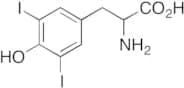
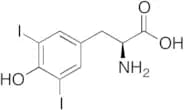
CAS:Controlled Product<p>Applications A well-known, highly active stimulant of cell divisions in plant tissue cultures.<br>References D.S. Letham: Phytochemistry, 12, 2445 (1973)<br></p>Formula:C15H21N5O5Color and Shape:NeatMolecular weight:351.363,5-Diiodo-DL-tyrosine
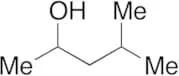
CAS:Controlled Product<p>Applications 3,5-Diiodo-DL-tyrosine is used for diagnosis of hypothyroidism caused by DEHAL1 gene defects.<br>References Encinas, S., et al.: Chem. Res. Toxicol., 11, 946 (1998), Daneshvar, A., et al.: Chemosphere, 80, 301 (2010), Eriksson, J., et al.: Photochem. Photobiol., 86, 528 (2010),<br></p>Formula:C9H9I2NO3Color and Shape:NeatMolecular weight:432.984-Methyl-2-pentanol
CAS:<p>Applications 4-Methyl-2-pentanol is used in the synthesis of 4-quinolone derivatives as high-affinity ligands for the brain GABAA receptors. Also used in the preparation of antimycotic imadazoles, as antifungals.<br> Not a dangerous good if item is equal to or less than 1g/ml and there is less than 100g/ml in the package<br>References Lager, E. et al.: J. Med. Chem., 49, 2526 (2006); Heeres, J. et al.: J. Med. Chem., 22, 1003 (1979);<br></p>Formula:C6H14OColor and Shape:Clear ColourlessMolecular weight:102.173-Chloro-6,11-dihydro-5,5-dioxo-11-hydroxy-6-methyldibenzo[c,f][1,2]thiazepine
CAS:Controlled Product<p>Applications 3-Chloro-6,11-dihydro-5,5-dioxo-11-hydroxy-6-methyldibenzo[c,f][1,2]thiazepine, can beused in the synthesis of Dibenzo[c,f][1,2]thiazepine derivatives.<br>References Gilleron, P., et al.: Bioorg. Med. Chem. Lett., 17, 5465 (2007),<br></p>Formula:C14H12ClNO3SColor and Shape:NeatMolecular weight:309.773-([(TERT-BUTOXY)CARBONYL](METHYL)AMINO)CYCLOBUTANE-1-CARBOXYLIC ACID
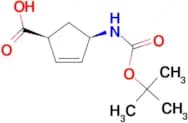
CAS:Purity:95.0%Molecular weight:229.2760009765625(1S,4R)-4-Boc-aminocyclopent-2-enecarboxylic acid
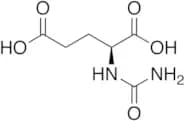
CAS:Purity:95.0%Color and Shape:SolidMolecular weight:227.25999450683594N-Carbamyl-L-glutamic Acid
CAS:Controlled Product<p>Applications N-Carbamyl-L-glutamic Acid has been shown to have protective effects against ammonia intoxication and is used in the treatment of acute hyperammonemia.<br>References Paik, W.K. et al.: Life Sci., 15, 1189 (1974); O'Connor, J.E. et al.: Eur. J. Pediat., 148, 540 (1989); Lee, J.H. et al.: Biochem. Biophys. Res. Chem., 248, 391 (1998);<br></p>Formula:C6H10N2O5Color and Shape:NeatMolecular weight:190.156-Phenyl-5,6,6a,7,8,9,10,10a-octahydro-7,10-methanophenanthridine-2-carboxylic acid
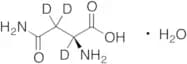
CAS:Purity:98%Molecular weight:319.40399169921875L-Asparagine-d3 Hydrate
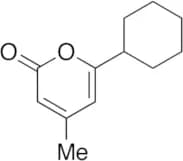
CAS:Controlled Product<p>Applications L-Asparagine-d3 Hydrate is an isotope labelled L-Asparagine Hydrate, a naturally occurring amino acid that is not a essential for humans and can be synthesized from central metabolic pathway intermediates.<br>References Burda, P., et al.: Biochim. Biophys. Acta., 1426, 239 (1999); Yamane, H., et al.: Animal. Sci. J., 80, 286 (2009);<br></p>Formula:C4D3H5N2O3·H2OColor and Shape:White To Off-WhiteMolecular weight:153.15176-Cyclohexyl-4-methyl-2H-pyran-2-one
CAS:Controlled Product<p>Impurity Ciclopirox EP Impurity B/ USP Ciclopirox Related Compound B<br>Applications 6-Cyclohexyl-4-methyl-2H-pyran-2-one (Ciclopirox EP Impurity B) is a a dialkylated pyranone derivative.<br></p>Formula:C12H16O2Color and Shape:NeatMolecular weight:192.251-[1-(2-methoxyethyl)piperidin-3-yl]methanamine
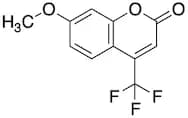
CAS:Controlled Product<p>Applications 1-[1-(2-methoxyethyl)piperidin-3-yl]methanamine (cas# 936940-49-7) is a useful research chemical.<br></p>Formula:C9H20N2OColor and Shape:NeatMolecular weight:172.2687-Methoxy-4-(trifluoromethyl)coumarin
CAS:Controlled Product<p>Applications 7-Methoxy-4-(trifluoromethyl)coumarin is a biochemical for proteomics research.<br></p>Formula:C8H8BrN3Color and Shape:White To Off-WhiteMolecular weight:226.073






![N6-{[(2-Phenylethyl)amino]carbonothioyl}lysine (PEITC-Lys)](/_next/image/?url=https%3A%2Fstatic.cymitquimica.com%2Fproducts%2FTR%2Fthumb-webp%2FP335918.webp&w=3840&q=75)
![[2-(1-Methyl-1H-pyrazol-3-yl)-1H-benzimidazol-1-yl]acetic Acid](/_next/image/?url=https%3A%2Fstatic.cymitquimica.com%2Fproducts%2FTR%2Fthumb-webp%2FM322388.webp&w=3840&q=75)
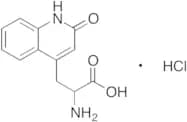
acetic acid](/_next/image/?url=https%3A%2Fstatic.cymitquimica.com%2Fproducts%2F10%2Fthumb-webp%2FF300210.webp&w=3840&q=75)
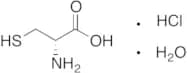

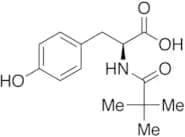

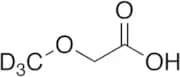
![8-methyl-4-(pyridine-4-carbonyl)-1-oxa-4,8-diazaspiro[4.5]decane-3-carboxylic acid](/_next/image/?url=https%3A%2Fstatic.cymitquimica.com%2Fproducts%2F10%2Fthumb-webp%2FF525650.webp&w=3840&q=75)

![4-(2,4-dichlorobenzoyl)-8-methyl-1-oxa-4,8-diazaspiro[4.5]decane-3-carboxylic acid](/_next/image/?url=https%3A%2Fstatic.cymitquimica.com%2Fproducts%2F10%2Fthumb-webp%2FF525618.webp&w=3840&q=75)

![8-benzyl-4-(pyridine-3-carbonyl)-1-oxa-4,8-diazaspiro[4.5]decane-3-carboxylic acid](/_next/image/?url=https%3A%2Fstatic.cymitquimica.com%2Fproducts%2F10%2Fthumb-webp%2FF525809.webp&w=3840&q=75)

![4-[2-(4-chlorophenyl)acetyl]-8-propyl-1-oxa-4,8-diazaspiro[4.5]decane-3-carboxylic acid](/_next/image/?url=https%3A%2Fstatic.cymitquimica.com%2Fproducts%2F10%2Fthumb-webp%2FF525746.webp&w=3840&q=75)


![4-{[4-(dimethylamino)phenyl]methylidene}-1,2,3,4-tetrahydroacridine-9-carboxylic acid](/_next/image/?url=https%3A%2Fstatic.cymitquimica.com%2Fproducts%2F10%2Fthumb-webp%2FF985969.webp&w=3840&q=75)
![1-[2-Nitro-4-(trifluoromethyl)phenyl]piperidine-4-carboxylic acid](/_next/image/?url=https%3A%2Fstatic.cymitquimica.com%2Fproducts%2F10%2Fthumb-webp%2FF034079.webp&w=3840&q=75)
![6-[(E)-4-Hydroxy-3-methylbut-2-enylamino]-9-β-D-ribofuranosylpurine](/_next/image/?url=https%3A%2Fstatic.cymitquimica.com%2Fproducts%2FTR%2Fthumb-webp%2FH946500.webp&w=3840&q=75)
![3-Chloro-6,11-dihydro-5,5-dioxo-11-hydroxy-6-methyldibenzo[c,f][1,2]thiazepine](/_next/image/?url=https%3A%2Fstatic.cymitquimica.com%2Fproducts%2FTR%2Fthumb-webp%2FC374795.webp&w=3840&q=75)
AMINO)CYCLOBUTANE-1-CARBOXYLIC ACID](/_next/image/?url=https%3A%2Fstatic.cymitquimica.com%2Fproducts%2F10%2Fthumb-webp%2FF504133.webp&w=3840&q=75)




![1-[1-(2-methoxyethyl)piperidin-3-yl]methanamine](/_next/image/?url=https%3A%2Fstatic.cymitquimica.com%2Fproducts%2FTR%2Fthumb-webp%2FM139405.webp&w=3840&q=75)