Amino Acids (AA)
Amino acids (AAs) are the fundamental building blocks of proteins, playing a crucial role in various biological processes. These organic compounds are essential for protein synthesis, metabolic pathways, and cell signaling. In this category, you will find a comprehensive range of amino acids, including essential, non-essential, and modified forms, which are vital for research in biochemistry, molecular biology, and nutritional sciences. At CymitQuimica, we provide high-quality amino acids to support your research and development needs, ensuring accuracy and reliability in your experimental outcomes.
Subcategories of "Amino Acids (AA)"
- Amino Acid Derivatives(3,955 products)
- Amino Acid and Amino Acid Related Compounds(3,436 products)
- Amino Acids with Oxygen or Sulphur(168 products)
- Boc- Amino Acids(351 products)
- Fmoc Amino Acids(1,710 products)
Found 38216 products of "Amino Acids (AA)"
Sort by
Purity (%)
0
100
|
0
|
50
|
90
|
95
|
100
1-O-Dimethoxytrityl-2-(N-Fmoc)-4-Aminobutyl)-1,3-propanediol, >95%
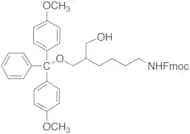
CAS:<p>Stability Very Hygroscopic<br>Applications 1-O-Dimethoxytrityl-2-(N-Fmoc)-4-Aminobutyl)-1,3-propanediol is a useful reagent for the synthesis of acridine and/or lipid containing oligodeoxyribonucleotides.<br>References Marasco, C. J., et al.: Tetra. Lett., 35, 3029 (1994)<br></p>Formula:C43H45NO6Purity:>95%Color and Shape:Off White SolidMolecular weight:671.82Boc-(S)-3-Amino-4-(2,4,5-trifluorophenyl)butyric Acid
CAS:Controlled Product<p>Applications Boc-(S)-3-Amino-4-(2,4,5-trifluorophenyl)butyric Acid is a reactant used in the preparation of peptidase IV inhibitors.<br>References Park, W. et al.: Bioorg. Med. Chem. Lett., 21, 1366 (2011);<br></p>Formula:C15H18F3NO4Color and Shape:NeatMolecular weight:333.32-Methoxytetrahydrofuran
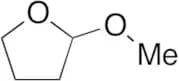
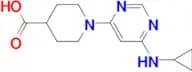
CAS:Controlled Product<p>Applications 2-Methoxytetrahydrofuran is a reactant in the preparation of ruthenium(III) chloro benzimidazolylmethylamine derivative complexes as oxidation catalysts.<br>References Murali, M., et. al.: Eur. J. Inorg. Chem., 22, 3238 (2009)<br></p>Formula:C5H10O2Color and Shape:NeatMolecular weight:102.131-(6-Cyclopropylamino-pyrimidin-4-yl)-piperidine-4-carboxylic acid
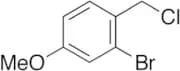
CAS:Purity:95.0%Molecular weight:262.312988281252-Bromo-4-methoxybenzyl Chloride 75% (+ regioisomers)
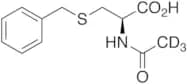
CAS:Controlled Product<p>Applications This compound contains up to 25% of the two other regioisiomers.<br></p>Formula:C8H8BrClOColor and Shape:NeatMolecular weight:235.51N-(Acetyl-d3)-S-benzyl-L-cysteine
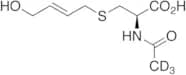
CAS:Controlled Product<p>Applications A labelled metabolite of Toluene.<br>References Gargas, M., et al.: Toxicol. Appl. Pharmacol., 98, 87 (1989), Commandeur, J., et al.: Pharmacol. Rev., 47(2), 271 (1995), Campo, P., et al.: Neurotoxicol. Teratol., 21, 427 (1999), Lohse, C., et al.: J. Agr. Food Chem., 48, 5913 (2000),<br></p>Formula:C122H3H12NO3SColor and Shape:White To Off-WhiteMolecular weight:256.34N-Acetyl-S-(4-hydroxy-2-buten-1-yl)-L-cysteine-d3
CAS:Controlled Product<p>Stability Hygroscopic<br>Applications A novel labelled metabolite of Butadiene monoepoxide (BMO), a mutagen and carcinogen compound.<br>References Cheng, X., et al.: Drug Metab. Dispos., 21, 121 (1993), Nieusma, J., et al.: Chem. Res. Toxicol., 10, 450 (1997),<br></p>Formula:C9D3H12NO4SColor and Shape:NeatMolecular weight:236.3032N-(Azetidin-3-yl)-N-methylacetamide Hydrochloride
CAS:Controlled Product<p>Applications N-(Azetidin-3-yl)-N-methylacetamide Hydrochloride (cas# 935668-15-8) is a useful research chemical.<br></p>Formula:C6H12N2O·HClColor and Shape:GreyMolecular weight:164.6332-Mercapto-4-methyl-5-thiazoleacetic Acid
CAS:Controlled Product<p>Applications 2-Mercapto-4-methyl-5-thiazoleacetic Acid is used as a reagent for determination of hydroxylamine using fused gold nanoparticles immobilized on sol-gel film modified gold electrode.<br> Not a dangerous good if item is equal to or less than 1g/ml and there is less than 100g/ml in the package<br>References Kannan, P., John, A.: Anal. Chim. Acta, 663, 158 (2010);<br></p>Formula:C6H7NO2S2Color and Shape:NeatMolecular weight:189.26D-Tryptophan-d5
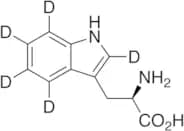
CAS:Controlled Product<p>Applications Labelled analogue of an essential amino acid found in naturally produced peptides. Unlike its stereoisomer, L-tryptophan, it is not used in structural or enzyme proteins.<br>References Karunakaran, S.et al.: Bochem. J., 414, 343 (2008); Pallaghy, P.K. et al.: Biochem., 38, 11553 (1999);<br></p>Formula:C112H5H7N2O2Color and Shape:NeatMolecular weight:209.264,4'-Methylenebis(2,6-dimethylphenol)
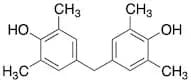
CAS:Controlled Product<p>Applications 4,4'-Methylenebis(2,6-dimethylphenol) is used in thermosetting resin composition for the industrial manufacture of metal-clad laminates and printed circuit boards.<br> Not a dangerous good if item is equal to or less than 1g/ml and there is less than 100g/ml in the package<br>References You, J., et al.: Faming Zhuanli Shenqing. 19 pp. (2019)<br></p>Formula:C17H20O2Color and Shape:ColourlessMolecular weight:256.34Seleno-D,L-ethionine
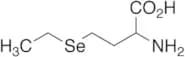
CAS:Controlled Product<p>Stability Hygroscopic<br>Applications Used as a substrate for methionine adenosyltransferase from rat liver.<br> Not a dangerous good if item is equal to or less than 1g/ml and there is less than 100g/ml in the package<br>References Lombardini, J.B., et al.: Biochem. Pharmacol., 32(3), 489 (1983), Kajander, E., et al.: Cancer Res., 46 (6), 2866 (1986), Kajander, E., et al.: Biochem. J., 267 (3), 767 (1990)<br></p>Formula:C6H13NO2SeColor and Shape:Off-White To Light BeigeMolecular weight:210.134-(2-chlorobenzoyl)-8-methyl-1-oxa-4,8-diazaspiro[4.5]decane-3-carboxylic acid
CAS:Purity:95.0%Molecular weight:338.79000854492193-Methyl-d3-indole
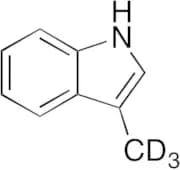
CAS:Controlled Product<p>Applications 3-Methyl-d3-indole has been used to prove that bioactivation of the pulmonary toxin 3-methylindole requires methyl carbon-hydrogen bond breakage in mice. 3-Methyl-d3-indole is the labeled analogue of 3-Methylindole (M313470), A naturally abundant pneumotoxin, found primarily in mammalian feces providing its strong fecal odor.<br> Not a dangerous good if item is equal to or less than 1g/ml and there is less than 100g/ml in the package<br>References Huijzer, J., et. al.: Toxicol. Appl. Pharm., 90, 60 (1987); Nakashima, T., et al.: Biol. Pharm. Bull., 32, 832 (2009); Xu, H., et al.: Chem. Pharm. Bull., 57, 321 (2009); Bodoor, K., et al.: J. Med. Chem., 52, 3753 (2009); Naskar, S., et al.: J. Chem. Res., 3, 174 (2009); Sollner, K., et al.: J. Agric. Food Chem., 57, 4319 (2009)<br></p>Formula:C92H3H6NColor and Shape:NeatMolecular weight:134.19DL-Cysteine
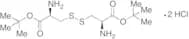
CAS:Controlled Product<p>Stability Hygroscopic<br>Applications Cysteine is a non-essential amino acid that can be synthesized by the human body under normal physiological conditions if a sufficient quantity of methionine is available. Cysteine is commonly used as a precursor in the food and pharmaceutical industries. Cysteine is used as a processing aid for baking, as an additive in cigarettes, as well as in the preparation of meat flavours.<br>References Hui, N. et al.: Meat Sci. Appl., 74 (2001); Kiviharju, K. et al.: J. Biotechnol., 117, 299 (2005); Pecivova, P. et al.: J. Sci. Food Agric., 90, 1681 (2010);<br></p>Formula:C3H7NO2SColor and Shape:NeatMolecular weight:121.16L-Cystine Bis(T-butyl Ester) Dihydrochloride
CAS:Controlled Product<p>Applications L-Cystine Bis(T-butyl Ester) Dihydrochloride is used as a reagent in the synthesis of chelate oxorhenium to create new integrin antagonists.<br>References Le Gal, J., et al.: J. Inorg. Biochem., 105, 880 (2011);<br></p>Formula:C14H28N2O4S2Color and Shape:NeatMolecular weight:352.513(3-Glycidoxypropyl)triethoxysilane
CAS:Controlled Product<p>Applications (3-Glycidoxypropyl)triethoxysilane is used in the fabric industry to treat and modify fabrics.<br>References Schramm, Christian, et al.: Coloration Tech., 133(3), 234-242 (2017);Grancaric, Ana Marija, et al.: Pro. in Org. Coatings, 103, 174-181 (2017); Yeo, Jun-Seok, et al.: J. of Ind. and Eng. Chem., 45, 301-306 (2017)<br></p>Formula:C12H26O5SiColor and Shape:NeatMolecular weight:278.428-benzyl-4-(2-methylpropanoyl)-1-oxa-4,8-diazaspiro[4.5]decane-3-carboxylic acid
CAS:Purity:95.0%Molecular weight:346.427001953125(4-Hydroxyphenyl)glycine
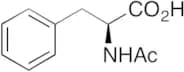
CAS:<p>Applications (4-Hydroxyphenyl)glycine, is a key intermediate for the synthesis Cefpiramide (C243400), used as a β-lactam antibiotic.<br>References Xiao, R. Q., et al.: Guangzhou Huagong, 41, 111 (2013);<br></p>Formula:C8H9NO3Color and Shape:Off White PowderMolecular weight:167.162N-Acetyl-L-phenylalanine
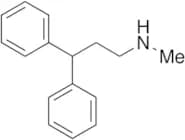
CAS:Controlled Product<p>Applications N-Acetyl-L-phenylalanine is an protected analogue of L-Phenylalanine (P319415), an essential amino acid produced for medical, feed, and nutritional applications such as in the preparation of Aspartame.<br>References Sriram, S., et al.: J. Med. Chem., 56, 2540 (2013); Parker, B.M., et al.: J. Biotech., 155, 396 (2011);<br></p>Formula:C11H13NO3Color and Shape:NeatMolecular weight:207.23N-Methyl-3,3-diphenylpropylamine
CAS:<p>Applications N-Methyl-3,3-diphenylpropylamine is an intermediate for the synthesis of SNRI-NMDA antagonist and neuroprotectants.<br>References Olney, J. et al.: Sci., 244, 1360 (1989); Williams, W., et al.: Mol. Pharmacol. 44, 851 (1993);<br></p>Formula:C16H19NColor and Shape:NeatMolecular weight:225.338-benzyl-4-(pyridine-4-carbonyl)-1-oxa-4,8-diazaspiro[4.5]decane-3-carboxylic acid
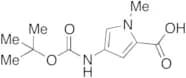
CAS:Purity:95.0%Molecular weight:381.43200683593754-(Boc-amino)-1-methylpyrrole-2-carboxylic Acid
CAS:Controlled Product<p>Applications 4-(Boc-amino)-1-methylpyrrole-2-carboxylic Acid is an unnatural amino acid for preparing heteroaromatic oligoamides for regulating gen expression in biotechnology.<br>References Baird, E., et al.: J. Am. Chem. Soc., 118, 6141 (1996); White, S., et al.: Nature, 391, 468 (1998)<br></p>Formula:C11H16N2O4Color and Shape:NeatMolecular weight:240.256Methyl 4-Methoxybenzoate
CAS:<p>Applications Methyl 4-Methoxybenzoate is also used in the synthesis of oxadiazole-based, GSK-3 inhibitors. Methyl 4-Methoxybenzoate is used in the synthesis of substituted hydrazides for their antitubercular properties.<br>References Lo Monte, F. et al.: Eur.J. Med. Chem., 61, 26 (2013); Gupta, R. et al.: Asian J. Pharm. Clin. Res., 5, 251 (2012);<br></p>Formula:C9H10O3Color and Shape:WhiteMolecular weight:166.17D-Lysine hydrochloride
CAS:Controlled Product<p>Applications D-Lysine, HCl<br></p>Formula:C6H14N2O2·ClHColor and Shape:NeatMolecular weight:182.6494-benzoyl-8-ethyl-1-oxa-4,8-diazaspiro[4.5]decane-3-carboxylic acid
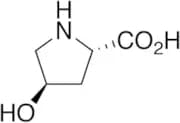
CAS:Purity:95.0%Molecular weight:318.37298583984375trans-4-Hydroxy-L-proline
CAS:Controlled Product<p>Applications A natural constituent of animal structural proteins such as collagen and elastin. Several microorganisms producing proline trans-4- and cis-3-hydroxylase were discovered and these enzymes were applied to the industrial production of trans-4- and cis-3-hydroxy-L-proline.<br>References Langmaier, F. et al.: Int. J. Cosm. Sci., 24, 273 (2002); Lawrence, C., et al.: Biochem. J., 313, 185 (1996); Mori, H., et al.: J. Bacteriol.; 179, 5677 (1997); Clifton, I., et al.: Eur. J. Biochem., 268, 6625 (2001);<br></p>Formula:C5H9NO3Color and Shape:NeatMolecular weight:131.132-(3-Aminophenyl)-quinoline-4-carboxylic acid
CAS:Purity:97%Color and Shape:SolidMolecular weight:264.283996582031254-(4-ethylphenyl)-3H,4H,5H,6H,7H-imidazo[4,5-c]pyridine-6-carboxylic acid
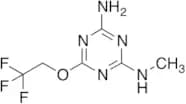
CAS:Purity:95.0%Molecular weight:271.32000732421875N-Methyl-6-(2,2,2-trifluoroethoxy)-1,3,5-triazine-2,4-diamine
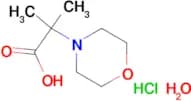
CAS:Controlled Product<p>Applications N-methyl-6-(2,2,2-trifluoroethoxy)-1,3,5-triazine-2,4-diamine (cas# 101988-70-9) is a useful research chemical.<br></p>Formula:C6H8F3N5OColor and Shape:White To Off-WhiteMolecular weight:223.162-methyl-2-(4-morpholinyl)propanoic acid hydrochloride hydrate
CAS:Purity:95.0%Color and Shape:SolidMolecular weight:227.690002441406252-Methylbutyrylglycine-d9
CAS:Controlled Product<p>Applications Labelled 2-Methylbutyrylglycine (M294340). 2-Methylbutyrylglycine is one of the acylglycines, an important class of metabolites that have been used in the diagnosis of several inborn errors of metabolism (IEM).<br>References Costa, C., et al.: J. Pharmaceut. Biomed. Anal., 21, 1215 (2000), Garcia-Villoria, J., et al.: Clin. Biochem., 42, 2 (2009), Scalbert, A., et al.: Metabolomics, 5, 435 (2009),<br></p>Formula:C72H9H4NO3Color and Shape:Off-WhiteMolecular weight:168.242-Methoxypropene
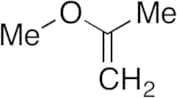
CAS:Controlled Product<p>Applications 2-Methoxypropene is used in the synthesis of Macrolactin A, a 24-member macrolide typically employed as an antibiotic. Also used in the synthesis of phenylalanine derivatives used as α4β1 and α4β7 receptor antagonists in the treatment of allergic asthma.<br>References Marino, K. et al.: J. Am. Chem. Soc., 12, 1664, (2002); Tilley, J. et al.: Bioorg. Med. Chem. Lett., 23, 1036 (2013);<br></p>Formula:C4H8OColor and Shape:NeatMolecular weight:72.112-(4-Fluorophenyl)-2-[4-(4-fluorophenyl)piperazin-1-yl]acetic acid
CAS:Molecular weight:332.351013183593758-ethyl-4-(4-fluorobenzoyl)-1-oxa-4,8-diazaspiro[4.5]decane-3-carboxylic acid
CAS:Purity:95.0%Molecular weight:336.36300659179694-(2-phenylacetyl)-8-propyl-1-oxa-4,8-diazaspiro[4.5]decane-3-carboxylic acid
CAS:Purity:95.0%Molecular weight:346.427001953125N-Methyl-N-nitroso-1-hexadecylamine
CAS:<p>Applications N-Methyl-N-nitroso-1-hexadecanamine is a compound found in a wide range of cosmetic products and cleaning emulsions.<br> Not a dangerous good if item is equal to or less than 1g/ml and there is less than 100g/ml in the package<br>References Kamp, E.. et al.: Food. Chem. Toxicol., 29, 203 (1991); Lalljie, S. P. D., et al.: Adv. Mass. Spec., 14, 33790 (1998); Abidi, S.L., et al.: J. Chroma., 324, 209 (1985);<br></p>Formula:C17H36N2OColor and Shape:White To Light YellowMolecular weight:284.48Ferrous Bisglycinate
CAS:Controlled Product<p>Stability Hygroscopic<br>Applications Ferrous Bisglycinate is used in the fortification of infant formulations and foods.<br>References Fox, T. et al.: Am. J. Clin. Nutri., 67, 664 (1998); Heath, A. et al.: J. Am. Coll. Nutr., 20, 477 (2001);<br></p>Formula:C2H4NO2·FeColor and Shape:NeatMolecular weight:203.966-Dodecanoate-1,4-anhydro-D-glucitol
CAS:Controlled ProductFormula:C18H34O6Color and Shape:NeatMolecular weight:346.459Fmoc N-Hydroxysuccinimide Ester
CAS:<p>Stability Moisture Sensitive<br>Applications Used in conjunction with Isothiocyanate to conduct partial Edman Degradation on biologically active peptides.<br> Not a dangerous good if item is equal to or less than 1g/ml and there is less than 100g/ml in the package<br>References Heidenreich, O., et al.: J. Biol. Chem., 269, 2131 (1994), Kothe, U., et al.: Anal. Biochem., 356, 148 (2006), Thakkar, A., et al.: Anal. Chem., 78, 5935 (2006),<br></p>Formula:C19H15NO5Color and Shape:NeatMolecular weight:337.334,4'-Methylenebis[2-chlorophenol]
CAS:Controlled Product<p>Applications 4,4'-Methylenebis[2-chlorophenol] is used in the manufacture of fire-resistant polyester material and is used in the synthesis of photo-sensitive print plates.<br> Not a dangerous good if item is equal to or less than 1g/ml and there is less than 100g/ml in the package<br>References Yu, S. et al.: Faming Zhuanli Shenqing (2009), CN 101597219 A 20091209.<br></p>Formula:C13H10Cl2O2Color and Shape:NeatMolecular weight:269.12N-Methyl-L-alanine
CAS:Controlled Product<p>Applications N-Methyl-L-alanine is a reactant used in the preparation of site-specific trastuzumab maytansinoid antibody-drug conjugates with improved therapeutic activity.<br>References Pillow, T.H., et. al.: J. Med. Chem., 57, 7890 (2014)<br></p>Formula:C4H9NO2Color and Shape:NeatMolecular weight:103.122-Chloro-2-methylpropane-d9
CAS:Controlled Product<p>Applications Isotope labelled 2-Chloro-2-methylpropane is a starting molecule to carry out nucleophilic substitution reactions.<br>References Eyet, N., et al.: J. Phy. Chem. A., 117, 1136 (2013); Eyet, N., et al.: J. Am. Mass. Spec., 18, 1046 (2007);<br></p>Formula:C4D9ClColor and Shape:NeatMolecular weight:101.62rac (8-Hydroxyquinolin-3-yl)alanine Dihydrochloride
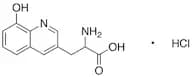
CAS:Controlled Product<p>Stability Hygroscopic<br>Applications Genetic incorporation of a metal-ion chelating amino acid into proteins as a biophysical probe.<br>References McRee, D., et al.: J. Struct. Biol., 125, 156 (1999), Wang, L., et al.: Science, 292, 498 (2001), Ioerger, T., et al.: Methods Enzymol., 374, 244 (2003),<br></p>Formula:C12H12N2O3·2ClHColor and Shape:NeatMolecular weight:305.16(3,5-Di-tert-butyl-4-methoxyphenyl)boronic Acid
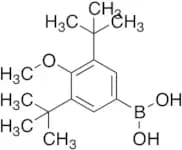
CAS:Controlled Product<p>Applications: (3,5-Di-tert-butyl-4-methoxyphenyl)boronic acid (cas# 233584-42-4) is a useful research chemical.<br></p>Formula:C15H25BO3Color and Shape:NeatMolecular weight:264.168






![4-(2-chlorobenzoyl)-8-methyl-1-oxa-4,8-diazaspiro[4.5]decane-3-carboxylic acid](/_next/image/?url=https%3A%2Fstatic.cymitquimica.com%2Fproducts%2F10%2Fthumb-webp%2FF525617.webp&w=3840&q=75)


![8-benzyl-4-(2-methylpropanoyl)-1-oxa-4,8-diazaspiro[4.5]decane-3-carboxylic acid](/_next/image/?url=https%3A%2Fstatic.cymitquimica.com%2Fproducts%2F10%2Fthumb-webp%2FF525794.webp&w=3840&q=75)

![8-benzyl-4-(pyridine-4-carbonyl)-1-oxa-4,8-diazaspiro[4.5]decane-3-carboxylic acid](/_next/image/?url=https%3A%2Fstatic.cymitquimica.com%2Fproducts%2F10%2Fthumb-webp%2FF525808.webp&w=3840&q=75)


![4-benzoyl-8-ethyl-1-oxa-4,8-diazaspiro[4.5]decane-3-carboxylic acid](/_next/image/?url=https%3A%2Fstatic.cymitquimica.com%2Fproducts%2F10%2Fthumb-webp%2FF525665.webp&w=3840&q=75)

![4-(4-ethylphenyl)-3H,4H,5H,6H,7H-imidazo[4,5-c]pyridine-6-carboxylic acid](/_next/image/?url=https%3A%2Fstatic.cymitquimica.com%2Fproducts%2F10%2Fthumb-webp%2FF522520.webp&w=3840&q=75)

acetic acid](/_next/image/?url=https%3A%2Fstatic.cymitquimica.com%2Fproducts%2F10%2Fthumb-webp%2FF300211.webp&w=3840&q=75)
![2-(4-Fluorophenyl)-2-[4-(4-fluorophenyl)piperazin-1-yl]acetic acid](/_next/image/?url=https%3A%2Fstatic.cymitquimica.com%2Fproducts%2F10%2Fthumb-webp%2FF300207.webp&w=3840&q=75)
![8-ethyl-4-(4-fluorobenzoyl)-1-oxa-4,8-diazaspiro[4.5]decane-3-carboxylic acid](/_next/image/?url=https%3A%2Fstatic.cymitquimica.com%2Fproducts%2F10%2Fthumb-webp%2FF525666.webp&w=3840&q=75)
![4-(2-phenylacetyl)-8-propyl-1-oxa-4,8-diazaspiro[4.5]decane-3-carboxylic acid](/_next/image/?url=https%3A%2Fstatic.cymitquimica.com%2Fproducts%2F10%2Fthumb-webp%2FF525718.webp&w=3840&q=75)





![4,4'-Methylenebis[2-chlorophenol]](/_next/image/?url=https%3A%2Fstatic.cymitquimica.com%2Fproducts%2FTR%2Fthumb-webp%2FM625390.webp&w=3840&q=75)