


Amino Acids (AA)
Amino acids (AAs) are the fundamental building blocks of proteins, playing a crucial role in various biological processes. These organic compounds are essential for protein synthesis, metabolic pathways, and cell signaling. In this category, you will find a comprehensive range of amino acids, including essential, non-essential, and modified forms, which are vital for research in biochemistry, molecular biology, and nutritional sciences. At CymitQuimica, we provide high-quality amino acids to support your research and development needs, ensuring accuracy and reliability in your experimental outcomes.
Subcategories of "Amino Acids (AA)"
- Amino Acid Derivatives(3,955 products)
- Amino Acid and Amino Acid Related Compounds(3,436 products)
- Amino Acids with Oxygen or Sulphur(168 products)
- Boc- Amino Acids(351 products)
- Fmoc Amino Acids(1,710 products)
Found 38216 products of "Amino Acids (AA)"
Sort by
Purity (%)
0
100
|
0
|
50
|
90
|
95
|
100
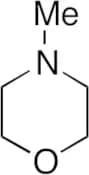
4-Methylmorpholine
CAS:<p>Applications 4-Methylmorpholine is used in the synthesis of novel and selective TYK2 inhibitors, used in the treatment of inflammatory diseases. Also used in the preparation of cathespin K inhibitors which are highly selective.<br> Not a dangerous good if item is equal to or less than 1g/ml and there is less than 100g/ml in the package<br>References Liang, J. et al.: Eur. J. Med. Chem., 67, 175 (2013); Yuan, X. et al.: Org. Biomol. Chem., 11, 5847 (2013);<br></p>Formula:C5H11NOColor and Shape:NeatMolecular weight:101.15DL-2-aminobutyric acid
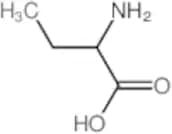
CAS:Controlled Product<p>Applications DL-2-aminobutyric acid<br></p>Formula:C4H9NO2Color and Shape:NeatMolecular weight:103.122-Methoxyphenol
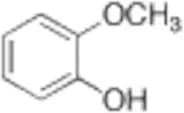
CAS:Controlled Product<p>Stability Light Sensitive<br>Applications 2-Methoxyphenol (CAS# 90-05-1) is useful for testing ruthenium- and palladium-containing catalysts activity via guaiacol hydrogenation.<br>References Shakirov, I. I., et al.: Pet. Chem., 60, 1136 (2020)<br></p>Formula:C7H8O2Color and Shape:NeatMolecular weight:124.14N-(4-Aminobenzoyl-d4)-β-alanine
CAS:Controlled Product<p>Applications N-(4-Aminobenzoyl-d4)-β-alanine is the labeled analogue of N-(4-Aminobenzoyl)-β-alanine (A593795), a metabolite of BX661A, a therapeutic agent used in the treatment of ulcerative colitis, chemotaxis and reactive oxygen species production in polymorphonuclear leukocyctes. Inhibits lipid peroxidation in large intestinal mucosa after mesenteric ischemia/reperfusion.<br>References Kimura, I. et al.: Arzneimittelforschung., 48, 1007 (1998); Kumamoto, T. et al.: Jpn. J. Pharmacol., 75, 187 (1997);<br></p>Formula:C10D4H8N2O3Color and Shape:NeatMolecular weight:212.238L-Allo-isoleucine
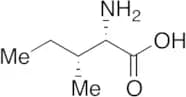
CAS:Controlled Product<p>Applications L-alloisoleucine is a stereo-isomer of L-isoleucine (I820175) and is produced as a byproduct of isoleucine via transamination. L-allo-isoleucine has been suggested to induce epithelial β-defensin expression. In addition, L-allo-isoleucine is utilized in the biosynthesis pathway for coronamic acid.<br>References Fehlbaum, P., et al.: Proc. Natl. Acad. Sci. USA 97, 12723 (2000); Parry, R. J., et al.: J. Am. Chem. Soc. 113, 1849 (1991)<br></p>Formula:C6H13NO2Color and Shape:NeatMolecular weight:131.178-ethyl-4-(3-fluorobenzoyl)-1-oxa-4,8-diazaspiro[4.5]decane-3-carboxylic acid
CAS:Purity:95.0%Molecular weight:336.3630065917969trans-4-Hydroxy-L-proline
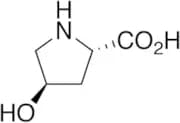
CAS:Controlled Product<p>Applications A natural constituent of animal structural proteins such as collagen and elastin. Several microorganisms producing proline trans-4- and cis-3-hydroxylase were discovered and these enzymes were applied to the industrial production of trans-4- and cis-3-hydroxy-L-proline.<br>References Langmaier, F. et al.: Int. J. Cosm. Sci., 24, 273 (2002); Lawrence, C., et al.: Biochem. J., 313, 185 (1996); Mori, H., et al.: J. Bacteriol.; 179, 5677 (1997); Clifton, I., et al.: Eur. J. Biochem., 268, 6625 (2001);<br></p>Formula:C5H9NO3Color and Shape:NeatMolecular weight:131.138-benzyl-4-(4-fluorobenzoyl)-1-oxa-4,8-diazaspiro[4.5]decane-3-carboxylic acid
CAS:Purity:95.0%Molecular weight:398.43399047851563-Methoxy-1,2-propanediol
CAS:<p>Applications 3-Methoxy-1,2-propanediol is used to prepare phosphorothioate analogs of sn-2 radyl lysophosphatidic acid as metabolically stabilized LPA receptor agonists. It is also used to synthesize diacylglycerol analogs as potential second-messenger antagonists.<br>References Jiang, G., et al.: Bioorg. Med. Chem. Lett., 23, 1865 (2013); Briggs, J., et al.: Bioorg. Med. Chem. Lett., 2, 127 (1992)<br></p>Formula:C4H10O3Color and Shape:Colourless LiquidMolecular weight:106.1203a,4,5,9b-Tetrahydro-3 H -cyclopenta[ c ]quinoline-4-carboxylic acid
CAS:Purity:95.0%Color and Shape:SolidMolecular weight:215.25199890136724-(2-methoxybenzoyl)-8-methyl-1-oxa-4,8-diazaspiro[4.5]decane-3-carboxylic acid
CAS:Purity:95.0%Molecular weight:334.372009277343751'-(tert-Butoxycarbonyl)spiro[indoline-3,4'-piperidine]-5-carboxylic acid
CAS:Purity:95.0%Molecular weight:332.3999938964844N-Boc-L-glutamic Acid 5-Methyl Ester
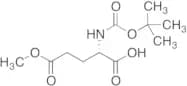
CAS:Controlled Product<p>Applications N-Boc-L-glutamic Acid 5-Methyl Ester is an intermediate used in the synthesis of Isodesmosine Chloride Hydrate (Synthetic) (I815051), which is a component of elastin and also it is extremely hygroscopic and must be stored over a desiccant such as silica gel.<br>References Partridge, S., et al.: Nature, 209, 399 (1966)<br></p>Formula:C11H19NO6Color and Shape:NeatMolecular weight:261.27Pteroyltri-γ-L-glutamic acid (>85%)
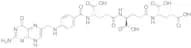
CAS:<p>Applications Pteroyltri-γ-L-glutamic acid is a folate derivative found in various foods such as yeast, spinach, beef liver, beef fillet and peas.<br>References Tamura, T., et al.: Br. J. Haematol., 25, 513 (1973); Ndaw, S., et al.: J. Chromatogr. A, 928, 77 (2001)<br></p>Formula:C29H33N9O12Purity:>85%Color and Shape:Off WhiteMolecular weight:699.6251-Ethyl-1-methylcyclopentane
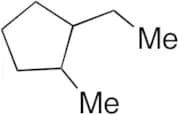
CAS:Controlled Product<p>Applications 1-Ethyl-1-methylcyclopentane, is one of the chemical components of Gas-Phase organic carbon emissions from motor vehicles. It is also a volatile component of frying oils.<br>References Gentner, D. R., et al.: Environ. Sci. Tech., 47, 11937 (2013); Prevot, A. Frying Food, 155 (1988);<br></p>Formula:C8H16Color and Shape:NeatMolecular weight:112.212-Methoxyphenylsulfate Potassium Salt
CAS:Controlled Product<p>Applications 2-Methoxyphenylsulfate is used in the analysis of alkylsulfatases and their kinetics.<br>References Bateman, T. et al.: Biochem. J., 236, 401 (1986);<br></p>Formula:C7H8O5S·KColor and Shape:White To Off-WhiteMolecular weight:204.21,3,5-Trichloro-2-methylbenzene
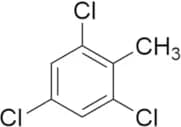
CAS:<p>Applications 1,3,5-Trichloro-2-methylbenzene can be used as reactant/reagent in hydrodechlorination process and catalysts for the production of 2,6-dichlorotoluene from polychlorotoluene-containing mixtures. Also, it is derived from 2,4,6-Trichlorobenzoic Acid (T774715), which is a possible degradation intermediate of Polychlorinated Biphenyls (PCBs) in contaminated soil, suggesting the occurrence of microbial transformation processes over time.<br> Not a dangerous good if item is equal to or less than 1g/ml and there is less than 100g/ml in the package<br>References Eichinger, W., et al.: PCT Int. Appl., WO 2001017932 A1 20010315 (2001); Stella, T., et al.: Sci Total Environ, 533, 177-186 (2015)<br></p>Formula:C7H5Cl3Color and Shape:White To Off-WhiteMolecular weight:195.478-benzyl-4-hexanoyl-1-oxa-4,8-diazaspiro[4.5]decane-3-carboxylic acid
CAS:Purity:95.0%Molecular weight:374.4809875488281D-Lysine Methyl Ester Dihydrochloride
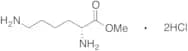
CAS:Controlled Product<p>Applications D-Lysine Methyl Ester is a protected form of D-Lysine (L468930). D-Lysine is the unnatural isomer of L-Lysine (L468895) that has the ability to reduce non-enzymatic glycation in vitro. D-Lysine also exists as polypeptide chains of poly-D-lysine, a nonspecific adhesion-promoting molecule that has the potential to be a polymeric drug carrier.<br>References Chen, Q. et al.: J. Biol. Chem., 269, 26602 (1994); Sensi, M., et al.: Diabetologia, 36, 797 (1993); Vermeersch, H. & Remon, J.: J. Control. Rel., 32, 225 (1994)<br></p>Formula:C7H16N2O2HClColor and Shape:NeatMolecular weight:233.1361-Chloro-3-methoxypropane
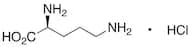
CAS:Controlled Product<p>Applications 1-Chloro-3-methoxypropane (cas# 36215-07-3) is a compound useful in organic synthesis.<br></p>Formula:C4H9ClOColor and Shape:NeatMolecular weight:108.57L-Ornithine-d6 Hydrochloride
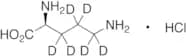
CAS:Controlled Product<p>Applications Labelled L-Ornithine. A non-essential amino acid for human development but is required intermediate in arginine biosynthesis. L-Ornithine is found in virtually all vertebrate tissues as well as incorporated into proteins, such as tyrocidine. Isolation from chicken excreta.<br>References Fattori, D. et al.: J. Med. Chem., 50, 550 (2007); Gomez-Alonso, S. et al.: J. Agric. Food Chem., 55, 608 (2007); Subramaniam, R. et al.: Bioorg. Med. Chem. Lett., 18, 3333 (2008);<br></p>Formula:C52H6H6N2O2·ClHColor and Shape:White To Off-WhiteMolecular weight:174.66L-Tyrosine-13C9,15N
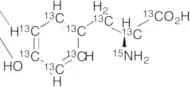
CAS:<p>Applications L-Tyrosine-13C9 ,15N is labelled analogue of L-Tyrosine (T899975), one of the 22 proteinogenic amino acids that are used by cells to synthesize proteins. L-Tyrosine is biologically converted from L-phenylalanine and is in turn is converted to L-DOPA and further converted into the neurotransmitters: dopamine, norepinephrine, and epinephrine.<br>References Rasmussen D.D. et al.: J. Clin. Endocrinol. Metab., 57, 760 (1983); Bagchi, S.P. et al.: Biochem. Pharmacol., 26, 900 (1977)<br></p>Formula:C9H1115NO3Color and Shape:White To Off-WhiteMolecular weight:191.1158L-Ornithine Hydrochloride
CAS:Controlled Product<p>Stability Hygroscopic<br>Applications L-Ornithine is a non-essential amino acid for human development but is required intermediate in arginine biosynthesis. L-Ornithine is found in virtually all vertebrate tissues as well as incorporated into proteins, such as tyrocidine. Isolation from chicken excreta.<br>References Fattori, D., et al.: J. Med. Chem., 50, 550 (2007), Gomez-Alonso, S., et al.: J. Agric. Food Chem., 55, 608 (2007), Subramaniam, R., et al.: Bioorg. Med. Chem. Lett., 18, 3333 (2008),<br></p>Formula:C5H12N2O2·ClHColor and Shape:White To Off-WhiteMolecular weight:168.62Linoleoyl Carnitine
CAS:Controlled Product<p>Stability Hygroscopic, Temperature Sensitive<br>Applications A carnitine ester of unsaturated fatty acid. Used in the studies of fibroblasts in long-chain 3-hydroxyacyl-CoA dehydrogenase deficiency and fatty acid oxidation disorders.<br>References Gross R.W., et al.: J. Biol. Chem., 258, 5221 (1983),<br></p>Formula:C25H45NO4Color and Shape:NeatMolecular weight:423.63D-Glutamic Acid 1-tert-Butyl Ester
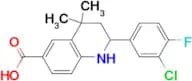
CAS:Controlled Product<p>Applications D-Glutamic acid 1-tert-butyl ester is a protected form of D-Glutamic acid (G596965). D-Glutamic acid is an unnatural isomer of L-Glutamic acid (G596960), and is found in bacterial cell wall peptidoglycan of gram-positive and gram-negative bacteria. D-Glutamic acid also occurs as poly-gamma-Glutamic acid, which is a weak immunogen but is capable of acting as a hapten (a small molecule that induces the production of antibodies, as well as binding to them).<br>References Dougherty, T., et al.: J. Bacteriol., 175, 111 (1993); Goodman, J. & Nitecki, D.: Immunology, 13, 577 (1967); Robinson, T.: Life Sci., 19, 1097 (1976)<br></p>Formula:C9H17NO4Color and Shape:NeatMolecular weight:203.242-(3-CHLORO-4-FLUOROPHENYL)-4,4-DIMETHYL-1,2,3,4-TETRAHYDROQUINOLINE-6-CARBOXYLIC ACID
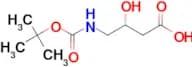
CAS:Purity:95.0%Molecular weight:333.7900085449219(R)-4-(BOC-AMINO)-3-HYDROXYBUTANOIC ACID
CAS:Purity:97.0%Color and Shape:SolidMolecular weight:219.236999511718751-[2-Nitro-4-(trifluoromethyl)phenyl]piperidine-4-carboxylic acid
CAS:Molecular weight:318.25201416015625N-(Azetidin-3-yl)-N-methylacetamide Hydrochloride
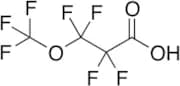
CAS:Controlled Product<p>Applications N-(Azetidin-3-yl)-N-methylacetamide Hydrochloride (cas# 935668-15-8) is a useful research chemical.<br></p>Formula:C6H12N2O·HClColor and Shape:GreyMolecular weight:164.633Perfluoro-3-methoxypropanoic Acid
CAS:<p>Applications Perfluoro-3-methoxypropanoic acid (cas# 377-73-1) is a useful research chemical.<br> Not a dangerous good if item is equal to or less than 1g/ml and there is less than 100g/ml in the package<br></p>Formula:C4HF7O3Color and Shape:NeatMolecular weight:230.04(S)-2-Amino-4-[(3-aminopropyl)amino]-butanoic Acid
CAS:Controlled Product<p>Applications (S)-2-Amino-4-[(3-aminopropyl)amino]-butanoic Acid is used in the reaction of carboxynorspermidine decarboxylase of Vibrio alginolyticus.<br>References Nakao, H., et al.: J. Gen. Microbiol. 136, 1699-704 (1990)<br></p>Formula:C7H17N3O2Purity:>90%Color and Shape:NeatMolecular weight:175.229Ethyl trans-3-Methyl-4-oxocrotonate
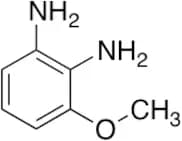
CAS:Controlled Product<p>Applications Derivative of monoenoic and trienoic analogs of Sorbic Acid with antifungal activity.<br>References Guerin, J. et al.: Annales Pharmaceutiques Francaises 44, 373 (1987)<br></p>Formula:C7H10O3Color and Shape:NeatMolecular weight:142.153-Methoxybenzene-1,2-diamine
CAS:<p>Applications 3-Methoxybenzene-1,2-Diamine (cas# 37466-89-0) is a useful research chemical.<br> Not a dangerous good if item is equal to or less than 1g/ml and there is less than 100g/ml in the package<br></p>Formula:C7H10N2OColor and Shape:BrownMolecular weight:138.171-Isobutyl-2,3,4,9-tetrahydro-1H-pyrido[3,4-b]indole-3-carboxylic acid
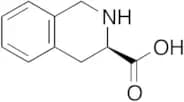
CAS:Purity:97%Molecular weight:272.3479919433594(R)-1,2,3,4-Tetrahydroisoquinoline-3-carboxylic Acid
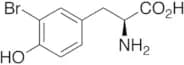
CAS:Controlled Product<p>Applications (R)-1,2,3,4-Tetrahydroisoquinoline-3-carboxylic Acid, is an amino acid building block used in peptide synthesis. With a growing peptide drug market the fast, reliable synthesis of peptides is of great importance.<br></p>Formula:C10H11NO2Color and Shape:NeatMolecular weight:177.203-Bromo-L-tyrosine
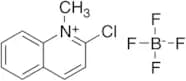
CAS:Controlled Product<p>Applications 3-Bromo-L-tyrosine is used in the preparation and synthesis of polyclonal antibodies that work against brominated protein related allergic responses and afflictions. Also effective in asthma control and prediction in children.<br>References Kambayashi, Y. et al.: J. Clin. Biochem., 44, 95 (2009); Wedes, S. et al.: J. Ped., 159, 248 (2011);<br></p>Formula:C9H10BrNO3Color and Shape:White To Light BrownMolecular weight:260.082-Chloro-1-methylquinolinium Tetrafluoroborate
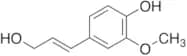
CAS:Controlled Product<p>Applications 2-Chloro-1-methylquinolinium tetrafluoroborate (cas# 16843-24-6) is a useful research chemical.<br></p>Formula:C10H9ClN·BF4Color and Shape:NeatMolecular weight:265.444-(3-Hydroxyprop-1-en-1yl)-2-methoxyphenol
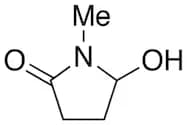
CAS:<p>Applications 4-(3-HYDROXYPROP-1-EN-1-YL)-2-METHOXYPHENOL (cas# 458-35-5) is a useful research chemical.<br></p>Formula:C10H12O3Color and Shape:NeatMolecular weight:180.205-Hydroxy-N-methyl-2-pyrrolidinone
CAS:Controlled Product<p>Applications 5-Hydroxy-N-methyl-2-pyrrolidinone is a metabolite of N-methylpyrrolidone (NMP).<br>References Payan, J., et al.: Drug Metab. Dispos., 30, 1418 (2002), Carnerup, M., et al.: Food Chem. Toxicol., 43, 1441 (2005), Angerer, J., et al.: Toxicol. Sci., 93, 3 (2006),<br></p>Formula:C5H9NO2Color and Shape:NeatMolecular weight:115.132-(1'-(tert-Butoxycarbonyl)spiro[chroman-2,4'-piperidine]-4-yl)acetic acid
CAS:Purity:95.0%Molecular weight:361.437988281252-BENZYL-8-CHLORO-1,2,3,4-TETRAHYDROBENZO[B][1,6]NAPHTHYRIDINE-10-CARBOXYLIC ACID
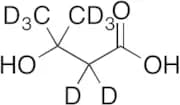
CAS:Purity:95.0%Color and Shape:Liquid, No data available.Molecular weight:352.82000732421875β-Hydroxyisovaleric Acid-d8
CAS:Controlled ProductFormula:C5H2D8O3Color and Shape:Colourless To YellowMolecular weight:126.18(S)-3-Amino-3-(3-(trifluoromethyl)phenyl)propanoic acid hydrochloride
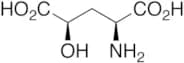
CAS:Purity:95%Molecular weight:269.6499938964844(2S,4R)-4-Hydroxy-L-glutamic Acid
CAS:Controlled Product<p>Applications (2S,4R)-4-Hydroxy-L-glutamic Acid is a metabolite of Glutamic acid (G596960).<br>References Hampson, D., et al.: J. Biol. Chem., 274, 33488 (1999), Jensen, A., et al.: Eur. J. Pharmacol., 397, 247 (2000),<br></p>Formula:C5H9NO5Color and Shape:NeatMolecular weight:163.13N-[(Benzyloxy)carbonyl]glycylglycine
CAS:<p>Applications N-[(Benzyloxy)carbonyl]glycylglycine is a reagent in the synthesis of Glycylglycyl-L-tyrosine (G718500), which is a fungal tyrosinases and their capability to oxidize peptide-bound tyrosine residues is important in a view of applicability of tyrosinases.<br>References Bowness, J., et al.: Biochem. J., 53, 620 (1953), Cuff, M., et al.: J. Mol. Biol., 278, 855 (1998), Kubo, I., et al.: Bioorg. Med. Chem., 12, 5349 (2004),<br></p>Formula:C12H14N2O5Color and Shape:NeatMolecular weight:266.254-Chloro-2-methylaniline
CAS:Controlled Product<p>Stability Air Sensitive<br>Applications 4-Chloro-2-methylaniline<br> Not a dangerous good if item is equal to or less than 1g/ml and there is less than 100g/ml in the package<br></p>Formula:C7H8ClNColor and Shape:Light BrownMolecular weight:141.60


![8-ethyl-4-(3-fluorobenzoyl)-1-oxa-4,8-diazaspiro[4.5]decane-3-carboxylic acid](/_next/image/?url=https%3A%2Fstatic.cymitquimica.com%2Fproducts%2F10%2Fthumb-webp%2FF525685.webp&w=3840&q=75)

![8-benzyl-4-(4-fluorobenzoyl)-1-oxa-4,8-diazaspiro[4.5]decane-3-carboxylic acid](/_next/image/?url=https%3A%2Fstatic.cymitquimica.com%2Fproducts%2F10%2Fthumb-webp%2FF525792.webp&w=3840&q=75)


![3a,4,5,9b-Tetrahydro-3 H -cyclopenta[ c ]quinoline-4-carboxylic acid](/_next/image/?url=https%3A%2Fstatic.cymitquimica.com%2Fproducts%2F10%2Fthumb-webp%2FF028952.webp&w=3840&q=75)
![4-(2-methoxybenzoyl)-8-methyl-1-oxa-4,8-diazaspiro[4.5]decane-3-carboxylic acid](/_next/image/?url=https%3A%2Fstatic.cymitquimica.com%2Fproducts%2F10%2Fthumb-webp%2FF525647.webp&w=3840&q=75)
![1'-(tert-Butoxycarbonyl)spiro[indoline-3,4'-piperidine]-5-carboxylic acid](/_next/image/?url=https%3A%2Fstatic.cymitquimica.com%2Fproducts%2F10%2Fthumb-webp%2FF223613.webp&w=3840&q=75)

![8-benzyl-4-hexanoyl-1-oxa-4,8-diazaspiro[4.5]decane-3-carboxylic acid](/_next/image/?url=https%3A%2Fstatic.cymitquimica.com%2Fproducts%2F10%2Fthumb-webp%2FF525801.webp&w=3840&q=75)



![1-[2-Nitro-4-(trifluoromethyl)phenyl]piperidine-4-carboxylic acid](/_next/image/?url=https%3A%2Fstatic.cymitquimica.com%2Fproducts%2F10%2Fthumb-webp%2FF034079.webp&w=3840&q=75)

![(S)-2-Amino-4-[(3-aminopropyl)amino]-butanoic Acid](/_next/image/?url=https%3A%2Fstatic.cymitquimica.com%2Fproducts%2FTR%2Fthumb-webp%2FA609335.webp&w=3840&q=75)

![1-Isobutyl-2,3,4,9-tetrahydro-1H-pyrido[3,4-b]indole-3-carboxylic acid](/_next/image/?url=https%3A%2Fstatic.cymitquimica.com%2Fproducts%2F10%2Fthumb-webp%2FF695615.webp&w=3840&q=75)
![2-(1'-(tert-Butoxycarbonyl)spiro[chroman-2,4'-piperidine]-4-yl)acetic acid](/_next/image/?url=https%3A%2Fstatic.cymitquimica.com%2Fproducts%2F10%2Fthumb-webp%2FF078168.webp&w=3840&q=75)
![2-BENZYL-8-CHLORO-1,2,3,4-TETRAHYDROBENZO[B][1,6]NAPHTHYRIDINE-10-CARBOXYLIC ACID](/_next/image/?url=https%3A%2Fstatic.cymitquimica.com%2Fproducts%2F10%2Fthumb-webp%2FF306441.webp&w=3840&q=75)

![N-[(Benzyloxy)carbonyl]glycylglycine](/_next/image/?url=https%3A%2Fstatic.cymitquimica.com%2Fproducts%2FTR%2Fthumb-webp%2FB287100.webp&w=3840&q=75)
