Amino Acids (AA)
Amino acids (AAs) are the fundamental building blocks of proteins, playing a crucial role in various biological processes. These organic compounds are essential for protein synthesis, metabolic pathways, and cell signaling. In this category, you will find a comprehensive range of amino acids, including essential, non-essential, and modified forms, which are vital for research in biochemistry, molecular biology, and nutritional sciences. At CymitQuimica, we provide high-quality amino acids to support your research and development needs, ensuring accuracy and reliability in your experimental outcomes.
Subcategories of "Amino Acids (AA)"
- Amino Acid Derivatives(3,955 products)
- Amino Acid and Amino Acid Related Compounds(3,461 products)
- Amino Acids with Oxygen or Sulphur(168 products)
- Boc- Amino Acids(351 products)
- Fmoc Amino Acids(1,710 products)
Found 38244 products of "Amino Acids (AA)"
Sort by
Purity (%)
0
100
|
0
|
50
|
90
|
95
|
100
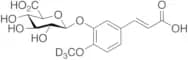
Isoferulic Acid-d3 3-O-β-D-Glucuronide
CAS:Controlled Product<p>Applications Labelled Isoferulic Acid 3-O-β-D-Glucuronide, the glucuronide conjugate of Isoferulic Acid (H946180). Isoferulic Acid 3-O-β-D-Glucuronide is one of the circulating metabolites in human plasma after coffee consumption.<br>References Fumeaux, R. et al.: Org. Biomol. Chem., 8, 5199 (2010); Redeuil, K. et al.: J. Chrom. A, 1218, 4678 (2011);<br></p>Formula:C16H15D3O10Color and Shape:NeatMolecular weight:373.332-(3-Fluorophenyl)-2-[4-(4-fluorophenyl)piperazin-1-yl]acetic acid
CAS:Molecular weight:332.351013183593758-ethyl-4-(4-nitrobenzoyl)-1-oxa-4,8-diazaspiro[4.5]decane-3-carboxylic acid
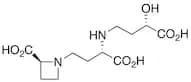
CAS:Purity:95.0%Molecular weight:363.36999511718752’-Deoxymugineic Acid
CAS:Controlled Product<p>Applications Phytosiderophores are produced in higher plants as iron chelating amino acids that promote uptake of iron from soil.<br>References Klair, S., et al.: J. Plant Nutr., 19, 1295 (1996),<br></p>Formula:C12H20N2O7Color and Shape:NeatMolecular weight:304.30(2R,3S,4S,5R,6S)-2-(4-Chloro-3-(4-ethoxybenzyl)phenyl)-6-(hydroxymethyl)tetrahydro-2H-pyran-3,4,5-triol
CAS:Controlled Product<p>Applications (2R,3S,4S,5R,6S)-2-(4-Chloro-3-(4-ethoxybenzyl)phenyl)-6-(hydroxymethyl)tetrahydro-2H-pyran-3,4,5-triol is an enantiomer of dapagliflozin(D185370), which is a sodium-glucose transporter 2 inhibitor.<br>References Kasichayanula, S. et al.: Diabetes, Obesity and Metabolism 13, 47 (2011)<br></p>Formula:C21H25ClO6Color and Shape:NeatMolecular weight:408.8735-Amino-2,4,6-triiodoisophthalic Acid
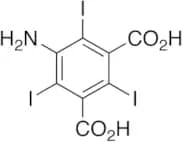
CAS:Controlled Product<p>Impurity Iohexol EP Impurity K<br>Applications 5-Amino-2,4,6-triiodoisophthalic Acid (Iohexol EP Impurity K) is an intermediate for nonionic iodinated X-ray contrast agents.<br></p>Formula:C8H4I3NO4Color and Shape:NeatMolecular weight:558.84D-Homotyrosine Hydrobromide
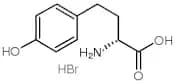
CAS:Controlled Product<p>Applications D-Homotyrosine hydrobromide<br></p>Formula:C10H13NO3·HBrColor and Shape:White To Off-WhiteMolecular weight:276.127D,L-b-Chloroalanine Methyl Ester Hydrochloride
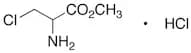
CAS:Controlled Product<p>Applications D,L-β-Chloroalanine Methyl Ester Hydrochloride (cas# 33646-31-0) is a compound useful in organic synthesis.<br></p>Formula:C4H8ClNO2·ClHColor and Shape:NeatMolecular weight:174.03N-Heptanoylglycine
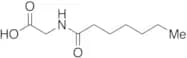
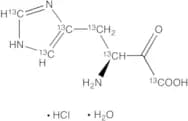
CAS:<p>Applications An acylglycine present in urniary excretion that can be analyzed and be used as diagnostic tool for metabolic disorders, complementary to organic acids and acylcarnitine profiles.<br>References Bonafe, L. et al.: Mol. Genetics Metab., 69, 302 (2000);<br></p>Formula:C9H17NO3Color and Shape:WhiteMolecular weight:187.24L-Histidine Hydrochloride Hydrate (<5% D) (13C6, 97-99%)
CAS:Controlled ProductFormula:C6H9N3O2•(HCl)•(H2O)Purity:97-99%Color and Shape:NeatMolecular weight:161.11364618028-methyl-4-(naphthalene-1-carbonyl)-1-oxa-4,8-diazaspiro[4.5]decane-3-carboxylic acid
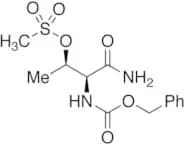
CAS:Purity:95.0%Molecular weight:354.406005859375N-Benzyloxycarbonyl L-Threonine Amide O-Methanesulfonate
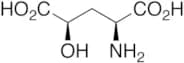
CAS:Controlled Product<p>Applications N-Benzyloxycarbonyl L-Threonine Amide O-Methanesulfonate (cas# 80082-51-5) is a compound useful in organic synthesis.<br></p>Formula:C13H18N2O6SColor and Shape:NeatMolecular weight:330.36(2S,4R)-4-Hydroxy-L-glutamic Acid
CAS:Controlled Product<p>Applications (2S,4R)-4-Hydroxy-L-glutamic Acid is a metabolite of Glutamic acid (G596960).<br>References Hampson, D., et al.: J. Biol. Chem., 274, 33488 (1999), Jensen, A., et al.: Eur. J. Pharmacol., 397, 247 (2000),<br></p>Formula:C5H9NO5Color and Shape:NeatMolecular weight:163.13D-Aspartic Acid Dimethyl Ester Hydrochloride
CAS:<p>Applications D-Aspartic Acid Dimethyl Ester Hydrochloride is a useful synthetic intermediate in the synthesis of MK-7246 (M425045); a potent and selective CRTH2 antagonist for the treatment of respiratory diseases.<br>References Molinaro, C., et al.: J. Org. Chem., 77, 2299 (2012); Gervais, F.G., et al.: Mol. Pharmacol., 79, 69 (2011); Gallant, M, et al.: Bioorg. Med. Chem. Lett., 21, 288 (2011)<br></p>Formula:C6H12ClNO4Color and Shape:NeatMolecular weight:197.62Azido-PEG3-alcohol
CAS:Controlled ProductFormula:C6H13N3O3Color and Shape:NeatMolecular weight:175.19Thiodiglycolic Acid-d4
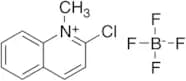
CAS:Controlled Product<p>Applications Thiodiglycolic Acid-d4 acts as a reagent for the synthesis of metabolites of S-carboxymethyl-L-cysteine and S-methyl-L-Cysteine and of some isotoically labelled (2H, 13C) analogs.<br>References Meese, C. O., et al.: Archiv der Pharmazie, 323, 957 (1990)<br></p>Formula:C4D4H2O4SColor and Shape:NeatMolecular weight:154.172-Chloro-1-methylquinolinium Tetrafluoroborate
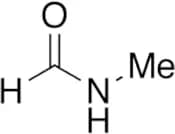
CAS:Controlled Product<p>Applications 2-Chloro-1-methylquinolinium tetrafluoroborate (cas# 16843-24-6) is a useful research chemical.<br></p>Formula:C10H9ClN·BF4Color and Shape:NeatMolecular weight:265.44N-Methylformamide
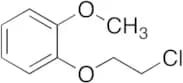
CAS:Controlled Product<p>Applications N-Methylformamide is used in amidation or transamidation chemical reactions where formamide is insufficient.<br>References Rao, S. et al.: Org. Lett., 15, 1496 (2013); Xu, K. et al.: Chem. A. Eur. J., 18, 9793 (2012);<br></p>Formula:C2H5NOColor and Shape:NeatMolecular weight:59.071-(2-Chloroethoxy)-2-methoxybenzene
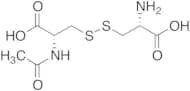
CAS:Controlled Product<p>Applications 1-(2-Chloroethoxy)-2-methoxy benzene, is an impurity of Carvedilol (C184625), a nonselective β-adrenergic blocker with α1-blocking activity. Carvedilol is an antihypertensive used in the treatment of congestive heart failure.<br>References Hirohashi, M., et al.: Arzneim.-Forsch., 40, 735 (1990); Packer, M., et al.: N. Engl. J. Med., 334, 1349 (1996);<br></p>Formula:C9H11ClO2Color and Shape:NeatMolecular weight:186.64N-Acetyl-L-cystine
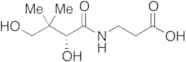
CAS:Controlled Product<p>Applications N-Acetyl-L-cystine is an antioxidant, used in the treatment of influenza A virus pandemic (1). N-Acetyl-L-cystine promotes fertilization by reducing disulfide bonds in zona pellucida of mouse (2).Releases N-Acetyl-L-cysteine, which is an antidote for paracetamol poisoning.<br>References (1) Zhang, R., et al.: (2014) Int. Immunopharmacol. 22: 1-8 (2) Takeo, T., et al.: Biol Reprod. (2015) 92: 1-7<br></p>Formula:C8H14N2O5S2Color and Shape:NeatMolecular weight:282.34Pantothenic Acid (Technical Grade, Contains Lactone)
CAS:Controlled Product<p>Stability Hygroscopic<br>Applications Pantothenic Acid is a member of the B complex vitamins; essential vitamin for the biosynthesis of coenzyme A in mammalian cells. Occurs ubiquitously in all animal and plant tissue. The richest common source is liver, but jelly of the queen bee contains 6 times as much as liver. Rice bran and molasses are other good sources.<br>References Gardner, P., et al.: Food Chem., 68, 471 (2000); Ou, B., et al.: J. Agric. Food Chem., 50, 2772 (2002); Bahorun, T., et al.: J. Sci. Food Agric., 84, 1553 (2004)<br></p>Formula:C9H17NO5Color and Shape:NeatMolecular weight:219.242-(3,4-Diethoxyphenyl)ethanamine
CAS:Controlled Product<p>Applications 2-(3,4-Diethoxyphenyl)ethanamine is a useful intermediate in the preparation of Drotaverine hydrochloride, an antispasmodic drug arising from papaverine class of biologically active compounds.<br>References Turks, M., et al.: Rigas Tehniskas Universitates Zinatniskie Raksti, Serija 1: Materialzinatne un Lietiska Kimija, 23, 107 (2011)<br></p>Formula:C12H19NO2Color and Shape:NeatMolecular weight:209.28(+)-a-Methyl-b-alanine
CAS:Controlled Product<p>Applications (+)-α-Methyl-β-alanine is a reactant for the chemoenzymatic assembly of cryptophycins as potent anticancer therapeutics.<br>References Magarvey, N.A., et al.: ACS Chem. Biol., 1, 766-779 (2006)<br></p>Formula:C4H9NO2Color and Shape:NeatMolecular weight:103.1204-(4-chlorobenzoyl)-8-propyl-1-oxa-4,8-diazaspiro[4.5]decane-3-carboxylic acid
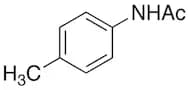
CAS:Purity:95.0%Molecular weight:366.83999633789064'-Methylacetanilide
CAS:Controlled Product<p>Applications 4'-Methylacetanilide (cas# 103-89-9) is a compound useful in organic synthesis.<br></p>Formula:C9H11NOColor and Shape:NeatMolecular weight:149.19Arginine Vasopressin Diacetate
CAS:<p>Applications An endogenous antidiuretic hormone in most mammalian species. It is released into the blood from nerve terminals in the posterior pituitary and median eminence. It is a neurotransmitter in the central nervous system and also implicated in a variety of physiological processes such as regulating water balance by antidiuretic action. It is a peptidic V1a receptor agonist that produces vasoconstriction via V1aR-mediated vascular smooth muscle cell contraction and is being used to increase blood pressure in septic shock, a form of vasodilatory hypotension.<br>References Perucca, J. et al.: J. AM. Soc. Nephrol., 19, 1721 (2008); Toba, K. et al.: Prog. Brain Res., 119, 337 (1998); Berrada, K. et al.: J. Biol. Chem., 275, 27229 (2000);<br></p>Formula:C50H73N15O16S2Color and Shape:NeatMolecular weight:1204.342,2-Diselanediyldiethanamine Dihydrochloride
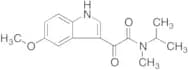
CAS:Controlled Product<p>Stability Hygroscopic<br>Applications 2,2-Diselanediyldiethanamine dihydrochloride (cas# 3542-13-0) is a useful research chemical.<br></p>Formula:C13H16N2O10Color and Shape:NeatMolecular weight:360.2745-Methoxy-N-methyl-N-(1-methylethyl)-α-oxo-1H-indole-3-acetamide
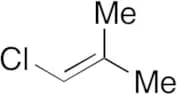
CAS:Controlled Product<p>Applications 5-Methoxy-N-methyl-N-(1-methylethyl)-α-oxo-1H-indole-3-acetamide is an intermediate used in the synthesis of 5-Methoxy-N-methyl-N-isopropyl Tryptamine (M271680), which is a psychedelic tryptamine related to N-methyl-N-isopropyltryptamine. 5-Methoxy MiPT potently inhibits the re-uptake of the monoamines serotonin and norepinephrine but does not affect dopamine re-uptake. 5-Methoxy MiPT has no effect on the release of monoamines from rat brain synaptosomes. This product is intended for forensic and research applications.<br>References Katagi, M., et al.: Jpn. J. Forensic Toxicol., 20, 303 (2002), Meatherall, R., et al.: J. Anal. Toxicol., 27, 313 (2003), Wilson, J., et al.: Forensic Sci. Int., 148, 31 (2005), Kamata, T., et al.: Drug Metab. Dispos., 34, 281 (2006),<br></p>Formula:C15H18N2O3Color and Shape:Beige To Light BrownMolecular weight:274.321-Chloro-2-methylpropene
CAS:Controlled Product<p>Stability Volatile<br>Applications 1-Chloro-2-methylpropene is a reagent in the synthesis of pyrrolyl and indolyl diketo acids and esters as nucleotide-competitive non-nucleoside inhibitors of terminal deoxynucleotidyl transferase.<br> Not a dangerous good if item is equal to or less than 1g/ml and there is less than 100g/ml in the package<br>References Costi, R., et al.: J. Med. Chem., 56, 7431 (2013);<br></p>Formula:C4H7ClColor and Shape:NeatMolecular weight:90.55Caerulein (>85%)
CAS:Controlled Product<p>Applications Caerulein is a ten amino acid oligopeptide that stimulates smooth muscle and increases digestive secretions. It is similar in action and composition to cholecystokinin. It stimulates gastric, biliary, and pancreatic secretion; and certain smooth muscle. It is used in paralytic ileus and as diagnostic aid in pancreatic malfunction. It is used to induce pancreatitis in experimental animal models.<br>References Anastasi,E., et al.: Ep., 23, 699 (1997); De Caro, G., et al.: Br. J. Pharmac Chemother., 33, 48 (1968)<br></p>Formula:C58H73N13O21S2Purity:~90%Color and Shape:Off-WhiteMolecular weight:1352.40L-Homocysteine Thiolactone Hydrochloride
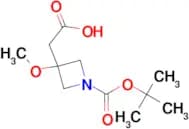
CAS:Controlled Product<p>Applications L-Homocysteine Thiolactone Hydrochloride is used to prepare substituted homocysteine analogs as inhibitors of peptidylglycine α-amidating monooxygenase. It is also used to synthesize (mercaptoacyl)alanylprolines as metalloprotease inhibitors.<br>References Erion, M., et al.: J. Med. Chem., 37, 4430 (1994); Slusarchyk, W., et al.: Bioorg. Med. Chem. Lett., 5, 753 (1995)<br></p>Formula:C4H8ClNOSColor and Shape:NeatMolecular weight:153.632-(1-(TERT-BUTOXYCARBONYL)-3-METHOXYAZETIDIN-3-YL)ACETIC ACID
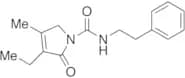
CAS:Purity:95.0%Molecular weight:245.274993896484383-Ethyl-2,5-dihydro-4-methyl-2-oxo-N-(2-phenylethyl)-1H-pyrrole-1-carboxamide
CAS:Controlled Product<p>Applications Intermediate for the preparation of Glimepiride.<br></p>Formula:C16H20N2O2Color and Shape:NeatMolecular weight:272.34(2R)-3-Amino-2-fluoropropanoic Acid-13C3
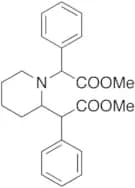
CAS:Controlled ProductFormula:C3H6FNO2Color and Shape:NeatMolecular weight:110.061,2-Bismethylphenidate (Mixture of Diastereomers)
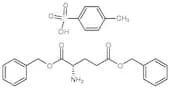
Controlled Product<p>Applications 1,2-Bismethylphenidate is an impurity of methylphenidate (M325880), an CNS stimulant.<br>References Greenblatt, E.N., et al.: J. Pharmacol. Exp. Ther., 131, 115 (1961), Padmanabhan, G.R., Anal. Profiles Drug Subs., 10, 473 (1981), Srinivas, N.R., et al.: Pharm. Res., 10, 14 (1993),<br></p>Formula:C23H27NO4Color and Shape:NeatMolecular weight:381.46L-Glutamic acid dibenzyl ester 4-toluenesulfonate
CAS:Controlled Product<p>Applications L-Glutamic acid dibenzyl ester 4-toluenesulfonate<br></p>Formula:C26H29NO7SColor and Shape:NeatMolecular weight:499.584-(2,4-dimethylphenyl)-3H,4H,5H,6H,7H-imidazo[4,5-c]pyridine-6-carboxylic acid
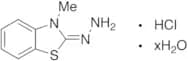
CAS:Purity:95.0%Molecular weight:271.320007324218753-Methyl-2-benzothiazolinone Hydrazone Hydrochloride Hydrate
CAS:<p>Stability Hygroscopic<br>Applications 3-Methyl-2-benzothiazolinone Hydrazone Hydrochloride Hydrate is a chromegenic reagent for the determination of benzodiazepines, cholesterol, and enzyme activity. 3-Methyl-2-benzothiazolinone Hydrazone Hydrochloride Hydrate is used as an electrophilic coupling reagent used in the spectrophotometric determination of chloramine-B (CAB) and other residual chlorine content in various environmental water samples.<br> Not a dangerous good if item is equal to or less than 1g/ml and there is less than 100g/ml in the package<br>References Syed, A. et al.: Environ. Sci. Indian J., 3, 49 (2008); Syed, A.A. et al.: Chem. Environ. Res., 15, 41 (2006); Mohan, J. et al.: Indian J. Chem., 32B, 44 (1993);<br></p>Formula:C8H10ClN3S·xH2OColor and Shape:NeatMolecular weight:233.718N-Acetyl-L-cysteine
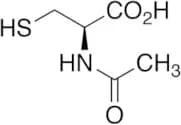
CAS:Controlled Product<p>Stability Air Sensitive<br>Applications A metabolite of Methyl Isocyanate.<br>References Slatter, J. G., et al.: Chem. Res. Toxicol., 4, 157 (1991),<br></p>Formula:C5H9NO3SColor and Shape:Light YellowMolecular weight:163.19Ethylenediaminetetraacetic Acid-d16
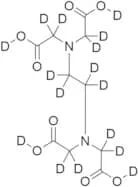
CAS:Controlled Product<p>Applications Ethylenediaminetetraacetic Acid-d16 (CAS# 203805-96-3) is a useful isotopically labeled research compound.<br></p>Formula:C10D16N2O8Color and Shape:White To Off-WhiteMolecular weight:308.34Nε-(1-Carboxymethyl)-L-lysine-d4
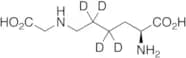
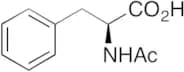
CAS:Controlled Product<p>Stability Hygroscopic<br>Applications CEL and CML are two stable, nonenzymatic chemical modifications of protein lysine residues resulting from glycation and oxidation reactions.<br>References Fu, M.X., et al.: J. Biol. Chem., 271, 9982 (1996), Ahmed M.U., et al.: Biochem.J., 324, 565 (1997), Schleicher, E.D., et al.: J. Clin. Invest., 99, 457 (1997), Shibayama, R., et al.: Diabetes, 48, 1842 (1999),<br></p>Formula:C8H12D4N2O4Color and Shape:NeatMolecular weight:208.25N-Acetyl-L-phenylalanine
CAS:Controlled Product<p>Applications N-Acetyl-L-phenylalanine is an protected analogue of L-Phenylalanine (P319415), an essential amino acid produced for medical, feed, and nutritional applications such as in the preparation of Aspartame.<br>References Sriram, S., et al.: J. Med. Chem., 56, 2540 (2013); Parker, B.M., et al.: J. Biotech., 155, 396 (2011);<br></p>Formula:C11H13NO3Color and Shape:NeatMolecular weight:207.23cis-4-Hydroxy-L-proline
CAS:<p>Applications Hydroxyprolines are valuable chiral building blocks for organic synthesis of pharmaceuticals. Several microorganisms producing proline trans-4- and cis-3-hydroxylase were discovered and these enzymes were applied to the industrial production of trans-4- and cis-3-hydroxy-L-proline.<br>References Lawrence, C., et al.: Biochem. J., 313, 185 (1996), Mori, H., et al.: J. Bacteriol., 179, 5677 (1997), Clifton, I., et al.: Eur. J. Biochem., 268, 6625 (2001),<br></p>Formula:C5H9NO3Color and Shape:Off White Crystalline PowderMolecular weight:131.13

![2-(3-Fluorophenyl)-2-[4-(4-fluorophenyl)piperazin-1-yl]acetic acid](/_next/image/?url=https%3A%2Fstatic.cymitquimica.com%2Fproducts%2F10%2Fthumb-webp%2FF300392.webp&w=3840&q=75)

![8-ethyl-4-(4-nitrobenzoyl)-1-oxa-4,8-diazaspiro[4.5]decane-3-carboxylic acid](/_next/image/?url=https%3A%2Fstatic.cymitquimica.com%2Fproducts%2F10%2Fthumb-webp%2FF525672.webp&w=3840&q=75)


![8-methyl-4-(naphthalene-1-carbonyl)-1-oxa-4,8-diazaspiro[4.5]decane-3-carboxylic acid](/_next/image/?url=https%3A%2Fstatic.cymitquimica.com%2Fproducts%2F10%2Fthumb-webp%2FF525637.webp&w=3840&q=75)





![4-(4-chlorobenzoyl)-8-propyl-1-oxa-4,8-diazaspiro[4.5]decane-3-carboxylic acid](/_next/image/?url=https%3A%2Fstatic.cymitquimica.com%2Fproducts%2F10%2Fthumb-webp%2FF525719.webp&w=3840&q=75)







![4-(2,4-dimethylphenyl)-3H,4H,5H,6H,7H-imidazo[4,5-c]pyridine-6-carboxylic acid](/_next/image/?url=https%3A%2Fstatic.cymitquimica.com%2Fproducts%2F10%2Fthumb-webp%2FF522510.webp&w=3840&q=75)