Amino Acids (AA)
Amino acids (AAs) are the fundamental building blocks of proteins, playing a crucial role in various biological processes. These organic compounds are essential for protein synthesis, metabolic pathways, and cell signaling. In this category, you will find a comprehensive range of amino acids, including essential, non-essential, and modified forms, which are vital for research in biochemistry, molecular biology, and nutritional sciences. At CymitQuimica, we provide high-quality amino acids to support your research and development needs, ensuring accuracy and reliability in your experimental outcomes.
Subcategories of "Amino Acids (AA)"
- Amino Acid Derivatives(3,955 products)
- Amino Acid and Amino Acid Related Compounds(3,461 products)
- Amino Acids with Oxygen or Sulphur(168 products)
- Boc- Amino Acids(351 products)
- Fmoc Amino Acids(1,710 products)
Found 38244 products of "Amino Acids (AA)"
Sort by
Purity (%)
0
100
|
0
|
50
|
90
|
95
|
100
(6Z)-8-Methyl-6-nonenoic Acid (up to 10% trans isomer)
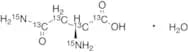
CAS:Controlled Product<p>Applications Used in the synthesis of Capsaicin analogues, useful for their anti-tumor activity.<br>References Fusco, B., et al.: Drugs, 53, 909 (1997), Buisman, G., et al.: Biotechnol. Lett., 20, 131 (1998), Kobata, K., et al.: Bios. Biotechnol. Biochem., 66, 319 (2002), Aluru, M., et al.: J. Exp. Bot., 54, 1655 (2003),; Wang, W. et al.: Gaodeng Xuexiao Huaxue Xuebao 31, 2400(2010)<br></p>Formula:C10H18O2Color and Shape:NeatMolecular weight:170.25L-Asparagine-13C4, 15N2 Hydrate
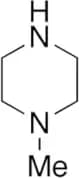
CAS:Controlled ProductFormula:C4H815N2O3H2OColor and Shape:NeatMolecular weight:138.0818021-Methylpiperazine
CAS:Controlled Product<p>Impurity Imatinib EP Impurity G<br>Applications 1-Methylpiperazine (Imatinib EP Impurity G) is used in the preparation of 2-(4-Methyl-1-piperazinylmethyl)acrylophenone(MPMAP), an antimicrotubular drug. It is a COVID19-related research product.<br>References Mallevais, M.L. et al.: Biochimie, 66, 477 (1984);<br></p>Formula:C5H12N2Color and Shape:Colourless To Light YellowMolecular weight:100.163-Methylbutyric-2,2-d2 Acid
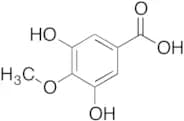
CAS:Controlled Product<p>Applications 3-Methylbutyric-2,2-d2 Acid (CAS# 95927-02-9) is a useful isotopically labeled research compound.<br></p>Formula:C5H8D2O2Color and Shape:NeatMolecular weight:104.153,5-Dihydroxy-4-methoxybenzoic Acid
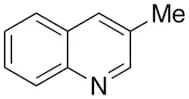
CAS:Controlled Product<p>Applications 3,5-Dihydroxy-4-methoxybenzoic Acid is a useful building block in organic synthesis.<br>References Ghosh, Koushik, et al.: Angewandte Chemie, I.E., 55(27), 7821-7825 (2016);Vergne, Fabrice, et al.: Bioorg. & Medi. Chem. Let., 14(18), 4607-4613 (2004)<br></p>Formula:C8H8O5Color and Shape:NeatMolecular weight:184.153-Methylquinoline
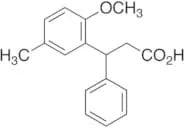
CAS:Controlled Product<p>Applications It can be degraded efficiently by the QL-degrading bacteria.<br>References Shukla, O., et al.: Microbios., 59, 47 (1989), Oh, Y; Biotechnol Bioeng 1994, 44, 533,,,<br></p>Formula:C10H9NColor and Shape:NeatMolecular weight:143.193-(2-Methoxy-5-methylphenyl)-3-phenyl-propanoic Acid
CAS:Controlled Product<p>Applications 3-(2-Methoxy-5-methylphenyl)-3-phenyl-propanoic Acid (cas# 109089-77-2) is a compound useful in organic synthesis.<br></p>Formula:C17H18O3Color and Shape:NeatMolecular weight:270.324-benzoyl-8-propyl-1-oxa-4,8-diazaspiro[4.5]decane-3-carboxylic acid
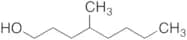
CAS:Purity:95.0%Molecular weight:332.39999389648444-Methyl-1-octanol
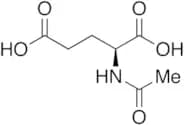
CAS:Controlled Product<p>Applications 4-Methyl-1-octanol is an intermediate in the synthesis of 1,2-Cyclohexanedicarboxylic Acid Mono 4-Methyloctan-1-ol Ester which is a possible metabolite of the di(isononyl)cyclohexane-1,2-dicarboxylate (DINCH) monoester (MINCH).<br>References Koch, H., et al.: Arch. Toxicol., 87, 799 (2013)<br></p>Formula:C9H20OColor and Shape:NeatMolecular weight:144.25N-Acetyl-L-glutamic Acid
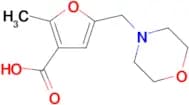
CAS:Controlled Product<p>Applications N-Acetyl-L-glutamic Acid is the N-Acetyl analogue of the non-essential amino acid, L-glutamic acid (G596960). N-Acetyl-L-glutamic Acid activates carbamoyl phosphate synthetase in the urea cycle.<br>References Saheki, T. et al.: J. Biochem., 77, 659 (1975); Rivas, J. et al.: Acta Biol. Med. Ger., 36, 1673 (1977); Zollner, H.: Biochim. Biophys. Acta, 676, 170 (1981);<br></p>Formula:C7H11NO5Color and Shape:NeatMolecular weight:189.172-Methyl-5-morpholin-4-ylmethyl-furan-3-carboxylic acid
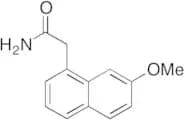
CAS:Formula:C11H15NO4Purity:98%Color and Shape:SolidMolecular weight:225.2447-Methoxy-1-naphthaleneacetamide
CAS:Controlled Product<p>Applications 7-Methoxy-1-naphthaleneacetamide, can be used for the synthesis of the analogs of Melatonin (M215000), containing naphthalene moiety instead of indole nucleus, having high affinity for the melatonin receptor. Agomelatine Impurity 6<br>References Tang, J. D., et al.: Org. Prep. Proc. Int., 41, 164 (2009); Sndrieux Y. J., et al.: J. Med. Chem., 35, 1484 (1992);<br></p>Formula:C13H13NO2Color and Shape:NeatMolecular weight:215.25Butyrylglycine
CAS:<p>Applications Butyrylglycine is one of the acylglycines, an important class of metabolites that have been used in the diagnosis of several inborn errors of metabolism (IEM).<br>References Costa, C., et al.: J. Pharmaceut. Biomed. Anal., 21, 1215 (2000), Garcia-Villoria, J., et al.: Clin. Biochem., 42, 2 (2009), Scalbert, A., et al.: Metabolomics, 5, 435 (2009),<br></p>Formula:C6H11NO3Color and Shape:NeatMolecular weight:145.162-([(TERT-BUTOXY)CARBONYL]AMINO)-5-METHOXY-5-OXOPENTANOIC ACID
CAS:Purity:95.0%Molecular weight:261.27398681640625Caerulein (>85%)
CAS:Controlled Product<p>Applications Caerulein is a ten amino acid oligopeptide that stimulates smooth muscle and increases digestive secretions. It is similar in action and composition to cholecystokinin. It stimulates gastric, biliary, and pancreatic secretion; and certain smooth muscle. It is used in paralytic ileus and as diagnostic aid in pancreatic malfunction. It is used to induce pancreatitis in experimental animal models.<br>References Anastasi,E., et al.: Ep., 23, 699 (1997); De Caro, G., et al.: Br. J. Pharmac Chemother., 33, 48 (1968)<br></p>Formula:C58H73N13O21S2Purity:~90%Color and Shape:Off-WhiteMolecular weight:1352.401-{[(2-METHYL-2-PROPANYL)OXY]CARBONYL-6-PHENYL-3-PIPERIDINECARBOXYLIC ACID
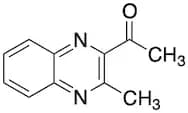
CAS:Purity:95.0%Molecular weight:305.37399291992193-Acetyl-2-methylquinoxaline
CAS:<p>Applications 3-Acetyl-2-methylquinoxaline is an intermediate in the synthesis of Desoxyquinocetone which is a metabolite of the veterinay drug Quinocetone.<br>References Li, Y. et al.: J. AOAC Int., 91, 1494 (2008); Liu, Z.-Y. et al.: Anal. Bioanal. Chem., 396, 1259 (1271);<br></p>Formula:C11H10N2OColor and Shape:NeatMolecular weight:186.212-Ethyl-4-methylpentyl Acrylate
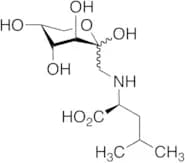
Controlled Product<p>Stability Temperature Sensitive, Light Sensitive<br>Applications 2-Ethyl-4-methylpentyl Acrylate<br></p>Formula:C11H20O2Color and Shape:NeatMolecular weight:184.28Fructose-leucine (mixture of diastereomers)
CAS:Controlled ProductFormula:C12H23NO7Color and Shape:White To BrownMolecular weight:293.31L-Methionine-3,3,4,4-d4
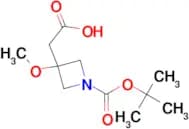
CAS:Controlled Product<p>Applications L-Methionine-3,3,4,4-d4 (CAS# 67866-75-5) is a useful isotopically labeled research compound.<br></p>Formula:C5D4H7NO2SColor and Shape:White To Off-WhiteMolecular weight:153.2362-(1-(TERT-BUTOXYCARBONYL)-3-METHOXYAZETIDIN-3-YL)ACETIC ACID
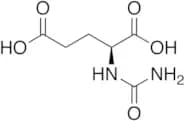
CAS:Purity:95.0%Molecular weight:245.27499389648438N-Carbamyl-L-glutamic Acid
CAS:Controlled Product<p>Applications N-Carbamyl-L-glutamic Acid has been shown to have protective effects against ammonia intoxication and is used in the treatment of acute hyperammonemia.<br>References Paik, W.K. et al.: Life Sci., 15, 1189 (1974); O'Connor, J.E. et al.: Eur. J. Pediat., 148, 540 (1989); Lee, J.H. et al.: Biochem. Biophys. Res. Chem., 248, 391 (1998);<br></p>Formula:C6H10N2O5Color and Shape:NeatMolecular weight:190.154-(3-bromophenyl)-3H,4H,5H,6H,7H-imidazo[4,5-c]pyridine-6-carboxylic acid
CAS:Purity:95.0%Molecular weight:322.16198730468755,6-Dihydro-4H-benzo[b]thieno[2,3-d]azepine-2-carboxylic acid
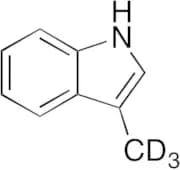
CAS:Purity:95.0%Molecular weight:245.30000305175783-Methyl-d3-indole
CAS:Controlled Product<p>Applications 3-Methyl-d3-indole has been used to prove that bioactivation of the pulmonary toxin 3-methylindole requires methyl carbon-hydrogen bond breakage in mice. 3-Methyl-d3-indole is the labeled analogue of 3-Methylindole (M313470), A naturally abundant pneumotoxin, found primarily in mammalian feces providing its strong fecal odor.<br> Not a dangerous good if item is equal to or less than 1g/ml and there is less than 100g/ml in the package<br>References Huijzer, J., et. al.: Toxicol. Appl. Pharm., 90, 60 (1987); Nakashima, T., et al.: Biol. Pharm. Bull., 32, 832 (2009); Xu, H., et al.: Chem. Pharm. Bull., 57, 321 (2009); Bodoor, K., et al.: J. Med. Chem., 52, 3753 (2009); Naskar, S., et al.: J. Chem. Res., 3, 174 (2009); Sollner, K., et al.: J. Agric. Food Chem., 57, 4319 (2009)<br></p>Formula:C92H3H6NColor and Shape:NeatMolecular weight:134.19L-Arginine-13C,d4 Dihydrochloride
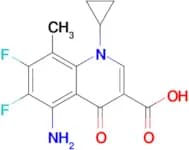
CAS:Controlled Product<p>Stability Extremely Hygroscopic<br>Applications Labelled L-Arginine (A769500). An essential amino acid for human development. Precursor for nitric oxide. Ammonia detoxicant (hepatic failure); diagnostic aid (pituitary function).<br>References Miura, T., et al.: Anal. Biochem., 139, 432 (1984), Jones, et al.: Adv. Enzyme Regul., 9, 19 (1970), Borders, C.L., et al.: Protein. Sci., 3, 541 (1994),<br></p>Formula:C5CH10D4N4O2·2HClColor and Shape:NeatMolecular weight:252.145-Amino-1-cyclopropyl-6,7-difluoro-8-methyl-4-oxo-1,4-dihydroquinoline-3-carboxylic acid
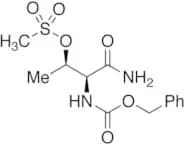
CAS:Purity:95+%Molecular weight:294.25799560546875N-Benzyloxycarbonyl L-Threonine Amide O-Methanesulfonate
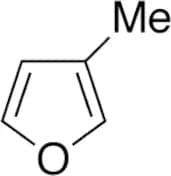
CAS:Controlled Product<p>Applications N-Benzyloxycarbonyl L-Threonine Amide O-Methanesulfonate (cas# 80082-51-5) is a compound useful in organic synthesis.<br></p>Formula:C13H18N2O6SColor and Shape:NeatMolecular weight:330.363-Methylfuran
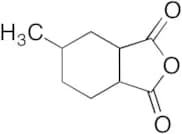
CAS:<p>Stability Very Volatile<br>Applications 3-Methylfuran is a volatile organic compound (VOCs) used as a potential non-intrusive tool for screening of lung cancer.<br> Not a dangerous good if item is equal to or less than 1g/ml and there is less than 100g/ml in the package<br>References McWilliams, et al.: Curr. Oncol. Rep., 4, 487 (2002), Buszewski, B., et al.: Biomed. Chromatogr., 21, 553 (2007), Ligor, T., et al.: J. Breath. Res., 1, 1 (2007),<br></p>Formula:C5H6OColor and Shape:Light YellowMolecular weight:82.10Hexahydro-4-methylphthalic Anhydride
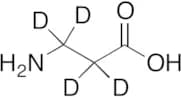
CAS:Controlled Product<p>Stability Hygroscopic, Moisture Sensitive<br>Applications Hexahydro-4-methylphthalic Anhydride, can be used in the mixture of other isomers nanofiber supported 3D interconnected BN nanosheets for epoxy nanocomposites with ultrahigh thermal management capability<br>References Chen, J., et al.: Adv. Funct. Material., 27, 5 (2017)<br></p>Formula:C9H12O3Color and Shape:NeatMolecular weight:168.190β-Alanine-2,2,3,3-D4
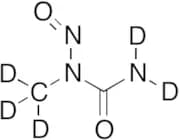
CAS:Controlled Product<p>Applications Isotope labelled β-Alanine is a naturally occurring beta amino acid. β-Alanine is formed in vivo by the degradation of dihydrouracil (D449990) and carnosine. β-Alanine is also the rate-limiting precursor of carnosine, as a result supplementation with β-alanine increases the concentration of carnosine in muscles.<br></p>Formula:C3D4H3NO2Color and Shape:NeatMolecular weight:93.12N-Methyl-N-nitroso Urea-d5 (Wetted with water >20%)
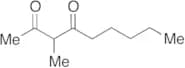
CAS:Controlled Product<p>Applications N-Methyl-N-nitroso Urea-d6 is the labelled form of N-Methyl-N-nitroso Urea (M325815), which is a precursor of Diazomethane. It has a cytotoxicity effect.<br>References Huggins, C., et al.: J. Exp. Med., 131, 321 (1970); Gullino, P.M., et al.: J. Natl. Cancer Inst., 54, 401 (1975)<br></p>Formula:C2D5N3O2Color and Shape:NeatMolecular weight:108.113-Methylnonane-2,4-dione (>80%)
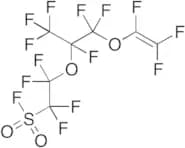
CAS:Controlled Product<p>Applications 3-Methylnonane-2,4-dione is a compound that possesses a butter-like and beany off flavour that is a result of flavour reversion of soya-bean oil. 3-Methylnonane-2,4-dione is also present in Japanese green tea and pressure-cooked hen meat.<br>References Farkaš, P., et al.: Food Chem., 60, 617 (1997); Guth, H. & Grosch, W.: Flav. Chem., No vol. given, 377 (1999); Kumazawa, K. & Masuda, H.: J. Agr. Food Chem., 47, 5169 (1999)<br></p>Formula:C10H18O2Purity:>80%Color and Shape:NeatMolecular weight:170.25Perfluoro(4-methyl-3,6-dioxaoct-7-ene)sulfonyl Fluoride
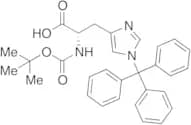
CAS:Controlled Product<p>Applications Perfluoro(4-methyl-3,6-dioxaoct-7-ene)sulfonyl Fluoride is used as a reagent in the synthesis of novel perfluorinated vinyl ether containing sulfonimide functionality which can be copolymered with tetrafluoroethylene to yield a novel perfluorinated copolymer.<br>References Zhu, S., et al.: Chinese J. Chem., 21, 921 (2003);<br></p>Formula:C7F14O4SColor and Shape:NeatMolecular weight:446.12Boc-His(Trt)-OH
CAS:Controlled Product<p>Applications Boc-His(Trt)-OH was used in the study to prepare and study structure-activity relationship of amino acid amides as selective inhibitors for dipeptidyl peptidases.<br>References Senten, K., et al.: J. Med. Chem., 46, 5005 (2003);<br></p>Formula:C30H31N3O4Color and Shape:White To Off-WhiteMolecular weight:497.588-benzyl-4-(4-fluorobenzoyl)-1-oxa-4,8-diazaspiro[4.5]decane-3-carboxylic acid
CAS:Purity:95.0%Molecular weight:398.4339904785156L-Isoleucine
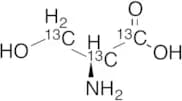
CAS:<p>Applications L-Isoleucine is classified as an essential amino acid, and is also a tumour promoter of bladder cancer in rats.<br>References Hatch, T., et al.: Infect. Immun., 12, 211 (1975); Nishio, Y., et al.: Science, 231, 843 (1986)<br></p>Formula:C6H13NO2Color and Shape:White To Off-WhiteMolecular weight:131.17L-Serine-13C3
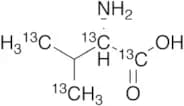
CAS:Controlled Product<p>Applications L-Serine-13C3 is the isotope labelled analog of L-Serine (S270995); a compound used in the synthesis of purines and pyrimidines as antibacterial/antifungal agents, as well as acting as a proteinogenic compound.<br>References Olivella, M. et al.: Bioorg. Med. Chem., 20, 6109 (2012)<br></p>Formula:C3H7NO3Color and Shape:NeatMolecular weight:108.07L-Valine-13C5,15N
CAS:Controlled Product<p>Applications Labelled analogue of L-Vailne. L-Valine is an essential amino acid and one of 20 proteinogenic amino acids. L-Valine cannot be manufactured by the body and must be acquired through diet or supplementation. L-valine is found in grains, dairy products, mushrooms, meats, peanuts and soy proteins. L-Valine has been used in studies to attenuate arrhythmias and induce hypotensive effects.<br>References Choi, C.W. et al.: Anim. Feed Sci. Technol., 102, 15 (2002); Kolarski, D. et al.: Krmiva, 30, 155 (1988); Oba, M. et al.: J. Dairy Sci., 93, 2044 (2010); Mitrega, K. et al.: Pharmacol. Res., 64, 218 (2011);<br></p>Formula:C5H1115NO2Color and Shape:NeatMolecular weight:123.12-(6-(4-(((9H-Fluoren-9-yl)methoxy)carbonyl)piperazin-1-yl)-4-oxoquinazolin-3(4H)-yl)acetic acid
CAS:Purity:97%Molecular weight:510.549987792968752-Ethyl-4-methyl-1-pentanol
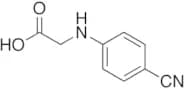
CAS:Controlled Product<p>Applications 2-Ethyl-4-methyl-1-pentanol is a volatile chemical that can be used to diagnose ratoon stunting disease in Sugar cane.<br>References Berna, A. Z., et al.: Pro. of the Conf. of the Austr. Soc. of Sugar Cane Tech., 37th, 150-157 (2015)<br></p>Formula:C8H18OColor and Shape:NeatMolecular weight:130.23N-(4-Cyanophenyl)-glycine
CAS:Controlled Product<p>Applications N-(4-Cyanophenyl)-glycine (cas# 42288-26-6) is a compound useful in organic synthesis.<br></p>Formula:C9H8N2O2Color and Shape:NeatMolecular weight:176.174-(3-phenoxyphenyl)-3H,4H,5H,6H,7H-imidazo[4,5-c]pyridine-6-carboxylic acid
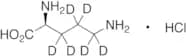
CAS:Purity:95.0%Molecular weight:335.3630065917969L-Ornithine-d6 Hydrochloride
CAS:Controlled Product<p>Applications Labelled L-Ornithine. A non-essential amino acid for human development but is required intermediate in arginine biosynthesis. L-Ornithine is found in virtually all vertebrate tissues as well as incorporated into proteins, such as tyrocidine. Isolation from chicken excreta.<br>References Fattori, D. et al.: J. Med. Chem., 50, 550 (2007); Gomez-Alonso, S. et al.: J. Agric. Food Chem., 55, 608 (2007); Subramaniam, R. et al.: Bioorg. Med. Chem. Lett., 18, 3333 (2008);<br></p>Formula:C52H6H6N2O2·ClHColor and Shape:White To Off-WhiteMolecular weight:174.662-(4-Fluorophenyl)-2-[4-(4-fluorophenyl)piperazin-1-yl]acetic acid
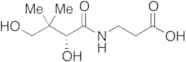
CAS:Molecular weight:332.35101318359375Pantothenic Acid (Technical Grade, Contains Lactone)
CAS:Controlled Product<p>Stability Hygroscopic<br>Applications Pantothenic Acid is a member of the B complex vitamins; essential vitamin for the biosynthesis of coenzyme A in mammalian cells. Occurs ubiquitously in all animal and plant tissue. The richest common source is liver, but jelly of the queen bee contains 6 times as much as liver. Rice bran and molasses are other good sources.<br>References Gardner, P., et al.: Food Chem., 68, 471 (2000); Ou, B., et al.: J. Agric. Food Chem., 50, 2772 (2002); Bahorun, T., et al.: J. Sci. Food Agric., 84, 1553 (2004)<br></p>Formula:C9H17NO5Color and Shape:NeatMolecular weight:219.248-ethyl-4-(3-methylbenzoyl)-1-oxa-4,8-diazaspiro[4.5]decane-3-carboxylic acid
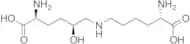
CAS:Purity:95.0%Molecular weight:332.3999938964844(2S,2’S,5S)-5-Hydroxy Lysinonorleucine
CAS:<p>Stability Hygroscopic<br>Applications 2S,2’S,5S)-5-Hydroxy Lysinonorleucine is one of the stereoisomers of 5-Hydroxylysinonorleucine, reduced collagen cross links.<br>References Astbury, C., et al.: Br. J. Rheumatol., 33, 11 (1994), Watts, N., et al.: Clin. Chem., 45, 1359 (1999), Banse, X., et al.: Bone, 31, 70 (2002),<br></p>Formula:C12H25N3O5Color and Shape:Light Orange to Brown SolidMolecular weight:291.34



![4-benzoyl-8-propyl-1-oxa-4,8-diazaspiro[4.5]decane-3-carboxylic acid](/_next/image/?url=https%3A%2Fstatic.cymitquimica.com%2Fproducts%2F10%2Fthumb-webp%2FF525714.webp&w=3840&q=75)


![2-([(TERT-BUTOXY)CARBONYL]AMINO)-5-METHOXY-5-OXOPENTANOIC ACID](/_next/image/?url=https%3A%2Fstatic.cymitquimica.com%2Fproducts%2F10%2Fthumb-webp%2FF530252.webp&w=3840&q=75)

![1-{[(2-METHYL-2-PROPANYL)OXY]CARBONYL-6-PHENYL-3-PIPERIDINECARBOXYLIC ACID](/_next/image/?url=https%3A%2Fstatic.cymitquimica.com%2Fproducts%2F10%2Fthumb-webp%2FF513063.webp&w=3840&q=75)


![4-(3-bromophenyl)-3H,4H,5H,6H,7H-imidazo[4,5-c]pyridine-6-carboxylic acid](/_next/image/?url=https%3A%2Fstatic.cymitquimica.com%2Fproducts%2F10%2Fthumb-webp%2FF522521.webp&w=3840&q=75)
![5,6-Dihydro-4H-benzo[b]thieno[2,3-d]azepine-2-carboxylic acid](/_next/image/?url=https%3A%2Fstatic.cymitquimica.com%2Fproducts%2F10%2Fthumb-webp%2FF215573.webp&w=3840&q=75)

acetic acid](/_next/image/?url=https%3A%2Fstatic.cymitquimica.com%2Fproducts%2F10%2Fthumb-webp%2FF300214.webp&w=3840&q=75)
![8-benzyl-4-(4-fluorobenzoyl)-1-oxa-4,8-diazaspiro[4.5]decane-3-carboxylic acid](/_next/image/?url=https%3A%2Fstatic.cymitquimica.com%2Fproducts%2F10%2Fthumb-webp%2FF525792.webp&w=3840&q=75)



![4-(3-phenoxyphenyl)-3H,4H,5H,6H,7H-imidazo[4,5-c]pyridine-6-carboxylic acid](/_next/image/?url=https%3A%2Fstatic.cymitquimica.com%2Fproducts%2F10%2Fthumb-webp%2FF522499.webp&w=3840&q=75)
![2-(4-Fluorophenyl)-2-[4-(4-fluorophenyl)piperazin-1-yl]acetic acid](/_next/image/?url=https%3A%2Fstatic.cymitquimica.com%2Fproducts%2F10%2Fthumb-webp%2FF300207.webp&w=3840&q=75)
![8-ethyl-4-(3-methylbenzoyl)-1-oxa-4,8-diazaspiro[4.5]decane-3-carboxylic acid](/_next/image/?url=https%3A%2Fstatic.cymitquimica.com%2Fproducts%2F10%2Fthumb-webp%2FF525702.webp&w=3840&q=75)