


Amino Acids (AA)
Amino acids (AAs) are the fundamental building blocks of proteins, playing a crucial role in various biological processes. These organic compounds are essential for protein synthesis, metabolic pathways, and cell signaling. In this category, you will find a comprehensive range of amino acids, including essential, non-essential, and modified forms, which are vital for research in biochemistry, molecular biology, and nutritional sciences. At CymitQuimica, we provide high-quality amino acids to support your research and development needs, ensuring accuracy and reliability in your experimental outcomes.
Subcategories of "Amino Acids (AA)"
- Amino Acid Derivatives(3,955 products)
- Amino Acid and Amino Acid Related Compounds(3,461 products)
- Amino Acids with Oxygen or Sulphur(168 products)
- Boc- Amino Acids(351 products)
- Fmoc Amino Acids(1,710 products)
Found 38244 products of "Amino Acids (AA)"
Sort by
Purity (%)
0
100
|
0
|
50
|
90
|
95
|
100
3-Methyl-1,5-pentanediol Diacrylate (~0.5% 4-Hydroxy Anisole as a stabilizer)
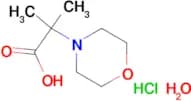
CAS:Controlled Product<p>Stability Light sensitive, Temperature Sensitive<br>Applications 3-Methyl-1,5-pentanediol Diacrylate is a useful chemical reagent.<br></p>Formula:C12H18O4Color and Shape:NeatMolecular weight:226.272-methyl-2-(4-morpholinyl)propanoic acid hydrochloride hydrate
CAS:Purity:95.0%Color and Shape:SolidMolecular weight:227.69000244140625(1-Chlorocyclohexyl)cyclohexyl-methanone
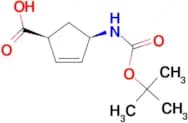
CAS:Controlled Product<p>Applications (1-Chlorocyclohexyl)cyclohexyl-methanone is a synthetic intermediate and a potential reagent for the synthesis of Dicyclomine Impurity A (B382435) and Dihexyverine Hydrochloride (D448200).<br>References Cramer, R., et al.: J. Med. Chem., 47, 6777 (2004); Vilar, S., et al.: J. Med. Chem., 49, 1118 (2006); Kopp, M., et al.: B. Soc. Chim. Fr., no vol., 84 (1952); Levy, J., et al.: CR. Soc. Biol., 144, 339 (1950)<br></p>Formula:C13H21ClOColor and Shape:NeatMolecular weight:228.76(1S,4R)-4-Boc-aminocyclopent-2-enecarboxylic acid
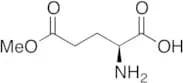
CAS:Purity:95.0%Color and Shape:SolidMolecular weight:227.25999450683594L-Glutamic Acid 5-Methyl Ester
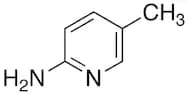
CAS:Controlled Product<p>Applications L-Glutamic acid 5-methyl ester is a protected form of L-Glutamic acid (G596960). L-Glutamic acid is a nonessential amino acid that is important to the mammalian central nervous system. L-Glutamic acid is also a neurotransmitter for cone photoreceptors in the human brain and is used as a treatment for patients who have liver disease accompanied by encephalopathy (a condition termed ‘hepatic coma’).<br>References Anderson, H., et al.: J. Nutr., 99, 82 (1969); Brandon, C. & Lam, D.: Proc. Nat. Acad. Sci., 80, 5117 (1983); McDermott Jr, W., et al.: New Engl. J. Med., 253, 1093 (1955)<br></p>Formula:C6H11NO4Color and Shape:NeatMolecular weight:161.1562-Amino-5-methylpyridine
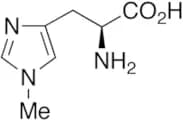
CAS:Controlled Product<p>Applications 2-Amino-5-methylpyridine (cas# 1603-41-4) is a compound useful in organic synthesis.<br> Not a dangerous good if item is equal to or less than 1g/ml and there is less than 100g/ml in the package<br>References Francotte, P., et al.: Bioorg. Med. Chem., 16, 9948 (2008), Sundaraganesan, N., et al.: J. Mol. Struc., 891, 284 (2008), Caleta, I., et al.: J. Med. Chem., 52, 1744 (2009),<br></p>Formula:C6H8N2Color and Shape:NeatMolecular weight:108.141-Methyl-L-histidine
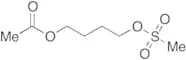
CAS:Controlled Product<p>Applications The urinary 1- and 3-methylhistidine (1- and 3-MH) metabolites as potential biomarkers of skeletal muscle toxicity. These metabolites were highly correlated to sex-, dose-, and time-dependent development of cerivastatin-induced myotoxicity. Natural but non-proteinogenic amino acid; employed as index of muscle protein breakdown.<br>References Berna, M., et al.: Anal. Chem., 79, 4199 (2007), Pritt, M., et al.: Toxicol. Sci., 103, 382 (2008), Tonomura, Y., et al.: Toxicology, 266, 48 (2009),<br></p>Formula:C7H11N3O2Color and Shape:NeatMolecular weight:169.181-Acetate 4-Methanesulfonate 1,4-Butanediol
CAS:Controlled Product<p>Stability Moisture Sensitive<br>Applications 1-Acetate 4-Methanesulfonate 1,4-Butanediol is used in the facile cleavage of ethers. A Busulfan Impurity<br>References Mazur, Y., et al.: J. Org. Chem., 36, 532 (1971);<br></p>Formula:C7H14O5SColor and Shape:NeatMolecular weight:210.25L-Citrulline-d6
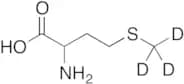
CAS:Controlled Product<p>Applications Labelled L-Citrulline. An amino acid, first isolated from the juice of watermelon, Citrullus vulgaris Schrad., Cucurbitaceae. Used in the treatment of asthenia.<br>References Kurtz, et al.: J. Biol. Chem., 122, 477 (1938), Rajantie, J., et al.: J. Pediatr., 97, 927 (1980), Carpenter, T.O., et al.: N. Engl. J. Med., 312, 290 (1985),<br></p>Formula:C62H6H7N3O3Color and Shape:NeatMolecular weight:181.22Methionine-methyl-d3
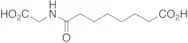
CAS:Controlled Product<p>Applications Methionine-methyl-d3 is the labeled Methionine-methyl, a useful building block.<br></p>Formula:C5D3H8NO2SColor and Shape:NeatMolecular weight:152.23Suberyl Glycine
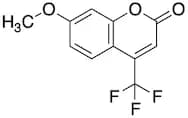
CAS:Controlled Product<p>Applications Suberylglycine is one of the acylglycines, an important class of metabolites that have been used in the diagnosis of several inborn errors of metabolism (IEM).<br>References Costa, C., et al.: J. Pharmaceut. Biomed. Anal., 21, 1215 (2000), Garcia-Villoria, J., et al.: Clin. Biochem., 42, 2 (2009), Scalbert, A., et al.: Metabolomics, 5, 435 (2009),<br></p>Formula:C10H17NO5Color and Shape:Light Yellow To BrownMolecular weight:231.257-Methoxy-4-(trifluoromethyl)coumarin
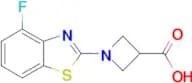
CAS:Controlled Product<p>Applications 7-Methoxy-4-(trifluoromethyl)coumarin is a biochemical for proteomics research.<br></p>Formula:C8H8BrN3Color and Shape:White To Off-WhiteMolecular weight:226.0731-(4-fluoro-1,3-benzothiazol-2-yl)azetidine-3-carboxylic acid
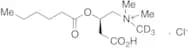
CAS:Purity:95.0%Molecular weight:252.25999450683594Hexanoyl-L-carnitine-(N-methyl-d3) Chloride
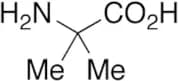
Controlled Product<p>Stability Hygroscopic<br>Applications Hexanoyl-L-carnitine-(N-methyl-d3) Chloride, is the labeled analogue of Hexanoyl-L-carnitine Hydrochloride (H294440), which is used as reactant in the synthesis of carnitine benzyl esters as prodrugs.<br>References Gong, X., et. al.: J. Chem. Res., 6, 327 (2008)<br></p>Formula:C13H23D3ClNO4Color and Shape:NeatMolecular weight:298.822-Aminoisobutyric Acid (2-Methylalanine)
CAS:Controlled Product<p>Applications 2-Methylalanine is an Alanine (A481400) derivative. Alanine is an amino acid that occurs naturally in nature. It is a functional component in the alanine cycle which regulates the level of alanine aminotransferases which can be used as a diagnostic tool to predict type II diabetes.<br>References Naveed S. et al.: Diab., 53, 11 (2004); Barlind, J. et al.: Bioorg. Med. Chem. Lett., 23, 2721 (2013);<br></p>Formula:C4H9NO2Color and Shape:NeatMolecular weight:103.12(R)-3-Amino-4-(1H-indol-3-yl)butanoic acid hydrochloride
CAS:Purity:95.0%Color and Shape:Liquid, No data available.Molecular weight:254.7100067138672Decanoyl-L-carnitine-d3 Chloride
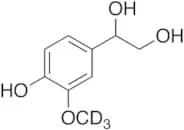
CAS:Controlled Product<p>Stability Hygroscopic<br>Applications Decanoyl-L-carnitine-d3 Chloride is the isotope labelled analog of Decanoyl-L-carnitine Chloride (D212580); a metabolite of L-Carnitine (C184110) which is an essential cofactor of fatty acid metabolism. Also required for the transport of fatty acids through the inner mitochondrial membrane.<br>References Mitchell, M.E., et al.: Am. J. Clin. Nutr., 31, 293 (1978); Lango, R., et al.: Cardiovasc. Res., 51, 21 (2001); Vaz, F.M., et al.: Biochem. J., et al.: 361, 417 (2002); Karlic, H., et al.: Nutrition, 20, 709 (2004)<br></p>Formula:C17D3H31NO4·ClColor and Shape:NeatMolecular weight:354.93rac 4-Hydroxy-3-methoxyphenylethylene Glycol-d3
CAS:Controlled Product<p>Applications A labelled metabolite of Catecholamines.<br>References Kopin, I.J., et al.: J. Biol. Chem., 236, 2109 (1961), Short, F.W., et al.: J. Med. Pharm. Chem., 5, 642 (1962)<br></p>Formula:C92H3H9O4Color and Shape:NeatMolecular weight:187.212-Methyl-4-nitroaniline-d3
CAS:Controlled Product<p>Applications A red azoic dye.<br> Not a dangerous good if item is equal to or less than 1g/ml and there is less than 100g/ml in the package<br>References Hoover, K., et al.: Chem. Res. Toxicol., 18, 1497 (2005), Altenburger, R., et al.: Environ. Toxicol. Chem., 24, 324 (2005), Gonzalez, M., et al.: Bioorg. Med. Chem., 13, 1775 (2005),<br></p>Formula:C7H5D3N2O2Color and Shape:NeatMolecular weight:155.178-benzyl-4-butanoyl-1-oxa-4,8-diazaspiro[4.5]decane-3-carboxylic acid
CAS:Purity:95.0%Molecular weight:346.4270019531251-(2-Methoxyphenethyl)piperazine
CAS:Controlled Product<p>Applications 1-(2-METHOXYPHENETHYL)PIPERAZINE (cas# 6722-54-9) is a useful research chemical.<br></p>Formula:C13H20N2OColor and Shape:NeatMolecular weight:220.323-(4-tert-Butoxycarbonylaminophenoxy)propionic acid
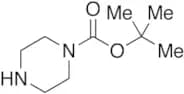
Formula:C14H19NO5Purity:85.0%Molecular weight:281.308N-Boc-piperazine
CAS:<p>Applications N-Boc-piperazine (cas# 57260-71-6) is a compound useful in organic synthesis.<br></p>Formula:C9H18N2O2Color and Shape:NeatMolecular weight:186.258-methyl-4-(naphthalene-2-carbonyl)-1-oxa-4,8-diazaspiro[4.5]decane-3-carboxylic acid
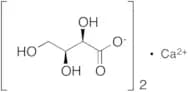
CAS:Purity:95.0%Molecular weight:354.406005859375L-Threonic Acid Calcium Salt
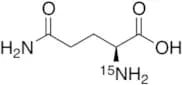
CAS:Controlled Product<p>Applications L-Threonic acid calcium salt is the salt of L-Threonic acid, a naturally occurring compound that can be found in the leaves of Pelargonium crispum. L-Threonic acid is also the degradation product of Dehydroascorbate (DHA), a metabolite of Vitamin C (A786990).<br>References Helsper, J. & Loewus, F.: Plant Phys., 69, 1365 (1982); Koch, C. & Biaglow, J.: J. Cell. Phys., 94, 299 (1978); Nielsen J., et al.: J. Agr. Food Chem., 49, 2998 (2001)<br></p>Formula:C4H7O5·CaColor and Shape:NeatMolecular weight:310.269L-Glutamine-15N
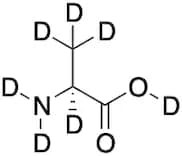
CAS:<p>Applications L-Glutamine (Alpha-15n, 98%) (cas# 80143-57-3) is a useful research chemical.<br></p>Formula:C5H1015NNO3Color and Shape:NeatMolecular weight:147.138L-Alanine-d7
CAS:Controlled Product<p>Applications L-Alanine-d7 (CAS# 74280-71-0) is a useful isotopically labeled research compound.<br></p>Formula:C3D7NO2Color and Shape:Off-WhiteMolecular weight:96.144-{[(1-methyl-1H-benzimidazol-2-yl)methyl]amino}benzoic acid
CAS:Purity:95.0%Molecular weight:281.315002441406254-{[4-(dimethylamino)phenyl]methylidene}-1,2,3,4-tetrahydroacridine-9-carboxylic acid
CAS:Purity:95%Molecular weight:358.4414-Chloro-3-cyano-6-methoxy-7-[3-(4-methylpiperazin-1-yl)propoxy]quinoline
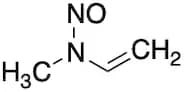
CAS:<p>Stability Hygroscopic<br>Applications 4-Chloro-3-cyano-6-methoxy-7-[3-(4-methylpiperazin-1-yl)propoxy]quinoline is a useful reagent to prepare benzofuranyl derivatives for treating solid tumours. It is also an impurity of Bosutinib.<br>References Hennequin, L. F. A. PCT Int. Appl. (2003), WO 2003047585 A1 20030612 (2003); Hennequin, L. F. A., Gibson, K. H., Foote, K. M. PCT Int. Appl. WO 2003047582 A1 20030612 (2003)<br></p>Formula:C19H23ClN4O2Color and Shape:Off White SolidMolecular weight:374.86N-Methyl-N-nitroso-ethenamine
CAS:<p>Applications N-Methyl-N-nitroso-ethenamine is used as research reagent for base induced fragmentation to give aldehydes or ketones and smaller alkylnitrosamine<br>References Leoppky, R.N., et al.: J Org. Chem, 23, 135(1982)<br></p>Formula:C3H6N2OColor and Shape:YellowMolecular weight:86.092-ACETAMIDO-2-(1-BOC-PIPERIDIN-4-YL)PROPANOIC ACID
CAS:Purity:95.0%Color and Shape:SolidMolecular weight:314.3819885253906L,L-Dityrosine Dihydrochloride
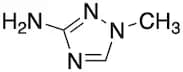
CAS:Controlled Product<p>Stability Hygroscopic<br>Applications Dityrosine (DY), a tyrosine dimer formed by 3,3’-biaryl bond formation can be used as a biomarker to detect oxidative protein damage and selective proteolysis. Fluorescence intensity decays of Dityrosine are generally characterized by two decay components, one with a lifetime in the range of 150 to 800 ps and another between 2.5 and 4.5 ns.<br>References Libertini, L., et al.: Biophys. J., 47, 765 (1985), Huggins, T., et al.: J. Biol. Chem., 268, 12341 (1993), Malencik, D., et al.: Biochemistry, 35, 4375 (1996),<br></p>Formula:C18H20N2O6·2ClHColor and Shape:NeatMolecular weight:433.281-Methyl-1h-1,2,4-triazol-3-amine
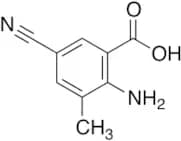
CAS:Controlled Product<p>Applications 1-Methyl-1h-1,2,4-triazol-3-amine (cas# 49607-51-4) is a useful research chemical.<br></p>Formula:C3H6N4Color and Shape:NeatMolecular weight:98.1062-Amino-5-cyano-3-methylbenzoicAcid
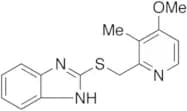
CAS:Controlled Product<p>Applications 2-Amino-5-cyano-3-methylbenzoic Acid (cas# 871239-18-8) is a useful research chemical.<br></p>Formula:C9H8N2O2Color and Shape:NeatMolecular weight:176.1724-Desmethoxypropoxyl-4-methoxy S-Deoxo Rabeprazole
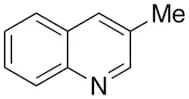
CAS:Controlled Product<p>Impurity Rabeprazole EP Impurity G<br>Applications Used in the preparation of 2-[[(2-pyridyl)methyl]thio]-1H-benzimidazoles derivatives as anti helicobacter pylori agents.<br>References Kuehler, T. et al.: J. Med. Chem., 41, 1777 (1998)<br></p>Formula:C15H15N3OSColor and Shape:WhiteMolecular weight:285.363-Methylquinoline
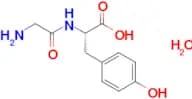
CAS:Controlled Product<p>Applications It can be degraded efficiently by the QL-degrading bacteria.<br>References Shukla, O., et al.: Microbios., 59, 47 (1989), Oh, Y; Biotechnol Bioeng 1994, 44, 533,,,<br></p>Formula:C10H9NColor and Shape:NeatMolecular weight:143.19(S)-2-(2-Aminoacetamido)-3-(4-hydroxyphenyl)propanoic acid hydrate
CAS:Purity:95.0%Molecular weight:256.257995605468754-(2-chlorobenzoyl)-8-propyl-1-oxa-4,8-diazaspiro[4.5]decane-3-carboxylic acid
CAS:Purity:95.0%Molecular weight:366.83999633789068-ethyl-4-(thiophene-2-carbonyl)-1-oxa-4,8-diazaspiro[4.5]decane-3-carboxylic acid
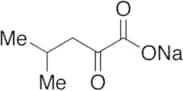
CAS:Purity:95.0%Molecular weight:324.39999389648444-Methyl-2-oxovaleric Acid Sodium Salt
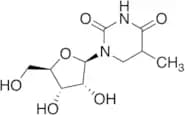
CAS:Controlled Product<p>Stability Hygroscopic<br>Applications 4-Methyl-2-oxovaleric Acid is an α-ketomonocarboxylic acid that triggers insulin release by acting upon receptor sites which differ from those occupied by amino acids. 4-Methyl-2-oxovaleric Acid is an intermediate in the metabolism of Leucine.<br>References Panten, U. et al.: Naun.-Schmied. Arch. Pharmacol., 291, 405 (1975); Vague, P. et al.: Diab. Metab., 1, 185 (1975); Francois, G. et al.: Lancet, 1, 858 (1984);<br></p>Formula:C6H9O3·NaColor and Shape:NeatMolecular weight:152.125,6-Dihydro-5-methyluridine
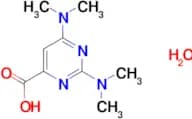
CAS:Controlled Product<p>Applications 5,6-Dihydro-5-methyluridine (cas# 23067-10-9) is a useful research chemical.<br></p>Formula:C10H16N2O6Color and Shape:NeatMolecular weight:260.242,4-Bis(dimethylamino)pyrimidine-6-carboxylic acid, hydrate
CAS:Formula:C9H16N4O3Purity:95.0%Molecular weight:228.2528-benzyl-4-(pyridine-4-carbonyl)-1-oxa-4,8-diazaspiro[4.5]decane-3-carboxylic acid
CAS:Purity:95.0%Molecular weight:381.4320068359375









![8-benzyl-4-butanoyl-1-oxa-4,8-diazaspiro[4.5]decane-3-carboxylic acid](/_next/image/?url=https%3A%2Fstatic.cymitquimica.com%2Fproducts%2F10%2Fthumb-webp%2FF525788.webp&w=3840&q=75)


![8-methyl-4-(naphthalene-2-carbonyl)-1-oxa-4,8-diazaspiro[4.5]decane-3-carboxylic acid](/_next/image/?url=https%3A%2Fstatic.cymitquimica.com%2Fproducts%2F10%2Fthumb-webp%2FF525638.webp&w=3840&q=75)

![4-{[(1-methyl-1H-benzimidazol-2-yl)methyl]amino}benzoic acid](/_next/image/?url=https%3A%2Fstatic.cymitquimica.com%2Fproducts%2F10%2Fthumb-webp%2FF314477.webp&w=3840&q=75)
![4-{[4-(dimethylamino)phenyl]methylidene}-1,2,3,4-tetrahydroacridine-9-carboxylic acid](/_next/image/?url=https%3A%2Fstatic.cymitquimica.com%2Fproducts%2F10%2Fthumb-webp%2FF985969.webp&w=3840&q=75)
![4-Chloro-3-cyano-6-methoxy-7-[3-(4-methylpiperazin-1-yl)propoxy]quinoline](/_next/image/?url=https%3A%2Fstatic.cymitquimica.com%2Fproducts%2FTR%2Fthumb-webp%2FC380750.webp&w=3840&q=75)


![4-(2-chlorobenzoyl)-8-propyl-1-oxa-4,8-diazaspiro[4.5]decane-3-carboxylic acid](/_next/image/?url=https%3A%2Fstatic.cymitquimica.com%2Fproducts%2F10%2Fthumb-webp%2FF525717.webp&w=3840&q=75)
![8-ethyl-4-(thiophene-2-carbonyl)-1-oxa-4,8-diazaspiro[4.5]decane-3-carboxylic acid](/_next/image/?url=https%3A%2Fstatic.cymitquimica.com%2Fproducts%2F10%2Fthumb-webp%2FF525675.webp&w=3840&q=75)

![8-benzyl-4-(pyridine-4-carbonyl)-1-oxa-4,8-diazaspiro[4.5]decane-3-carboxylic acid](/_next/image/?url=https%3A%2Fstatic.cymitquimica.com%2Fproducts%2F10%2Fthumb-webp%2FF525808.webp&w=3840&q=75)