


Amino Acids (AA)
Amino acids (AAs) are the fundamental building blocks of proteins, playing a crucial role in various biological processes. These organic compounds are essential for protein synthesis, metabolic pathways, and cell signaling. In this category, you will find a comprehensive range of amino acids, including essential, non-essential, and modified forms, which are vital for research in biochemistry, molecular biology, and nutritional sciences. At CymitQuimica, we provide high-quality amino acids to support your research and development needs, ensuring accuracy and reliability in your experimental outcomes.
Subcategories of "Amino Acids (AA)"
- Amino Acid Derivatives(3,955 products)
- Amino Acid and Amino Acid Related Compounds(3,464 products)
- Amino Acids with Oxygen or Sulphur(168 products)
- Boc- Amino Acids(351 products)
- Fmoc Amino Acids(1,710 products)
Found 38247 products of "Amino Acids (AA)"
Sort by
Purity (%)
0
100
|
0
|
50
|
90
|
95
|
100
rac (8-Hydroxyquinolin-3-yl)alanine Dihydrochloride
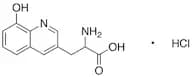
CAS:Controlled Product<p>Stability Hygroscopic<br>Applications Genetic incorporation of a metal-ion chelating amino acid into proteins as a biophysical probe.<br>References McRee, D., et al.: J. Struct. Biol., 125, 156 (1999), Wang, L., et al.: Science, 292, 498 (2001), Ioerger, T., et al.: Methods Enzymol., 374, 244 (2003),<br></p>Formula:C12H12N2O3·2ClHColor and Shape:NeatMolecular weight:305.16α-(2,3-Dimethylphenyl)-α-methyl-1H-imidazole-5-methanol
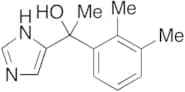
CAS:Controlled Product<p>Applications α-(2,3-Dimethylphenyl)-α-methyl-1H-imidazole-5-methanol is used as a reagent in the synthesis of Medetomidine (M203250); an α2-adrenergic agonist. Also a sedative and analgesic.<br>References Scheinin, M., et al.: Br. J. Clin. Pharmacol., 24, 443 (1987); Stenberg, D., et al.: J. Vet. Pharmacol. Ther., 10, 319 (1987); Virtanen, R., et al.: Eur. J. Pharmacol., 150, 9 (1988); Cullen, L.K., et al.: Br. Vet. J., 152, 519 (1996); Chen, W., et al.: Faming Zhuanli Shenqing. CN 101921234 A 20101222. Dec 22, 2010<br></p>Formula:C13H16N2OColor and Shape:Light Yellow To BeigeMolecular weight:216.281-Amino-2-Methylnaphthalene
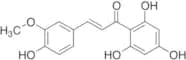
CAS:<p>Applications 1-AMINO-2-METHYLNAPHTHALENE (cas# 2246-44-8) is a useful research chemical.<br></p>Formula:C11H11NColor and Shape:NeatMolecular weight:157.213-Methoxy-2',4',6',4-tetrahydroxychalcone (>80%)
CAS:Controlled Product<p>Applications 3-Methoxy-2',4',6',4-tetrahydroxychalcone piperidine complex (cas# 52218-19-6) is a useful research chemical.<br></p>Formula:C16H14O6Purity:>80%Color and Shape:NeatMolecular weight:302.284-Methoxy-2-methylaniline
CAS:Controlled ProductFormula:C8H11NOColor and Shape:NeatMolecular weight:137.18endo-9-Methyl-9-azabicyclo[3.3.1]nonan-3-amine Acetate
CAS:Controlled Product<p>Stability Hygroscopic<br>Applications endo-9-Methyl-9-azabicyclo[3.3.1]nonan-3-amine Acetate is an impurity of Granisetron HCl (G780000), a serotonin 5-HT3 receptor antagonist used as an antiemetic to treat nausea and vomiting following chemotherapy<br>References Kilpatrick, G.J., et al.: Nature, 330, 746 (1987), Durig, T., et al.: J. Pharm. Sci., 86, 1092 (1997), Yuasa, H., et al.: Chem. Pharm. Bull., 44, 1361 (1996),<br></p>Formula:C9H18N2·C2H4O2Color and Shape:NeatMolecular weight:214.3N-Methyl-N-nitroso-1-hexadecylamine
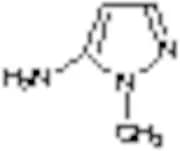
CAS:<p>Applications N-Methyl-N-nitroso-1-hexadecanamine is a compound found in a wide range of cosmetic products and cleaning emulsions.<br> Not a dangerous good if item is equal to or less than 1g/ml and there is less than 100g/ml in the package<br>References Kamp, E.. et al.: Food. Chem. Toxicol., 29, 203 (1991); Lalljie, S. P. D., et al.: Adv. Mass. Spec., 14, 33790 (1998); Abidi, S.L., et al.: J. Chroma., 324, 209 (1985);<br></p>Formula:C17H36N2OColor and Shape:White To Light YellowMolecular weight:284.485-Amino-1-methylpyrazole
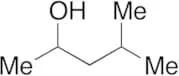
CAS:Controlled ProductFormula:C4H7N3Color and Shape:NeatMolecular weight:97.124-Methyl-2-pentanol
CAS:<p>Applications 4-Methyl-2-pentanol is used in the synthesis of 4-quinolone derivatives as high-affinity ligands for the brain GABAA receptors. Also used in the preparation of antimycotic imadazoles, as antifungals.<br> Not a dangerous good if item is equal to or less than 1g/ml and there is less than 100g/ml in the package<br>References Lager, E. et al.: J. Med. Chem., 49, 2526 (2006); Heeres, J. et al.: J. Med. Chem., 22, 1003 (1979);<br></p>Formula:C6H14OColor and Shape:Clear ColourlessMolecular weight:102.17Fmoc N-Hydroxysuccinimide Ester
CAS:<p>Stability Moisture Sensitive<br>Applications Used in conjunction with Isothiocyanate to conduct partial Edman Degradation on biologically active peptides.<br> Not a dangerous good if item is equal to or less than 1g/ml and there is less than 100g/ml in the package<br>References Heidenreich, O., et al.: J. Biol. Chem., 269, 2131 (1994), Kothe, U., et al.: Anal. Biochem., 356, 148 (2006), Thakkar, A., et al.: Anal. Chem., 78, 5935 (2006),<br></p>Formula:C19H15NO5Color and Shape:NeatMolecular weight:337.334-(3-phenoxyphenyl)-3H,4H,5H,6H,7H-imidazo[4,5-c]pyridine-6-carboxylic acid
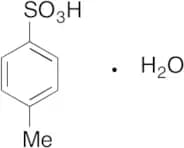
CAS:Purity:95.0%Molecular weight:335.36300659179694-Methylbenzenesulfonic Acid Monohydrate
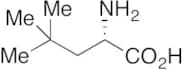
CAS:Controlled Product<p>Impurity Lisinopril EP Impurity B/ Anastrozole EP Impurity F<br>Applications 4-Methylbenzenesulfonic Acid Monohydrate (Lisinopril EP Impurity B) is used in the synthesis of resveratrol. Also used in the synthesis of oxane derivatives as antimalarial agents.<br> Not a dangerous good if item is equal to or less than 1g/ml and there is less than 100g/ml in the package<br>References Davis, M. et al.: Org. Prep. Proc. Int., 45, 304 (2013); Wang, X. et al.: J. Med. Chem., 56, 2547 (2013);<br></p>Formula:C7H8O3S·H2OColor and Shape:WhiteMolecular weight:190.22L-Leucine
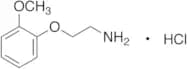
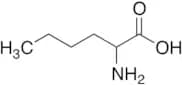
CAS:Controlled Product<p>Applications L-Leucine is an essential amino acid. L-Leucine acts as a nutrient signal to stimulate protein synthesis. It has also activates the mammalian target of rapamycin kinase that regulates cell growth.<br>References Demant, T. et al.: Am. J. Physiol., 270, E1022 (1996); Diraison, F. et al.: Am. J. Physiol., 277, E529 (1999); Suryawan, A. et al.: J. Anim. Sci., 89, 2004 (2011); Peyrollier, K. et al.: Biochem. J., 350, 361 (2000);<br></p>Formula:C6H13NO2Color and Shape:NeatMolecular weight:131.172-(2-Methoxyphenoxy)ethylamine Hydrochloride
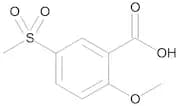
CAS:<p>Impurity Carvedilol EP Impurity E; Carvedilol Impurity E; Carvedilol USP E<br>Applications 2-(2-Methoxyphenoxy)ethylamine Hydrochloride (Carvedilol EP Impurity E; Carvedilol Impurity E; Carvedilol USP E) is an impurity of Carvedilol synthesis.<br>References Smith, L., et al.: J. Med. Chem., 20, 1653 (1977),<br></p>Formula:C9H13NO2·ClHColor and Shape:NeatMolecular weight:203.672-Methoxy-5-(methylsulfonyl)benzoic Acid
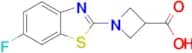
CAS:<p>Applications 2-Methoxy-5-(methylsulfonyl)benzoic acid (cas# 50390-76-6) is a useful research chemical.<br></p>Formula:C9H10O5SColor and Shape:NeatMolecular weight:230.241-(6-fluoro-1,3-benzothiazol-2-yl)azetidine-3-carboxylic acid
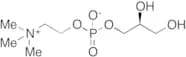
CAS:Purity:95.0%Molecular weight:252.25999450683594(S)-α-Glycerophosphocholine
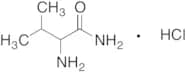
CAS:Controlled Product<p>Stability Hygroscopic<br>Applications α-Glycerylphosphorylcholine is a parasympathomimetic acetylcholine precursor which may have potential for the treatment of Alzheimer's disease and other dementias.<br>References Moreno, M., et al.: Clin. Ther., 25, 178 (2003); Parnetti, L., et al.: J. Neurol. Sci., 257, 264 (2007); Doggrell, S., et al.: Expert Opin. Investig. Drugs, 12, 1633 (2003)<br></p>Formula:C8H20NO6PColor and Shape:NeatMolecular weight:257.222-Amino-3-methylbutanamide Hydrochloride
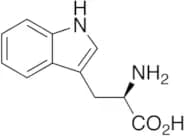
CAS:<p>Applications 2-amino-3-methylbutanamide Hydrochloride is a useful research chemical for the degradation studies of antibiotic MDL 62,879 (GE2270A), and a reagent for peptide synthesis.<br>References Tavecchia, P., et al.: Tetrahedron, 51, 4867 (1995); Gazis, E., et al.: Peptides, Proc. Eur. Symp., 6th, Athens, 1963, 107 (1966)<br></p>Formula:C5H12N2O·HClColor and Shape:NeatMolecular weight:152.622D-Tryptophan
CAS:Controlled Product<p>Applications An essential amino acid found in naturally produced peptides. Unlike its stereoisomer, L-tryptophan, it is not used in structural or enzyme proteins.<br>References Karunakaran, S.et al.: Bochem. J., 414, 343 (2008); Pallaghy, P.K. et al.: Biochem., 38, 11553 (1999);<br></p>Formula:C11H12N2O2Color and Shape:NeatMolecular weight:204.236-Methoxy-N2-methylpyridine-2,3-diamine Dihydrochloride
CAS:Controlled Product<p>Applications 6-Methoxy-N2-methylpyridine-2,3-diamine dihydrochloride (cas# 83732-72-3) is a useful research chemical.<br></p>Formula:C7H13Cl2N3OColor and Shape:NeatMolecular weight:226.18-ethyl-4-(4-methylbenzoyl)-1-oxa-4,8-diazaspiro[4.5]decane-3-carboxylic acid
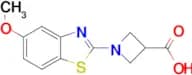
CAS:Purity:95.0%Molecular weight:332.39999389648441-(5-methoxy-1,3-benzothiazol-2-yl)azetidine-3-carboxylic acid
CAS:Purity:95.0%Molecular weight:264.29998779296875a-Methacrylic Acid
CAS:Controlled Product<p>Stability Light Sensitive<br>Applications α-Methacrylic acid is used in chemistry as a stabilizing agent, forming a thin capping layer on the surface of nanoparticles. α-Methacrylic acid is also used as a surfactant, so that control is maintained during nanocrystal growth. α-Methacrylic acid is also used as a chelating agent.<br> Not a dangerous good if item is equal to or less than 1g/ml and there is less than 100g/ml in the package<br>References Peng, W., et al.: J. Cryst. Growth, 279, 454 (2005); Qu, S., et al.: Appl. Phys. Lett., 80, 3605 (2002); Zhao, G., et al.: Phys. C: Supercond., 468, 2317 (2008)<br></p>Formula:C4H6O2Color and Shape:ColourlessMolecular weight:86.092-methyl-1-[4-(trifluoromethyl)phenyl]propan-1-one
CAS:Controlled Product<p>Applications 2-methyl-1-[4-(trifluoromethyl)phenyl]propan-1-one (cas# 64436-58-4) is a useful research chemical.<br></p>Formula:C11H11OF3Color and Shape:NeatMolecular weight:216.19D-Lysine hydrochloride
CAS:Controlled Product<p>Applications D-Lysine, HCl<br></p>Formula:C6H14N2O2·ClHColor and Shape:NeatMolecular weight:182.649(6Z)-8-Methyl-6-nonenoic Acid (up to 10% trans isomer)
CAS:Controlled Product<p>Applications Used in the synthesis of Capsaicin analogues, useful for their anti-tumor activity.<br>References Fusco, B., et al.: Drugs, 53, 909 (1997), Buisman, G., et al.: Biotechnol. Lett., 20, 131 (1998), Kobata, K., et al.: Bios. Biotechnol. Biochem., 66, 319 (2002), Aluru, M., et al.: J. Exp. Bot., 54, 1655 (2003),; Wang, W. et al.: Gaodeng Xuexiao Huaxue Xuebao 31, 2400(2010)<br></p>Formula:C10H18O2Color and Shape:NeatMolecular weight:170.254-(2-phenylacetyl)-8-propyl-1-oxa-4,8-diazaspiro[4.5]decane-3-carboxylic acid
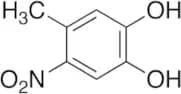
CAS:Purity:95.0%Molecular weight:346.4270019531254-Methyl-5-nitrocatechol
CAS:Controlled Product<p>Applications MNC is on the metabolic pathway for 2,4-Dinitotoluene degradation.<br>References Spangoord, R.J., et al.: App. and Environ. Microbiology, 57, 11, 3200 (1991)<br></p>Formula:C7H7NO4Color and Shape:NeatMolecular weight:169.132-Methyl-5-nitrobenzenesulfonamide
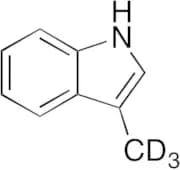
CAS:Controlled Product<p>Applications 2-Methyl-5-nitrobenzenesulfonamide is a chemical reagent in the synthesis of good inhibitors of cancer-related carbonic anhydrase. Also used in the synthesis of novel deacetylase inhibitors used in anti-tumor therapy.<br>References Moeker, J. et al.: J. Med. Chem., 57, 3522 (2014); Han, L. et al.: Bioorg. Med. Chem., 22, 1529 (2014);<br></p>Formula:C7H8N2O4SColor and Shape:Yellowish SolidMolecular weight:216.213-Methyl-d3-indole
CAS:Controlled Product<p>Applications 3-Methyl-d3-indole has been used to prove that bioactivation of the pulmonary toxin 3-methylindole requires methyl carbon-hydrogen bond breakage in mice. 3-Methyl-d3-indole is the labeled analogue of 3-Methylindole (M313470), A naturally abundant pneumotoxin, found primarily in mammalian feces providing its strong fecal odor.<br> Not a dangerous good if item is equal to or less than 1g/ml and there is less than 100g/ml in the package<br>References Huijzer, J., et. al.: Toxicol. Appl. Pharm., 90, 60 (1987); Nakashima, T., et al.: Biol. Pharm. Bull., 32, 832 (2009); Xu, H., et al.: Chem. Pharm. Bull., 57, 321 (2009); Bodoor, K., et al.: J. Med. Chem., 52, 3753 (2009); Naskar, S., et al.: J. Chem. Res., 3, 174 (2009); Sollner, K., et al.: J. Agric. Food Chem., 57, 4319 (2009)<br></p>Formula:C92H3H6NColor and Shape:NeatMolecular weight:134.192-Methyl-d3-propyl-3,3,3-d3 Alcohol
CAS:Controlled Product<p>Applications 2-Methyl-d3-propyl-3,3,3-d3 Alcohol (CAS# 72182-69-5) is a useful isotopically labeled research compound.<br></p>Formula:C4D6H4OColor and Shape:NeatMolecular weight:80.16N-Benzyloxycarbonyl L-Threonine Amide
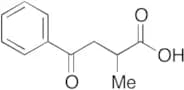
CAS:Controlled Product<p>Applications Threonine derivative used in the synthesis of peptide.<br>References Dekker, C.A., et al.: J. Biol. Chem., 180, 155 (1949),<br></p>Formula:C12H16N2O4Color and Shape:NeatMolecular weight:252.272-Methyl-4-oxo-4-phenylbutyric Acid
CAS:Controlled Product<p>Applications 2-Methyl-4-oxo-4-phenylbutyric Acid is a chemical reagent used in the synthesis of various pharmaceutically active compounds. Used in the synthesis of Minozac, a suppressor of brain proinflammatory cytokine up-regulation.<br>References Hu, W. et al.: Bioog. Med. Chem. Lett., 17, 414 (2007); Qabaja, G. ET AL.: J. ORG. CHEM., 80, 133 (2015);<br></p>Formula:C11H12O3Color and Shape:NeatMolecular weight:192.21N-Methylcytisine
CAS:<p>Applications N-Methylcytisine (cas# 486-86-2) is a compound useful in organic synthesis.<br></p>Formula:C12H16N2OColor and Shape:Off-WhiteMolecular weight:204.27Homocysteine-13C4,15N
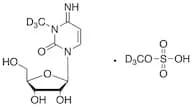
CAS:Controlled ProductFormula:C4H9NO2SColor and Shape:NeatMolecular weight:140.143-Methyl Cytidine-d3 Methosulfate-d3
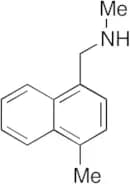
CAS:Controlled Product<p>Applications Labelled Cytidine derivative.<br>References Ueda, T., et al.: Chem. Pharmaceut. Bull., 22, 2377 (1974),<br></p>Formula:C10D3H12N3O5·CD3HO4SColor and Shape:NeatMolecular weight:375.385Methyl(4-methylnaphthalen-1-ylmethyl)amine
CAS:Controlled Product<p>Applications Methyl(4-methylnaphthalen-1-ylmethyl)amine is a reagent in the preparation of heterocyclic compounds as enoyl-acyl carrier protein reductase FabI inhibitors and antibacterial agents.<br>References Stuetz, A., et al.: J. Med. Chem., 29, 112 (1986); Berman, J., et al.: PCT Int. Appl., 2004:515512 (2004)<br></p>Formula:C13H15NColor and Shape:NeatMolecular weight:185.261-Boc-4-(carboxy-naphthalen-2-yl-methyl)-[1,4]diazepane
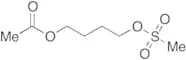
CAS:Purity:96%Molecular weight:384.476013183593751-Acetate 4-Methanesulfonate 1,4-Butanediol
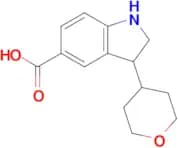
CAS:Controlled Product<p>Stability Moisture Sensitive<br>Applications 1-Acetate 4-Methanesulfonate 1,4-Butanediol is used in the facile cleavage of ethers. A Busulfan Impurity<br>References Mazur, Y., et al.: J. Org. Chem., 36, 532 (1971);<br></p>Formula:C7H14O5SColor and Shape:NeatMolecular weight:210.253-(Tetrahydro-2H-pyran-4-yl)indoline-5-carboxylic acid
CAS:Purity:97%Molecular weight:247.29400634765625Ethyl 2-Chloro-2-(2-(4-methoxyphenyl)hydrazono)acetate
CAS:Controlled Product<p>Applications Ethyl 2-chloro-2-(2-(4-methoxyphenyl)hydrazono)acetate (cas# 27143-07-3) is a useful research chemical.<br></p>Formula:C11H13N2O3ClColor and Shape:NeatMolecular weight:256.684-(3,4-dichlorobenzoyl)-8-ethyl-1-oxa-4,8-diazaspiro[4.5]decane-3-carboxylic acid
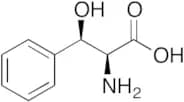
CAS:Purity:95.0%Molecular weight:387.260009765625L-threo-Phenylserine
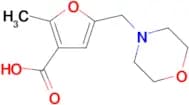
CAS:Controlled Product<p>Applications L-threo-Phenylserine is a valuable chiral synthon.<br></p>Formula:C9H11NO3Color and Shape:NeatMolecular weight:181.192-Methyl-5-morpholin-4-ylmethyl-furan-3-carboxylic acid
CAS:Formula:C11H15NO4Purity:98%Color and Shape:SolidMolecular weight:225.2445-Aminolevulinic Acid Methyl Ester Hydrochloride
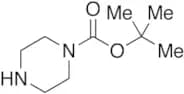
CAS:Controlled Product<p>Applications 5-Aminolevulinic Acid Methyl Ester Hydrochloride, is the methyl ester of Aminolevulinic Acid (ALA) (A611780), which has been shown to have higher lipophilicity, and to be highly efficient at inducing protoporphyrin IX (PpIX) production in cell culture.<br>References Morrow, D. I. J., et al.: J. Pharmac. Sci., 99, 3486 (2010); Peng, Q., et al.: Cancer, 79, 2282 (1997);<br></p>Formula:C6H11NO3·HClColor and Shape:NeatMolecular weight:181.62N-Boc-piperazine
CAS:<p>Applications N-Boc-piperazine (cas# 57260-71-6) is a compound useful in organic synthesis.<br></p>Formula:C9H18N2O2Color and Shape:NeatMolecular weight:186.252-(1'-(tert-Butoxycarbonyl)-2,3-dihydrospiro[indene-1,4'-piperidin]-3-yl)acetic acid
CAS:Purity:97%Molecular weight:345.43899536132814-{[(Pyridin-3-ylmethyl)amino]methyl}benzoic acid
CAS:Formula:C14H14N2O2Purity:98%Color and Shape:SolidMolecular weight:242.278



![endo-9-Methyl-9-azabicyclo[3.3.1]nonan-3-amine Acetate](/_next/image/?url=https%3A%2Fstatic.cymitquimica.com%2Fproducts%2FTR%2Fthumb-webp%2FM288615.webp&w=3840&q=75)


![4-(3-phenoxyphenyl)-3H,4H,5H,6H,7H-imidazo[4,5-c]pyridine-6-carboxylic acid](/_next/image/?url=https%3A%2Fstatic.cymitquimica.com%2Fproducts%2F10%2Fthumb-webp%2FF522499.webp&w=3840&q=75)


![8-ethyl-4-(4-methylbenzoyl)-1-oxa-4,8-diazaspiro[4.5]decane-3-carboxylic acid](/_next/image/?url=https%3A%2Fstatic.cymitquimica.com%2Fproducts%2F10%2Fthumb-webp%2FF525674.webp&w=3840&q=75)

![2-methyl-1-[4-(trifluoromethyl)phenyl]propan-1-one](/_next/image/?url=https%3A%2Fstatic.cymitquimica.com%2Fproducts%2FTR%2Fthumb-webp%2FB489000.webp&w=3840&q=75)


![4-(2-phenylacetyl)-8-propyl-1-oxa-4,8-diazaspiro[4.5]decane-3-carboxylic acid](/_next/image/?url=https%3A%2Fstatic.cymitquimica.com%2Fproducts%2F10%2Fthumb-webp%2FF525718.webp&w=3840&q=75)





![1-Boc-4-(carboxy-naphthalen-2-yl-methyl)-[1,4]diazepane](/_next/image/?url=https%3A%2Fstatic.cymitquimica.com%2Fproducts%2F10%2Fthumb-webp%2FF736020.webp&w=3840&q=75)

![4-(3,4-dichlorobenzoyl)-8-ethyl-1-oxa-4,8-diazaspiro[4.5]decane-3-carboxylic acid](/_next/image/?url=https%3A%2Fstatic.cymitquimica.com%2Fproducts%2F10%2Fthumb-webp%2FF525681.webp&w=3840&q=75)

![2-(1'-(tert-Butoxycarbonyl)-2,3-dihydrospiro[indene-1,4'-piperidin]-3-yl)acetic acid](/_next/image/?url=https%3A%2Fstatic.cymitquimica.com%2Fproducts%2F10%2Fthumb-webp%2FF601926.webp&w=3840&q=75)
![4-{[(Pyridin-3-ylmethyl)amino]methyl}benzoic acid](/_next/image/?url=https%3A%2Fstatic.cymitquimica.com%2Fproducts%2F10%2Fthumb-webp%2FF015160.webp&w=3840&q=75)