Amino Acids (AA)
Amino acids (AAs) are the fundamental building blocks of proteins, playing a crucial role in various biological processes. These organic compounds are essential for protein synthesis, metabolic pathways, and cell signaling. In this category, you will find a comprehensive range of amino acids, including essential, non-essential, and modified forms, which are vital for research in biochemistry, molecular biology, and nutritional sciences. At CymitQuimica, we provide high-quality amino acids to support your research and development needs, ensuring accuracy and reliability in your experimental outcomes.
Subcategories of "Amino Acids (AA)"
- Amino Acid Derivatives(3,955 products)
- Amino Acid and Amino Acid Related Compounds(3,461 products)
- Amino Acids with Oxygen or Sulphur(168 products)
- Boc- Amino Acids(351 products)
- Fmoc Amino Acids(1,710 products)
Found 38244 products of "Amino Acids (AA)"
Sort by
Purity (%)
0
100
|
0
|
50
|
90
|
95
|
100
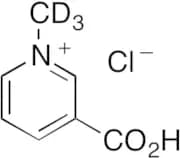
Trigonelline-d3 Hydrochloric Acid Salt (N-methyl-d3)
CAS:Controlled Product<p>Stability Hygroscopic<br>Applications Trigonelline-d3 HCl is deuterium labelled Trigonelline HCl. Trigonelline HCl has utility in developing site-specific system that delivers drugs to the brain. It has also been suggested as a potential anti-Alzheimer disease agent.<br>References Bodor, N., et al.: J. Med. Chem 26, 313 (1983); Makowska, J., et al.: J. Chromatogr. B 968, 101 (2014)<br></p>Formula:C7D3H5NO2·ClColor and Shape:NeatMolecular weight:176.624-(2H-1,3-benzodioxol-5-yl)-3H,4H,5H,6H,7H-imidazo[4,5-c]pyridine-6-carboxylic acid
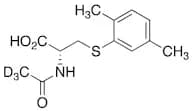
CAS:Purity:95.0%Molecular weight:287.2749938964844N-Acetyl-S-(2,5-dimethylbenzene)-L-cysteine-d3
CAS:Controlled Product<p>Applications N-Acetyl-S-(2,5-dimethylbenzene)-L-cysteine-d3 (cas# 1331909-07-9) is a compound useful in organic synthesis.<br>References Gonzalez-Reche, L., et al.: Arch. Toxicol., 77, 80 (2003),<br></p>Formula:C13H14D3NO3SColor and Shape:NeatMolecular weight:270.364-(4-chloro-2-fluorobenzoyl)-8-propyl-1-oxa-4,8-diazaspiro[4.5]decane-3-carboxylic acid
CAS:Purity:95.0%Molecular weight:384.82998657226564-(3,4-dichlorobenzoyl)-8-ethyl-1-oxa-4,8-diazaspiro[4.5]decane-3-carboxylic acid
CAS:Purity:95.0%Molecular weight:387.260009765625(S)-3-Amino-4-((carboxymethyl)amino)-4-oxobutanoic acid
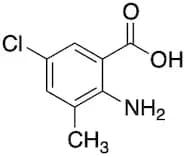
CAS:Purity:95%Molecular weight:190.154998779296882-Amino-5-chloro-3-methylbenzoic Acid
CAS:Controlled Product<p>Applications 2-Amino-5-chloro-3-methylbenzoic Acid is a useful research chemical for the preparation of benzoyl urea containing anthranillic acid groups with insecticidal activity.<br>References Peng, Y., et al.: Nongyao, 48, 326 (2009);<br></p>Formula:C8H8NO2ClColor and Shape:NeatMolecular weight:185.6Ethyl 1-Thio-β-D-glucuronide
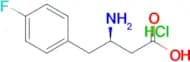
CAS:Controlled ProductFormula:C8H14O6SColor and Shape:NeatMolecular weight:654.615(R)-3-Amino-4-(4-fluorophenyl)butanoic acid hydrochloride
CAS:Purity:95.0%Color and Shape:Solid, White powderMolecular weight:233.6699981689453N-(8-Aminooctyl)-1,8-octanediamine
CAS:Controlled ProductFormula:C16H37N3Color and Shape:NeatMolecular weight:271.485DL-Homocysteic-3,3,4,4-d4 Acid
CAS:Controlled ProductFormula:C4D4H5NO5SColor and Shape:Light YellowMolecular weight:187.045258-benzyl-4-(furan-2-carbonyl)-1-oxa-4,8-diazaspiro[4.5]decane-3-carboxylic acid
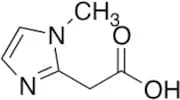
CAS:Purity:95.0%Molecular weight:370.4049987792969(1-Methyl-1H-imidazol-2-yl)-acetic Acid
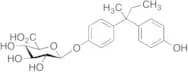
CAS:Controlled Product<p>Applications (1-Methyl-1H-imidazol-2-yl)-acetic acid (cas# 118054-54-9) is a useful research chemical.<br></p>Formula:C6H8N2O2Color and Shape:Off WhiteMolecular weight:140.14Bisphenol B Mono-b-D-glucuronide
<p>Applications Bisphenol B Mono-β-D-glucuronide is a metabolite of Bisphenol B (B519565), which is the analogue of Bisphenol A (B519495), that is used to make certain plastic an epoxy resins. BPA and its analogs, are also shown to activate human pregnane X receptor (PXR), a nuclear receptor that functions as a master regulator of xenobiotic metabolism.<br>References Krishnan, A.V., et al.: Endocrinology, 132, 2279 (1993); Steinmetz, R., et al.: Trends Endocrinol. Metab., 9, 124 (1998); Petersen, H., et al.: Eur. Food Res. Technol., 216, 355 (2003); Yipeng, S., et al.: Env Hea. Pers., 120, 399 (2012);<br></p>Formula:C22H26O8Color and Shape:White To Off-WhiteMolecular weight:418.448-methyl-4-(3-phenylpropanoyl)-1-oxa-4,8-diazaspiro[4.5]decane-3-carboxylic acid
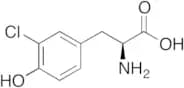
CAS:Purity:95.0%Molecular weight:332.39999389648443-Chloro-L-tyrosine
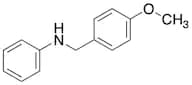
CAS:Controlled Product<p>Stability Hygroscopic<br>Applications 3-Chloro-L-tyrosine was used in the enzymatic synthesis of halogen derivatives of aromatic amino acids labeled with hydrogen isotope. 3-Chloro-L-tyrosine exhibited stronger antioxidant properties in Hb-induced oxidative stress as was evident by higher efficiency of reduction of ferryl species.<br>References Winnicka, E., et al.: J. Chem. Eng., 8, 54 (2014); Lu, N., et al.: Toxicol. In Vitro, 28, 847 (2014);<br></p>Formula:C9H10NO3ClColor and Shape:NeatMolecular weight:215.63N-Phenyl-4-methoxybenzylamine
CAS:Controlled Product<p>Applications N-PHENYL-4-METHOXYBENZYLAMINE (cas# 3526-43-0) is a useful research chemical.<br></p>Formula:C14H15NOColor and Shape:NeatMolecular weight:213.2754-(3,5-dichlorobenzoyl)-8-ethyl-1-oxa-4,8-diazaspiro[4.5]decane-3-carboxylic acid
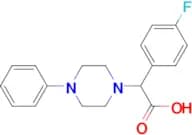
CAS:Purity:95.0%Molecular weight:387.2600097656252-(3-Chlorophenyl)-2-[4-(4-fluorophenyl)piperazin-1-yl]acetic acid
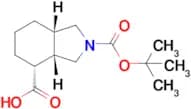
CAS:Molecular weight:348.79998779296875(3aS,4R,7aS)-2-(tert-Butoxycarbonyl)octahydro-1H-isoindole-4-carboxylic acid
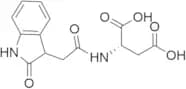
CAS:Purity:98+%Molecular weight:269.34100341796875Oxindole-3-acetyl-N-aspartic Acid
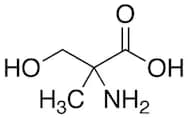
CAS:Controlled ProductFormula:C14H14N2O6Color and Shape:NeatMolecular weight:306.271α-Methyl-D,L-serine
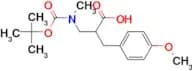
CAS:Controlled Product<p>Applications A serine derivative. Used in the synthesis of constrained amino acid buildings blocks and their incorporation into biologically active peptidomimetics.<br>References Rew, Y., et al.: J. Med. Chem., 45, 3746 (2002),<br></p>Formula:C4H9NO3Color and Shape:NeatMolecular weight:119.122-N-Boc-3-(4-Methoxy-phenyl)-2-methylaminomethyl-propionic acid
CAS:Formula:C17H25NO5Purity:97.0%Color and Shape:SolidMolecular weight:323.3894-(3-chlorophenyl)-3H,4H,5H,6H,7H-imidazo[4,5-c]pyridine-6-carboxylic acid
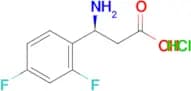
CAS:Purity:95.0%Molecular weight:277.7099914550781(3S)-3-Amino-3-(2,4-difluorophenyl)propanoic acid hydrochloride
CAS:Purity:95%Molecular weight:237.63000488281252-(4-(Benzo[d][1,3]dioxol-5-ylmethyl)piperazine-1-carbonyl)cyclohexane-1-carboxylic acid
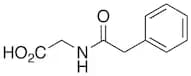
CAS:Purity:90%Molecular weight:374.43701171875N-Phenylacetylglycine
CAS:Controlled Product<p>Applications A metabolite of carboxylic acid.<br>References Bardsley, W., et al.: Biochem. J., 122, 557 (1971), Kim, J., et al.: Biosci. Biotechnol. Biochem., 69, 1331 (2005), Kopka, J., et al.: J. Biotechnol., 124, 312 (2006),<br></p>Formula:C10H11NO3Color and Shape:NeatMolecular weight:193.202-(2,2-Dimethyl-3-oxo-piperazin-1-yl)-propionic acid
CAS:Formula:C9H16N2O3Purity:98%Color and Shape:SolidMolecular weight:200.2388-methyl-4-(3,4,5-trimethoxybenzoyl)-1-oxa-4,8-diazaspiro[4.5]decane-3-carboxylic acid
CAS:Purity:95.0%Molecular weight:394.42401123046875L,L-Dityrosine Dihydrochloride
CAS:Controlled Product<p>Stability Hygroscopic<br>Applications Dityrosine (DY), a tyrosine dimer formed by 3,3’-biaryl bond formation can be used as a biomarker to detect oxidative protein damage and selective proteolysis. Fluorescence intensity decays of Dityrosine are generally characterized by two decay components, one with a lifetime in the range of 150 to 800 ps and another between 2.5 and 4.5 ns.<br>References Libertini, L., et al.: Biophys. J., 47, 765 (1985), Huggins, T., et al.: J. Biol. Chem., 268, 12341 (1993), Malencik, D., et al.: Biochemistry, 35, 4375 (1996),<br></p>Formula:C18H20N2O6·2ClHColor and Shape:NeatMolecular weight:433.284-(3-nitrobenzoyl)-8-propyl-1-oxa-4,8-diazaspiro[4.5]decane-3-carboxylic acid
CAS:Purity:95.0%Molecular weight:377.39700317382813-Mercapto-3-methylbutanoic Acid Ethyl Ester
CAS:Controlled Product<p>Applications 3-Mercapto-3-methylbutanoic Acid Ethyl Ester is an intermediate in the synthesis of 3-Mercapto-3-methylbutyl Formate (M253540), which is one of the major odor-active thiol in pan-roasted white sesame seeds.<br>References Czerny, M., et al.: J .Agric. Food Chem., 47, 695 (1999), Steinhaus, M., et al.: Eur. Food Res. Technol., 226, 45 (2007), Tamura, H., et al.: Agric. Food Chem., 2010, 58, 7368 (2010),<br></p>Formula:C7H14O2SColor and Shape:NeatMolecular weight:162.254-benzoyl-8-methyl-1-oxa-4,8-diazaspiro[4.5]decane-3-carboxylic acid
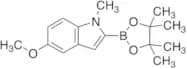
CAS:Purity:95.0%Molecular weight:304.346008300781255-Methoxy-1-methylindole-2-boronic Acid Pinacol Ester (>90%)
CAS:Controlled Product<p>Applications 5-Methoxy-1-methylindole-2-boronic acid pinacol ester (cas# 1256360-41-4) is a useful research chemical.<br></p>Formula:C16H22BNO3Purity:>90%Color and Shape:NeatMolecular weight:287.162N-Methyltaurine Sodium Salt (>50% in Water)
CAS:Controlled Product<p>Applications N-Methyltaurine Sodium Salt is used in the analysis of the changing properties of anionic surfactants and the development of new skin cleansers or soaps. It is the salt of N-Methyltaurine, a compound used in sperm cryopreservation studies. N-Methyltaurine is also used in the studies relating to effects on oxidative damage to erythrocytes via phenylhydrazine.<br> Not a dangerous good if item is equal to or less than 1g/ml and there is less than 100g/ml in the package<br>References Pokhrel, P.K. et al.: Adv. Exp. Med. Biol., 483, 503 (2000); Miyahara, R. et al.: Fragr. J., 28, 11 (2000); Garde, J.J. et al.: Bio. Repro., 69, 602 (2003);<br></p>Formula:C3H8NO3S·NaColor and Shape:ColourlessMolecular weight:161.16Methyl 4-Methoxybenzoate
CAS:<p>Applications Methyl 4-Methoxybenzoate is also used in the synthesis of oxadiazole-based, GSK-3 inhibitors. Methyl 4-Methoxybenzoate is used in the synthesis of substituted hydrazides for their antitubercular properties.<br>References Lo Monte, F. et al.: Eur.J. Med. Chem., 61, 26 (2013); Gupta, R. et al.: Asian J. Pharm. Clin. Res., 5, 251 (2012);<br></p>Formula:C9H10O3Color and Shape:WhiteMolecular weight:166.174-(2,4-dichlorobenzoyl)-8-methyl-1-oxa-4,8-diazaspiro[4.5]decane-3-carboxylic acid
CAS:Purity:95.0%Molecular weight:373.23001098632813-Methylfuran-d3
CAS:Controlled Product<p>Stability Volatile<br>Applications Labelled 3-Methylfuran (M305443). 3-Methylfuran is a volatile organic compound (VOCs) used as a potential non-intrusive tool for screening of lung cancer.<br> Not a dangerous good if item is equal to or less than 1g/ml and there is less than 100g/ml in the package<br>References McWilliams, et al.: Curr. Oncol. Rep., 4, 487 (2002), Buszewski, B., et al.: Biomed. Chromatogr., 21, 553 (2007), Ligor, T., et al.: J. Breath. Res., 1, 1 (2007),<br></p>Formula:C52H3H3OColor and Shape:ColourlessMolecular weight:85.122-(4-Chlorophenyl)-2-[4-(2-methylphenyl)piperazin-1-yl]acetic acid
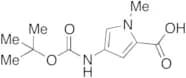
CAS:Molecular weight:344.83999633789064-(Boc-amino)-1-methylpyrrole-2-carboxylic Acid
CAS:Controlled Product<p>Applications 4-(Boc-amino)-1-methylpyrrole-2-carboxylic Acid is an unnatural amino acid for preparing heteroaromatic oligoamides for regulating gen expression in biotechnology.<br>References Baird, E., et al.: J. Am. Chem. Soc., 118, 6141 (1996); White, S., et al.: Nature, 391, 468 (1998)<br></p>Formula:C11H16N2O4Color and Shape:NeatMolecular weight:240.256N’-(5-Aminopentyl)-N-(4-methoxybenzyl)-N’-methyl-N-2-pyridinyl-1,2-ethanediamine, Dimaleate Salt
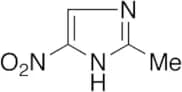
CAS:Controlled Product<p>Applications A synthetic intermediate.<br>References Blakemore, R., et al.: Eur. J. Med. Chem., 22, 91 (1987),<br></p>Formula:C21H32N4O·C4H4O4Color and Shape:NeatMolecular weight:472.582-Methyl-5-nitroimidazole
CAS:<p>Impurity Tinidazole EP Impurity A/ Metronidazole EP Impurity A<br>Applications 2-Methyl-5-nitroimidazole (Tinidazole EP Impurity A) is a Floconazole impurity.<br>References Sanderson, H., et al.: Toxicol. Lett., 187, 84 (2009), Kumar, L., et al.: Eur. J. Med. Chem., 45, 817 (2010),<br></p>Formula:C4H5N3O2Color and Shape:Light YellowMolecular weight:127.10N-Benzyl-L-tyrosine
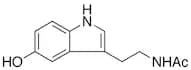
CAS:Controlled Product<p>Applications Protected L-Tyrosine (T899975), an amino acid, used by cells to synthesize proteins. L-Tyrosine is biologically converted from L-phenylalanine and is in turn is converted to L-DOPA and further converted into the neurotransmitters: dopamine, norepinephrine, and epinephrine.<br>References Rasmussen D.D. et al.: J. Clin. Endocrinol. Metab., 57, 760 (1983); Bagchi, S.P. et al.: Biochem. Pharmacol., 26, 900 (1977)<br></p>Formula:C16H17NO3Color and Shape:NeatMolecular weight:271.32N-Acetyl-5-hydroxytryptamine
CAS:<p>Stability Hygroscopic<br>Applications A metabolite of Melatonin (M215000).<br>References Reiter, R.J., et al.: J. Biomed. Sci., 7, 444 (2000), Chen, Z., et al.: Am. J. Physiol, 284, 1618 (2003), Barrenetxe, J., et al.: J. Physiol. Biochem., 60, 61 (2004),<br></p>Formula:C12H14N2O2Color and Shape:White To GreyMolecular weight:218.2518

![4-(2H-1,3-benzodioxol-5-yl)-3H,4H,5H,6H,7H-imidazo[4,5-c]pyridine-6-carboxylic acid](/_next/image/?url=https%3A%2Fstatic.cymitquimica.com%2Fproducts%2F10%2Fthumb-webp%2FF522503.webp&w=3840&q=75)

![4-(4-chloro-2-fluorobenzoyl)-8-propyl-1-oxa-4,8-diazaspiro[4.5]decane-3-carboxylic acid](/_next/image/?url=https%3A%2Fstatic.cymitquimica.com%2Fproducts%2F10%2Fthumb-webp%2FF525750.webp&w=3840&q=75)
![4-(3,4-dichlorobenzoyl)-8-ethyl-1-oxa-4,8-diazaspiro[4.5]decane-3-carboxylic acid](/_next/image/?url=https%3A%2Fstatic.cymitquimica.com%2Fproducts%2F10%2Fthumb-webp%2FF525681.webp&w=3840&q=75)





![8-benzyl-4-(furan-2-carbonyl)-1-oxa-4,8-diazaspiro[4.5]decane-3-carboxylic acid](/_next/image/?url=https%3A%2Fstatic.cymitquimica.com%2Fproducts%2F10%2Fthumb-webp%2FF525800.webp&w=3840&q=75)
![8-methyl-4-(3-phenylpropanoyl)-1-oxa-4,8-diazaspiro[4.5]decane-3-carboxylic acid](/_next/image/?url=https%3A%2Fstatic.cymitquimica.com%2Fproducts%2F10%2Fthumb-webp%2FF525629.webp&w=3840&q=75)
![4-(3,5-dichlorobenzoyl)-8-ethyl-1-oxa-4,8-diazaspiro[4.5]decane-3-carboxylic acid](/_next/image/?url=https%3A%2Fstatic.cymitquimica.com%2Fproducts%2F10%2Fthumb-webp%2FF525701.webp&w=3840&q=75)
![2-(3-Chlorophenyl)-2-[4-(4-fluorophenyl)piperazin-1-yl]acetic acid](/_next/image/?url=https%3A%2Fstatic.cymitquimica.com%2Fproducts%2F10%2Fthumb-webp%2FF300385.webp&w=3840&q=75)

![4-(3-chlorophenyl)-3H,4H,5H,6H,7H-imidazo[4,5-c]pyridine-6-carboxylic acid](/_next/image/?url=https%3A%2Fstatic.cymitquimica.com%2Fproducts%2F10%2Fthumb-webp%2FF522490.webp&w=3840&q=75)
![2-(4-(Benzo[d][1,3]dioxol-5-ylmethyl)piperazine-1-carbonyl)cyclohexane-1-carboxylic acid](/_next/image/?url=https%3A%2Fstatic.cymitquimica.com%2Fproducts%2F10%2Fthumb-webp%2FF729921.webp&w=3840&q=75)

![8-methyl-4-(3,4,5-trimethoxybenzoyl)-1-oxa-4,8-diazaspiro[4.5]decane-3-carboxylic acid](/_next/image/?url=https%3A%2Fstatic.cymitquimica.com%2Fproducts%2F10%2Fthumb-webp%2FF525628.webp&w=3840&q=75)


![4-(3-nitrobenzoyl)-8-propyl-1-oxa-4,8-diazaspiro[4.5]decane-3-carboxylic acid](/_next/image/?url=https%3A%2Fstatic.cymitquimica.com%2Fproducts%2F10%2Fthumb-webp%2FF525721.webp&w=3840&q=75)

![4-benzoyl-8-methyl-1-oxa-4,8-diazaspiro[4.5]decane-3-carboxylic acid](/_next/image/?url=https%3A%2Fstatic.cymitquimica.com%2Fproducts%2F10%2Fthumb-webp%2FF525614.webp&w=3840&q=75)


![4-(2,4-dichlorobenzoyl)-8-methyl-1-oxa-4,8-diazaspiro[4.5]decane-3-carboxylic acid](/_next/image/?url=https%3A%2Fstatic.cymitquimica.com%2Fproducts%2F10%2Fthumb-webp%2FF525618.webp&w=3840&q=75)

![2-(4-Chlorophenyl)-2-[4-(2-methylphenyl)piperazin-1-yl]acetic acid](/_next/image/?url=https%3A%2Fstatic.cymitquimica.com%2Fproducts%2F10%2Fthumb-webp%2FF300389.webp&w=3840&q=75)