Amino Acids (AA)
Amino acids (AAs) are the fundamental building blocks of proteins, playing a crucial role in various biological processes. These organic compounds are essential for protein synthesis, metabolic pathways, and cell signaling. In this category, you will find a comprehensive range of amino acids, including essential, non-essential, and modified forms, which are vital for research in biochemistry, molecular biology, and nutritional sciences. At CymitQuimica, we provide high-quality amino acids to support your research and development needs, ensuring accuracy and reliability in your experimental outcomes.
Subcategories of "Amino Acids (AA)"
- Amino Acid Derivatives(3,955 products)
- Amino Acid and Amino Acid Related Compounds(3,461 products)
- Amino Acids with Oxygen or Sulphur(168 products)
- Boc- Amino Acids(351 products)
- Fmoc Amino Acids(1,710 products)
Found 38244 products of "Amino Acids (AA)"
Sort by
Purity (%)
0
100
|
0
|
50
|
90
|
95
|
100
H-Gly-Asp-Arg-Ala-Asp-Gly-Gln-Pro-Ala-Gly-Asp-Arg-Ala-Asp-Gly-Gln-Pro-Ala-OH
CAS:<p>Please enquire for more information about H-Gly-Asp-Arg-Ala-Asp-Gly-Gln-Pro-Ala-Gly-Asp-Arg-Ala-Asp-Gly-Gln-Pro-Ala-OH including the price, delivery time and more detailed product information at the technical inquiry form on this page</p>Formula:C68H108N26O29Purity:Min. 95%Molecular weight:1,753.74 g/molGAP 27 acetate salt
CAS:<p>GAP 27 is a connexin that is expressed in the cardiac and skin cells. GAP 27 acetate salt H-Ser-Arg-Pro-Thr-Glu-Lys-Thr-Ile-Phe-Ile-Ile-OH acetate salt is made up of a number of amino acids, including serine, arginine, proline, glutamic acid, lysine, threonine and isoleucine. It has been shown to have biological function in vivo models and in vitro assays. GAP 27 acetate salt H-Ser-Arg-Pro-Thr-Glu-Lys-Thr--Ile--Phe--Ile--Ile--OH acetate salt has been shown to be non toxic to the heart and skin cells. This protein also shows growth factor activity when it interacts with toll like receptor 4 (TLR4) on human skin cells.</p>Formula:C60H101N15O17Purity:Min. 95%Molecular weight:1,304.53 g/mol(His(3-Me)2)-LHRH trifluoroacetate salt
CAS:<p>Please enquire for more information about (His(3-Me)2)-LHRH trifluoroacetate salt including the price, delivery time and more detailed product information at the technical inquiry form on this page</p>Formula:C56H77N17O13·C2HF3O2Purity:Min. 95%Molecular weight:1,310.34 g/molH-Gln(Trt)-2-chlorotrityl resin (200-400 mesh) (Low Substitution)
<p>Please enquire for more information about H-Gln(Trt)-2-chlorotrityl resin (200-400 mesh) (Low Substitution) including the price, delivery time and more detailed product information at the technical inquiry form on this page</p>Purity:Min. 95%(D-Arg2,Lys4)-Dermorphin (1-4) amide
CAS:<p>Dermorphin is a neuropeptide that has been shown to reduce cortisol levels in badgers and has been shown to have biological activity in vitro. Dermorphin also has a number of pharmacokinetic properties, including water solubility, lipid solubility, and oral bioavailability. The drug binds to δ receptors and inhibits the enzyme activities of rat liver microsomes. Dermorphin is used as an analgesic for bowel disease, such as inflammatory bowel disease or hypogaea. Dermorphin has antinociceptive properties (pain-relieving).</p>Formula:C30H45N9O5Purity:Min. 95%Molecular weight:611.74 g/molH-Leu-Gly-bNA
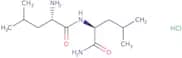
CAS:<p>H-Leu-Gly-bNA is a chromogenic, dipeptide, which has been shown to react with 2-naphthylamine in the presence of condensation agents and carboxylic acid to form a carboxy group. The amino group on the terminal Leu residue reacts with the carboxy group to form an amide bond. This reaction is used as a method for detecting bNA.</p>Formula:C18H23N3O2Purity:Min. 95%Molecular weight:313.39 g/molH-Leu-Leu-NH2·HCl
CAS:<p>Please enquire for more information about H-Leu-Leu-NH2·HCl including the price, delivery time and more detailed product information at the technical inquiry form on this page</p>Formula:C12H25N3O2·HClPurity:Min. 95%Molecular weight:279.81 g/molBoc-Tyr(tBu)-OH
CAS:<p>Boc-Tyr(tBu)-OH is a chemical compound that is part of the class of lactams. It has been shown to have antitumor activity in vitro and in vivo, but it has not yet been tested for its cytotoxicity. This compound is synthesized by solid-phase synthesis and contains a disulfide bond, which may contribute to its cytotoxicity. Boc-Tyr(tBu)-OH has also been shown to have high affinity for the alpha 2A adrenergic receptor subtype and other receptors with an isosteric carbonyl group.</p>Formula:C18H27NO5Purity:Min. 95%Color and Shape:PowderMolecular weight:337.41 g/molCalcium-Like Peptide
CAS:<p>Please enquire for more information about Calcium-Like Peptide including the price, delivery time and more detailed product information at the technical inquiry form on this page</p>Formula:C40H75N9O10Purity:Min. 95%Molecular weight:842.08 g/molAc-muramyl-Ala-D-Glu(Lys(stearoyl)-OH)-NH2
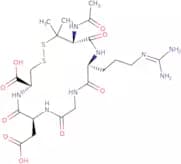
CAS:<p>Ac-muramyl-Ala-D-Glu(Lys(stearoyl)-OH)-NH2 is a synthetic peptide that was designed to mimic the sequence of muramyl dipeptide (MDP), which is found in bacterial cell walls. Ac-muramyl-Ala-D-Glu(Lys(stearoyl)-OH)-NH2 binds to the protein albumin, which is an important component of human blood plasma and has been shown to be elevated in patients with autoimmune diseases. This peptide also inhibits the activity of metal hydroxides, such as aluminum hydroxide and calcium hydroxide, by binding to their surface, reducing their antimicrobial activity. The effect on locomotor activity has not been studied. Ac-muramyl-Ala-D-Glu(Lys(stearoyl)-OH)-NH2 may have effects on various cells types including macrophages and T</p>Formula:C43H78N6O13Purity:Min. 95%Color and Shape:SolidMolecular weight:887.11 g/molAc-Pen-Arg-Gly-Asp-Cys-OH (Disulfide bond)
CAS:<p>Disulfide bond is an analytical method for the determination of the concentration-time curve. It is a cyclic peptide that competes with fibrinogen for binding to platelets. Disulfide bond has been shown to be an antagonist of receptor antagonist, and has potential applications in the treatment of autoimmune diseases. Disulfide bond can also be used as a model system for toxicological studies and experimental models in humans.</p>Formula:C22H36N8O9S2Purity:Min. 95%Molecular weight:620.7 g/mol(Cys8·13)-Dynorphin A (1-13) amide
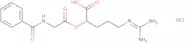
CAS:<p>Please enquire for more information about (Cys8·13)-Dynorphin A (1-13) amide including the price, delivery time and more detailed product information at the technical inquiry form on this page</p>Formula:C69H112N24O14S2Purity:Min. 95%Molecular weight:1,565.91 g/molO-a-Hippuryl-L-argininic acid hydrochloride salt
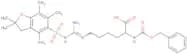
CAS:<p>Please enquire for more information about O-a-Hippuryl-L-argininic acid hydrochloride salt including the price, delivery time and more detailed product information at the technical inquiry form on this page</p>Formula:C15H20N4O5Purity:Min. 95%Molecular weight:336.34 g/molZ-Homoarg (Pbf)-OH
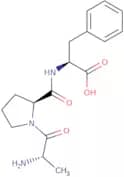
CAS:<p>Please enquire for more information about Z-Homoarg (Pbf)-OH including the price, delivery time and more detailed product information at the technical inquiry form on this page</p>Formula:C28H38N4O7SPurity:Min. 95%Molecular weight:574.69 g/molH-Ala-Pro-Phe-OH
CAS:<p>Please enquire for more information about H-Ala-Pro-Phe-OH including the price, delivery time and more detailed product information at the technical inquiry form on this page</p>Formula:C17H23N3O4Purity:Min. 95%Molecular weight:333.38 g/molBAM-22P (8-22) trifluoroacetate salt
CAS:<p>BAM-22P (8-22) trifluoroacetate salt is a compound that has been shown to be an effective drug for the treatment of pain. It has been shown to have an effect on bone cancer, which can be activated by serotonin. This compound may be beneficial in treating nerve injury and fibrosarcoma cells. BAM-22P (8-22) trifluoroacetate salt is an allosteric modulator of the serotonin receptor and may be used as a treatment for pain in wild-type mice. The molecule is also a serotonin reuptake inhibitor, which prevents the reuptake of serotonin into the presynaptic neuron. This leads to increased levels of serotonin in the synapse and increased pain relief.</p>Formula:C91H127N25O23SPurity:Min. 95%Molecular weight:1,971.2 g/molAbz-Ser-Pro-3-nitro-Tyr-OH
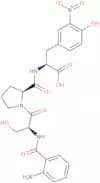
CAS:<p>Abz-Ser-Pro-3-nitro-Tyr-OH is a chromophobe peptide that is expressed in renal cell carcinomas. It is a potent inhibitor of all three major classes of proteases: serine, cysteine and aspartyl proteases. Abz-Ser-Pro-3-nitro-Tyr-OH inhibits the activity of peptidases, which are enzymes involved in protein degradation and turnover. Abz has been shown to inhibit the activity of intrarenal proteolytic enzymes, including endopeptidase, metallopeptidase and aminopeptidase activities. Abz also has been shown to inhibit the expression of markers on the surface of kidney cells and to reduce renal cell proliferation.</p>Formula:C24H27N5O9Purity:Min. 95%Molecular weight:529.5 g/molBz-Nle-Lys-Arg-Arg-AMC trifluoroacetate salt
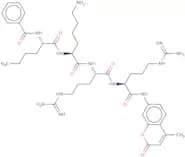
CAS:<p>Please enquire for more information about Bz-Nle-Lys-Arg-Arg-AMC trifluoroacetate salt including the price, delivery time and more detailed product information at the technical inquiry form on this page</p>Formula:C41H60N12O7·C2HF3O2Purity:Min. 95%Color and Shape:White PowderMolecular weight:832.99 g/molFmoc-Gln(Trt)-Wang resin (200-400 mesh)
<p>Please enquire for more information about Fmoc-Gln(Trt)-Wang resin (200-400 mesh) including the price, delivery time and more detailed product information at the technical inquiry form on this page</p>Purity:Min. 95%H-Gly-Cys-OH
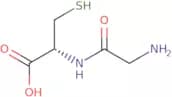
CAS:<p>H-Gly-Cys-OH is an amide that is structurally related to the nonapeptide, Gly-Pro-Cys. H-Gly-Cys-OH has been shown to be an efficient method for preparation of 3-mercaptopropionic acid. The nucleophilic attack of the thiol group on the carbonyl carbon atom in the amide bond leads to cleavage and formation of a disulfide bond. This reaction occurs spontaneously at room temperature with high efficiency and can be used for synthesis of 3-mercaptopropionic acid. H-Gly-Cys-OH has low bioavailability, which may be due to its primary amino group, which is not well absorbed by the intestinal epithelium.</p>Formula:C5H10N2O3SPurity:Min. 95%Molecular weight:178.21 g/molFibronectin Adhesion-Promoting Peptide trifluoroacetate salt
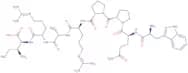
CAS:<p>Fibronectin Adhesion-Promoting Peptide trifluoroacetate salt H-Trp-Gln-Pro-Pro-Arg-Ala-Arg-Ile-OH trifluoroacetate salt (FAP) is a synthetic peptide that promotes fibronectin adhesion. It binds to the amino acid sequence in the C terminal end of fibronectin, which is known to be responsible for binding to actin filaments and growth factors. FAP has been shown to promote wound healing by stimulating the proliferation of corneal epithelial cells in vitro. The mechanism of action of FAP may be due to its ability to bind to chloride ions, which are involved in the regulation of cell proliferation and migration.</p>Formula:C47H74N16O10Purity:Min. 95%Molecular weight:1,023.19 g/mol(Ala2)-Leu-Enkephalin
CAS:<p>Leu-enkephalin is an opioid peptide that is a neurotransmitter in the brain. It is synthesized from the proenkephalin precursor and acts on δ-opioid receptors and kappa-opioid receptors. Leu-enkephalin has been shown to have physiological effects such as analgesia, hypothermia, hyperalgesia, and decreased gastrointestinal motility. Leu-enkephalin also inhibits voltage-dependent calcium channels in neuronal cells by binding to them with high affinity. The binding of leu-enkephalin to these channels affects their function and leads to neuronal death. Disulfide bonds are formed between cysteine residues on leu-enkephalin to stabilize this protein's structure.</p>Formula:C29H39N5O7Purity:Min. 95%Molecular weight:569.65 g/molMyristoyl-Arg-Lys-Arg-Thr-Leu-Arg-Arg-Leu-OH
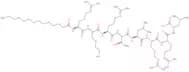
CAS:<p>Myristoyl-Arg-Lys-Arg-Thr-Leu-Arg-Arg-Leu-OH is a potent inhibitor of protein kinases. It has been shown to have an inhibitory concentration 50% (IC50) of 0.5 μM and inhibits the activity of ATPase in cells. This compound is a synthetic, multidrug protein kinase inhibitor that inhibits the activity of various kinases including adriamycin, atpase, and myristic acid. Myristoyl Arg Lys Arg Thr Leu Arg Arg Leu OH has been shown to be potent and effective against cell resistance to chemotherapy.</p>Formula:C60H117N21O11Purity:Min. 95%Molecular weight:1,308.71 g/molAc-Ser-Asp-Lys-Pro-OH
CAS:<p>Ac-Ser-Asp-Lys-Pro-OH is a tetrapeptide that has been shown to stimulate the growth of cells in vitro. It has been found to inhibit the production of interleukin-1β and tumor necrosis factor α, which are cytokines that are involved in inflammation. Ac-Ser-Asp-Lys-Pro-OH stimulates the production of growth factor β1 and collagen, which may be due to its ability to bind to toll like receptor 4 (TLR4). Acetylserotonin has been shown to have antiinflammatory and antifibrotic properties in animal models. Acetylserotonin also inhibits cancer cell growth and reduces drug resistance.</p>Formula:C20H33N5O9Purity:Min. 95%Molecular weight:487.5 g/molH-Glu-Glu-OH
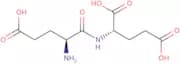
CAS:<p>H-Glu-Glu-OH is an organic acid that has proteolytic and gene product properties. It is a hyperactive compound that can be used as a sample preparation reagent for the detection of glutamic acid in proteins. H-Glu-Glu-OH inhibits protein synthesis by binding to ribosomes, which are responsible for the production of proteins in the cell, and prevents their function. Magnetic resonance spectroscopy has been used to investigate the uptake of H-Glu-Glu-OH into mammalian cells and ovarian follicles.</p>Formula:C10H16N2O7Purity:Min. 95 Area-%Color and Shape:White PowderMolecular weight:276.24 g/molPyr-Trp-OH
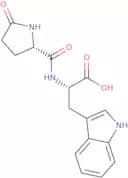
CAS:<p>Pyr-Trp-OH is a derivative of tryptophan. It has been found to be active in the brain and its metabolites have been shown to inhibit superoxide production by inhibiting the activity of hydroxylase and dismutase. Pyr-Trp-OH also inhibits serotonin synthesis, which may contribute to its antidepressant properties. Pyr-Trp-OH is an inhibitor of indoleamine 2,3 dioxygenase, an enzyme that converts tryptophan into kynurenine. This process generates hydrogen peroxide, which can lead to cell death. The conversion of tryptophan into serotonin also produces hydrogen peroxide, so it is possible that Pyr-Trp-OH may have antioxidant effects as well as antidepressant effects.</p>Formula:C16H17N3O4Purity:Min. 95%Molecular weight:315.32 g/mol6-Methoxy-2,3,4,9-tetrahydro-1H-β-carbolin-1-one
CAS:<p>6-Methoxy-2,3,4,9-tetrahydro-1H-beta-carbolin-1-one is a β-carboline alkaloid that is structurally related to harmaline and tetrahydroharmine. It has been shown to have antidepressant activity in animals. 6-Methoxy-2,3,4,9-tetrahydro-1H-beta-carbolin-1-one was analyzed by GC/MS and found to be present in the leaves of plants from the genus Tetraclinis. 6MHBC was also identified as a metabolite of diazepam in rat urine after administration of a single oral dose of 10 mg/kg diazepam. The observed β carboline metabolite was determined to be 6MHBC.</p>Formula:C12H12N2O2Purity:Min. 95%Molecular weight:216.24 g/molH-D-Cys(4-methoxytrityl)-2-chlorotrityl resin (200-400 mesh)
<p>Please enquire for more information about H-D-Cys(4-methoxytrityl)-2-chlorotrityl resin (200-400 mesh) including the price, delivery time and more detailed product information at the technical inquiry form on this page</p>Purity:Min. 95%3-Methoxyphenylboronic acid
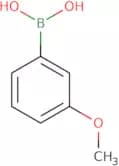
CAS:<p>3-Methoxyphenylboronic acid is a photophysical molecule that can be used as an analytical reagent in plant physiology and analytical chemistry. 3-Methoxyphenylboronic acid reacts reversibly with copper ions to form a complex. The binding constants of the copper complex depend on the pH of the solution, which can be altered by adding a phosphate derivative to the solution. This reaction was investigated using cross-coupling techniques and showed that the binding constants for this complex are dependent on the type of solvent used. 3-Methoxyphenylboronic acid has also been used to measure glucose levels in blood samples.</p>Formula:C7H9BO3Purity:Min. 95%Color and Shape:White PowderMolecular weight:151.96 g/molZ-His-Gly-OH
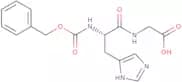
CAS:<p>Please enquire for more information about Z-His-Gly-OH including the price, delivery time and more detailed product information at the technical inquiry form on this page</p>Formula:C16H18N4O5Purity:Min. 95%Molecular weight:346.34 g/molBoc-Glu-OFm
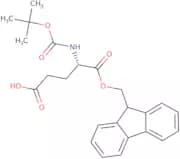
CAS:<p>Please enquire for more information about Boc-Glu-OFm including the price, delivery time and more detailed product information at the technical inquiry form on this page</p>Formula:C24H27NO6Purity:Min. 95%Molecular weight:425.47 g/molDynorphin A (1-8) acetate salt
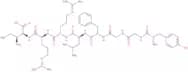
CAS:<p>Dynorphin A (1-8) acetate salt H-Tyr-Gly-Gly-Phe-Leu-Arg-Arg-Ile-OH acetate salt is a synthetic, nonpeptide opioid agonist. It binds to the delta receptor and inhibits nociception in the central nervous system. This compound has been shown to produce acute phase and subchronic toxicity in rats and has been shown to possess antinociceptive effects in mice. Dynorphin A (1-8) acetate salt H-Tyr-Gly-Gly-Phe-Leu-Arg-Arg-Ile-OH acetate salt has also been shown to antagonize the enzyme inhibitors of phospholipase A2, cyclooxygenase, and lipoxygenase.<br>MECHANISM OF ACTION: Dynorphin A (1–8) is an endogenous peptide that modulates neurotransmission at the</p>Formula:C46H72N14O10Purity:Min. 95%Molecular weight:981.15 g/molH-Gly-Gly-Met-OH
CAS:<p>H-Gly-Gly-Met-OH is a hydrophobic amino acid with a decelerated reaction. It has been shown to modulate the growth of organisms, such as Staphylococcus aureus and Streptococcus pneumoniae. This molecule also has aspirin-like activity against S. aureus and can be used for cavity prevention. H-Gly-Gly-Met-OH is effective in inhibiting the growth of S. aureus, but not against Streptococcus pneumoniae. The test organism used in this study was Escherichia coli K12. H-Gly-Gly-Met-OH has been shown to have sequences that are similar to those found in kinetically slow peptides and tripeptides, which may explain its stability when encapsulated in liposomes for oral administration.</p>Formula:C9H17N3O4SPurity:Min. 95%Molecular weight:263.32 g/molFibronectin Fragment (1377-1388)
CAS:<p>Please enquire for more information about Fibronectin Fragment (1377-1388) including the price, delivery time and more detailed product information at the technical inquiry form on this page</p>Formula:C56H97N19O20Purity:Min. 95%Molecular weight:1,356.49 g/molZ-Ala-Ala-Asn-AMC
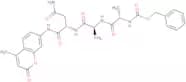
CAS:<p>Z-Ala-Ala-Asn-AMC is a molecule that is an analog of the amino acid alanine. It has been shown to be effective in inhibiting cancer cell viability and inducing apoptosis in MDA-MB-231 breast cancer cells, which can inhibit tumor growth. This molecule also inhibits protease activity, protein synthesis, and tubule cell proliferation. Z-Ala-Ala-Asn-AMC has applicability in the treatment of cancers and inflammatory diseases.</p>Formula:C28H31N5O8Purity:Min. 98 Area-%Color and Shape:PowderMolecular weight:565.57 g/molZ-Gly-Leu-NH2
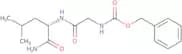
CAS:<p>Z-Gly-Leu-NH2 is a synthetic peptide that has been designed to mimic the amino acid sequence of casein. It is a metalloendopeptidase inhibitor and can be used in the synthesis of proteins. Z-Gly-Leu-NH2 inhibits the activity of subtilisin, which is a proteolytic enzyme. The inhibition of subtilisin by Z-Gly-Leu-NH2 prevents the hydrolysis of peptide bonds in protein substrates. This inhibition leads to an increase in molecular weight and molecular weight distribution, as well as an increase in the number of high molecular weight peaks on chromatograms. This peptide also has serine protease inhibitory activity and can be used as a synthetic substrate for kinetic studies.</p>Formula:C16H23N3O4Purity:Min. 95%Molecular weight:321.37 g/molFmoc-octyl-D-Gly-OH
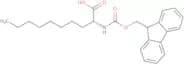
CAS:<p>Fmoc-octyl-D-Gly-OH is a supramolecular polymer with a wide range of applications, including oil recovery and as a nanomaterial. Fmoc-octyl-D-Gly-OH is synthesized by the ring opening polymerization of octylglycol with D,L lactic acid. It has been shown to be an effective emulsifier in water, which may be due to its synergistic effect with other molecules. Fmoc-octyl-D-Gly-OH also has the ability to self assemble into a variety of morphologies such as nanoribbons, nanowires, and gel networks. This polymer can also be used as a hydrogenation catalyst for organic synthesis reactions that require high pressures and temperatures. Fmoc-octyl-D-Gly-OH has also been used in the production of ultrasonication devices for use in medicine.</p>Formula:C25H31NO4Purity:Min. 95%Molecular weight:409.52 g/molNe-Fmoc-L-lysine
CAS:<p>Ne-Fmoc-L-lysine is an amine with a homopolypeptide backbone. It is insoluble in water and has a low profile. Ne-Fmoc-L-lysine is synthesized using solid phase chemistry, which can be used for the synthesis of nanocarriers. It has been shown to interact with other molecules such as polymers and proteins. Ne-Fmoc-L-lysine can also be used in supramolecular architectures and oriented microscopy techniques.</p>Formula:C21H24N2O4Purity:Min. 95%Molecular weight:368.43 g/molNocistatin (bovine) trifluoroacetate salt
CAS:<p>Please enquire for more information about Nocistatin (bovine) trifluoroacetate salt including the price, delivery time and more detailed product information at the technical inquiry form on this page</p>Formula:C82H135N21O32Purity:Min. 95%Molecular weight:1,927.07 g/molDL-Methionine methylsulfonium chloride
CAS:<p>DL-Methionine methylsulfonium chloride is a fine chemical that has many uses. It can be used as a versatile building block for research and synthesis of complex compounds, or as an intermediate for the production of speciality chemicals. DL-Methionine methylsulfonium chloride is also useful as a reaction component in organic synthesis and as a reagent in analytical chemistry. It is often used to introduce methionine residues into proteins, which are then used for structural studies and protein engineering. The quality of this compound is high and it has CAS number 3493-12-7.</p>Formula:C6H14ClNO2SColor and Shape:White PowderMolecular weight:199.7 g/molH-Trp-Val-OH
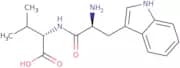
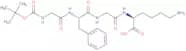
CAS:<p>H-Trp-Val-OH is a human protein that has been shown to be involved in the uptake of glucose into cells. H-Trp-Val-OH is also known as colony stimulating factor 1, which stimulates the growth and differentiation of hematopoietic cells. It has been shown to play a role in weight gain, insulin resistance, and type 2 diabetes. This monoclonal antibody has not been found to have any long term toxicity or genotoxicity in animal studies.</p>Formula:C16H21N3O3Purity:Min. 95%Molecular weight:303.36 g/molBoc-Gly-Phe-Gly-Lys-OH
CAS:<p>Boc-Gly-Phe-Gly-Lys-OH is an allergen that belongs to the group of flavonoids. It is a reaction product of cinnamates and methoxycinnamate, which are found in sunscreens. Boc-Gly-Phe-Gly-Lys-OH is used as a model for chemical carcinogens in studies on cancer. Boc-Gly-Phe-Gly-Lys-OH has been shown to be a potent skin cancer and radiation sensitizer. There are no known effects on humans, but it is possible that this compound may react with UV irradiation from sunlight, causing DNA damage and skin cancer.</p>Formula:C24H37N5O7Purity:Min. 95%Molecular weight:507.58 g/mol([15N]Gly)-Glutathione (reduced)
CAS:<p>Please enquire for more information about ([15N]Gly)-Glutathione (reduced) including the price, delivery time and more detailed product information at the technical inquiry form on this page</p>Purity:Min. 95%Z-Ala-Asp-OH
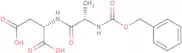
CAS:<p>Methyl ester of z-alanine and aspartic acid. The methyl ester is the reaction product of z-alanine and aspartic acid, which are modified amino acids. The methyl ester is a modification of an amino acid at its carboxyl group. This active site is found in the profile of a number of enzymes, including those that catalyze the hydrolysis of amides or esters. It may also be involved in the catalytic activity of alcohols. Z-Ala-Asp-OH can act as an inhibitor to certain enzymes that break down proteins, such as peptidases and proteases. It has been shown to be resistant to hydrolysis by amide and c-terminal amidases.</p>Formula:C15H18N2O7Purity:Min. 95%Molecular weight:338.31 g/molH-Gly-Glu-Gly-OH trifluoroacetic acid
CAS:<p>H-Gly-Glu-Gly-OH trifluoroacetic acid is a dilute buffer solution of amino acids. It has been used to study the thermodynamic stability of polypeptides and their sensitivity to acidic conditions. Experiments have shown that H-Gly-Glu-Gly-OH trifluoroacetic acid is more stable than glycine, glutamic acid, histidine, aspartic acid, or aspartyl. This compound is an amino acid with a high concentration of glutamic acid.</p>Formula:C9H15N3O6•(CF3CO2H)xPurity:Min. 95%Molecular weight:261.23 g/molBpoc-Ser(tBu)-OH·CHA
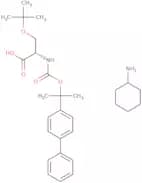
CAS:<p>Please enquire for more information about Bpoc-Ser(tBu)-OH·CHA including the price, delivery time and more detailed product information at the technical inquiry form on this page</p>Formula:C23H29NO5·C6H13NPurity:Min. 95%Molecular weight:498.65 g/molBiotinyl-Angiotensin I/II (1-7) Biotinyl-Asp-Arg-Val-Tyr-Ile-His-Pro-OH
CAS:<p>Please enquire for more information about Biotinyl-Angiotensin I/II (1-7) Biotinyl-Asp-Arg-Val-Tyr-Ile-His-Pro-OH including the price, delivery time and more detailed product information at the technical inquiry form on this page</p>Formula:C51H76N14O13SPurity:Min. 95%Molecular weight:1,125.3 g/molCell-permeable Caspase-1 Inhibitor I trifluoroacetate salt
CAS:<p>Please enquire for more information about Cell-permeable Caspase-1 Inhibitor I trifluoroacetate salt including the price, delivery time and more detailed product information at the technical inquiry form on this page</p>Formula:C97H160N20O24Purity:Min. 95%Molecular weight:1,990.43 g/molH-Phe-Pro-Ala-pNA
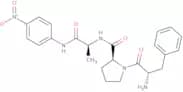
CAS:<p>Please enquire for more information about H-Phe-Pro-Ala-pNA including the price, delivery time and more detailed product information at the technical inquiry form on this page</p>Formula:C23H27N5O5Purity:Min. 95%Molecular weight:453.49 g/molPrepro-Atrial Natriuretic Factor (104-123) (human)
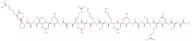
CAS:<p>Prepro-Atrial Natriuretic Factor (104-123) (human) H-Ser-Ser-Asp-Arg-Ser-Ala-Leu-Leu-Lys-Ser-Lys-Leu-Arg-Ala-Leu-Leu -Thr-Ala Pro Arg -OH is a natriuretic peptide hormone that belongs to the family of hormones called atrial natriuretic peptides. It is produced in the heart and has been shown to lower blood pressure by dilating blood vessels. Prepronatrial atrial natriuretic factor can also be used as a marker for colorectal adenocarcinoma, with high levels found in the serum of patients suffering from this disease.</p>Formula:C94H171N31O28Purity:Min. 95%Molecular weight:2,183.56 g/mol














![([15N]Gly)-Glutathione (reduced)](/_next/image/?url=https%3A%2Fstatic.cymitquimica.com%2Fproducts%2F3D%2Fthumb-webp%2FFG109306.webp&w=3840&q=75)