CAS 100403-19-8
:Ceramide
- Synthetic ceramide
- Ceramides
- N-Acylsphingosine
- Ceramide
- N-Acylsphingosines
Ceramides Mixture
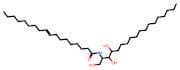
CAS:Ceramides Mixture: endogenous, regulates cell cycle, growth, and telomerase activity, with hydroxy/non-hydroxy fatty acids.Formel:C36H71NO4Reinheit:98%Farbe und Form:SolidMolekulargewicht:581.967Ceramides
CAS:Ceramides are fatty molecules consisting of a long chain of carbon and hydrogen atoms with a carboxyl group at one end. They form the major constituent of the lipid bilayer that makes up cell membranes. Ceramides perform many important functions in both the brain and mitochondria, where they regulate membrane permeability and mitochondrial functions. The structural analysis of ceramides has shown that they contain two hydrocarbon chains, which can be modified by enzymes to produce different types of ceramide. One type is sphingomyelin and is found in high levels in neuronal cell membranes. Sphingomyelin has a phase transition temperature of about 40°C, whereas another type, cerebroside, has a phase transition temperature closer to 25°C. Ceramide also contains an amide bond between two long-chain fatty acids, which is important for its stability and function. This bond can be broken by enzymes such as ceramidase or sphingomyelinase to form free fatty acids.
Reinheit:Min. 95%Farbe und Form:PowderRef: 3D-FC172209
Ausgelaufenes produkt