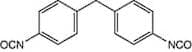
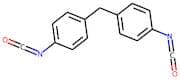
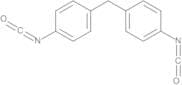
CAS 101-68-8
:Benzol, 1,1'-methylenbis[4-isocyanato-
Beschreibung:
Die chemische Substanz, die als Benzol, 1,1'-methylenbis[4-isocyanato- bekannt ist, allgemein als MDI (Methylen-Diphenyl-Diisocyanat) bezeichnet, ist ein aromatisches Isocyanat, das hauptsächlich in der Herstellung von Polyurethan-Schaumstoffen und -Beschichtungen verwendet wird. Es zeichnet sich durch seine hohe Reaktivität aufgrund der Anwesenheit von Isocyanat-Funktionsgruppen aus, die leicht mit Verbindungen reagieren, die aktive Wasserstoffatome enthalten, wie Alkohole und Amine. MDI ist typischerweise eine viskose Flüssigkeit oder ein Feststoff bei Raumtemperatur, mit einem ausgeprägten aromatischen Geruch. Es ist unlöslich in Wasser, aber löslich in organischen Lösungsmitteln wie Aceton und Toluol. MDI ist bekannt für seine hervorragende thermische Stabilität und mechanischen Eigenschaften, was es für verschiedene industrielle Anwendungen geeignet macht, einschließlich Isoliermaterialien und Elastomeren. Es ist jedoch auch mit Gesundheitsrisiken verbunden, da eine Exposition zu Atemproblemen und Hautsensibilisierung führen kann, was eine ordnungsgemäße Handhabung und Sicherheitsvorkehrungen in industriellen Umgebungen erforderlich macht.
Formel:C15H10N2O2
InChl:InChI=1/C15H10N2O2/c18-10-16-14-5-1-12(2-6-14)9-13-3-7-15(8-4-13)17-11-19/h1-8H,9H2
InChI Key:InChIKey=UPMLOUAZCHDJJD-UHFFFAOYSA-N
SMILES:C(C1=CC=C(N=C=O)C=C1)C2=CC=C(N=C=O)C=C2
Synonyme:- 1,1'-Methylenebis[4-isocyanatobenzene]
- 4,4'-Bis(isocyanatophenyl)methane
- 4,4'-Diisocyanatodiphenylmethane
- 4,4'-Diphenylmethane diisocyanate
- 4,4'-Diphenylmethane diisocyanate (MDI)
- 4,4'-Mdi
- 4,4'-Methylendiphenyldiisocyanat
- 4,4'-Methylenebis(isocyanatobenzene)
- 4,4'-Methylenebis(phenyl isocyanate)
- 4,4'-Methylenedi(phenyl isocyanate)
- 4,4'-Methylenedi-p-phenylene diisocyanate
- 4,4'-Methylenediphenyl Diisocyanate
- 4,4'-Methylenediphenyldiisocyanate
- 4,4'-Methylenediphenylene isocyanate
- 4,4′-Methylenebis(phenylisocyanate)
- Benzene, 1,1'-methylenebis[4-isocyanto-
- Bis (4-isocyanatophenyl)metan
- Bis(1,4-isocyanatophenyl)methane
- Bis(4-Isocyanatophenyl)Methane
- Bis(4-isocianatofenil)metano
- Bis(4-isocianatofenile)metano
- Bis(Phenylisocyanate), 4,4'-Methylene-
- Bis(isocyanatophenyl)methane
- Bis(p-isocyanatophenyl)methane
- Bis-(4-Isocyanatophenyl)methan
- Bis[1-Isocyanatobenzene], 4,4'-Methylene-
- Ddifenilmetano Diisocianato (MDI)
- Di(4-isocyanatophenyl)methane
- Di-isocyanate de diphénylméthane (MDI)
- Diisocianato De 4,4'-Metilendifenilo
- Diisocianato de difenilmetano (MDI)
- Diisocyanate De 4,4'-Methylenediphenyle
- Diisocyanatodiphenylmethane
- Diphenyl Methanediisocyanate
- Diphenyl methane diisocyanate
- Diphenylmetan diisocyanat (MDI)
- Diphenylmethan-4,4'-Diisocyanat
- Diphenylmethandiisocyant (MDI)
- Diphenylmethane 4,4'-diisocyanate
- Diphenylmethane diisocyanate
- Diphenylmethane diisocyanate (MDI)
- Diphenylmethane-4.4'-diisocyanate
- Diphenylmethyl Diisocyanate
- Diphenylmethylene 4,4′-diisocyanate
- Diphenylmethylene diisocyanate
- Isocyanic acid, diphenylmethylene ester
- Isocyanic acid, methylenedi-p-phenylene ester
- MDI
- Mdi 80
- Methylbiphenyl isocyanat
- Methylbis(4-phenylisocyanate)
- Methyldi-p-phenylene isocyanate
- Methylenbisphenylisocyanat
- Methylene Bisphenyl Isocyanate
- Methylene diisocyanate
- Methylene diphenyl diisocyanate
- Methylene-Diphenylene Di-Isocyanate (M.D.I.)
- Methylenebis(4-isocyanatobenzene)
- Methylenebis(4-phenyl isocyanate)
- Methylenebis(4-phenylene isocyanate)
- Methylenebis(p-phenyl isocyanate)
- Methylenebis(p-phenylene isocyanate)
- Methylenebis(phenyl isocyanate)
- Methylenebis(phenylisocyanate)
- Methylenebis(phenylisocyanate) (MDI)
- Methylenebis-p-phenylene diisocyanate
- Methylenebisphenylene diisocyanate
- Methylenebisphenylene diisocyanate, 4,4'-
- Methylenedi-p-phenylene diisocyanate
- Methylenedi-p-phenylene isocyanate
- Methylenediphenylisocyanate
- Metilene Bisfenil Isocianato
- Méthylène biphényl isocyanate
- Monomeric 4,4'-methylenediphenyl diisocyanate aerosol
- Nsc 9596
- P,P'-Methylenebis(Phenyl Isocyanate)
- Phenylmethane diisocyanate
- YHM
- p,p'-Diphenylmethane diisocyanate
- p,p′-Methylene diphenyl diisocyanate
- p,p′-Methylenediphenyl diisocyanate
- desmodur 44
- isonate 125m
- isonate 125mf
- nocconate 300
- 4,4'-Methylene bisphenyl isocyanate
- 1,1'-methanediylbis(4-isocyanatobenzene)
- Methylene diphenyl diisocyanate (monomeric and pol? METHYLENE BISPHENYL ISOCYANATE
- Methylenedi-p-phenyl diisocyanate, stabilized flakes, contains 1.5% 2,4[-isomer
- Methylenedi-p-phenyl diisocyanate
- caradate 30
- 4,4'-methylenedi(4,1-phenylene) isocyanate
- 4,4'-diphenyl methane diisocyanate
- Benzene, 1,1′-methylenebis[4-isocyanato-
- hylene m50
- VANCHEM HM-50
- Diphenyl methene-4,4′diisocyanate
- METHYLENEDIPHENYLENE DIISOCYANATE
- VANCHEM HM-4346
- DIPHENYLMETHAN-4,4'-DIISOCYANATE
- METHYLENEDIPHENYL 4,4'-DIISOCYANATE
- 1,1’-methylenebis(4-isocyanato)-benzene
- METHYLENE DI-P-PHENYLENE DIISOCYANATE
- Weitere Synonyme anzeigen
Sortieren nach
Reinheit (%)
0
100
|
0
|
50
|
90
|
95
|
100
7 Produkte.
Methylenediphenyl 4,4'-Diisocyanate
CAS:Formel:C15H10N2O2Reinheit:>97.0%(T)Farbe und Form:White to Almost white powder to lumpMolekulargewicht:250.264,4'-Methylenebis(phenyl isocyanate), 98%
CAS:4,4'-Methylenebis(phenyl isocyanate) acts as a monomer in the production of polyurethane. The rigid polyurethane foams are good thermal insulators, which find applications in all freezers and refrigerators, as well as in buildings. It is also used as an industrial strength adhesive, which is availabFormel:C15H10N2O2Reinheit:98%Farbe und Form:White to yellow, Crystals or powder or crystalline powder or flakes or fused solidMolekulargewicht:250.261,1'-Methanediylbis(4-isocyanatobenzene)
CAS:1,1'-Methanediylbis(4-isocyanatobenzene)
Reinheit:98%Farbe und Form:White To Off White SolidMolekulargewicht:250.25g/molDiphenylmethan-4,4'-diisocyanate
CAS:Kontrolliertes ProduktFormel:C15H10N2O2Farbe und Form:NeatMolekulargewicht:250.254,4'-Methylenebis(phenyl Isocyanate)
CAS:Kontrolliertes ProduktApplications 4,4'-Methylenebis(phenyl Isocyanate) is used in the manufacture of bio-based polyurethanes and resins used in flame retardants.Environmental toxin on US EPA Toxic Release Inventory list (TRI) list.
Not a dangerous good if item is equal to or less than 1g/ml and there is less than 100g/ml in the package
References Feng, Y. et al.: ACS Sust. Chem. Eng., 5, 7365 (2017); Yan, H. et al.: Ind. Eng. Chem. Res., 56, 8408 (2017);Formel:C15H10N2O2Farbe und Form:WhiteMolekulargewicht:250.254,4′-Diphenylmethanediisocyanate
CAS:Formel:C15H10N2O2Reinheit:97.0%Farbe und Form:Solid, Crystalline Powder or Solid or Lumps or FlakesMolekulargewicht:250.257Methylenedi-p-phenyl diisocyanate
CAS:Methylenedi-p-phenyl diisocyanate (MDI) is a glycol ether, which is a potent inducer of allergic reactions. It can be found in polyurethane foam insulation and in the production of diphenyl and diisocyanate. MDI has been shown to cause asthma, skin inflammation, and other respiratory problems. MDI is highly toxic to aquatic life and can cause long term effects on fish populations. The toxicity of MDI depends on the concentration and duration of exposure, as well as the species that it is administered to. High concentration exposure for a short period of time will result in death by respiratory failure or cardiac arrest. Longer exposure at lower concentrations may lead to liver, kidney, lung damage or cancerous tumor development.Formel:C15H10N2O2Reinheit:Min. 95%Molekulargewicht:250.25 g/mol