CAS 102-32-9
:DOPAC
Beschreibung:
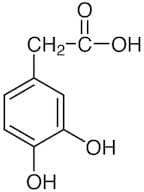
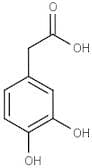
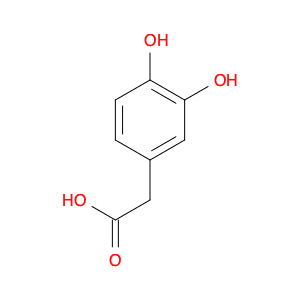
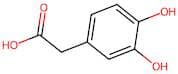
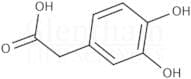
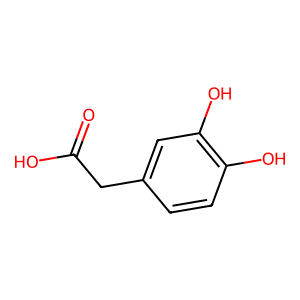
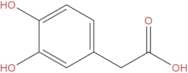
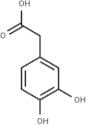
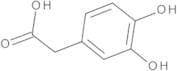
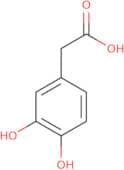
DOPAC, oder 3,4-Dihydroxyphenylacetic acid, ist eine aromatische organische Verbindung, die durch ihre zwei Hydroxylgruppen, die an einen Phenylring und eine Essigsäureeinheit gebunden sind, gekennzeichnet ist. Es ist ein Metabolit von Dopamin und spielt eine bedeutende Rolle in den biochemischen Wegen des Catecholaminmetabolismus. DOPAC wird typischerweise in biologischen Systemen gefunden, insbesondere im Gehirn, wo es an der Regulierung von Neurotransmittern beteiligt ist. Die Verbindung ist ein weißer bis off-white kristalliner Feststoff, der in Wasser und organischen Lösungsmitteln löslich ist, was ihre biologische Aktivität erleichtert. DOPAC zeigt antioxidative Eigenschaften und wurde auf seine potenziellen Implikationen bei neurodegenerativen Erkrankungen und psychiatrischen Störungen untersucht. Seine chemische Struktur ermöglicht es ihm, an verschiedenen chemischen Reaktionen teilzunehmen, was ihn zu einem interessanten Thema in der pharmazeutischen und biochemischen Forschung macht. Sicherheitsdaten zeigen, dass DOPAC mit Vorsicht behandelt werden sollte, wie viele organische Verbindungen, um potenzielle Gesundheitsrisiken zu vermeiden.
Formel:C8H8O4
InChl:InChI=1S/C8H8O4/c9-6-2-1-5(3-7(6)10)4-8(11)12/h1-3,9-10H,4H2,(H,11,12)
InChI Key:InChIKey=CFFZDZCDUFSOFZ-UHFFFAOYSA-N
SMILES:C(C(O)=O)C1=CC(O)=C(O)C=C1
Synonyme:- (3,4-Dihydroxyphenyl)-Aceticaci
- (3,4-Dihydroxyphenyl)Acetate
- (3,4-Dihydroxyphenyl)acetic acid
- 2-(3,4-Dihydroxyphenyl)acetic acid
- 3,4-Dihydroxy-Benzeneaceticaci
- 3,4-Dihydroxybenzeneacetic acid
- 3,4-Dihydroxybenzeneaceticacid
- 3,4-Dihydroxyphenylessigsaure
- Acetic acid, (3,4-dihydroxyphenyl)-
- Acide 3,4-Dihydroxyphenylacetique
- Acido 3,4-Dihidroxifenilacetico
- Ba 2773
- Ba2773
- Benzeneacetic acid, 3,4-dihydroxy-
- Dihydroxyphenylacetic acid
- Dopac
- Dopacetic acid
- Homoprotocatechuic acid
- Weitere Synonyme anzeigen
Sortieren nach
Reinheit (%)
0
100
|
0
|
50
|
90
|
95
|
100
14 Produkte.
3,4-Dihydroxyphenylacetic Acid
CAS:Formel:C8H8O4Reinheit:>98.0%(GC)Farbe und Form:White to Gray to Red powder to crystalMolekulargewicht:168.153,4-Dihydroxyphenylacetic acid, 98+%
CAS:3,4-Dihydroxyphenylacetic acid is an important metabolite when studying the behavior of the dopaminergic system. This Thermo Scientific Chemicals brand product was originally part of the Alfa Aesar product portfolio. Some documentation and label information may refer to the legacy brand. The originaFormel:C8H8O4Reinheit:98+%Farbe und Form:White to cream to grey to pale brown to purple-grey, PowderMolekulargewicht:168.153,4-Dihydroxyphenylacetic acid
CAS:3,4-Dihydroxyphenylacetic acid analytical standard provided with chromatographic purity, to be used as reference material for qualitative determination.Formel:C8H8O4Reinheit:(HPLC) ≥95%Farbe und Form:PowderMolekulargewicht:168.15Benzeneacetic acid, 3,4-dihydroxy-
CAS:Formel:C8H8O4Reinheit:98%Farbe und Form:SolidMolekulargewicht:168.14673,4-Dihydroxyphenylacetic acid
CAS:3,4-Dihydroxyphenylacetic acidFormel:C8H8O4Reinheit:98%Farbe und Form: off white. faint red solidMolekulargewicht:168.15g/mol3,4-Dihydroxyphenylacetic acid
CAS:Formel:C8H8O4Reinheit:≥ 98.0%Farbe und Form:White to off-white, red, brown or purple crystalline powderMolekulargewicht:168.153,4-Dihydroxybenzeneacetic acid
CAS:3,4-Dihydroxybenzeneacetic acidReinheit:≥98%Molekulargewicht:168.15g/mol3,4-Dihydroxybenzeneacetic acid
CAS:3,4-Dihydroxybenzeneacetic acid (3,4-Dihydroxyphenylacetic acid) is the main metabolite of dopamine.Formel:C8H8O4Reinheit:99.19% - 99.31%Farbe und Form:SolidMolekulargewicht:168.153,4-Dihydroxyphenylacetic Acid
CAS:Kontrolliertes ProduktApplications 3,4-Dihydroxyphenylacetic Acid is a metabolite of Dopamine (D533782).
References Johnson, S. et al.: J. Physiol., 450, 455 (1992)Formel:C8H8O4Farbe und Form:NeatMolekulargewicht:168.153,4-Dihydroxyphenylacetic acid
CAS:3,4-Dihydroxyphenylacetic acid (DOPAC) is a metabolite of dopamine and is found in the central nervous system. Dopamine is an important neurotransmitter that is involved in the regulation of movement, emotional responses, and hormone release. Dopamine is synthesized from tyrosine by tyrosine hydroxylase and then converted to L-3,4-dihydroxyphenylalanine by L-aromatic amino acid decarboxylase. DOPAC can be formed from dopamine by monoamine oxidases or catechol O-methyltransferases. The level of DOPAC in the brain has been shown to be increased following exposure to neurotoxins such as 6-hydroxy dopamine or 1-methyl 4-phenyl 1,2,3,6 tetrahydropyridine (MPTP). This increase may be due to decreased activity of monoamine oxidases. The levelFormel:C8H8O4Reinheit:Min. 95%Farbe und Form:Beige PowderMolekulargewicht:168.15 g/mol3,4-dihydroxyphenylacetic acid
CAS:Formel:C8H8O4Reinheit:95%Farbe und Form:Solid, Crystalline PowderMolekulargewicht:168.148