CAS 1034343-98-0
:Graphen
Beschreibung:
Graphen ist eine einzelne Schicht von Kohlenstoffatomen, die in einem zweidimensionalen Wabenmuster angeordnet sind und für ihre außergewöhnlichen Eigenschaften bekannt sind. Es zeigt eine bemerkenswerte elektrische Leitfähigkeit, was es zu einem ausgezeichneten Material für elektronische Anwendungen macht. Graphen ist auch für seine außergewöhnliche mechanische Festigkeit bekannt, die etwa 200 Mal stärker ist als Stahl, während es leicht und flexibel bleibt. Darüber hinaus hat es eine hohe Wärmeleitfähigkeit, die eine effiziente Wärmeabfuhr ermöglicht. Die Substanz ist transparent und absorbiert nur einen kleinen Bruchteil des Lichts, was sie für verschiedene optische Anwendungen geeignet macht. Die große Oberfläche von Graphen erhöht sein Potenzial für die Verwendung in der Energiespeicherung, wie Batterien und Superkondensatoren. Darüber hinaus zeigt es eine einzigartige chemische Reaktivität, die eine Funktionalisierung für spezifische Anwendungen in der Nanotechnologie und Materialwissenschaft ermöglicht. Seine Vielseitigkeit hat das Interesse in Bereichen geweckt, die von Elektronik bis Biomedizin reichen, obwohl Herausforderungen in der großtechnischen Produktion und der Integration in bestehende Technologien bestehen bleiben. Insgesamt positioniert die einzigartige Kombination von Eigenschaften von Graphen es als ein transformierendes Material in der modernen Wissenschaft und Technik.
Formel:C
Synonyme:- Graphene P
- Graphenes
- S 2194
- N 002-001N
- Graphene
Sortieren nach
Reinheit (%)
0
100
|
0
|
50
|
90
|
95
|
100
28 Produkte.
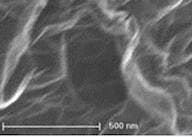
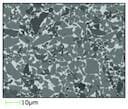
Graphene powder (1-5 layers thick x 0.5-5 microns wide, surface area 650-750 m²/g)
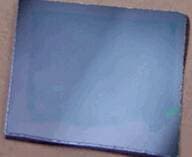
CAS:<p>Graphene powder (1-5 layers thick x 0.5-5 microns wide, surface area 650-750 m2/g)</p>Formel:CFarbe und Form:black pwdr.Molekulargewicht:12.011Graphene film, monolayer, on Si/SiO₂ wafer (1cm x1cm), by CVD
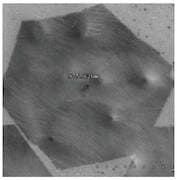
CAS:<p>Graphene film, monolayer, on Si/SiO2 wafer (1cm x1cm), by CVD</p>Formel:CFarbe und Form:waferMolekulargewicht:12.011Monolayer High Strength Metallurgical Graphene, HSMG®, on PMMA (25x25 mm)
CAS:<p>Monolayer High Strength Metallurgical Graphene, HSMG®, on PMMA (25x25 mm)</p>Formel:CFarbe und Form:colorless solidMolekulargewicht:12.011Graphene nanoplatelets, (2-10nm thick x ~5 microns wide)
CAS:<p>Graphene nanoplatelets, (2-10nm thick x ~5 microns wide)</p>Formel:CFarbe und Form:black solidMolekulargewicht:12.0Monolayer High Strength Metallurgical Graphene, HSMG®, on PMMA (10x10 mm)
CAS:<p>Monolayer High Strength Metallurgical Graphene, HSMG®, on PMMA (10x10 mm)</p>Formel:CFarbe und Form:colorless solidMolekulargewicht:12.011Graphene oxide (4mg/ml water dispersion)
CAS:<p>Graphene oxide (4mg/ml water dispersion)</p>Farbe und Form:yellow-brown liq dispersionMonolayer High Strength Metallurgical Graphene, HSMG®, on GLASS (10x10 mm)
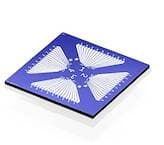
CAS:<p>Monolayer High Strength Metallurgical Graphene, HSMG®, on GLASS (10x10 mm)</p>Formel:CFarbe und Form:colorless solidMolekulargewicht:12.011Graphene Field-Effect Transistor (GFET) Chip - Quadrant pattern
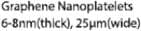
CAS:<p>Graphene Field-Effect Transistor (GFET) Chip - Quadrant pattern</p>Formel:CFarbe und Form:chipMolekulargewicht:12.0Graphene Nanoplatelets 5nm(thick), 135m2/g(surface area), 30µm(diameter)
CAS:Farbe und Form:Black powder to lumpGraphene Nanoplatelets 5nm(thick), 170m2/g(surface area), 30µm(diameter)
CAS:Farbe und Form:Black powder to lumpGraphene Nanoplatelets 3nm(thick), 800m2/g(surface area), 1.5µm(diameter)
CAS:Farbe und Form:Black powder to lumpGraphene Nanoplatelets 5nm(thick), 135m2/g(surface area), 7µm(diameter)
CAS:Farbe und Form:Black powder to lumpGraphene Nanoplatelets 5nm(thick), 170m2/g(surface area), 18µm(diameter)
CAS:Farbe und Form:Black powder to lumpGraphene Nanoplatelets 5nm(thick), 135m2/g(surface area), 18µm(diameter)
CAS:Farbe und Form:Black powder to lumpGraphene Nanoplatelets 5nm(thick), 170m2/g(surface area), 7µm(diameter)
CAS:Farbe und Form:Black powder to lumpGraphene Nanoplatelets 2-10nm(thick), 5µm(wide)
CAS:Farbe und Form:Light gray to Brown to Black powder to crystalGraphene oxide (4mg/ml water dispersion) - low Mn.
CAS:<p>Graphene oxide (4mg/ml water dispersion) - low Mn.</p>Formel:CFarbe und Form:brown liq.Molekulargewicht:12.0Graphene oxide (0.8-1.2nm thick x 1-15 microns wide, made by the Staudenmaier Method)
CAS:<p>Graphene oxide (0.8-1.2nm thick x 1-15 microns wide, made by the Staudenmaier Method)</p>Farbe und Form:black pwdr.Monolayer High Strength Metallurgical Graphene, HSMG®, on PMMA (50x50 mm)
CAS:<p>Monolayer High Strength Metallurgical Graphene, HSMG®, on PMMA (50x50 mm)</p>Formel:CFarbe und Form:colorless solidMolekulargewicht:12.011Monolayer Graphene on Cu (60 mm x 40 mm)
CAS:<p>Monolayer Graphene on Cu (60 mm x 40 mm)</p>Formel:CFarbe und Form:waferMolekulargewicht:12.011Graphene Nanoplatelets Aggregates (sub-micron particles, surface area 500m2/g)
CAS:Farbe und Form:Black powder to crystalGraphene Nanoplatelets Aggregates (sub-micron particles, surface area 300m2/g)
CAS:Farbe und Form:Black powder to crystalGraphene - Electrical conductivity >1000 S/m, powder
CAS:<p>Graphene is a single layer of graphite that is made up of carbon atoms. Graphene has been shown to be an excellent conductor of electricity, with electrical conductivity greater than 1000 S/m. It has been found to have many potential applications in the field of cancer research, such as the inhibition of tumor growth by destroying cancer cells and stimulating the immune system. Graphene also exhibits strong biocompatibility and can be used to generate biogas from agricultural waste or wastewater treatment. In addition, graphene has been shown to inhibit transfer reactions in enzymes and regulate transcriptional activity. It also exhibits chemical stability due to its high surface area and low reactivity.</p>Formel:CH4Reinheit:Min. 95%Graphene nanoplatelets aggregates - (sub-micron particles, surface area 500m2/g
CAS:Graphene nanoplatelets aggregates are a reactive material that can be used to make medications. They are also used in the production of lubricants, polymers, and other products. Graphene nanoplatelets aggregates have photocatalytic activity, which means they have the ability to convert light energy into chemical energy. This process is called photo-catalysis. The surface area of graphene nanoplatelets aggregates is 500 m2/g. Graphene nanoplatelets aggregates have a high viscosity and are activated at a temperature of 100 °C. Graphene nanoplatelets aggregates can evaporate quickly and transport rapidly in air because they are gaseous. Graphene nanoplatelets aggregates are combustible due to their flammable additives and ultrafast transport rate.Reinheit:Min. 95%Farbe und Form:Brown PowderGraphene Nanoplatelets Aggregates (sub-micron particles, surface area 750m2/g)
CAS:Farbe und Form:Black powder to crystal