CAS 104-10-9
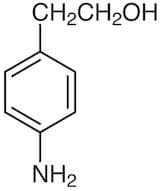
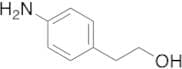
:2-(4-Aminophenyl)ethanol
Beschreibung:
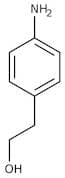
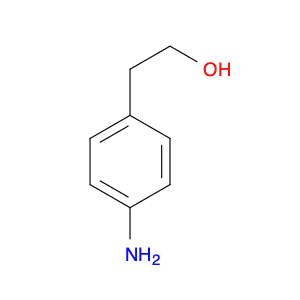
2-(4-Aminophenyl)ethanol, auch bekannt als para-Aminophenylethanol, ist eine organische Verbindung, die durch das Vorhandensein sowohl einer Aminogruppe (-NH2) als auch einer Hydroxylgruppe (-OH), die an einen Phenylring gebunden sind, gekennzeichnet ist. Diese Verbindung weist eine zwei Kohlenstoffatome umfassende Ethylkette auf, die die aminogruppierte Phenylgruppe mit der Hydroxylgruppe verbindet. Sie ist typischerweise ein weißer bis off-white fester Stoff bei Raumtemperatur und ist aufgrund ihrer polaren funktionellen Gruppen in Wasser und organischen Lösungsmitteln löslich. Das Vorhandensein der Aminogruppe verleiht basische Eigenschaften, die es ihr ermöglichen, an verschiedenen chemischen Reaktionen teilzunehmen, einschließlich Acylierung und Alkylierung. 2-(4-Aminophenyl)ethanol ist von Interesse in der medizinischen Chemie und kann als Vorläufer in der Synthese von Arzneimitteln dienen, insbesondere bei der Entwicklung von Analgetika und entzündungshemmenden Mitteln. Darüber hinaus kann es in der Farbstoffherstellung und als Reagenz in der organischen Synthese verwendet werden. Sicherheitsvorkehrungen sollten beim Umgang mit dieser Verbindung beachtet werden, da sie bei Exposition gesundheitliche Risiken darstellen kann.
Formel:C8H11NO
InChl:InChI=1S/C8H11NO/c9-8-3-1-7(2-4-8)5-6-10/h1-4,10H,5-6,9H2
InChI Key:InChIKey=QXHDYMUPPXAMPQ-UHFFFAOYSA-N
SMILES:C(CO)C1=CC=C(N)C=C1
Synonyme:- 2-(4-Amino-phenyl)ethanol
- 2-(4-Aminophenyl) ethanol
- 2-(4-Aminophenyl)-1-ethanol
- 2-(4-Aminophenyl)ethyl alcohol
- 2-(p-Aminophenyl)ethanol
- 4-(2-Hydroxyethyl)aniline
- 4-(2-Hydroxyethyl)phenylamine
- 4-Amino Phenethyl Alcohol
- 4-Aminobenzeneethanol
- 4-Aminophenethyl alcohol
- Benzeneethanol, 4-amino-
- NSC 409780
- P-Amino Phenethyl Alcohol
- P-Aminophenethyl Alcohol
- Phenethyl alcohol, p-amino-
- Weitere Synonyme anzeigen
Sortieren nach
Reinheit (%)
0
100
|
0
|
50
|
90
|
95
|
100
10 Produkte.
2-(4-Aminophenyl)ethanol, 97%
CAS:2-(4-Aminophenyl)ethanol is used as nonsymmetric monomer in the preparation of ordered [head-to-head (H-H) or tail-to-tail (T-T)] poly(amide-ester), in the synthesis of 4-aminostyrene and in functionalization of graphene nanoplatelets. This Thermo Scientific Chemicals brand product was originallyFormel:C8H11NOReinheit:97%Farbe und Form:Pale cream to cream to yellow to brown, Crystals or powder or crystalline powder or lumps or granulesMolekulargewicht:137.184-Aminophenethyl alcohol
CAS:4-Aminophenethyl alcoholFormel:C8H11NOReinheit:≥95%Farbe und Form: brown crystalline powderMolekulargewicht:137.17903g/mol2-(4-Aminophenyl)ethanol
CAS:Formel:C8H11NOReinheit:>98.0%(GC)(T)Farbe und Form:White to Light yellow to Light orange powder to crystalMolekulargewicht:137.184-Aminophenethyl alcohol
CAS:Formel:C8H11NOReinheit:95%Farbe und Form:Solid, Chunks or Crystalline PowderMolekulargewicht:137.1824-Aminophenethyl Alcohol
CAS:Kontrolliertes ProduktApplications 4-Aminophenethyl Alcohol, is a building block that can be used in the synthesis of various compounds, such as in synthesis of 4-aminostyrene, and in functionalization of graphene nanoplatelets.
References Li L, et al.Polymer Journal 33(4), 364-370; Hagiwara T, et al. Macromolecules 24(26), 6856-6858, (1991);Formel:C8H11NOFarbe und Form:NeatMolekulargewicht:137.184-Aminophenethyl alcohol
CAS:4-Aminophenethyl alcohol is a monosubstituted, basic compound that is used in the laboratory as a cell culture medium supplement to promote growth of fibroblasts. This compound has been shown to stimulate human intestinal cells and human peripheral blood mononuclear cells. 4-Aminophenethyl alcohol acts as a hydroxyl group donor, which may be due to its ability to form hydrogen ions when reacted with sodium hydroxide solution. The reaction of this compound with diazonium salt produces an intermediate, which can be hydrolyzed by the addition of sodium hydroxide solution. The resultant chloride ion reacts with the aminophenethyldihydroxylamine (APDA) moiety to produce APDCl. This product has been shown to increase the population growth rate of fibroblasts in culture by causing DNA synthesis and protein synthesis. Linear regression analysis revealed that there was no statistically significant difference between the control and experimental groups for either DNAFormel:C8H11NOReinheit:Min. 95%Molekulargewicht:137.18 g/mol