CAS 104339-66-4
:Histatin 5
Beschreibung:
Histatin 5 ist ein Peptid, das zur Familie der Histatine gehört, die histidinreiche Proteine sind, die hauptsächlich im menschlichen Speichel vorkommen. Es ist bekannt für seine antimikrobiellen Eigenschaften, insbesondere gegen verschiedene Bakterien und Pilze, was es in der Mundgesundheit und in potenziellen therapeutischen Anwendungen bedeutend macht. Das Peptid besteht aus 24 Aminosäuren und zeichnet sich durch seinen hohen Histidingehalt aus, der zu seiner Fähigkeit beiträgt, Metallionen zu binden und antimikrobielle Aktivität zu zeigen. Histatin 5 spielt auch eine Rolle bei der Wundheilung und hat gezeigt, dass es die Zellproliferation und -migration fördert, die wesentliche Prozesse bei der Gewebereparatur sind. Sein Wirkmechanismus umfasst die Störung mikrobieller Membranen und die Beeinträchtigung zellulärer Prozesse in Krankheitserregern. Darüber hinaus wurde Histatin 5 auf sein Potenzial in Arzneimittellieferungssystemen und als Modell zur Entwicklung neuer antimikrobieller Wirkstoffe untersucht. Insgesamt machen seine einzigartigen Eigenschaften es zu einem interessanten Thema sowohl in der Mikrobiologie als auch in der biochemischen Forschung.
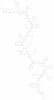
Formel:C133H195N51O33
InChl:InChI=1/C133H195N51O33/c1-71(164-120(206)96(46-76-54-146-65-158-76)181-128(214)103(62-185)183-110(196)84(138)52-108(193)194)109(195)167-86(18-5-9-35-134)113(199)172-91(24-15-41-154-133(143)144)118(204)178-99(49-79-57-149-68-161-79)125(211)176-95(45-75-53-145-64-157-75)112(198)156-60-105(189)165-93(43-73-25-29-82(187)30-26-73)121(207)173-87(19-6-10-36-135)114(200)171-90(23-14-40-153-132(141)142)115(201)169-88(20-7-11-37-136)116(202)175-94(42-72-16-3-2-4-17-72)122(208)179-97(47-77-55-147-66-159-77)124(210)174-92(33-34-107(191)192)119(205)170-89(21-8-12-38-137)117(203)177-100(50-80-58-150-69-162-80)126(212)180-101(51-81-59-151-70-163-81)127(213)184-104(63-186)129(215)182-98(48-78-56-148-67-160-78)123(209)168-85(22-13-39-152-131(139)140)111(197)155-61-106(190)166-102(130(216)217)44-74-27-31-83(188)32-28-74/h2-4,16-17,25-32,53-59,64-71,84-104,185-188H,5-15,18-24,33-52,60-63,134-138H2,1H3,(H,145,157)(H,146,158)(H,147,159)(H,148,160)(H,149,161)(H,150,162)(H,151,163)(H,155,197)(H,156,198)(H,164,206)(H,165,189)(H,166,190)(H,167,195)(H,168,209)(H,169,201)(H,170,205)(H,171,200)(H,172,199)(H,173,207)(H,174,210)(H,175,202)(H,176,211)(H,177,203)(H,178,204)(H,179,208)(H,180,212)(H,181,214)(H,182,215)(H,183,196)(H,184,213)(H,191,192)(H,193,194)(H,216,217)(H4,139,140,152)(H4,141,142,153)(H4,143,144,154)/t71-,84-,85-,86-,87-,88-,89-,90-,91-,92-,93-,94-,95-,96-,97-,98-,99-,100-,101-,102-,103-,104-/m0/s1
SMILES:C[C@@H](C(=N[C@@H](CCCCN)C(=N[C@@H](CCCNC(=N)N)C(=N[C@@H](Cc1cnc[nH]1)C(=N[C@@H](Cc1cnc[nH]1)C(=NCC(=N[C@@H](Cc1ccc(cc1)O)C(=N[C@@H](CCCCN)C(=N[C@@H](CCCNC(=N)N)C(=N[C@@H](CCCCN)C(=N[C@@H](Cc1ccccc1)C(=N[C@@H](Cc1cnc[nH]1)C(=N[C@@H](CCC(=O)O)C(=N[C@@H](CCCCN)C(=N[C@@H](Cc1cnc[nH]1)C(=N[C@@H](Cc1cnc[nH]1)C(=N[C@@H](CO)C(=N[C@@H](Cc1cnc[nH]1)C(=N[C@@H](CCCNC(=N)N)C(=NCC(=N[C@@H](Cc1ccc(cc1)O)C(=O)O)O)O)O)O)O)O)O)O)O)O)O)O)O)O)O)O)O)O)O)O)N=C([C@H](Cc1cnc[nH]1)N=C([C@H](CO)N=C([C@H](CC(=O)O)N)O)O)O
Synonyme:- Histatin-5
Sortieren nach
Reinheit (%)
0
100
|
0
|
50
|
90
|
95
|
100
3 Produkte.
Histatin 5
CAS:Peptide Histatin 5 is a Research Peptide with significant interest within the field academic and medical research. This peptide is available for purchase at Cymit Quimica in multiple sizes and with a specification of your choice.Formel:C133H195N51O33Molekulargewicht:3,036.36 g/molHistatin 5
CAS:Custom research peptide; min purity 95%.
Formel:C133H195N51O33Reinheit:Min. 95%Molekulargewicht:3,036.36 g/molHistatin 5, human
CAS:As a member of the Histatin family, Histatin 5 is a 24 amino acid, antimicrobial peptide rich in histidine. The Histatin family’s large histidine presence allow Histatins to associate with metal ions through the histidine side chains.Histatin 5 is found naturally in human saliva, and is a proteolytic fragment of Histatin 3. It exhibits antifungal properties and is thus useful in inhibiting the growth of yeast and C. albicans. Histatin 5 contains a functional domain located at amino acids 11 to 24 and this is where the antimicrobial activity of Histatin 5 takes place. It also has a random secondary structure with α-helices which are believed to allow it to enter the cytoplasm of the pathogenic cell. Once it has gained entry into the cells of pathogens, it is known to induce an ATP influx and the production of reactive oxygen species.However it is important to note that while Histatin 5 displays potent antifungal activity, this is reduced when in saliva due to the exposure to interfering metals, proteins and salts.Formel:C133H195N51O33Reinheit:Min. 95%Molekulargewicht:3,036.3 g/mol