CAS 10487-71-5
:2-Butenoylchlorid
Beschreibung:
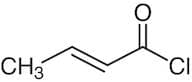
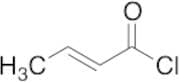
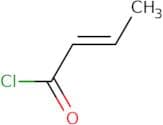
2-Butenoylchlorid, auch bekannt als Crotonylchlorid, ist eine organische Verbindung, die durch ihre Struktur gekennzeichnet ist, die eine Butenoylgruppe enthält, die an ein Chloratom gebunden ist. Es ist eine farblose bis gelbliche Flüssigkeit mit einem stechenden Geruch, der auf seine Reaktivität hinweist. Diese Verbindung wird als Acylchlorid klassifiziert, was sie hochreaktiv macht, insbesondere mit Wasser, Alkoholen und Aminen, was zur Bildung entsprechender Säuren und Ester führt. 2-Butenoylchlorid ist in organischen Lösungsmitteln wie Ether und Chloroform löslich, reagiert jedoch heftig mit Feuchtigkeit und setzt Salzsäure frei. Es wird hauptsächlich in der organischen Synthese verwendet, insbesondere bei der Herstellung verschiedener chemischer Zwischenprodukte und in der Produktion von Polymeren. Aufgrund seiner Reaktivität erfordert es eine sorgfältige Handhabung und Lagerung unter einer inert Atmosphäre, um Hydrolyse und Zersetzung zu verhindern. Sicherheitsvorkehrungen sind beim Arbeiten mit dieser Verbindung unerlässlich, da sie schwere Reizungen der Haut, der Augen und des Atmungssystems verursachen kann.
Formel:C4H5ClO
InChl:InChI=1S/C4H5ClO/c1-2-3-4(5)6/h2-3H,1H3
InChI Key:InChIKey=RJUIDDKTATZJFE-UHFFFAOYSA-N
SMILES:C(C(Cl)=O)=CC
Synonyme:- 2-Butenoyl chloride
- But-2-enoyl chloride
- Crotonic acid chloride
- Crotonoyl chloride
- β-Methylacryloyl chloride
Sortieren nach
Reinheit (%)
0
100
|
0
|
50
|
90
|
95
|
100
5 Produkte.
Crotonoyl Chloride (cis- and trans- mixture)
CAS:Formel:C4H5ClOReinheit:>95.0%(GC)Farbe und Form:Colorless to Yellow to Orange clear liquidMolekulargewicht:104.53Crotonyl chloride
CAS:Crotonyl chlorideFormel:C4H5ClOReinheit:98%Farbe und Form: clear. almost colourless liquidMolekulargewicht:104.54g/molCrotonoyl Chloride
CAS:Kontrolliertes ProduktFormel:C4H5ClOFarbe und Form:ColourlessMolekulargewicht:104.53Crotonyl chloride
CAS:Crotonyl chloride is a chemical compound that contains a hydroxyl group (-OH) and an amide (-CONH). It can be used in the synthesis of epidermal growth factor. Crotonyl chloride also has the ability to inhibit the growth of cancer cells by binding to surface receptors on the cell membrane, which leads to apoptosis. It is used as a polymerase chain reaction (PCR) substrate film for sodium carbonate and chloride yields. This chemical can be synthesized using an asymmetric synthesis with nitrogen atoms, amines, and sodium carbonate.Formel:C4H5ClOReinheit:Min. 95%Molekulargewicht:104.53 g/mol