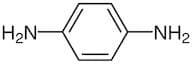
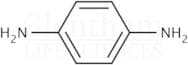
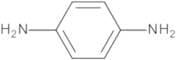
CAS 106-50-3
:p-Phenylendiamin
- (4-Aminophenyl)amine
- 1,4-Benzenediamie
- 1,4-Benzenediamine
- 1,4-Diaminobenzene
- 1,4-Diaminobenzol
- 1,4-Phenylendiamin
- 1,4-Phenylenediamine
- 3,4-Dichloraniline
- 4-Aminoaniline
- 4-Phenylenediamine
- BASF Ursol D
- Benzene, 1,4-Diamino-
- Benzene-1,4-Diamine
- Benzofur D
- Black for Fur D
- Developer PF
- Durafur Black R
- Fouramine D
- Fourrine 1
- Fourrine D
- Fur Black 41867
- Fur Brown 41866
- Fur Yellow
- Furro D
- Futramine D
- Nako H
- Nsc 4777
- Orsin
- Oxidation Base 10
- P-Fenilendiamina
- P-Pda
- P-Phene Diamine
- P-Phenylene Diamine
- P-Phenylene Diamine Flake
- P-diamino benzene
- PDA
- PPD
- Paramine
- Pelagol D
- Pelagol DR
- Pelagol Grey D
- Peltol D
- Phenylene-1,4-Diamine
- Renal PF
- Rodol D
- Rodol DJ
- Tertral D
- Ursol D
- Zoba Black D
- p-Aminoaniline
- p-Benzenediamine
- p-Diaminobenzene
- p-Phenylendiamin
- para Phenylene diamine
- C.I. Developer 13
- C.I. 76060
- p-Phenylenediamine
- Weitere Synonyme anzeigen
1,4-Phenylenediamine
CAS:Formel:C6H8N2Reinheit:>98.0%(GC)(T)Farbe und Form:White to Light yellow to Light red powder to crystalMolekulargewicht:108.14p-Phenylenediamine, 97%
CAS:p-Phenylenediamine is used as a precursor to aramid plastics, Kevlar fibers and to urethane polymers. It serves as a developing agent in photography, antioxidants in rubber products and as a vulcanization accelerator. It is used as a henna surrogate for temporary tattoos and as a histological stainFormel:C6H8N2Reinheit:97%Farbe und Form:Crystals or powder or crystalline powder or chunks or fused solid or flakes, Colorless to white to pale cream to cream to brown or pink to purple or pale gray to dark greyMolekulargewicht:108.141,4-Phenylenediamine 2000 µg/mL in Acetonitrile
CAS:Kontrolliertes ProduktFormel:C6H8N2Farbe und Form:Single SolutionMolekulargewicht:108.14GB 31604.52-2021 Primary Aromatic Amine Mixtures 36 1000 µg/mL in Acetonitrile
CAS:Kontrolliertes Produkt- 101-14-4
- 101-77-9
- 101-80-4
- 106-47-8
- 106-50-3
- 108-45-2
- 119-90-4
- 119-93-7
- 120-71-8
- 1208-52-2
- 137-17-7
- 139-65-1
- 60-09-3
- 615-05-4
- 62-53-3
- 6582-52-1
- 838-88-0
- 87-62-7
- 90-04-0
- 91-59-8
- 91-94-1
- 92-67-1
- 92-87-5
- 95-53-4
- 95-68-1
- 95-69-2
- 95-80-7
- 97-56-3
- 99-55-8
Farbe und Form:MixtureGB/T 17592-2011 Azo Dyes Mixture 128 1000 µg/mL in Acetonitrile
CAS:Kontrolliertes Produkt- 101-14-4
- 101-77-9
- 101-80-4
- 106-47-8
- 106-50-3
- 119-90-4
- 119-93-7
- 120-71-8
- 137-17-7
- 139-65-1
- 60-09-3
- 615-05-4
- 62-53-3
- 838-88-0
- 87-62-7
- 90-04-0
- 91-59-8
- 91-94-1
- 92-67-1
- 92-87-5
- 95-53-4
- 95-68-1
- 95-69-2
- 95-80-7
- 97-56-3
- 99-55-8
Farbe und Form:Mixture1,4-Phenylenediamine
CAS:Kontrolliertes ProduktFormel:C6H8N2Farbe und Form:NeatMolekulargewicht:108.14p-Phenylenediamine
CAS:Formel:C6H8N2Reinheit:(GC) ≥ 98.0%Farbe und Form:White to light-beige, or light-orange to brown crystalline solidMolekulargewicht:108.141,4-Phenylenediamine
CAS:Applications A hair dye component, paraphenylenediamine, as a contact allergen for treatment of inflammatory diseases.
Not a dangerous good if item is equal to or less than 1g/ml and there is less than 100g/ml in the package
References Chugh, K., et al.: J. Med., 13, 131 (1982), Baud, F., et al.: J. Toxicol. Med., 4, 279 (1984), Ashraf, W., et al.: Human Exp. Toxicol., 13, 167 (1994),Formel:C6H8N2Farbe und Form:NeatMolekulargewicht:108.141,4-Phenylenediamine
CAS:Phenylenediamine is a heterocyclic amine that is used as a precursor to the dye intermediate 4-aminophenol. It has been shown to have high intramolecular hydrogen bonding and low intermolecular hydrogen bonding. Phenylenediamine has a redox potential of -1.8 V, which means it can be reduced by chemical reduction or electrolysis. The nitrogen atoms in phenylenediamine are able to form redox reactions with p-hydroxybenzoic acid, which is found in human serum, leading to the formation of quinoneimines and reactive oxygen species such as superoxide anion and hydroxyl radicals. These reactive oxygen species can cause toxicity in humans. Titration calorimetry studies show that phenylenediamine binds with water molecules at its ortho position, forming a hydrogen bond with the water molecule's OH group. This interaction may contribute to its toxic effects on living organisms.
Formel:C6H8N2Reinheit:Min. 95 Area-%Farbe und Form:PowderMolekulargewicht:108.14 g/molBenzene-1,4-diamine
CAS:Formel:C6H8N2Reinheit:95.0%Farbe und Form:Solid, White to pale red powderMolekulargewicht:108.144p-Phenylenediamine pure, 98%
CAS:Formel:C6H8N2Reinheit:min. 98%Farbe und Form:White to brown or pink to red or purple, Flakes/Chunks/Crystals or crystalline powder, ClearMolekulargewicht:108.14