CAS 107-43-7
:Betain
Beschreibung:
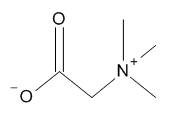
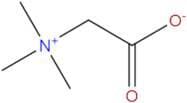
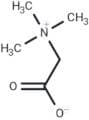
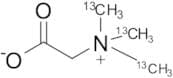
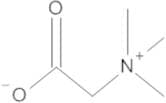
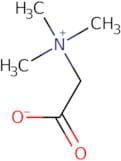
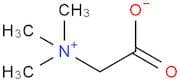
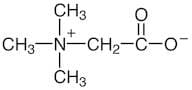
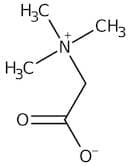
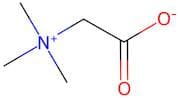
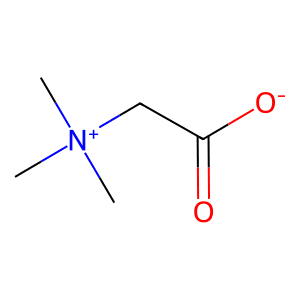
Betain, mit der CAS-Nummer 107-43-7, ist eine natürlich vorkommende Verbindung, die als zwitterionisches Aminosäurederivat klassifiziert ist. Sie zeichnet sich durch ihre chemische Struktur aus, die eine quartäre Ammoniumgruppe und eine Carboxylatgruppe umfasst, wodurch sie bei physiologischem pH sowohl positiv als auch negativ geladen ist. Betain ist in Wasser löslich und weist hygroskopische Eigenschaften auf, die es ihm ermöglichen, Feuchtigkeit anzuziehen. Es kommt häufig in Zuckerrüben, Spinat und anderen Pflanzen vor und wird oft als Futtermittelzusatz in der Tierhaltung verwendet, um das Wachstum und die Futtereffizienz zu verbessern. In der menschlichen Ernährung wird Betain für seine Rolle in Methylierungsprozessen und als potenzieller Osmoprotektor anerkannt, der den Zellen hilft, ihre Struktur und Funktion unter Stressbedingungen aufrechtzuerhalten. Darüber hinaus hat es Aufmerksamkeit für seine potenziellen Vorteile in der sportlichen Leistung und der metabolischen Gesundheit erregt. Insgesamt wird Betain für seine multifunktionalen Eigenschaften sowohl in biologischen Systemen als auch in verschiedenen industriellen Anwendungen geschätzt.
Formel:C5H11NO2
InChl:InChI:1S/C5H11NO2/c1-6(2,3)4-5(7)8/h4H2,1-3H3
InChI Key:InChIKey=KWIUHFFTVRNATP-UHFFFAOYSA-N
SMILES:C([N+](C)(C)C)C([O-])=O
Synonyme:- (Carboxymethyl)trimethylammonium hydroxide inner salt
- (Trimethylammonio)Acetate
- (Trimethylammonio)Acetate-Glycine (1:1)
- 2-(Trimethylammonio)ethanoic acid, hydroxide, inner salt
- 2-(Trimethylazaniumyl)acetate
- Abromine
- Aminocoat
- Ammonium compounds, substituted, (carboxymethyl)trimethyl-, hydroxide, inner salt
- Aquadew AN 100
- Auqadew AN 100
- Betafin
- Betafin BCR
- Betafin BP
- Betafin BP 20
- Betain
- Betaina
- Betaine anhydrous
- Bluestim
- Cystadane
- Fencaijian
- FinnStim
- Genecare OSMS BA
- Genencare OSMS BA
- Glycine betaine
- Glycine, trimethylbetaine
- Glycocoll betaine
- Glycylbetaine
- Greenstim
- Intracell
- Loramine AMB 13
- Lycine
- Methanaminium, 1-carboxy-N,N,N-trimethyl-, hydroxide, inner salt
- Methanaminium, 1-carboxy-N,N,N-trimethyl-, inner salt
- N,N,N-Trimethylglycine
- Oxyneurine
- Rubrine C
- Trimethylbetaine
- Trimethylglycine
- Trimethylglycocoll
- carboxy-N,N,N-trimethylmethanaminium
- α-Earleine
- Betaine
- Dimethylsarcosine
- BET
- (CARBOXYMETHYL)TRIMETHYLAMMONIUM HYDROXIDE ANHYDRIDE
- glycocollbetaine
- 1-Carboxy-N,N,N-trimethylmethanaminium inner salt
- BETAINE BASE
- N-TRIMETHYLGLYCINE HYDROXIDE
- Weitere Synonyme anzeigen
Sortieren nach
Reinheit (%)
0
100
|
0
|
50
|
90
|
95
|
100
Betaine Anhydrous
CAS:Formel:C5H11NO2Reinheit:>97.0%(T)Farbe und Form:White to Almost white powder to crystalMolekulargewicht:117.15Betaine, 5M Solution, Molecular Biology Grade, Ultrapure
CAS:Thermo Scientific Betaine Molecular Biology Grade UltrapureFormel:C5H11NO2Molekulargewicht:117.15Betaine, anhydrous, 98%
CAS:Betaine is an active ingredient in toothpaste to control the symptoms of dryness of the mouth. It is used to treat homocystinuria, which is a defect in the major pathway of methionine biosynthesis. It is also used for boosting the immune system and for improving athletic performance. It is helpfulFormel:C5H11NO2Reinheit:98%Farbe und Form:White, Crystals or powder or crystalline powder or granulesMolekulargewicht:117.15Betaine
CAS:Quaternary ammonium salts and hydroxides, whether or not chemically defined, nesoiFormel:C5H11NO2Farbe und Form:White Crystalline PowderMolekulargewicht:117.07898Methanaminium, 1-carboxy-N,N,N-trimethyl-, inner salt
CAS:Formel:C5H11NO2Reinheit:96%Farbe und Form:SolidMolekulargewicht:117.1463Betaine, anhydrous
CAS:Formel:C5H11NO2Reinheit:98.0 - 102.0 % (dried basis)Farbe und Form:White to off-white crystalline powderMolekulargewicht:117.15Betaine Anhydrous [for Biochemical Research]
CAS:Formel:C5H11NO2Reinheit:>97.0%(T)Farbe und Form:White to Almost white powder to crystalMolekulargewicht:117.15Betaine
CAS:Formel:C5H11NO2Reinheit:98.0%Farbe und Form:Solid, Crystalline Powder or PowderMolekulargewicht:117.148Betaine
CAS:Betaine, a glycine derivative from sugar beets, may aid muscle gain, fat loss, and heart health by enhancing protein synthesis.Formel:C5H11NO2Reinheit:99.9% - 99.96%Farbe und Form:SolidMolekulargewicht:117.15Betaine
CAS:Applications Betaine, is the product of the enzyme oxidation of choline. It can also be used as an organic osmolytes. Betain is a methyl donor of increasingly recognized significance in biology. It can also be used for the treatment of homocystinuria which is an inherited disorder of the metabolism of amino acid methionine.
References J. Biol. Chem., 234, 1171 (1959); Alex, N. et al.: Org. Chem., (1987); Rees, W. et al.: Biochem., 32, 137 (1993);Formel:C5H11NO2Farbe und Form:NeatMolekulargewicht:117.15Betaine
CAS:Osmolyte giving cellular protection against environmental stress
Formel:C5H11NO2Reinheit:99.0 To 101.0%Farbe und Form:White Off-White PowderMolekulargewicht:117.15 g/molBetaine (Glycine Betaine) pure, 98%
CAS:Formel:C5H11NO2Reinheit:min. 98%Farbe und Form:White, Crystalline powderMolekulargewicht:117.15







![Betaine Anhydrous [for Biochemical Research]](/_next/image/?url=https%3A%2Fstatic.cymitquimica.com%2Fproducts%2F3B%2Fthumb%2FB6796.jpg&w=3840&q=75)