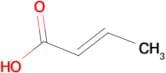
CAS 107-93-7
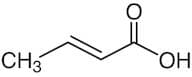
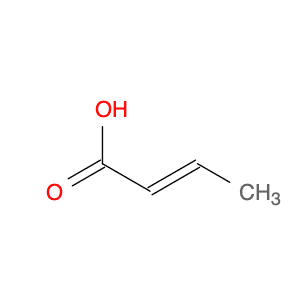
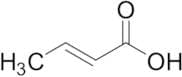
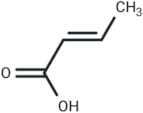
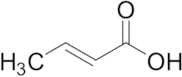
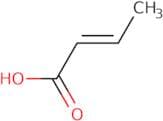
:trans-Crotonsäure
- (2E)-2-Butenoic acid
- (2E)-but-2-enoate
- (2E)-but-2-enoic acid
- (E)-2-Butenoic acid
- (E)-Crotonic acid
- 2-Butenoic acid, (2E)-
- 2-Butenoic acid, (E)-
- But-2-Enoic Acid
- Crotonic acid, (E)-
- NSC 8751
- trans-2-Butenoic acid
- trans-3-Methylacrylic acid
- Weitere Synonyme anzeigen
Crotonic Acid
CAS:Formel:C4H6O2Reinheit:>98.0%(GC)(T)Farbe und Form:White to Almost white powder to lumpMolekulargewicht:86.09trans-Crotonic acid, 98%
CAS:trans-Crotonic acid is used in the copolymerization of crotonic acid hydrogel systems by using gamma-rays. The crosslinked copolymeric crotonic acid hydrogels release fertilizers and drugs that help to prevent environmental pollution. This Thermo Scientific Chemicals brand product was originally paFormel:C4H6O2Reinheit:98%Farbe und Form:White to pale yellow, Crystals or powder or crystalline powder or crystalline flakes or pelletsMolekulargewicht:86.09Crotonic acid
CAS:Formel:C4H6O2Reinheit:(GC) ≥ 98.0%Farbe und Form:White to almost white powder, flakes or crystalsMolekulargewicht:86.09(E)-2-Butenoic acid
CAS:(E)-2-Butenoic acid (Crotonic acid) is fatty acid formed by the action of fatty acid synthases from acetyl-CoA and malonyl-CoA precursors. Crotonic acid is involved in the fatty acid biosynthesis. Crotonic acid is also found in water extracts from carrot seeds (Daucus carota L.).Formel:C4H6O2Reinheit:98% - 99.98%Farbe und Form:White Solid CrystallineMolekulargewicht:86.09Crotonic Acid
CAS:Applications Crotonic Acid is found in water extracts from carrot seeds (Daucus carota L.) and is shown to have strong herbicidal properties.
Not a dangerous good if item is equal to or less than 1g/ml and there is less than 100g/ml in the package
References Jasicka-Misiak, I., et al.: Phytochemistry, 66, 1485 (2005)Formel:C4H6O2Farbe und Form:WhiteMolekulargewicht:86.09Crotonic acid
CAS:Crotonic acid is a fatty acid that is a potential inhibitor of glycol ethers. It has been demonstrated to inhibit the formation of infectious diseases by binding to the agonist binding site on the surface of bacteria. Crotonic acid also binds to water molecules and forms crotonic acid hydroxide, which may be responsible for its inhibitory properties. The hydrolysis of crotonic acid can be achieved through a reaction mechanism involving water and an electrochemical process in which methyl ethyl groups are oxidized and form methyl ethyl radicals. These radicals react with hydrogen atoms from water, forming methoxy radicals that react with two hydroxyl groups, which results in the cleavage of the C-O bonds in crotonic acid to form acetic acid and methanol. Crotonic acid has also been shown to have detergent properties when used as a solid catalyst for organic reactions or as an additive in detergent compositions.
Formel:C4H6O2Reinheit:Min. 95%Farbe und Form:PowderMolekulargewicht:86.09 g/molCrotonic Acid pure, 99%
CAS:Formel:C4H6O2Reinheit:min. 99%Farbe und Form:White to off-white, Crystalline powder /pellets, ClearMolekulargewicht:86.09