CAS 1070-70-8
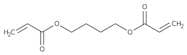
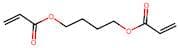
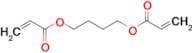
:1,4-Butandiol diacrylat
Beschreibung:
1,4-Butandiol diacrylat (BDDA) ist ein Diacrylatester, der häufig in der Polymerchemie und Materialwissenschaft verwendet wird. Er zeichnet sich durch seine zwei Acrylat-Funktionsgruppen aus, die es ihm ermöglichen, an der radikalischen Polymerisation teilzunehmen, was ihn zu einem wertvollen Monomer bei der Herstellung von vernetzten Polymeren und Harzen macht. BDDA ist typischerweise eine farblose bis blassgelbe Flüssigkeit mit niedriger Viskosität und hat einen relativ niedrigen Siedepunkt. Es ist in organischen Lösungsmitteln wie Aceton und Ethylacetat löslich, aber in Wasser unlöslich. Die Verbindung ist bekannt für ihre Fähigkeit, die mechanischen Eigenschaften und die chemische Beständigkeit der resultierenden Polymere zu verbessern. Es ist jedoch auch wichtig zu beachten, dass BDDA ein Haut- und Augenreizmittel sein kann, und geeignete Sicherheitsmaßnahmen sollten beim Umgang damit getroffen werden. Seine Anwendungen erstrecken sich über verschiedene Branchen, einschließlich Beschichtungen, Klebstoffe und zahnmedizinische Materialien, wo seine Vernetzungskapazitäten besonders vorteilhaft sind.
Formel:C10H14O4
InChl:InChI=1/C10H14O4.C2H6O2/c1-3-9(11)13-7-5-6-8-14-10(12)4-2;3-1-2-4/h3-4H,1-2,5-8H2;3-4H,1-2H2
InChI Key:InChIKey=JHWGFJBTMHEZME-UHFFFAOYSA-N
SMILES:C(OCCCCOC(C=C)=O)(C=C)=O
Synonyme:- 1,4-Bis(acryloyloxy)butane
- 1,4-Butylene diacrylate
- 1,4-Butylene glycol diacrylate
- 1,4-Butyleneglycol diacrylate
- 2-Propenoic acid, 1,1′-(1,4-butanediyl) ester
- 2-Propenoic acid, 1,4-butanediyl ester
- Acrylic acid, tetramethylene ester
- Bdda
- Butane-1,1-Diyl Bisprop-2-Enoate
- Butane-1,4-Diyl Bisprop-2-Enoate
- Butane-1,4-diyl diacrylate
- Butylene glycol diacrylate
- Fa 124As
- Fancryl FA 124AS
- Fancryl FA 124SA
- Laromer BDDA
- M 204
- Miramer 204
- SR 213 (ester)
- Sartomer 213
- Sm 624
- Sr 213
- Tetramethylene acrylate
- Tetramethylene diacrylate
- Tetramethylene glycol diacrylate
- Viscoat 195
- Viscoat V 195
- n-Butane-1,4-diyl diacrylate
- 1,4-Butanediol, diacrylate
- 4-(Acryloyloxy)butyl acrylate
- ACRYLICACID,DIESTERWITH1,4-BUTANEDIOL
- acrylicacid,tetramethyleneester
- 1,4-BUTANEDIOL DIACRYLATE, TECH., 90%
- 2-Propenoicacid,1,4-butanediylester
- tetramethyleneacrylate
- 1,4-butanediyl diacrylate
- butylenediacrylate
- Butylene diacrylate
- sr213
- 1,4-butylenediacrylate
- Weitere Synonyme anzeigen
Sortieren nach
Reinheit (%)
0
100
|
0
|
50
|
90
|
95
|
100
5 Produkte.
1,4-Bis(acryloyloxy)butane (stabilized with MEHQ)
CAS:Formel:C10H14O4Reinheit:>88.0%(GC)Farbe und Form:Colorless to Light yellow to Light orange clear liquidMolekulargewicht:198.221,4-Butanediol diacrylate, 85+%, stab. with 50-105 ppm hydroquinone
CAS:<p>1,4-Butanediol diacrylate is used as a multifunctional crosslinker. It is used in drying technology for paintings, coatings, inks, resins and adhesives. It serves as an intermediate product for polymer synthesis in the chemical industry. This Thermo Scientific Chemicals brand product was originally </p>Formel:C10H14O4Reinheit:85+%Farbe und Form:Clear, viscous liquidMolekulargewicht:198.221,4-Butanediol Diacrylate
CAS:1,4-Butanediol DiacrylateReinheit:90% (stabilized with 200~400ppm MEHQ)Molekulargewicht:198.22g/mol1,4-Bis(acryloyloxy)butane(stabilizedwithMEHQ)
CAS:Reinheit:95%,stabilized with MEHQMolekulargewicht:198.2181,4-Butanediol biscrylate - Hydroquinone as inhibitor
CAS:Kontrolliertes Produkt<p>1,4-Butanediol biscrylate - Hydroquinone as inhibitor is a glycol ester that is used in the process of laser ablation. It has been shown to be a biocompatible polymer that can be used for surface methodology. This polymer is synthesized by reacting monosodium salt of butanediol with hydroquinone and sodium carbonate in aqueous solution. 1,4-Butanediol biscrylate - Hydroquinone as inhibitor has been tested using cervical cancer cells and it was found to have a cytotoxic effect on these cells.</p>Formel:C10H14O4Reinheit:Min. 95%Molekulargewicht:198.22 g/mol