CAS 108-18-9
:Diisopropylamin
- (N-(1-Methylethyl)-2)propanamine
- 2-Isopropylamine
- 2-Propanamine, N-(1-methylethyl)-
- Bis(1-methylethyl)amine
- Bis(isopropyl)amine
- Bis(propan-2-yl)amine
- D 0925
- Di-iso-propylamine
- Diisopropilamina
- Diisopropylamin
- Dipa
- N,N-Diisopropylamine
- N-(1-methylethyl)propan-2-aminium
- N-(propan-2-yl)propan-2-amine
- N-Isopropylpropan-2-amine
- Nsc 6758
- Weitere Synonyme anzeigen
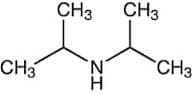
Diisopropylamine, 99+%
CAS:Diisopropylamine is used as a precursor to prepare lithium diisopropylamide and sulfenamides, which are used in rubber vulcanization. It is also involved in the synthesis of N,N-Diisopropylethylamine (Hünig's base) obtained by alkylation with diethyl sulfate. Diisopropylammonium bromide is a bromide
Formel:C6H15NReinheit:99+%Farbe und Form:Clear colorless, LiquidMolekulargewicht:101.19Diisopropylamine
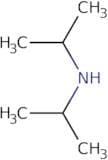
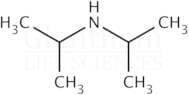
CAS:Kontrolliertes ProduktDiisopropylamine is a tertiary amine and a component of trifluoroacetic acid. It is an amide with physiological effects that are not well understood. The diisopropylamine molecule has been shown to undergo transfer reactions, which may be due to steric interactions between the intramolecular hydrogen and nitrogen atoms. Trifluoroacetic acid can be found in reaction solution, such as in the formation of diazo compounds or as an intermediate in the reaction of ethyl acetate and sodium hypochlorite. Diisopropylamine is metabolized through dehydrogenative reactions, which involve the conversion of a group from one part of a molecule to another by removal of hydrogen atoms. This process generates reactive oxygen species and free radicals that may lead to oxidative stress in cells.
Formel:C6H15NReinheit:Min. 95%Farbe und Form:Clear LiquidMolekulargewicht:101.19 g/molDiisopropylamine
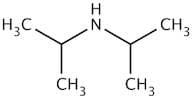
CAS:Formel:(CH3)2CHNHReinheit:≥ 99.0%Farbe und Form:Clear, colourless liquidMolekulargewicht:101.19Diisopropylamine pure, 98%
CAS:Formel:C6H15NReinheit:min. 98%Farbe und Form:Clear, Colourless, LiquidMolekulargewicht:101.19