CAS 108-86-1
:Brombenzol
Beschreibung:
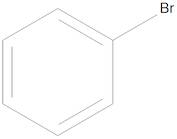
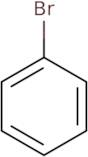
Brombenzol, mit der CAS-Nummer 108-86-1, ist eine aromatische organische Verbindung, die durch einen Benzolring charakterisiert ist, der mit einem Bromatom substituiert ist. Es ist bei Raumtemperatur eine farblose bis hellgelbe Flüssigkeit mit einem süßen, aromatischen Geruch. Brombenzol ist relativ unpolar, was es in organischen Lösungsmitteln löslich, aber in Wasser unlöslich macht. Seine chemische Formel ist C6H5Br und es hat ein Molekulargewicht von etwa 157,01 g/mol. Die Verbindung ist bekannt für ihre Stabilität und wird als Lösungsmittel sowie in der Synthese verschiedener organischer Verbindungen, einschließlich pharmazeutischer Produkte und Agrochemikalien, verwendet. Brombenzol kann elektrophile Substitutionsreaktionen durchlaufen, die typisch für aromatische Verbindungen sind, und kann auch an nucleophilen Substitutionsreaktionen teilnehmen, aufgrund des Vorhandenseins des Bromatoms. Es ist jedoch wichtig, Brombenzol mit Vorsicht zu behandeln, da es als giftig gilt und Gesundheitsrisiken bei Exposition darstellen kann. Es sollten angemessene Sicherheitsmaßnahmen getroffen werden, wenn mit dieser Verbindung in Labor- oder Industrieumgebungen gearbeitet wird.
Formel:C6H5Br
InChl:InChI=1S/C6H5Br/c7-6-4-2-1-3-5-6/h1-5H
InChI Key:InChIKey=QARVLSVVCXYDNA-UHFFFAOYSA-N
SMILES:BrC1=CC=CC=C1
Synonyme:- 1-Bromobenzene
- Benzene, bromo-
- Brombenzol
- Bromobenceno
- Bromobenzene 99+%
- Bromobenzol
- Monobromobenzene
- Nci-C55492
- Nsc 6529
- Phenyl bromide
- Phenylbromide
- Weitere Synonyme anzeigen
Filtern nach
Reinheitsanteil
0
100
|
0
|
50
|
90
|
95
|
100
- Niedrigster Preis
- Höchster Preis
- Niedrigste Reinheit
- Höchste Reinheit
- Schnellste Lieferung
1-Bromobenzene
CAS:Kontrolliertes ProduktApplications 1-Bromobenzene, is used as a general reagent in palladium-catalyzed reactions and in the synthesis of Grignard reagents.
Not a dangerous good if item is equal to or less than 1g/ml and there is less than 100g/ml in the package
References Miyaura, N. et al.: Synth. Commun., 11, 513 (1981); Nahm, S. et al.: Tetra. Lett., 22, 3815 (1981);Formel:C6H5BrFarbe und Form:NeatMolekulargewicht:157.01Bromobenzene
CAS:Bromobenzene is a reactive molecule that can be used in organic syntheses. It can also be used to change the properties of other molecules, such as reducing the reactivity of anhydrous sodium. Bromobenzene has been shown to have hepatotoxic effects in rats by inducing liver lesions and affecting iron homeostasis. Bromobenzene is toxic to humans and reacts with oxygen to form bromate, which is toxic to cells. The reaction mechanism for this process has not been elucidated yet, but it is believed that a tetrazolium dye may be involved in the oxidation catalyst. br>br> Bromobenzene is an aromatic compound with chemical formula C6H5Br. This molecule consists of benzene ring with two bromine atoms attached at ortho positions on the ring (see figure). br>br> The general structure for aromatic compounds is as follows: br>br> CFormel:C6H5BrReinheit:Min. 95%Molekulargewicht:157.01 g/molBromobenzene Reagent Grade, 99%
CAS:Formel:C6H5BrReinheit:min. 99%Farbe und Form:Clear, Colourless to faint yellow, Liquid, max. 50Molekulargewicht:157.01Bromobenzene extrapure, 99%
CAS:Formel:C6H5BrReinheit:min. 99%Farbe und Form:Clear, Almost colourless, Liquid, max. 30Molekulargewicht:157.02