


CAS 108636-29-9
:Uridin 5′-(Trihydrogen-Diphosphat), P′-[2-(Acetylamino)-2-desoxy-3-O-[(3R)-3-hydroxy-1-oxotetradecyl]-α-D-glucopyranosyl] Ester
- (2R,3R,4R,5S,6R)-3-(acetylamino)-2-{[{[{[(2R,3S,4R,5R)-5-(2,4-dioxo-3,4-dihydropyrimidin-1(2H)-yl)-3,4-dihydroxytetrahydrofuran-2-yl]methoxy}(hydroxy)phosphoryl]oxy}(hydroxy)phosphoryl]oxy}-5-hydroxy-6-(hydroxymethyl)tetrahydro-2H-pyran-4-yl (3R)-3-hydroxytetradecanoate (non-preferred name)
- Udp-3-hmaglc
- Uridine 5′-(trihydrogen diphosphate), P′-[2-(acetylamino)-2-deoxy-3-O-[(3R)-3-hydroxy-1-oxotetradecyl]-α-<span class="text-smallcaps">D</span>-glucopyranosyl] ester
- Uridine 5′-(trihydrogen diphosphate), P′-[2-(acetylamino)-2-deoxy-3-O-[(3R)-3-hydroxy-1-oxotetradecyl]-α-D-glucopyranosyl] ester
- Udp-3-O-(3-hydroxymyristoyl)-N-acetylglucosamine
UDP-3-O-acyl-GlcNAc
CAS:UDP-3-O-acyl-GlcNAc is an E. coli metabolite for KDO biosynthesis.Formel:C31H53N3O19P2Farbe und Form:SolidMolekulargewicht:833.71Udp-3-O[R-3-hydroxymyristoyl]-N-acetylglucosamine
CAS:UDP-3-O[R-3-hydroxymyristoyl]-N-acetylglucosamine is a potent inhibitor of tumor growth and has been used in medicinal research for its potential anticancer properties. It works by targeting kinases that are involved in the regulation of cell growth and survival, inducing apoptosis (programmed cell death) in cancer cells. UDP-3-O[R-3-hydroxymyristoyl]-N-acetylglucosamine is an analog of UDP-N-acetylglucosamine, which is a protein precursor found in human urine. This inhibitor has been shown to be effective against various types of cancer, including breast, lung, and prostate cancer. Additionally, it has been found to inhibit the activity of Chinese hamster ovary cells that produce proteins for therapeutic use. Overall, UDP-3-O[R-3-hydroxymyristoyl]-N-acetylglucosamine holds great promise as a potential anticancer
Formel:C31H53N3O19P2Reinheit:Min. 95%Molekulargewicht:833.7 g/mol
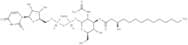

![Udp-3-O[R-3-hydroxymyristoyl]-N-acetylglucosamine](/_next/image/?url=https%3A%2Fstatic.cymitquimica.com%2Fproducts%2F3D%2Fthumb%2FIEA63629.jpg&w=3840&q=75)
