CAS 108930-17-2
:H 7 Dihydrochlorid
Beschreibung:
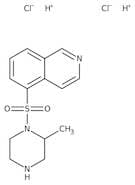
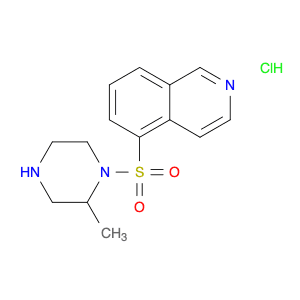
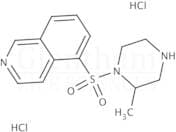
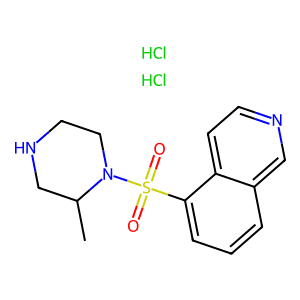
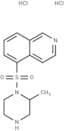
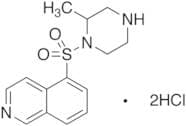
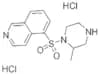
H7 Dihydrochlorid, mit der CAS-Nummer 108930-17-2, ist eine chemische Verbindung, die typischerweise Eigenschaften aufweist, die mit ihrer molekularen Struktur und funktionellen Gruppen verbunden sind. Als Dihydrochloridsalz ist es wahrscheinlich ein stabiler, kristalliner Feststoff bei Raumtemperatur, der in Wasser und anderen polaren Lösungsmitteln aufgrund der Anwesenheit von Chloridionen löslich ist. Die Verbindung kann basische Eigenschaften aufweisen, da sie von einer Base abgeleitet ist, die durch Salzsäure protoniert wurde. Ihre molekularen Wechselwirkungen können Wasserstoffbrückenbindungen umfassen, die ihre Löslichkeit und Reaktivität beeinflussen können. H7 Dihydrochlorid kann in verschiedenen Anwendungen eingesetzt werden, einschließlich pharmazeutischer Formulierungen, wo es als Wirkstoff oder als Stabilisator dienen könnte. Sicherheitsdatenblätter würden typischerweise Handhabungsvorschriften angeben, wie bei vielen chemischen Substanzen, um Risiken im Zusammenhang mit der Exposition zu mindern. Insgesamt würden die spezifischen Eigenschaften von H7 Dihydrochlorid von seiner genauen molekularen Struktur und dem Kontext seiner Verwendung abhängen.
Formel:C14H17N3O2S·2ClH
InChl:InChI=1S/C14H17N3O2S.2ClH/c1-11-9-16-7-8-17(11)20(18,19)14-4-2-3-12-10-15-6-5-13(12)14;;/h2-6,10-11,16H,7-9H2,1H3;2*1H
InChI Key:InChIKey=OARGPFMFRLLKPF-UHFFFAOYSA-N
SMILES:S(=O)(=O)(C=1C2=C(C=CC1)C=NC=C2)N3C(C)CNCC3.Cl
Synonyme:- (+/-)-1-(5-Isoquinolinesulfonyl)-2-Methylpiperazine 2Hcl
- (+/-)-1-(5-Isoquinolinesulfonyl)-2-Methylpiperazine Dihydrochloride
- (+/-)-1-(5-Isoquinolinesulphonyl)-2-Methylpiperazine Dihydrochloride
- (-)-1-(5-Isoquinolinesulfonyl)-2-Methylpiperazine, Di-Hcl Salt
- (3R)-4-(isoquinolin-5-ylsulfonyl)-3-methylpiperazin-1-ium
- (3S)-4-(isoquinolin-5-ylsulfonyl)-3-methylpiperazin-1-ium
- 1-(5-Isoquinolinylsulfonyl)-2-Methyl-Piperazine Dihydrochloride
- 5-[(2-Methylpiperazin-1-Yl)Sulfonyl]Isoquinoline Dihydrochloride
- 5-[(2-Methylpiperazin-1-Yl)Sulfonyl]Isoquinoline Hydrochloride
- H-7
- Isoquinoline, 5-[(2-methyl-1-piperazinyl)sulfonyl]-, hydrochloride (1:2)
- Piperazine, 1-(5-isoquinolinylsulfonyl)-2-methyl-, dihydrochloride
- Weitere Synonyme anzeigen
Sortieren nach
Reinheit (%)
0
100
|
0
|
50
|
90
|
95
|
100
8 Produkte.
H-7 dihydrochloride
CAS:Protein kinase inhibitor. Inhibits cyclic nucleotide dependent protein kinase (PKA) and protein kinase C This Thermo Scientific Chemicals brand product was originally part of the Alfa Aesar product portfolio. Some documentation and label information may refer to the legacy brand. The original Alfa AFormel:C14H17N3O2S•2HClMolekulargewicht:364.29Protein kinase inhibitor H-7 2HCl
CAS:Formel:C14H19Cl2N3O2SReinheit:98%Farbe und Form:SolidMolekulargewicht:364.2906Protein kinase inhibitor H-7 dihydrochloride
CAS:Protein kinase inhibitor H-7 dihydrochlorideReinheit:≥98%Molekulargewicht:364.29g/molProtein kinase inhibitor H-7 dihydrochloride
CAS:Protein kinase inhibitor H-7 dihydrochloride(H-7 dihydrochloride) is a potent protein kinase C (PKC) inhibitor.Formel:C14H19Cl2N3O2SReinheit:99.81%Farbe und Form:White Crystalline SolidMolekulargewicht:364.291-(5-Isoquinolinesulfonyl)-2-methylpiperazine Dihydrochloride
CAS:Kontrolliertes ProduktApplications A selective inhibitor of protein kinase C or cyclic-nucleotide-dependent protein kinases.
References Hidaka, H. and Kawamoto, S.: Biochem. and Biophys. Res. Comm., 125, 1, 258 (1984)Formel:C14H17N3O2S·2ClHFarbe und Form:NeatMolekulargewicht:364.29H-7 dihydrochloride
CAS:H-7 is a cytostatic agent that inhibits the activation of transcription by inhibiting the synthesis of DNA and RNA. H-7 has shown to be an effective inhibitor of epidermal growth factor and α subunit, which are involved in the proliferation of cancer cells. In addition, H-7 can inhibit calcium ion influx into the cell, which may cause cell death. This drug also has potent inducers effects on primary cells, such as HL-60 cells, and induces apoptosis in carcinoma cell lines. H-7 is not an inhibitor of cyclase activity but enhances it when added with guanine nucleotide binding proteins (G proteins) activators such as forskolin. This leads to increased levels of cyclic AMP. As a result, H-7 inhibits protein synthesis and activates cytosolic calcium channels.Formel:C14H17N3O2S·2HClReinheit:Min. 95%Molekulargewicht:364.29 g/mol