CAS 110-78-1
:Propylisocyanat
Beschreibung:
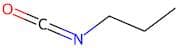
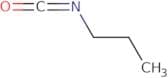
Propylisocyanat, mit der CAS-Nummer 110-78-1, ist eine organische Verbindung, die durch das Vorhandensein einer Isocyanat-Funktionalgruppe (-N=C=O), die an eine Propylkette gebunden ist, gekennzeichnet ist. Es handelt sich um eine farblose bis blassgelbe Flüssigkeit mit einem stechenden Geruch, der an Senf oder andere starke Chemikalien erinnert. Diese Verbindung ist bekannt für ihre Reaktivität, insbesondere in nucleophilen Additionsreaktionen, was sie nützlich für die Synthese verschiedener organischer Verbindungen, einschließlich pharmazeutischer Produkte und Agrochemikalien, macht. Propylisocyanat ist mäßig in Wasser löslich und besser in organischen Lösungsmitteln löslich, was ihre Anwendungen in der chemischen Synthese beeinflusst. Es ist wichtig, diese Substanz mit Vorsicht zu behandeln, da sie toxisch und reizend für Haut, Augen und Atemwege sein kann. Angemessene Sicherheitsmaßnahmen, einschließlich der Verwendung von persönlicher Schutzausrüstung und ausreichender Belüftung, sind unerlässlich, wenn mit Propylisocyanat gearbeitet wird. Darüber hinaus ist es als gefährlicher Stoff eingestuft, was die Einhaltung der Vorschriften für Lagerung und Entsorgung erforderlich macht.
Formel:C4H7NO
InChl:InChI=1S/C4H7NO/c1-2-3-5-4-6/h2-3H2,1H3
InChI Key:InChIKey=OQURWGJAWSLGQG-UHFFFAOYSA-N
SMILES:C(N=C=O)CC
Synonyme:- 1-Isocyanatopropane
- 1-Propyl isocyanate
- Isocianato De Propilo
- Isocyanate de propyle
- Isocyanic Acid n-Propyl Ester
- Isocyanic acid, propyl ester
- Isocyanocacidpropylester
- Nsc 89688
- Propane, 1-isocyanato-
- Propyl isocyanate
- Propylisocyanat
Sortieren nach
Reinheit (%)
0
100
|
0
|
50
|
90
|
95
|
100
2 Produkte.
N-Propyl isocyanate
CAS:N-Propyl isocyanate is a reactive molecule that can be used as an antimicrobial agent. It has been shown to be effective against infectious diseases, such as chronic bronchitis and antibiotic-resistant strains of bacteria. N-propyl isocyanate has been shown to be a competitive inhibitor of bacterial enzymes and inactivates the enzyme’s active site. This inhibits the synthesis of DNA, RNA, and proteins that are necessary for bacterial replication. The addition of hydroxyl groups to the molecule allows for hydrogen bonding with other molecules, forming a reactive functional group. The molecule also has an electrochemical impedance spectroscopy (EIS) property that can be used to detect its presence in liquids. Kinetic data shows the reaction rate between N-propyl isocyanate and various bacteria.Formel:C4H7NOReinheit:Min. 95%Molekulargewicht:85.1 g/mol