CAS 111-58-0
:Oleoylethanolamid
Beschreibung:
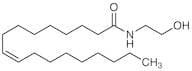
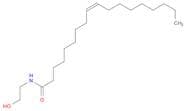
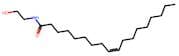
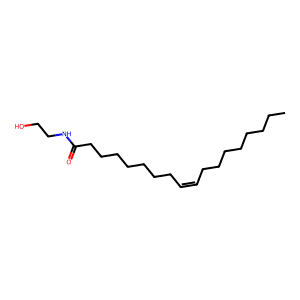
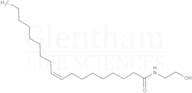
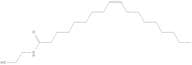
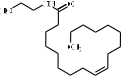
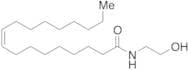
Oleoylethanolamid (OEA) ist eine Fettsäureethanolamid, das aus Ölsäure, einer häufigen einfach ungesättigten Fettsäure, abgeleitet ist. Es zeichnet sich durch seine Rolle als Signalmolekül in verschiedenen biologischen Prozessen aus, insbesondere bei der Regulierung des Appetits und der Energiehomöostase. OEA ist bekannt dafür, den peroxisomproliferator-aktivierten Rezeptor Alpha (PPAR-α) zu aktivieren, der eine entscheidende Rolle im Lipidstoffwechsel und bei Entzündungen spielt. Diese Verbindung wird typischerweise im Dünndarm gefunden und wird als Reaktion auf diätetische Fette produziert. OEA wurde auf seine potenziellen therapeutischen Wirkungen untersucht, einschließlich Gewichtsmanagement und neuroprotektiven Eigenschaften. In Bezug auf die physikalischen Eigenschaften ist OEA bei Raumtemperatur eine viskose Flüssigkeit und in organischen Lösungsmitteln löslich, hat jedoch eine begrenzte Löslichkeit in Wasser. Seine molekulare Struktur weist eine Amidbindung auf, die zu seiner biologischen Aktivität beiträgt. Insgesamt ist Oleoylethanolamid sowohl in der Biochemie als auch in der Pharmakologie von Bedeutung, wobei laufende Forschungen seine verschiedenen gesundheitlichen Implikationen untersuchen.
Formel:C20H39NO2
InChl:InChI=1S/C20H39NO2/c1-2-3-4-5-6-7-8-9-10-11-12-13-14-15-16-17-20(23)21-18-19-22/h9-10,22H,2-8,11-19H2,1H3,(H,21,23)/b10-9-
InChI Key:InChIKey=BOWVQLFMWHZBEF-KTKRTIGZSA-N
SMILES:C(CCCCC/C=C\CCCCCCCC)CC(NCCO)=O
Synonyme:- (9Z)-N-(2-Hydroxyethyl)-9-octadecenamide
- (9Z)-N-(2-hydroxyethyl)octadec-9-enamide
- 9-Octadecenamide, N-(2-hydroxyethyl)-
- 9-Octadecenamide, N-(2-hydroxyethyl)-, (9Z)-
- 9-Octadecenamide, N-(2-hydroxyethyl)-, (Z)-
- Am 3101
- Monoethanolamine oleic acid amide
- N-(2-Hydroxyethyl)-9-Z-octadecenamide
- N-(2-Hydroxyethyl)-9-octadecenamide
- N-(2-Hydroxyethyl)oleamide
- N-Oleoyl-2-aminoethanol
- N-Oleoylethanolamide
- N-Oleoylethanolamine
- Oleamide MEA
- Oleamide, N-(2-hydroxyethyl)-
- Oleic acid ethanolamide
- Oleic acid monoethanolamide
- Oleoyl monoethanolamide
- Oleoylethanolamide
- Weitere Synonyme anzeigen
Sortieren nach
Reinheit (%)
0
100
|
0
|
50
|
90
|
95
|
100
12 Produkte.
N-Oleoylethanolamine
CAS:Formel:C20H39NO2Reinheit:>98.0%(GC)Farbe und Form:White to Almost white powder to crystalMolekulargewicht:325.54(9Z)-N-(2-hydroxyethyl)octadec-9-enamide
CAS:Formel:C20H39NO2Reinheit:85%Farbe und Form:SolidMolekulargewicht:325.5292Oleoylethanolamide
CAS:Oleoylethanolamide (N-Oleoylethanolamide) is a high affinity endogenous agonist of PPAR-α.Formel:C20H39NO2Reinheit:99.98%Farbe und Form:SolidMolekulargewicht:325.53Ref: TM-T12296
2mg34,00€5mg50,00€1mL*10mM (DMSO)55,00€10mg75,00€25mg138,00€50mg236,00€100mg356,00€200mg522,00€N-Oleoylethanolamine
CAS:Formel:C20H39NO2Reinheit:(HPLC) ≥ 98.0%Farbe und Form:White to off-white powderMolekulargewicht:325.53N-Oleoylethanolamide
CAS:Kontrolliertes ProduktApplications N-Oleoylethanolamide is an agonist of peroxisome proliferator-activated receptor-α (PPAR-α). N-Oleoylethanolamide generates an intestinal signal that stimulates central dopamine activity establishing a link between caloric-homeostatic and hedonic-homeostatic controllers. Oleoylethanolamide has been implicated as the molecular mechanism associated with gastric bypass success. N-Oleoylethanolamide is a selective GPR55 agonist.
References Sasso, O., et. al.: Pain, 154, 350 (2013); Begg, D.P., Woods, S.C.: Cell Met., 18, 459 (2013); Chem. and Eng. News p.7, Jan. 8 (2017)Formel:C20H39NO2Farbe und Form:Off-WhiteMolekulargewicht:325.53N-(2-Hydroxyethyl)oleamide
CAS:Formel:C20H39NO2Reinheit:95.0%Farbe und Form:SolidMolekulargewicht:325.537N-Oleoylethanolamide
CAS:N-Oleoylethanolamide (NOPE) is a fatty acid amide that is synthesized from oleic acid and ethanolamide. NOPE is a low potency compound that has been shown to cause mitochondrial membrane depolarization in mesenteric cells. It also activates the peroxisome proliferator-activated receptor alpha, which causes mitochondrial membrane potential to be maintained. NOPE has been shown to inhibit prostate cancer and bone cancer cell growth in vitro and reduce the size of prostate tumors in vivo. NOPE also inhibits the activity of two different enzymes that are involved in cellular processes such as apoptosis: protein kinase C and phosphodiesterase 4. The effects of NOPE on these enzymes may be due to its ability to bind with fatty acids or other lipids, thereby inhibiting their synthesis or function.Formel:C20H39NO2Reinheit:Min. 95%Farbe und Form:PowderMolekulargewicht:325.53 g/mol