CymitQuimica logo

CAS 11110-52-4

:

Natriumamalgam

Beschreibung:
Natriumamalgam ist eine chemische Verbindung, die durch die Legierung von Natrium mit Quecksilber entsteht. Sie zeichnet sich durch ihr metallisches Aussehen aus und ist typischerweise eine weiche, silberne Substanz, die je nach Menge des vorhandenen Natriums in der Zusammensetzung variieren kann. Natriumamalgam ist bekannt für seine Fähigkeit, als Reduktionsmittel zu wirken, was es in verschiedenen chemischen Reaktionen nützlich macht, insbesondere in der organischen Synthese und der Elektrochemie. Es wird häufig bei der Herstellung anderer Natriumverbindungen und bei der Reduktion bestimmter organischer Verbindungen eingesetzt. Das Amalgam ist hochreaktiv, insbesondere mit Wasser, und produziert Natriumhydroxid und Wasserstoffgas, was gefährlich sein kann. Aufgrund seines Quecksilbergehalts birgt Natriumamalgam erhebliche Gesundheits- und Umweltgefahren, die eine sorgfältige Handhabung und Entsorgung erfordern. Es ist wichtig zu beachten, dass die Verwendung von Quecksilber in irgendeiner Form in vielen Ländern aufgrund seiner Toxizität strengen Vorschriften unterliegt. Insgesamt dient Natriumamalgam als wertvolles Reagenz in spezialisierten Anwendungen, aber seine Verwendung muss mit Vorsicht angegangen werden.
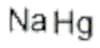
Formel:Hg·Na
InChl:InChI=1S/Hg.Na
InChI Key:InChIKey=MJGFBOZCAJSGQW-UHFFFAOYSA-N
SMILES:[Na].[Hg]
Synonyme:
  • Sodium alloy, nonbase, Hg,Na
  • Mercury alloy, base, Hg,Na
  • Sodium amalgam
Sortieren nach

Reinheit (%)
0
100
|
0
|
50
|
90
|
95
|
100
2 Produkte.
  • Sodium mercury amalgam

    CAS:
    Formel:HgNa
    Farbe und Form:Solid
    Molekulargewicht:223.5798

    Ref: IN-DA003UCX

    Ausgelaufenes produkt
  • Sodium mercury amalgam

    Kontrolliertes Produkt
    CAS:
    <p>Sodium mercury amalgam is a metal-containing material that has been used as a dental filling material for over 150 years. It is made by mixing mercury with sodium hydroxide, which causes the mercury to react with the sodium and form an amalgam. The reaction between the two metals produces hydrogen gas, which is released from the mixture. The resulting product is an amalgam of mercury, sodium and water. Sodium mercury amalgams have shown biological activity in studies involving enzyme activities and metabolism rates in animals.br&gt; br&gt; Lithium mercury amalgam is also used in dental fillings. Lithium replaces some of the sodium in this compound, forming a more stable product that does not corrode easily. Lithium has no significant effect on the properties of this compound.br&gt; br&gt; Mercury zinc amalgam has also been studied as a potential alternative to dental fillings due to its low cost and better corrosion resistance than other types of filling materials.br&gt;</p>
    Formel:HgNa
    Reinheit:Min. 95%
    Molekulargewicht:223.58 g/mol
